punjab university introduces
| | |

Punjab University introduces AI Chatbot amid recor…

LAHORE: Punjab University has witnessed a significant increase in applications for its undergraduate programs, receiving more than 25,000 additional confirmed applications compared to last year, reflecting growing student confidence in the institution’s academic standards.

According to a university spokesperson, the university received 147,909 applications for undergraduate admissions this year, of which 113,182 were finalized. In comparison, during the first phase of admissions in 2025, the university received 120,395 applications, with 87,831 successfully completed.

Vice Chancellor Dr. Muhammad Ali said the record rise in applications demonstrates that Punjab University continues to be the preferred choice for students seeking quality higher education. He noted that the increasing number of applicants highlights the trust students and their families place in the university’s academic reputation.

Dr. Ali said the university remains committed to providing students with the best possible opportunities to develop academically while enhancing their research, extracurricular, and professional skills. He emphasized that the institution aims to produce capable, responsible, and ethical graduates who can make meaningful contributions to society, industry, and the country’s development.

In a first for the university, Punjab University has also introduced an AI-powered chatbot to assist applicants during the admission and entry test process, making information and guidance more accessible while improving the overall admissions experience.
Similar Posts

  • | |

    Pakistan rejects India’s statements at UN securi…

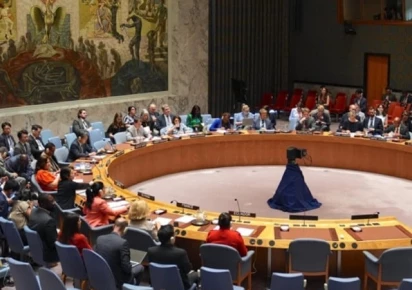
      ISLAMABAD: Pakistan has strongly rejected India’s remarks at the United Nations Security Council (UNSC) concerning the Indus Waters Treaty (IWT) and allegations of terrorism, describing them as an attempt to misrepresent facts and divert attention from issues raised by Pakistan. The response came after India’s Permanent Representative to the United Nations, Ambassador Harish Parvathaneni, accused Pakistan of supporting cross-border terrorism and suggested that the issue had affected bilateral cooperation under the Indus Waters Treaty. Pakistan dismissed these allegations during the UNSC’s High-Level Open Debate on “Natural Resource Governance: The Foundation of Peace, Security and Prosperity.” Speaking in a right of reply, Pakistan’s First Secretary to the UN, Ansar Shah, said India’s statement was misleading and represented a futile effort to distort the facts surrounding the treaty and regional security issues. He maintained that the Indus Waters Treaty remains legally valid and binding, rejecting India’s claim that the agreement could be placed in abeyance through unilateral action. Shah stated that the treaty contains no provision allowing either party to suspend or set it aside on its own. He referred to the Court of Arbitration’s August 2025 award, which, according to Pakistan, reaffirmed that the treaty continues to remain fully in force along with its dispute resolution mechanisms. He argued that India’s unilateral approach violated the terms of the agreement as well as established principles of international law. Pakistan also accused India of using shared water resources as a political tool. Shah said any attempt to weaponise water for political pressure or to restrict water access would amount to a serious breach of international legal obligations and norms. He added that such actions could undermine regional stability and pose risks to international peace and security, making the issue relevant to discussions at the Security Council. Responding to India’s allegations regarding terrorism, Shah rejected the accusations and instead claimed that India was attempting to conceal its own involvement in activities that Pakistan says have contributed to terrorism within its borders. He alleged that militant groups such as the Tehreek-e-Taliban Pakistan (TTP), the Balochistan Liberation Army (BLA), and the Majeed Brigade had been responsible for attacks that claimed the lives of thousands of Pakistani civilians and security personnel, including women and children. Pakistan reiterated its long-standing allegation that India supports and finances these groups, a claim India has consistently denied. Shah also referred to reports of alleged extraterritorial operations involving India, saying such incidents had raised international concerns. He further argued that India could not portray itself solely as a victim of terrorism while ignoring accusations directed against it. Addressing the situation in Indian Illegally Occupied Jammu and Kashmir, Shah said the people of the region continue to be denied their right to self-determination. He maintained that the territory remains internationally recognised as disputed and asserted that no unilateral measures could alter its legal or historical status. He also urged India to fulfil its obligations under the UN Charter and implement relevant UN Security Council resolutions. Earlier in the debate, Pakistan’s Permanent Representative to the United Nations, Ambassador Asim Iftikhar, reaffirmed that the Indus Waters Treaty remains effective and legally binding. He called on the UN Security Council to remain vigilant against the misuse or weaponisation of natural resources and encouraged greater use of preventive diplomacy, peaceful dispute resolution, monitoring mechanisms, and other international measures to prevent disputes over shared resources from escalating into broader conflicts.

  • | | |

    Corruption cases transferred back to NAB courts in…

    KARACHI: Corruption cases that had been shifted from accountability courts to anti-corruption courts have now been transferred back to the National Accountability Bureau (NAB) courts. The development came after a request from a NAB prosecutor, following a Sindh High Court ruling that declared the earlier transfer of the cases to anti-corruption courts invalid. The accountability court has initiated proceedings to revive 15 references that were previously transferred. The Sindh High Court had directed that the cases pending before accountability courts be returned to NAB courts after setting aside the order through which they were moved to anti-corruption courts. NAB subsequently filed an application seeking restoration of the cases in compliance with the high court’s decision. The accountability court issued notices to the accused persons nominated in 15 separate references and summoned them for proceedings. Several officials and other individuals have been named in cases involving alleged corruption and illegal allocation of land. Balochistan provincial minister Ali Hassan Brohi is among those nominated in the cases. The court also issued notices to former Sindh chief secretary and former Land Utilisation member Siddiq Memon. Former Malir deputy commissioner Qazi Jan Muhammad and former district officer revenue Ijaz Hussain were also summoned. Notices were further issued to former additional secretary of Land Utilisation Abdul Qadir Memon and former section officer Ghulam Mustafa. Treasury officer Muhammad Musa Kazmi and assistant treasury officer Abdul Latif Khoso were also summoned by the court. The court additionally issued notices to Mirpur Sakro tapedar Nisar Ahmed Wagan and Ali Asghar Mendhro. Former Mukhtiarkar Iqbal Awan and Muhammad Hanif were also among those summoned in connection with the cases. The accountability court has also called several revenue officials and builders, including Javed Iqbal and Waseem Ahmed Sheikh, to appear before it.

  • |

    Myanmar’s detained former leader Aung San Suu Kyi meets Red Cross official

    Myanmar’s ousted leader Aung San Suu Kyi met with Arnaud de Baecque, the International Committee of the Red Cross (ICRC) resident representative, in her first publicised meeting with a foreign official since the 2021 military coup. Government-released photographs show the 81-year-old Nobel Peace Prize winner in Naypyitaw alongside images of her celebrating her June birthday under house arrest, where she is currently serving an 18-year sentence following commuted convictions. While Myanmar authorities maintain Suu Kyi is in good health, international bodies and her opposition supporters continue to demand her unconditional release and independent verification of her well-being.

  • |

    Palace fears Harry could reach King Charles while Camilla’s away

    Prince Harry’s ongoing push to rebuild ties with the royal family may be approaching a pivotal moment. A new development has insiders within the Firm reportedly on edge. The concern centres around Queen Camilla’s upcoming girls’ trip, which happens to overlap with King Charles’s time at Balmoral in Scotland. According to celebrity reporter Rob Shuter and a Palace insider, this overlap has become a genuine point of worry. Camilla is widely believed to play a key role in tempering Charles’s emotional responses when it comes to Harry. She’s even reportedly rearranged her own schedule in the past just to be present during Harry’s summer meeting at Highgrove. A Palace source told Shuter that Harry is well aware of exactly when his father is most emotionally vulnerable. With Camilla away, one of the strongest steadying influences on Charles would temporarily be missing. The source explained that Harry understands his father on a deeply emotional level. According to the insider, Harry knows Charles misses him and senses that beneath the tension, the King still wants his son back. The source added that while Charles can be firm and composed in his role as monarch, Harry knows exactly how to reach him as a father. That emotional vulnerability is reportedly what worries palace insiders the most. Shuter noted that no dramatic gesture would even be necessary to make an impact. Even a simple phone call, he suggested, could open a door that officials would then struggle to close again. The timing adds another layer of complexity to the already delicate relationship between Harry and his father. With Camilla’s steadying presence temporarily out of the picture, palace insiders appear to be bracing for the possibility of an unplanned reconciliation attempt. Whether Harry chooses to act during this window remains to be seen, but the concern within palace circles suggests his opportunity is being taken seriously behind the scenes.

  • | | |

    Government assures uninterrupted fuel supply amid …

    Sources in Pakistan’s Petroleum Division have stated that the government is committed to ensuring the uninterrupted supply of petroleum products across the country. The assurance comes amid ongoing discussions with representatives of the Pakistan Petrol Pump Owners Association regarding fuel pricing and dealers’ profit margins. According to official sources, the government is working to determine petroleum product prices through a transparent and fair mechanism. Officials emphasized that the Ministry of Petroleum remains open to hearing constructive and practical suggestions from all stakeholders involved in the petroleum sector. They stressed that maintaining transparency in the pricing process is a key priority and that the government welcomes proposals that can contribute to a balanced and sustainable policy. Sources further revealed that the Federal Minister for Petroleum held a meeting with office-bearers of the Petrol Pump Owners Association, during which he listened carefully to their concerns and demands. The minister reportedly gave the representatives ample time to present their viewpoints and assured them that the government was willing to consider reasonable proposals in the interest of both consumers and fuel dealers. However, according to Petroleum Division sources, the discussions failed to produce the desired outcome because representatives of the association allegedly adopted an uncompromising approach during the meeting. Officials claimed that the association’s leadership insisted on having its demands accepted without presenting convincing arguments or practical justification. The sources stated that despite the government’s willingness to engage in dialogue, the association remained firm on its position and showed little flexibility in the negotiations. The Petroleum Division also said that the representatives of the Petrol Pump Owners Association eventually walked out of the meeting on their own before the discussions had been concluded. Officials maintained that the government had not ended the talks and was still prepared to continue negotiations in order to resolve outstanding issues through mutual understanding. According to the sources, the Petroleum Minister has already assured petrol pump dealers that the government is prepared to review their profit margins. The minister acknowledged that the concerns of fuel retailers deserve careful consideration and indicated that the issue of dealer commissions would be examined as part of the ongoing consultation process. Government officials reiterated that while they are open to discussions with all stakeholders, any decision regarding fuel prices or dealer margins must be made in the broader public interest. They emphasized that ensuring a stable supply of petroleum products remains the government’s top priority and that consumers should not face unnecessary disruptions because of disagreements between authorities and industry representatives. The Petroleum Division further noted that transparent policymaking requires consultation with all parties, including oil marketing companies, petrol pump owners, and other industry stakeholders. Officials expressed hope that future meetings would take place in a more constructive atmosphere and lead to a mutually acceptable solution. The ongoing discussions come at a time when petroleum prices remain a matter of significant public concern due to their impact on transportation costs, inflation, and the overall economy. Fuel dealers have repeatedly called for higher profit margins, arguing that rising operational costs have made it increasingly difficult to run their businesses profitably. Despite the differences that emerged during the latest meeting, government sources insisted that dialogue remains the preferred way forward. They reaffirmed the government’s commitment to maintaining an uninterrupted fuel supply, ensuring transparency in the pricing mechanism, and continuing consultations with petrol pump owners until an acceptable solution is reached that protects both consumers and businesses.

  • | |

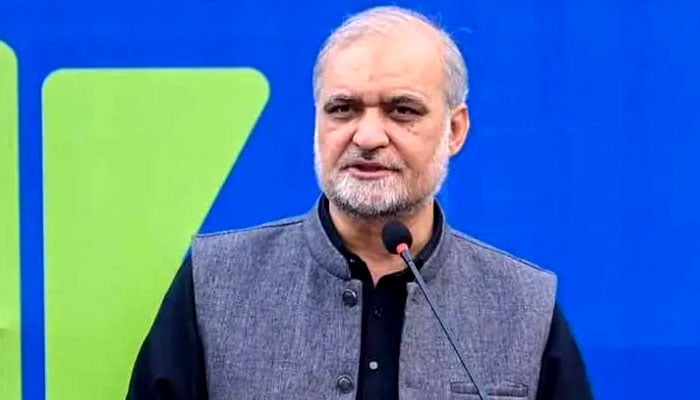
    JI Chief Hafiz Naeem ur Rehman urges government to…

      Islamabad: Jamaat-e-Islami (JI) chief Hafiz Naeem ur Rehman has called on the government to focus on resolving the problems faced by the people instead of relying solely on the use of force to establish the writ of the state. He made these remarks in a statement criticizing the government’s economic policies and its handling of public affairs. According to Hafiz Naeem ur Rehman, a state’s authority cannot be maintained through coercive measures alone. He argued that the government should prioritize addressing the everyday concerns of citizens, including rising inflation, unemployment, and the increasing cost of essential services. He said that public trust is strengthened when governments respond to people’s needs rather than depending on administrative pressure or strict enforcement. The Jamaat-e-Islami leader strongly criticized the government’s electricity policies, alleging that the ruling authorities are placing an unbearable financial burden on the public through high electricity charges. He stated that ordinary citizens are struggling to pay their utility bills at a time when the cost of living continues to rise. According to him, households and businesses alike are being severely affected by expensive electricity tariffs, making it increasingly difficult for many families to manage their monthly expenses. Hafiz Naeem ur Rehman also criticized the government’s fuel taxation policy. Referring to the petroleum levy, he alleged that the government is effectively collecting money from the public in the form of what he described as “extortion.” He argued that increasing fuel-related taxes has a direct impact on transportation costs, which in turn raises the prices of food, consumer goods, and other essential commodities. As a result, he claimed, inflation continues to place additional pressure on the country’s middle- and lower-income groups. In his statement, the Jamaat-e-Islami chief further alleged that both the Pakistan Muslim League (Nawaz) and the Pakistan Peoples Party (PPP) came to power through what he referred to as “Form 47” This phrase has been used by some political parties in Pakistan to allege irregularities in the electoral process. His remarks reflect his party’s political stance regarding the legitimacy of the current governing coalition. Hafiz Naeem ur Rehman maintained that the country’s leadership should focus on providing relief to the public by reducing electricity prices, reviewing taxation policies, and introducing measures that improve the economic conditions of ordinary citizens. He emphasized that sustainable governance depends on public confidence, transparency, and policies that directly benefit the people. The government has previously defended its economic decisions by stating that measures such as electricity pricing and petroleum levies are necessary to meet fiscal requirements and maintain economic stability. However, opposition parties, including Jamaat-e-Islami, continue to argue that these policies have placed excessive financial pressure on the public. The latest remarks by Hafiz Naeem ur Rehman come amid ongoing political debate over Pakistan’s economic challenges, rising inflation, and governance. His statement highlights Jamaat-e-Islami’s continued criticism of the government’s economic policies and its call for greater public relief, while also reiterating the party’s political objections regarding the current administration’s mandate.

Leave a Reply

Your email address will not be published. Required fields are marked *