qatar steps mediate
|

Qatar steps in to mediate as Trump says US not talking to Iran

Qatar’s prime minister visited Tehran on Thursday, August 27, in an effort to revive stalled diplomacy six months into the war, as US President Donald Trump said Washington was not currently talking to Iran.

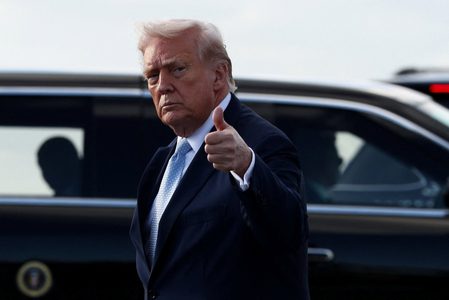
“We don’t want to speak to them. We’re not looking to meet or anything,” Trump told reporters in the Oval Office after the White House said a US economic campaign against Tehran would continue until Iran decides to negotiate meaningfully.

Major combat operations have been paused for weeks but there has been little progress toward a wider peace agreement or reopening the Strait of Hormuz, a vital shipping route. Six months after US and Israeli forces attacked Iran, killing its supreme leader and maiming his son and successor, the Iranian government is under economic siege, but it still holds power and has shown little urgency to negotiate.
Must Read

US threatens countries doing business with Iran


US threatens countries doing business with Iran

Trump, facing political pressure at home over higher energy prices ahead of November congressional elections, has opted to focus on economic sanctions, but aggressively enforcing them would require taking measures against Iranian trade partners such as China and India.

In Tehran, Qatar’s Prime Minister Sheikh Mohammed bin Abdulrahman Al Thani urged a return to diplomacy during talks with Iran’s top negotiator Mohammad Baqer Qalibaf on Thursday, Qatar’s foreign ministry said.

Iran in turn called on regional neighbors to prevent the US from using their territory to carry out military or economic attacks on Iran, Iranian Foreign Minister Abbas Araqchi said on his Telegram account.

Mohsen Rezaei, the secretary of Iran’s Supreme National Security Council, told the Qatari prime minister that Tehran would strike US military and economic interests if Washington engaged in “mischief” against Iran, Iranian media reported.

Rezaei said the United States must take steps to meet Iran’s conditions before Tehran moved to reopen the Strait of Hormuz. Those conditions include an end to the US blockade on Iranian ports, compensation and removal of sanctions.

“We do not trust the United States; it has repeatedly betrayed diplomacy and negotiations,” Rezaei said.

A June memorandum of understanding between Washington and Tehran collapsed in part over the future of the Strait of Hormuz, the narrow waterway between Iran and Oman through which about a fifth of global energy supplies passed before the war.

Iran has sought to exert control over the strait and charge fees to ships it authorizes, while Washington insists it should remain an open international waterway.

Al Thani said on X that he stressed the importance of freedom of navigation through the Strait of Hormuz. He and the Iranian foreign minister also discussed a proposal to establish a temporary joint Iranian-Omani shipping corridor through the strait and a joint project to clear mines, Qatar’s foreign ministry said.

Iran’s Revolutionary Guards said on Wednesday that Iran and Oman had agreed in principle on administering traffic in the strait and sharing revenues, but a senior Iranian source later said the two countries were still working on the details of an agreement.

Iran is preparing a list of conditions for reopening the Strait of Hormuz after mediators asked Tehran to set them out, Rezaei said. Ships would use a designated central channel if the US met Iran’s conditions, he said through an interpreter in an Al Manar TV interview.

‘No negotiations happening’

White House press secretary Karoline Leavitt said on Thursday that Trump “continues to retain all options on the table” with regard to Iran.

“We’ve had Operation Epic Fury to destroy their military. Now we have Operation Economic Outcast to destroy their economy,” Leavitt said in an interview with Fox News.

“No negotiations are happening right now, and this will continue until the president feels that maybe they come to the table in a meaningful way,” she said. “We have not seen that yet.”

Tehran has lived under various forms of US sanctions since the Islamic revolution in 1979.

Despite suffering heavy military losses, Iran retains enough missile and drone capability to strike Gulf states that host US forces and disrupt shipping in the Strait of Hormuz.

The International Maritime Organization has reported 70 incidents in the strait since February 28 that have killed 19 seafarers.

Thousands of others have died, mostly in Iran and Lebanon, since the US and Israel attacked Iran with the stated goals of denying Iran a nuclear weapon, helping Iranians topple their government, and destroying Tehran’s missile program. – Rappler.com

Similar Posts

  • |

    UN chief visits Syria after 17 years and backs reconstruction efforts

    United Nations Secretary General Antonio Guterres visited Syria on Saturday for the first time in 17 years, marking a significant moment in the country’s efforts to rebuild after more than a decade of conflict. During his visit to Damascus, Guterres met Syrian President Ahmed al Sharaa and pledged continued UN support for reconstruction, humanitarian recovery and long-term stability as Syria works to recover from years of war. President Sharaa welcomed Guterres at the presidential palace, where the two leaders held talks focused on rebuilding the country and strengthening cooperation with the United Nations. Speaking after the meeting alongside Syrian Foreign Minister Asaad al Shaibani, Guterres said no nation can recover from a devastating conflict without international assistance. He stressed that the global community has a responsibility to help Syria restore its economy, rebuild damaged infrastructure and create conditions for lasting peace. Foreign Minister Shaibani called on the international community, particularly the European Union, to increase financial and technical support for Syria’s recovery. He said discussions with Guterres also covered plans to expand UN assistance for reconstruction projects and support the government’s efforts to gradually close displacement camps as security conditions improve. Regional security was another major topic during the visit. Guterres expressed concern over the situation in the Golan Heights, describing recent developments as unacceptable. Syrian officials repeated their demand for Israeli forces to withdraw immediately from the United Nations monitored buffer zone where troops have been stationed since 2024. Damascus has also called for a return to the 1974 disengagement agreement that previously governed military positions in the area. The visit is being viewed as another important step in Syria’s return to the international stage following the removal of former president Bashar al Assad in late 2024. The end of Assad’s rule brought an end to a civil war that began in 2011 and resulted in hundreds of thousands of deaths while forcing millions of Syrians to flee their homes. At the time, Guterres described the political transition as a hopeful moment for both Syria and the wider region. Before arriving in Damascus, the UN chief described his trip as a visit of solidarity and reaffirmed the United Nations’ commitment to supporting the Syrian people during this critical period. He is expected to spend several days in the country, meeting senior government officials, representatives of civil society and humanitarian organizations. Guterres is also scheduled to address Syria’s parliament, where he is expected to speak about the country’s opportunity to build a more stable, inclusive and prosperous future after years of conflict. The visit comes as Syria continues to rebuild diplomatic ties with countries around the world. President Sharaa’s administration has sought to strengthen relations beyond the country’s traditional allies while encouraging international investment and cooperation. Since taking office, the government has focused on restoring Syria’s place in regional and global affairs after years of political isolation. Recent diplomatic developments have reflected that effort. Last year, Sharaa became the first Syrian president in decades to address the United Nations General Assembly. Earlier this month, US President Donald Trump announced plans to remove Syria from the United States list of state sponsors of terrorism after Washington lifted most of its sanctions on the country. Despite these diplomatic gains, security concerns remain. Guterres’ visit follows recent bomb explosions near a hotel in Damascus that had hosted French President Emmanuel Macron during his landmark visit, the first by a European Union head of state since Syria’s political transition. The incidents highlighted the continuing security challenges facing the country as it moves through a delicate rebuilding process. During his stay, Guterres is also expected to visit the UN peacekeeping mission responsible for monitoring the buffer zone between Israeli and Syrian forces. The mission has operated in the area for decades and continues to play a key role in maintaining stability along the disputed frontier. His visit underscores the United Nations’ commitment to supporting Syria’s recovery while encouraging dialogue, regional stability and international cooperation.

  • | |

    Malaysian PM Anwar Ibrahim undergoes medical proce…

    KUALA LUMPUR: Malaysian Prime Minister Anwar Ibrahim is undergoing medical examinations and procedures, with his aide saying he is expected to remain under observation for two days. Anwar’s Press Secretary Tunku Nashrul Abaidah confirmed the development on Monday but did not disclose details about the nature of the medical procedures or the condition that prompted them. In a statement, the aide said Anwar was undergoing examinations and procedures arranged by a team of medical experts. The statement also appealed for prayers for the premier’s health and expressed hope that he would be able to return to his regular duties soon. “Let us pray … that he is blessed with long-lasting health so that he can return to his usual duties in the near future,” the statement said. The news prompted a message of support from Pakistan, with Prime Minister Shehbaz Sharif wishing his Malaysian counterpart a swift recovery. “Wishing my dear brother, Prime Minister Anwar Ibrahim, a swift and smooth recovery during his medical procedures,” Shehbaz wrote in a post on X. He added that the people of Pakistan were joining him in praying for Anwar’s continued good health and well-being, reflecting the close ties between the two countries. Anwar, who turned 79 on Monday, has served as Malaysia’s prime minister since 2022. His current medical observation has drawn attention partly because of previous health issues involving his back and shoulder. The Malaysian leader was hospitalised in 2018 after experiencing shoulder and back pain. More recently, he cancelled a planned visit to Pahang state in November last year because of back discomfort. Despite those previous problems, Anwar received a clean bill of health following a routine medical examination in January, according to a statement from the hospital where the check-up was conducted. The latest announcement has not indicated that Anwar is facing any serious health condition. Officials have also not provided details about when he is expected to leave medical care or resume his full schedule. For now, the Malaysian government and Anwar’s supporters are awaiting further updates from his medical team. His aide’s statement sought to reassure the public while asking for prayers as the veteran politician undergoes the procedures. Anwar’s health is closely watched as he continues to lead Malaysia through a period of economic and political challenges, making his expected return to official duties a matter of considerable public interest.

  • U.S. Slashes F-1 Visas for Chinese Students By Nearly 50 Percent

    WASHINGTON, D.C. – The landscape of American higher education is undergoing a quiet but massive transformation. Recent data shows that the United States has sharply reduced the issuance of F-1 academic visas for Chinese students. This shift comes as federal authorities implement stricter vetting procedures and national security checks. University campuses, which have long relied […]

  • |

    Houthi blockade threatens Saudi oil exports to Asia

    Saudi Arabia’s oil exports to Asia are facing fresh uncertainty after Yemen’s Houthi movement announced a blockade targeting Saudi ports in the Red Sea, raising fears of major disruptions to global energy supplies and higher oil prices. The impact became evident after two oil tankers carrying nearly 2.8 million barrels of Saudi crude reversed course in the Red Sea instead of continuing through the Bab al-Mandeb Strait. The vessels had departed from the Saudi port of Yanbu and were originally bound for Asian markets. The latest development has created concerns over the security of Saudi Arabia’s alternative export route. For months, the kingdom relied heavily on its Red Sea pipeline network and Yanbu terminal to bypass disruptions in the Strait of Hormuz, where regional tensions have significantly reduced shipping traffic. With Bab al-Mandeb now under threat, Saudi Arabia’s backup route is also facing serious challenges. Energy analysts warn that this could restrict oil exports, tighten global supplies and increase pressure on international crude prices. Asian countries are expected to suffer the greatest impact because they depend heavily on Middle Eastern oil. Around six million barrels of crude oil pass through Bab al-Mandeb every day on their way to Asian markets, with Saudi Arabia accounting for nearly two-thirds of that volume. India is considered the most vulnerable, as more than half of its crude oil imports travel through the Red Sea route. Pakistan is also among the affected countries, with around 36 percent of its crude imports passing through Bab al-Mandeb. Other major importers exposed to disruptions include the Philippines, South Korea, Japan, Taiwan and China. To avoid conflict zones, shipping companies are evaluating a much longer route through Egypt’s Suez Canal, the Mediterranean Sea and around Africa’s Cape of Good Hope before heading towards Asia. Although this route bypasses both the Strait of Hormuz and Bab al-Mandeb, it comes with significant drawbacks. The journey could take more than twice as long, extending delivery times by several weeks. Longer voyages would also increase fuel consumption, insurance costs and freight charges, making crude oil more expensive for buyers. Logistical challenges further complicate the situation. Most Saudi crude from Yanbu is transported on Very Large Crude Carriers (VLCCs), which are too large to pass through the Suez Canal when fully loaded. Operators would need to either transfer part of the cargo through Egypt’s SUMED pipeline or use smaller tankers, both of which would add time and operational costs. Energy experts believe these limitations could reduce Saudi Arabia’s export capacity even if alternative shipping routes remain available. Some refiners in Asia have already started preparing for longer supply routes, while shipping companies are adjusting vessel schedules in anticipation of prolonged disruptions. Analysts also warn that if instability continues in both the Strait of Hormuz and Bab al-Mandeb, the consequences could extend beyond shipping. Higher transportation costs, tighter crude supplies and increased demand for oil tankers could push global oil prices above the $100-per-barrel mark. Alternative supplies from countries such as Russia, the United States and Venezuela may help ease shortages, but those options are limited by production constraints, longer shipping distances and higher transportation expenses.

  • | |

    Biden’s cancer has spread and become very pa…

    Former President Joe Biden’s prostate cancer has spread beyond his bones and has become very painful, his son Hunter Biden revealed in a new interview, offering the most detailed public update yet on the 83-year-old’s deteriorating health condition. Hunter Biden told the BBC’s Newsnight programme that his father’s cancer has metastasized into his bones and beyond, according to video footage of the interview posted online on Friday. He described the condition as very painful and debilitating in many respects, offering a stark assessment of how far the disease has progressed since it was first diagnosed. A spokesman for the former Democratic president declined to comment on Hunter Biden’s remarks when reached on Saturday, leaving the son’s account as the most recent and detailed public statement on the elder Biden’s health status. Diagnosis first revealed in 2025 Biden first disclosed his prostate cancer diagnosis in May 2025, less than four months after leaving the White House. At the time, his office described the diagnosis as an aggressive form of the disease and confirmed that it had already spread to his bones, marking a serious health revelation that came just months after he left office following a single term as president. A spokesman for Biden said in October that the former president had begun undergoing radiation treatment alongside hormone therapy in an effort to manage the disease, representing the most recent official update on his treatment regimen prior to Hunter Biden’s latest comments. A presidency shaped by scrutiny over age and health Biden made history as the oldest person ever elected to the American presidency when he won the office in 2020. His physical health and mental acuity faced sustained public scrutiny throughout his presidency, which ran from 2021 to 2025, with questions about his fitness for office becoming a recurring theme during his time in the White House and throughout his time seeking reelection. Despite the health challenges that have emerged since leaving office, Biden has continued to make public appearances. He attended the dedication of former President Barack Obama’s presidential library in Chicago in June, marking one of his more notable public appearances since departing the presidency. Biden served as vice president under Obama from 2009 to 2017, a partnership that has continued to define much of his political legacy. Memoir set for November release Biden’s presidential memoir is scheduled for release on November 17, offering what is expected to be his own detailed account of his one term in office. The timing of the book’s release means it will arrive as public attention remains focused on his health, with Hunter Biden’s latest comments likely to intensify interest in how the former president addresses his cancer diagnosis and its impact on his post-presidency in his own written account. The revelation adds to a year marked by significant health developments for the former president, whose battle with an aggressive and now advancing form of cancer has become an increasingly prominent part of his public story since leaving the White House.

  • |

    Strait of Hormuz closure halts oil shipments from Iran’s Kharg Island

      US media has claimed that the closure of the Strait of Hormuz has completely disrupted oil shipments from Iran’s Kharg Island, one of the country’s most important centres for crude oil exports. According to a reports, Kharg Island serves as the largest hub for the transportation and export of Iranian crude oil. The island plays a central role in Iran’s oil-export infrastructure and handles a significant portion of the country’s crude shipments to international markets. Three oil terminals on Kharg Island have been completely emptied. According to the report, no ship or oil tanker has departed from Kharg Island since July 31, indicating that crude oil exports through the facility have effectively come to a halt. The report further stated that a large share of the oil exported from Kharg Island is destined for China. However, no oil has reportedly been exported from the island for approximately two weeks. The reported disruption is being linked to the situation surrounding the Strait of Hormuz, a strategically important waterway through which a substantial portion of the world’s oil and energy supplies normally pass. Any prolonged disruption in the strait can have significant consequences for oil-producing countries, shipping companies and global energy markets. Kharg Island is particularly important to Iran because of its role in the country’s crude oil export network. Oil produced in different parts of Iran is transported to export terminals, from where it is loaded onto tankers for shipment to international destinations. The reported halt in tanker movements from Kharg therefore represents a major disruption to Iran’s traditional oil-export operations. If the situation continues, it could potentially affect the volume of Iranian crude reaching international buyers, particularly major customers in Asia. China has historically been an important destination for Iranian crude oil, making the reported suspension of shipments from Kharg Island particularly significant. Any interruption in the supply chain could have implications for refiners and traders that rely on Iranian crude. The Strait of Hormuz connects the Persian Gulf with the Gulf of Oman and the Arabian Sea. Its strategic importance comes from the large volume of oil and other energy products transported through the waterway. Because of this, tensions or restrictions affecting maritime traffic in the area can quickly generate concerns in international energy markets. According to report, the absence of vessels from Kharg Island since July 31 suggests that the impact of the reported disruption has extended beyond individual shipping delays. The complete emptying of the island’s three oil terminals could indicate that existing crude stocks have already been cleared while further exports have been prevented or significantly restricted. However, the report’s claims about the complete halt in Iranian oil exports from Kharg Island would need to be assessed alongside independent shipping and energy-market data. Tanker movements, satellite observations and official statements from Iranian authorities and international monitoring organisations can provide additional information about the actual scale and duration of the disruption. The development highlights the vulnerability of global energy supplies to disruptions in major maritime routes. With Kharg Island serving as Iran’s largest crude-export hub and China reportedly receiving most of its shipments, continued restrictions around the Strait of Hormuz could have wider implications for regional trade and international oil markets. For now, the reported absence of oil tankers from Kharg Island since July 31 marks a significant interruption in Iran’s crude export activity and could remain an important factor for global energy markets if the disruption persists.

Leave a Reply

Your email address will not be published. Required fields are marked *