refreshed alabang town
| |

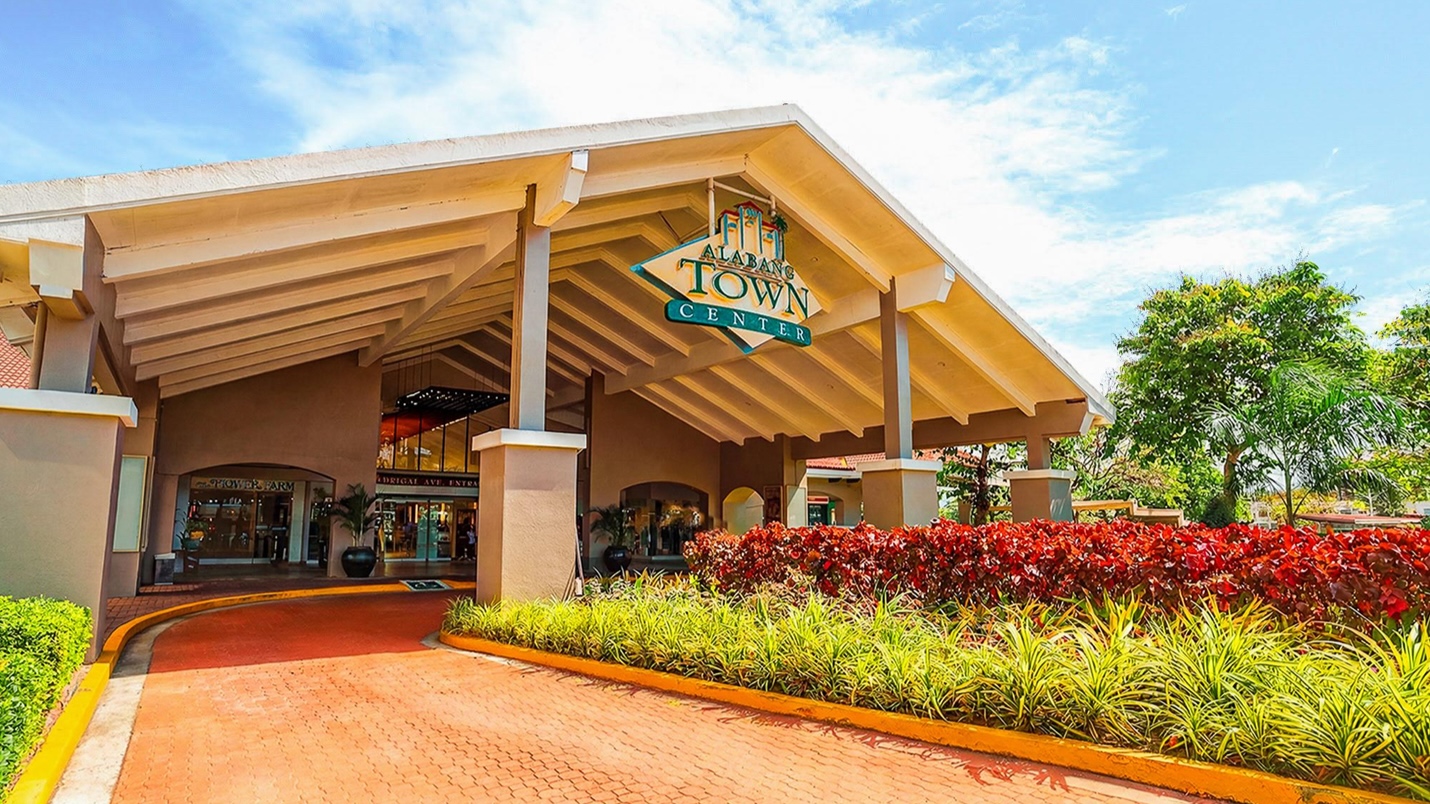
Refreshed Alabang Town Center? What shoppers can expect now that Rockwell has near-full control.

MANILA, Philippines – Regulars of Alabang Town Center should expect the first changes under Rockwell Land to be practical rather than dramatic, including better parking, improved traffic circulation, and a refreshed mix of stores and restaurants.

Rockwell said it acquired another 22.96% of Alabang Commercial Corporation (ACC), the company that owns and operates the 17.5-hectare complex, for P6.2 billion. The purchase bumps up Rockwell’s stake from 76.3% to 99.26%, effectively giving the developer almost complete ownership of the mall and the wider property. 

The latest transaction will be paid in three equal installments every July from 2026 to 2028, acording to a stock market disclosure by Rockwell Land on Thursday, July 30.

For shoppers, the company’s stated plans suggest that Alabang Town Center will not be remade overnight. Over the next two years, Rockwell intends to prioritize parking, circulation around the property, and the tenancy mix. 

The bigger transformation is expected to unfold over five to 10 years. Rockwell has commissioned Uruguayan architect Carlos Ott and Filipino architect Jun Rodriguez of PRSP Architects to draw up a master plan that aims to “to restore the old charm while evolving ATC into a more vibrant and experiential lifestyle destination.”

Rockwell has not yet disclosed a detailed construction schedule, though signs in the complex state that starting August, parts of The Street will be temporarily closed.

RELAX. Mall-goers lounge in the outdoor areas of Alabang Town Center. courtesy of Rockwell Land

Known fondly to generations of Southies as ATC or just Town, Alabang Town Center opened in 1982 and now houses more than 500 retail and office tenants. Its sprawling, low-rise design, open-air walkways, and landscaped spaces have long set it apart from the larger enclosed malls that later came to dominate Metro Manila.

The change in ownership began in December 2025, when Ayala Land sold its 50% interest in ACC to its partner shareholders for P13.5 billion. Days later, Rockwell agreed to acquire a nearly 75% controlling stake from the Madrigal family for P21.6 billion, also payable in three equal installments. 

Rockwell is best known for Rockwell Center in Makati, anchored by Power Plant Mall, and has built its brand around premium mixed-use communities with curated retail and dining offerings. It has also been expanding outside Makati, including projects in Cebu, Pampanga, Bacolod, Batangas, and Mactan. 

Its 2026 milestones include the handover of Aruga Resort and Residences–Mactan, the topping off of Power Plant Mall Angeles, and what the company described as “strong market reception” for Cabo San Diego, its beach community in Lian, Batangas.

Rockwell Land earned a record P5.3 billion in consolidated net income in 2025, up 29%, while revenues rose 4% to P20.9 billion. Profit attributable to the parent company reached P4.7 billion, partly boosted by a P700-million one-time gain from its initial acquisition of Alabang Commercial Corporation.

In the first quarter of 2026, revenues climbed 45% to P6.45 billion, while profit attributable to the parent rose 67% to P1.29 billion. – Rappler.com

Similar Posts

  • | | |

    SM’s Gen Z council decrees: More pickleball, running hubs, and an Aura library

    ‘We really took the young ones, the officers who are Gen Zs, to do all the insighting for us,’ says the mall’s marketing chief of its ‘Gen Z Council,’ which is helping bring everything from pickleball courts to a library into SM malls

  • | | |

    Gold rate slips to Rs426,736 per tola

    Gold prices witnessed a sharp decline across Pakistan on Saturday, providing some relief to buyers after recent fluctuations in the bullion market. The decrease came in line with a fall in international gold prices, according to the All Pakistan Gems and Jewellers Association. The association said the price of 24-karat gold per tola dropped by Rs3,700, bringing the new rate to Rs426,736. Similarly, the price of 10 grams of 24-karat gold fell by Rs3,202, with the new price fixed at Rs365,857. Jewellers said the domestic gold market remained under pressure due to changes in global bullion prices. They explained that local gold rates are determined by international market trends along with fluctuations in the value of the Pakistani rupee against the US dollar. In the international bullion market, the price of gold also registered a noticeable decline. The price per ounce dropped by $37, settling at $4,043. Market analysts said international gold prices continue to fluctuate because of changes in investor sentiment, global economic conditions, inflation expectations and movements in the US dollar. These factors directly influence gold prices in Pakistan.

  • |

    GIDC Amendment Bill to unlock Rs400bn stuck dues

    ISLAMABAD: The National Assembly is expected to consider the Gas Infrastructure Development Cess (Amendment) Bill, 2026, a proposed legal change aimed at resolving more than Rs400 billion in disputed and outstanding Gas Infrastructure Development Cess (GIDC) payments currently tied up in litigation. The proposed legislation seeks to amend the Gas Infrastructure Development Cess Act, 2015, and comes after years of legal disputes between the government and major gas consumers, including industrial, fertiliser and CNG sectors. The Cabinet Committee for Disposal of Legislative Cases (CCLC) approved the proposed amendments in principle earlier this year, paving the way for the government to move forward with the legislative process. The GIDC was originally introduced to generate funds for major gas infrastructure projects, including the Iran-Pakistan (IP) gas pipeline, the Turkmenistan-Afghanistan-Pakistan-India (TAPI) pipeline, LNG-related projects and other associated infrastructure. However, progress on several of these projects has remained slow, while the collection and utilisation of the cess became the subject of prolonged litigation. Legal history of GIDC According to a briefing provided by the Petroleum Division to the CCLC, the original Gas Infrastructure Development Cess Act, 2011, and the GIDC Ordinance, 2014 were struck down by the Supreme Court in 2014. The government subsequently enacted the GIDC Act, 2015, in May that year. The new legislation also provided retrospective legal cover to the cess that had been charged and collected under the 2011 Act and the 2014 ordinance. Section 4(1) of the 2015 law specifies that the cess is to be utilised by the federal government for infrastructure development related to the IP pipeline, TAPI pipeline, LNG projects and other ancillary schemes. The constitutional validity of the 2015 legislation was subsequently challenged by consumers from the industrial, fertiliser and CNG sectors before different high courts. The disputes eventually reached the Supreme Court. In its judgment of August 13, 2020, the Supreme Court dismissed the civil appeals and connected petitions and upheld the constitutionality of the GIDC Act, 2015, including its retrospective application. The court, however, did not permit the government to impose a fresh cess under the disputed arrangements. Instead, it allowed recovery of outstanding arrears through instalments. Supreme Court links cess to infrastructure projects A significant aspect of the Supreme Court’s ruling was its observation that GIDC constituted a fee rather than a conventional tax. As a fee, the court noted, there must be a corresponding benefit or service associated with the amount collected. The infrastructure projects identified under Section 4 of the Act therefore formed an important basis for the continuation and utilisation of the cess. The court also observed that failure to pursue the specified gas infrastructure projects could undermine the purpose for which the cess had been imposed. Despite the Supreme Court judgment, the dispute did not come to an immediate end, as consumers continued pursuing related matters before the high courts. This resulted in a substantial amount of GIDC remaining locked in prolonged litigation. Government forms high-powered committee In an attempt to find a solution, Prime Minister Shehbaz Sharif constituted a high-powered GIDC Committee on November 8, 2022, to examine the issue of outstanding amounts exceeding Rs400 billion. The committee held several meetings following its formation, but progress remained limited because of continuing litigation in different high courts. The matter was again taken up on March 19, 2025, when the committee met under the chairmanship of the federal Minister for Finance and Revenue. The meeting was attended by the Minister for Petroleum Division, the Attorney General for Pakistan and senior officials from the Petroleum, Finance and Law divisions. During the meeting, participants agreed in principle that Section 4 of the GIDC Act, 2015 should be amended to help address the long-running legal disputes. Following the committee’s recommendations, the Petroleum Division prepared a proposal for amendments and submitted a summary seeking approval of the draft GIDC (Amendment) Act, 2025. First amendment proposal rejected The initial proposal, however, was not approved by the CCLC at its meeting on September 3, 2025. The committee directed the Petroleum Division to revisit the draft and ensure that the proposed changes remained within the original scope and objectives of the GIDC Act, 2015. The Petroleum Division subsequently revised the draft after consultations with the relevant government departments. The amended draft was sent to the Law and Justice Division for legal scrutiny, which gave its concurrence on December 15, 2025. The Petroleum Division then sought formal approval of the revised GIDC amendment bill under the relevant provisions of the Rules of Business, 1973. The Finance Division had also been consulted during the process and conveyed that it had no objection to the proposal contained in the summary submitted to the CCLC. CCLC gives approval to revised proposal The CCLC considered a Petroleum Division summary dated January 1, 2026 concerning amendments to the GIDC Act, 2015. The committee approved the proposal, subject to the incorporation of amendments recommended by the CCLC into the draft legislation by the Law and Justice Division before the bill was submitted to the federal Cabinet. The approval represents another attempt by the government to break the deadlock surrounding billions of rupees in GIDC dues and bring a degree of finality to disputes that have continued for more than a decade. TAPI project remains slow The government’s original justification for GIDC included financing major regional gas infrastructure projects. However, the implementation of these projects has remained challenging. The TAPI pipeline, envisioned to transport natural gas from Turkmenistan through Afghanistan and Pakistan to India, has faced repeated delays because of financial, security and geopolitical challenges. Although work has reportedly begun on an initial 153-kilometre section extending from Serhetabat on the Turkmenistan-Afghanistan border towards Herat in western Afghanistan, the broader project remains far from completion. The slow progress of the pipeline and other proposed infrastructure projects has also remained relevant to the broader debate over the purpose and utilisation of GIDC collections. The proposed amendment is therefore being viewed as an effort to address both the legal complications surrounding outstanding dues and the government’s

Leave a Reply

Your email address will not be published. Required fields are marked *