salman khan reunites
| |

Salman Khan reunites with Sanjay Dutt in emotional post

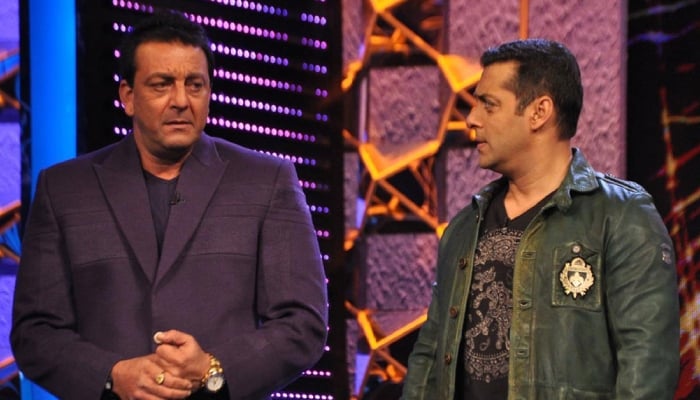
Bollywood superstar Salman Khan shared a heartfelt moment with longtime friend and fellow actor Sanjay Dutt, delighting fans with an emotional reunion that quickly went viral on social media. The touching post, shared on Instagram on July 31, came just days after Dutt celebrated his 67th birthday and highlighted the enduring bond between the two stars.
The Instagram post featured two candid photographs showing Salman warmly embracing Sanjay Dutt, while the veteran actor returned the hug with equal affection. The reunion reflected a friendship that has lasted for decades, with both actors having worked together in several films and often referring to each other as family.
Alongside the pictures, Salman penned an emotional tribute to Dutt, writing:
“Babaaaa forever baba and baba is baba. Sanju baba is the baba of all of us and Sanju baba is now the baba of his children, my elder brother Sanjay Dutt, may Allah, Bhagwan, Jesus all keep this man happy, I love you Baba.”
The heartfelt message received an equally warm response from Dutt, who replied in the comments:
“Brothers for life, love you bhaijaan.”
The exchange between the two actors quickly captured fans’ attention, with thousands flooding the comments section to celebrate their friendship. Many described the reunion as one of the most heartwarming celebrity moments of the year, praising the pair for maintaining such a close relationship despite their busy careers.
The emotional reunion came only two days after Sanjay Dutt celebrated his 67th birthday on July 29, 2026. Salman chose the occasion to publicly express his affection and respect for the actor, whom he has often referred to as an elder brother. Their friendship has remained one of Bollywood’s strongest, surviving decades of personal and professional challenges.
The post also arrived amid growing concern over Salman’s health. Earlier this week, the actor attended the inauguration of the newly developed Data Collection and Segregation Support Centre (IT Server Room) at Mumbai’s Slum Rehabilitation Authority office. Videos from the event showed Salman appearing noticeably lean and tired, prompting fresh speculation about his well-being.
Some fans wondered whether the actor might once again be dealing with trigeminal neuralgia, a chronic facial pain condition often referred to as the “suicide disease.” Salman has previously spoken about battling the condition and undergoing surgery in 2011 after enduring years of severe pain. However, the actor has not commented on the latest speculation surrounding his health.
Despite the ongoing concerns, Salman’s emotional reunion with Sanjay Dutt shifted the focus to their long-standing friendship. Fans praised the two actors for their genuine affection and hoped to see them share the screen again in the future. The touching exchange served as a reminder that, beyond their successful careers, the bond between Salman Khan and Sanjay Dutt remains as strong as ever.

Similar Posts

  • |

    Harshad Chopda becomes first finalist as Shivangi Joshi exits

    Harshad Chopda has secured the first finalist position in Lock Upp 2, while Shivangi Joshi’s journey on the reality show came to an unexpected end after a dramatic elimination that left contestants and viewers stunned. The latest episode featured an emotional task to determine the season’s first finalist. Several contestants, including Varun Yadav, Shilpa Shinde, Ram Kapoor and Akanksha Chamola, stepped aside, leaving Harshad Chopda and Shivangi Joshi as the final two contenders for the coveted spot. As part of the challenge, the two actors were locked inside the final cell and asked to decide between themselves who deserved to move directly into the finale. However, the decision proved difficult as both contestants hesitated to choose themselves over the other, resulting in an emotional conversation that revealed the strong bond they had formed during the competition. During the discussion, Chopda surprised Joshi by admitting that he had intentionally lost one of the earlier tasks to help her. The revelation caught the actress off guard, especially after he had previously denied making such a sacrifice. “I did lose the game,” Chopda confessed, leaving Joshi visibly confused and emotional. Questioning his decision, Joshi asked why he had given up an opportunity that could have benefited him. Chopda explained that throughout the season he had often put others before himself. This time, however, he felt it was important to focus on his own journey and fight for a place in the finale. Despite his explanation, neither contestant was willing to make the final decision. Their reluctance prompted hosts Farah Khan and Riteish Deshmukh to intervene and encourage them to settle the matter. Chopda remained firm, saying that for the first time in the competition he wanted to prioritise himself. Realising his determination, Joshi eventually stepped out of the final cell, allowing Chopda to claim the title of the season’s first finalist. The emotional moment was followed by another dramatic twist that changed the course of the game. Earlier in the episode, Shreya Kalra had earned a special advantage after winning a crucial task. The reward gave her the authority to eliminate one contestant from the competition. Most contestants believed Kalra would use her power against either Yogesh Rawat or Akanksha Chamola, making her eventual decision all the more surprising. Instead, Kalra chose to evict Shivangi Joshi, bringing the actress’s journey on Lock Upp 2 to an abrupt end. The unexpected elimination shocked fellow contestants, many of whom had not anticipated Joshi’s exit at this stage of the competition. Viewers also reacted with surprise, as the actress had been widely considered one of the strongest contenders for the title. With Chopda becoming the first confirmed finalist and Joshi leaving the show in a dramatic fashion, the race for the Lock Upp 2 trophy has become even more intense. As the finale draws closer, the remaining contestants will continue battling for the remaining spots in the final, promising more emotional moments, strategic gameplay and unexpected twists before the winner is crowned.

  • | |

    Karachi hosts D-8 Health Summit 2026

    The D-8 Health Summit 2026 begins today at the Karachi Expo Centre, bringing together representatives from the eight Developing Islamic Countries (D-8) to strengthen cooperation in the health sector. The three-day summit will continue until July 25. The international event is being organised jointly by the Ibn Sina Institute, the World Aging Council, and the Karachi Healthcare Expo and Conference. This year’s theme is “Healthy and Age-Friendly D-8 Countries.” The summit will focus on a wide range of healthcare issues, including health diplomacy, the challenges of an ageing population, preventive healthcare, healthy longevity, medical tourism, digital health, the impact of climate change on public health, and sustainable healthcare policies. A key highlight of the summit will be a keynote address by renowned gerontologist Dr Kamal Aydin. He will speak on “Global Health and Aging Diplomacy: A Future Vision for D-8 Countries,” presenting recommendations to promote international cooperation for developing healthy and age-friendly cities, particularly in the context of COP31. Dr Aydin, who completed his education at the University of the Punjab in 1996, has maintained close academic and professional links with Pakistan throughout his career. He is attending this year’s summit as President of the D-8 Health Summit 2026 and the honorary chief guest of the Karachi Healthcare Expo and Conference. In his message, Dr Aydin said it was a great honour to return to Pakistan, a country he considers his second home. He said it was gratifying to see the vision behind the Ibn Sina Institute and the World Aging Council, established nearly three decades ago, evolve into an international platform promoting global cooperation in health and ageing. He also thanked the organisers of the Karachi Healthcare Expo and Conference, including Tanveer Abbas, Dr Abid Abbas Sheikh, and their team, for their efforts in arranging the event. Alongside the summit, Karachi D-8 Healthcare Week 2026 is being held from July 20 to 27. The programme includes conferences, academic sessions, business-to-business meetings, investment discussions, innovation forums, and corporate social responsibility activities focused on healthcare and ageing. During the event, organisers will also launch an international signature campaign supporting the establishment of a United Nations World Assembly on Ageing. In addition, the Global Health and Aging Ambassadors Programme will be officially introduced.

  • | | |

    AJK police allege 8 officers ‘abducted&#8217…

    MUZAFFARABAD: Azad Jammu and Kashmir (AJK) police on Thursday alleged that eight highway police personnel deployed for election duty had been “abducted” by the proscribed Joint Awami Action Committee (JAAC), as tensions continue to simmer across the region. Police spokesperson SSP Khawar Ali Shaukat made the allegation during a televised press conference in Rawalakot, claiming that the personnel were being held by members of the group and had been subjected to what he described as “brutal abuse”. According to the spokesperson, the security personnel were attacked while carrying out their election-related duties. He claimed the officials’ families had also been threatened, allegedly being warned that the personnel would be killed if the protesters’ demands were not accepted. “We will not allow pressure to be exerted over the lives of these officials,” Shaukat said, calling for the immediate release of the personnel. He warned that authorities would take action if the officials were harmed, their release was obstructed or their families continued to receive threats. The police spokesperson also rejected the perception that the JAAC was a peaceful movement, alleging that recent incidents showed the group was willing to use violence to challenge the state’s authority and institutions. “The state is not weak,” he said, adding that authorities had exercised restraint despite the escalating tensions. Shaukat also appealed to residents to distance themselves from the group and urged parents to monitor their children, alleging that propaganda was being used to encourage young people to participate in unrest. His remarks came as AJK continues to hold elections in phases amid heightened security concerns. The region has witnessed weeks of demonstrations led by the JAAC, which has been demanding, among other things, the abolition of 12 seats in the local legislature reserved for refugees from Indian-held Kashmir. Tensions escalated on July 28 when clashes were reported between protesters and law enforcement personnel in Rawalakot and Mirpur. The violence reportedly resulted in several casualties and further intensified the political and security situation. The government has also accused elements it describes as militants of exploiting the unrest and pursuing a foreign agenda, alleging Indian financial backing. Those allegations have added another layer to an already tense political environment. Last week, AJK Information Secretary Muhammad Rashid Hanif said seven law enforcement personnel, including police and Rangers officials, had been killed during the recent unrest. Meanwhile, Thursday’s police statement has placed renewed focus on the safety of personnel deployed for election duties. Shaukat called on the JAAC to release the eight officials and warned that any further violence against state employees would trigger a firm response under the law and Constitution. The allegations have not been independently verified, and the JAAC’s response to the police claims was not included in the report.

  • | |

    Pakistan faces population planning crisis, Senate …

    Islamabad: Pakistan’s population planning system has come under serious criticism after a Senate committee expressed concern over the absence of updated population data, warning that outdated information could damage government planning and decision making. The Senate Standing Committee on Planning, Development and Special Initiatives questioned why the country’s latest population and health information was still based on the Pakistan Demographic and Health Survey conducted in 2017 and 2018, despite the survey being planned every five years. The committee said that without fresh population data, it becomes difficult for the government to properly plan healthcare services, allocate resources and create policies according to people’s needs. The issue was discussed during a meeting chaired by Senator Quratulain Marri at Parliament House, Islamabad, where the committee reviewed the implementation of the National Action Plan on Population 2021 to 2026. Officials from the Ministry of National Health Services informed the committee that the population action plan was approved in May 2021 with a total cost of Rs1,996.683 million. The project covers areas including Azad Jammu and Kashmir, Gilgit Baltistan, and the Islamabad Capital Territory. The committee was informed that a major portion of the project budget, around Rs1,679.6 million, has been allocated for purchasing contraceptives. Officials said these contraceptives are being imported for population welfare programmes. For the financial year 2026 and 2027, Rs250 million has been allocated mainly for awareness campaigns and procurement of contraceptives. However, the committee questioned the effectiveness of these efforts and demanded complete details on resource allocation and the number of beneficiaries. Senator Quratulain Marri expressed concern that the Ministry’s briefing did not fully answer the questions raised by the committee. She directed the ministry to provide a detailed presentation in the next meeting covering the purchase, distribution, usage and challenges related to contraceptives. The chairperson said that population planning decisions must be based on accurate and updated information. She questioned why the Pakistan Bureau of Statistics had not completed the population and health survey within the expected timeframe. Officials informed the committee that the Pakistan Bureau of Statistics is currently conducting the next survey to update population and health indicators for the period up to 2025 and 2026. The committee said delays in collecting population data create serious problems because the government cannot accurately estimate the needs of hospitals, schools, employment opportunities and public services. Members stressed that a growing population requires proper planning to ensure that citizens receive enough healthcare, education and basic facilities. The committee reviewed the National Action Plan on Population as part of wider discussions about Pakistan’s future development challenges. Lawmakers said population growth is directly connected with economic pressure, healthcare demand and availability of public resources. The committee directed officials to improve monitoring and provide clearer information about the progress of population related programmes. Senator Quratulain Marri emphasized that government projects must deliver real results and that public money should be used effectively. The committee decided to continue reviewing the population action plan in future meetings and seek further details from relevant departments.

  • | |

    PM expresses displeasure over Islamabad officials?…

      ISLAMABAD: Prime Minister Shehbaz Sharif has taken serious notice of the use of a ceremonial horse-drawn buggy by Islamabad’s Chief Commissioner and Inspector General of Police (IGP) during an official function held on August 14, according to official documents. The incident occurred during the Independence Day celebrations in Islamabad, when Chief Commissioner Lt. (Retd.) Sohail Ashraf and IGP Syed Ali Nasir Rizvi travelled to the event in the ceremonial buggy. The display later drew criticism on social media and prompted the government to issue an advisory to both senior officials. According to documents, a formal advisory was issued on Monday by Establishment Division Joint Secretary (Discipline) Syeda Shafaq Hashmi to the Islamabad IGP and Chief Commissioner. The advisory stated that the prime minister had expressed “disappointment and displeasure” over the incident and had taken a serious view of the matter. The document noted that the use of the ceremonial vehicle had attracted considerable public criticism and created an impression of excessive pomp and privilege. It said such a display was inconsistent with the values and responsibilities associated with public service. The advisory reminded the officials that civil servants and public office holders serve the people and are expected to maintain humility, restraint, dignity and sound judgment while performing their duties. According to the Establishment Division, conduct that conveys an impression of ostentation or personal privilege can negatively affect public confidence in government institutions. The advisory stressed that senior government functionaries are expected to maintain high standards of propriety, discipline and responsible governance. The officials were directed to exercise greater caution in the discharge of their responsibilities and ensure that such an incident does not happen again. The instructions were issued for “strict compliance” in both letter and spirit. The controversy gained wider attention after photographs and videos of the two officials using the buggy circulated on social media during the Independence Day celebrations. The incident prompted Interior Minister Mohsin Naqvi to clarify the circumstances surrounding the officials’ use of the ceremonial vehicle. Interior Minister Mohsin Naqvi defended the Islamabad police chief and chief commissioner, saying that neither official should be blamed for using the buggy. In a statement posted on X on August 15, Naqvi acknowledged that the situation had not unfolded as intended but said the two officials were not responsible for the decision. Naqvi explained that the ceremonial buggy had originally been arranged for the chief guest. However, the chief guest and the interior minister were delayed because of a meeting involving President Asif Ali Zardari and Prime Minister Shehbaz Sharif. He said the two Islamabad officials had initially been reluctant to begin the programme in the absence of the chief guest and the interior minister. However, they were specifically instructed to proceed with the event so that members of the public would not face unnecessary inconvenience. “The buggy was arranged for the chief guest but, unfortunately, due to unavoidable circumstances, it was used by the officers,” Naqvi explained. The minister further said that both officials had initially resisted proceeding without the dignitaries but ultimately followed the instructions given to them. Naqvi also thanked Islamabad residents for participating in the August 14 celebrations and helping make the Independence Day event successful. The episode has since sparked discussion about appropriate conduct, public perception and the standards expected from senior government officials, with the prime minister’s advisory stressing the importance of maintaining humility and public trust.

  • | |

    Punjab allocates Rs12.52bn for local polls after 1…

    The Punjab government has taken a major step towards holding long-delayed local government elections, approving Rs12.52 billion for the polls that could finally restore elected local councils across the province after an 11-year gap. The decision was taken during the 36th meeting of the Punjab Cabinet, chaired by Chief Minister Maryam Nawaz. The allocation signals that the provincial government is preparing for a fresh local election process after years of political, legal and administrative delays. Punjab last held local government elections in 2015, during the tenure of former chief minister Shehbaz Sharif. Polling was conducted in phases between October and December that year, while elected councils formally assumed office in 2017 following indirect elections for mayors and chairpersons. However, the local government system subsequently faced repeated disruptions. The Pakistan Tehreek-i-Insaf government dissolved the elected local bodies in April 2019 before their scheduled completion. Although the Supreme Court later ordered their restoration, the councils eventually completed their term on December 31, 2021. Under Article 140A of the Constitution and the Elections Act, local government elections are required within 120 days after the expiry of local councils. This meant Punjab’s next elections were due in April 2022. Yet successive governments repeatedly changed local government laws, forcing the Election Commission of Pakistan (ECP) to restart key preparations. Polls Could Be Held by November The latest development has raised hopes that Punjab may finally see local elections later this year. PILDAT President Ahmad Bilal Mehboob welcomed the cabinet’s decision to allocate funds, describing it as a positive indication that the electoral process could move forward. He said the ECP had completed the demarcation and delimitation process and dealt with objections, making it possible for the commission to announce an election schedule after August 17. According to Mehboob, if there is no “unseen factor”, local government elections could be held in Punjab by November 2026. The move could also have wider political implications. Asked whether the PML-N government’s decision might ease pressure surrounding demands for the creation of new provinces, Mehboob said provincial restructuring remained a complex issue. However, he noted that holding local elections could, to some extent, reduce the pressure for new provinces by strengthening grassroots representation. For millions of Punjab residents, the key question now is whether the latest budget allocation will finally translate into polling stations, elected councils and a functioning local government system after years of waiting.

Leave a Reply

Your email address will not be published. Required fields are marked *