secret service probes
| |

Secret Service probes alleged leak of JD Vance tra…

WASHINGTON: A member of US Vice President JD Vance’s security detail is under investigation over allegations that sensitive information related to the vice president’s travel arrangements was leaked to the media, raising concerns about security protocols surrounding one of the country’s highest-ranking officials.

The US Secret Service confirmed on Friday that an administrative investigation is underway into the conduct of an officer assigned to Vance’s protective unit. Officials said the inquiry could potentially lead to a criminal investigation depending on the findings.

Secret Service spokesperson Anthony Guglielmi said the agency takes any breach of operational security seriously and would not tolerate actions that could compromise the safety of protected government officials.

“The Secret Service maintains strict standards regarding operational and informational security,” Guglielmi said in a statement. “Any violation of those standards is thoroughly reviewed and investigated.”

The controversy emerged after a US media outlet published a report claiming that Vance had made several unusual requests involving his security team and travel arrangements. The report cited unnamed sources who alleged that some members of the vice president’s protective detail had expressed frustration over certain personal travel-related requests.

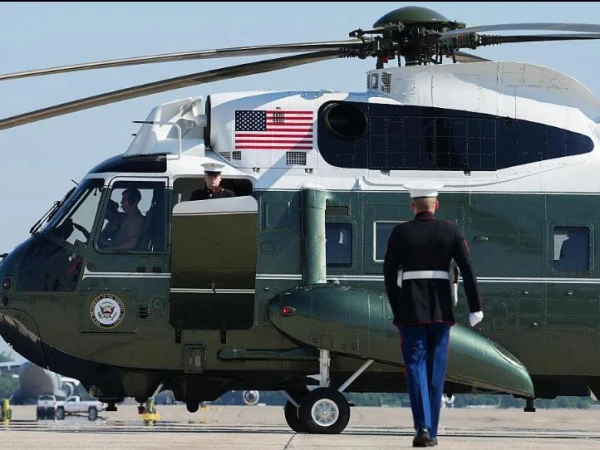
One of the claims attracting significant attention involved an alleged proposal to use Marine Two, the official helicopter designated for the vice president, to transport Vance’s son to a secure golf course for golf lessons.

According to the report, discussions about using the government aircraft for the trip were considered but never materialized. The proposed flight was ultimately canceled due to severe weather conditions, including thunderstorms that made flying unsafe.

While the report has fueled debate in Washington, no evidence has been publicly presented showing that any rules were broken regarding the proposed transportation arrangements. The focus of the investigation currently remains on how details of the vice president’s security operations allegedly reached the media.

The Office of the Vice President has not issued a detailed response to the report, and Vance’s team has so far declined to comment publicly on the allegations.

Political analysts say the case highlights two sensitive issues often facing senior government officials: the appropriate use of official resources and the protection of confidential security information.

Security experts warn that unauthorized disclosures about the travel plans or protective measures of top government leaders can create significant risks, even when the information appears routine.

As investigators continue reviewing the matter, attention remains fixed on whether the alleged leak violated federal regulations and what consequences could follow if wrongdoing is confirmed. The findings could have broader implications for security procedures protecting senior US officials.

Similar Posts

  • | |

    Dar vows continued rescue efforts after Broad Peak…

    ISLAMABAD: Deputy Prime Minister and Foreign Minister Ishaq Dar has expressed profound grief over the deaths of 10 mountaineers who lost their lives in the devastating avalanche on Broad Peak in Gilgit-Baltistan. He assured that Pakistan will continue search, rescue and recovery operations until all possible efforts have been exhausted. In his statement, Dar extended heartfelt condolences to the bereaved families and expressed solidarity with the governments and people of Nepal, China, Oman, the United Kingdom and the United States, whose citizens were among those killed in the tragedy. The deputy prime minister paid special tribute to legendary Nepali climber Nirmal Purja, describing him as one of the world’s most accomplished mountaineers. He also honored Pakistani climber Sohail Sakhi of Hunza, saying his bravery, determination and passion for the mountains would always be remembered. Dar said the courage and dedication shown by all the climbers reflected the true spirit of mountaineering. He added that their achievements would continue to inspire climbers across the world despite the tragic loss. He also praised the rescue personnel, Pakistan Army Aviation teams, high-altitude porters and emergency responders who have been working in extremely difficult conditions at high altitude. He said their commitment and professionalism deserve the nation’s appreciation. The foreign minister reaffirmed that Pakistan remains fully committed to the ongoing rescue and recovery mission. He said the government is maintaining close coordination with the embassies of the affected countries to facilitate the operation and provide all possible assistance. The deadly avalanche struck an international climbing expedition on Broad Peak while the team was moving from Camp 2 to Camp 3. The incident claimed the lives of climbers from Pakistan, Nepal, China, Oman, the United Kingdom and the United States. Among those killed was Nirmal Purja, who gained worldwide recognition after climbing all 14 mountains above 8,000 metres in a record six months and six days in 2019. He had returned to Pakistan in an attempt to become the first mountaineer to summit all 14 eight-thousanders twice without using supplemental oxygen. Rescue teams later recovered Purja’s body from an altitude of approximately 5,700 metres, several days after he and other members of the expedition went missing following the avalanche. The victims also included climbers from Nepal, China, Oman, the United States and Pakistan, making it one of the deadliest mountaineering disasters in the region in recent years.

  • | | | |

    Why Lahore sinks whenever it rains in the city? 

    The rain on July 22 almost sank most parts of Defence Housing Authority. Those low-lying areas of the city were also under water. And this happened as the city was lashed with 343 millimetres of rain for two days, according to the Provincial Disaster Management Authority (PDMA). That spell has gone and when you are reading these lines, the city is undergoing a second rain spell. Pakistan’s Meteorological Department has issued a fresh weather advisory, warning that another active monsoon spell is expected from July 29 to August 5 across much of the country. The department said rain, wind and thundershowers, along with scattered heavy to very heavy rainfall, may trigger urban flooding, flash floods and landslides in vulnerable areas. This will keep the residents of low-lying areas, mainly of Lahore’s south, and DHA on the toe. Reacting to this advisory, environmental activist Rafay Alam explained why cities like Lahore keep flooding every monsoon season, and what is really behind the crisis. He said the Met Department had already notified that rain would continue for two days and people were warned in advance that urban flooding would take place, not just in Lahore, but in several cities across Punjab, including Gujranwala and Sialkot. He then pointed to last year’s floods for comparison. “Those floods were caused by heavy rains in the northern areas of the country, which caused rivers to swell,” he said. On top of that, India had released water from the Pong Dam and Bhakra Dam. He said a gate at the Madhopur headworks also broke, causing water levels in the Ravi river to rise sharply. Alam said the situation today is different. The flooding happening now is not caused by river floods or dam releases. Instead, it is simply due to heavy rainfall occurring within Pakistan itself. He said that if people read the Met Department’s advisory carefully, the heaviest rain in the coming days is expected in the northern areas once again, not directly over Lahore. He advised people to check whether they live in low lying or high lying areas, since this makes a big difference during heavy rain. However, he said that the real issue lies in the sheer intensity of rainfall being recorded now. “Some areas have received around 150 millimetres of rain within just a few hours,” he said. He added that 20 or 30 years ago, when the drainage systems and infrastructure in these areas were built, climate change was never part of the planning. Nobody at that time imagined that such intense rainfall could happen within just a few hours. As a result, the old infrastructure simply cannot handle the kind of rain Pakistan is now experiencing. Dr Farid A Malik, a resident of Defence Phase 5, witnessed the entire flood attack first hand. He said that when he was growing up in the 1950s, 1960s and 1970s, rainwater never used to stand in Lahore. At that time, he said, the city was much smaller and the population was far lower, yet even then, the city did not face standing water after rainfall the way it does today. “Whenever the rain would stop, we children used to go out on our bicycles looking for standing water, just for fun. And there were really only two places where water would collect. One was near Shahdara, and another was near the Do Moriya Pul area close to the railway station. That area of Shahdara was a low lying area,” he said. He recalled that in the 1970s, when Zulfiqar Ali Bhutto’s government came into power, and the People’s Party had a lot of support from that area of Lahore at the time, the government promised that they would install pumps in Shahdara and set up a proper system to drain the water out. And they actually did this. Heavy duty pumps were installed in Shahdara, and they used to successfully drain the water out. Dr Farid said the sewerage system Lahore has today simply cannot handle rainwater, because the amount of water that comes with heavy rain is very large, and the system does not have the capacity to handle that much water. He explained there are two separate problems here. First, the underground sewerage system is not cleaned properly. The pipes, whether four feet wide or six feet wide, have become clogged with scaling inside them over time. So even though a pipe might be four or six feet in diameter, the actual open space left for water to pass through has shrunk down to just one or two feet, meaning the whole system does not flow properly. Second, even if the sewerage system was clean, it still cannot handle rainwater on top of regular sewage. For this reason, Lahore used to have separate storm drains, called nalas in Urdu, which carried rainwater away separately into the Ravi river. Because of this separate system, rainwater never used to accumulate in the city. He said this has changed because storm drains have been blocked, either through neglect or construction on top of them. “An entire market has been built on top of a storm drain along Hall Road,” he said, adding that similar encroachment has happened along the Ravi river itself. Last year, water that should have gone into the river ended up flowing into housing societies instead. Dr Farid also pointed out that when Lahore had open drains instead of an underground sewerage system, the drainage actually worked better. Since the city moved underground, cleaning has become irregular, flow has suffered, and pumping stations work only some of the time. He said Lahore’s expansion added to the problem, since new areas were given sewerage systems but no proper storm drain network for rainwater. DHA, he said, expanded in phases over the years without any master plan covering how sewage and rainwater would both be managed. Speaking about his own neighbourhood, Dr Farid said there is a pumping station near the Sui Gas Society area of Defence that pumps sewage water

  • |

    South Korea beats NASA to first photos of SpaceX Moon crash

    A spent SpaceX rocket stage slammed into the Moon on August 5, travelling at roughly 8,700 kilometres per hour. South Korea’s Danuri orbiter was perfectly positioned to capture the moment. The Korea Aerospace Administration released the images on August 6, beating NASA’s own Lunar Reconnaissance Orbiter to the first confirmed photos of the impact site. KASA had adjusted Danuri’s orbital path specifically for this event. The manoeuvre let the probe fly around 340 to 350 kilometres above the impact zone near Einstein Crater, capturing images just before and after the collision. Using its high-resolution Lunar Terrain Imager, the satellite photographed the site at an estimated resolution of five metres per pixel. A separate instrument measured changes in surface reflectivity to help gauge how much debris the impact had thrown up. KASA compared the difficulty of the shot to photographing a car crash in Busan from an aircraft flying above Seoul. The comparison highlighted just how precise the timing and positioning needed to be. The rocket stage originally launched in January 2025, carrying Firefly Aerospace’s Blue Ghost lander and ispace’s RESILIENCE spacecraft toward the Moon. Both spacecraft were part of separate lunar missions at the time. Falcon 9 upper stages are typically destroyed by burning up in Earth’s atmosphere after their missions end. This particular stage, however, had used up nearly all its fuel reaching lunar orbit, leaving it drifting as space debris. Gravitational and solar forces eventually pulled the stage back down, resulting in the lunar impact. SpaceX confirmed it had coordinated with NASA on the disposal process for the spent stage. The company noted that controlled descents are not always possible for upper stages following this kind of trajectory. NASA administrator Jared Isaacman downplayed the event’s significance afterward. Isaacman pointed out that meteoroids strike the lunar surface roughly every hour. He noted that impacts of this scale happen approximately every six days, framing the incident as fairly routine rather than dramatic.

  • | |

    UK assures swift action on Pakistani student visas

    British High Commissioner Jane Marriott has assured Pakistan that the issue of delays in student visas will be addressed. Marriott gave the assurance during a meeting with Federal Minister for Law and Justice Azam Nazeer Tarar. The meeting was held as concerns grow over delays faced by Pakistani students seeking to travel to the United Kingdom for higher education. During the meeting, Tarar raised the issue of delayed visa processing with the British envoy. He conveyed the government’s concerns over the difficulties being faced by Pakistani students. The minister said hundreds of Pakistani students could lose their academic year because of the delays. Many students require timely visa decisions to join their universities and begin their studies according to the scheduled academic calendar. Tarar stressed the importance of resolving the issue at the earliest. He said unnecessary delays could create serious academic and financial difficulties for students and their families. The British High Commissioner assured the minister that efforts would be made to address the matter. The two sides also discussed broader issues of mutual interest. They exchanged views on strengthening institutional communication and cooperation between Pakistan and the United Kingdom. The meeting highlighted the importance of maintaining effective coordination between the relevant institutions of both countries. Better institutional engagement could help resolve issues affecting students and other Pakistani citizens seeking services in the UK. The assurance comes amid concerns among Pakistani students about securing timely visas for their higher education programmes.

  • |

    Kashmir activist and journalist released on bail after years in custody

    Indian authorities have released Kashmiri human rights activist Khurram Parvez and journalist Irfan Mehraj on bail after they spent years in custody under terrorism related charges. Their families confirmed that both men were released from a prison in New Delhi late on Wednesday following a court order, although strict bail conditions will keep them in the capital while their trial continues. Parvez, a well known human rights defender and programme coordinator of the Jammu Kashmir Coalition of Civil Society, was arrested by India’s National Investigation Agency in November 2021 from his home in Srinagar. Mehraj, a freelance journalist who also worked with the same rights organisation, was arrested in 2023. Both men have been charged under India’s anti terrorism laws with allegedly financing terrorism and promoting separatist activities. The legislation allows authorities to detain suspects for long periods without trial and has frequently been criticised by rights organisations for its broad powers. Although they have now been granted bail, their freedom remains limited. Court conditions require both Parvez and Mehraj to stay in New Delhi during the legal proceedings. They are not permitted to return to Kashmir and must arrange their own accommodation in the capital while attending court hearings. Indian investigators had challenged the decision to grant bail, but a higher court upheld the order. The Jammu Kashmir Coalition of Civil Society has spent many years documenting alleged human rights violations in the region. The organisation has published reports on cases involving torture, unlawful killings, enforced disappearances, and unmarked graves in areas affected by the long running conflict. Its work has often drawn international attention and placed it at the centre of debates over human rights in Kashmir. Parvez has received support from several international human rights organisations that have repeatedly called for his release. In 2023, the United Nations Working Group on Arbitrary Detention described his arrest as retaliation for his human rights activities. The UN experts said the detention appeared intended to silence both Parvez and wider civil society efforts in Kashmir. The case has also renewed attention on press freedom in the region. Journalists working in Indian administered Kashmir have reported increasing restrictions, surveillance, and legal action since the Indian government revoked the region’s special constitutional status in 2019. Several media workers and activists say they have faced questioning, arrests, or pressure while reporting on political and security issues. The Indian government maintains that its actions are necessary to combat terrorism and protect national security. Officials argue that the anti terrorism laws are an essential tool in dealing with militant groups operating in the region. However, critics say the legislation has increasingly been used against journalists, activists, and civil society members who peacefully document human rights concerns. Government figures show that more than 3,600 people were arrested under anti terrorism laws in Kashmir between 2019 and 2023. More than half of those detained remain in prison while awaiting legal proceedings, highlighting concerns over lengthy pre trial detention. The release of Parvez and Mehraj has been welcomed by rights advocates, but legal proceedings against both men continue. They will remain in New Delhi under the conditions set by the court until their trial reaches its conclusion. Their cases are expected to remain closely watched by international human rights organisations and press freedom groups as they continue to raise concerns about civil liberties and legal protections in Indian administered Kashmir.

  • |

    Lionel Messi questions future after father’s death

    ROSARIO: Lionel Messi has cast fresh doubt over his football future following the death of his father and longtime agent, Jorge Messi, saying he is unsure whether he can continue playing for “much longer.” The Argentina superstar, 39, shared an emotional message after returning to the United States following his father’s funeral, describing Jorge as a central figure in both his personal life and extraordinary football career. “I don’t know what I’ll do without you, I don’t know how to go on,” Messi wrote, admitting that he now has “serious doubts” about continuing his career. Jorge Messi died last week at the age of 68. His absence was particularly painful for Lionel because his father had repeatedly encouraged him to compete at another World Cup. The pair had hoped Jorge would watch Messi play in the tournament, but his health deteriorated shortly before the competition began. Messi said he kept believing Argentina could reach the final and hoped his father would eventually be able to travel and watch him. Argentina did reach the final, but Messi’s team lost 1-0 to Spain in New Jersey. Messi scored eight goals during the tournament and was once again at the centre of his country’s campaign. Yet the tournament was overshadowed by his father’s declining health. “Every time a match ended I waited for and missed your message,” Messi recalled, explaining how he gradually realised how serious the situation had become. After the final, Messi returned to Rosario to spend time with his family. He said his father initially believed Argentina had lost the final on penalties and was unable to fully experience the tournament because of his condition. Despite the heartbreak, Messi remembered how much his father had contributed to his career. Jorge was not only his agent but also his first coach and one of his strongest supporters. When Barcelona invited the 13-year-old Messi to Spain in 2000, Jorge left Argentina and moved with his son, helping him pursue his football dream. He later managed Messi’s career through major moves involving Barcelona, Paris Saint-Germain and Inter Miami. “You were a father, a friend, and an agent,” Messi wrote. For now, Messi’s future remains uncertain. His contract with Inter Miami reportedly runs through the end of the 2028 season, but his emotional message suggests that personal loss may force the football icon to reconsider how long he wants to remain on the pitch. For a player who has achieved almost everything in football, the next decision may be his most personal one yet.

Leave a Reply

Your email address will not be published. Required fields are marked *