icj rules myanmar
|

ICJ rules Myanmar responsible for genocide. But will it help the Rohingya?

Yesterday, November 19, the International Court of Justice in The Hague ruled, by nine votes to six, that Myanmar is responsible for having committed a genocide against the Rohingya in 2017, and had also failed to investigate and prosecute those responsible.

In the landmark ruling, which came seven years after the case was filed, the court ordered Myanmar must provide restitution and compensation to the victims of its “clearance operations” in Rakhine State in 2017.

It is the first time since the adoption of the UN genocide convention in 1948 that the court has found a state responsible for committing genocide.
Must Read

Top UN court finds Myanmar committed genocide against Muslim Rohingya


Top UN court finds Myanmar committed genocide against Muslim Rohingya

Why the case matters

Twice before, however, the ICJ has ruled on the merits of a genocide claim.

In 2007, the court found Bosnian Serb forces had committed genocide at Srebrenica in 1995 during the Bosnian War, but that Serbia itself was not responsible for it. It concluded instead that Serbia had failed to prevent the genocide and punish those responsible.

And in 2015, the ICJ dismissed Croatia’s claim and Serbia’s counter-claim over crimes committed during the conflict after the breakup of Yugoslavia in the 1990s. The court found serious crimes had occurred, but there was not the intent to destroy a group that genocide requires.

The case against Myanmar was already significant because it set a new precedent for who can bring cases to the ICJ.

The Gambia, a small African nation with no direct connection to the Rohingya, brought Myanmar before the court under the genocide convention in 2019. Three years later, the judges accepted that any party to the treaty can enforce it.

This reasoning will be considered carefully in another genocide case currently before the court, brought by South Africa against Israel over its actions in Gaza.

How did we get here: Attacking the Rohingya

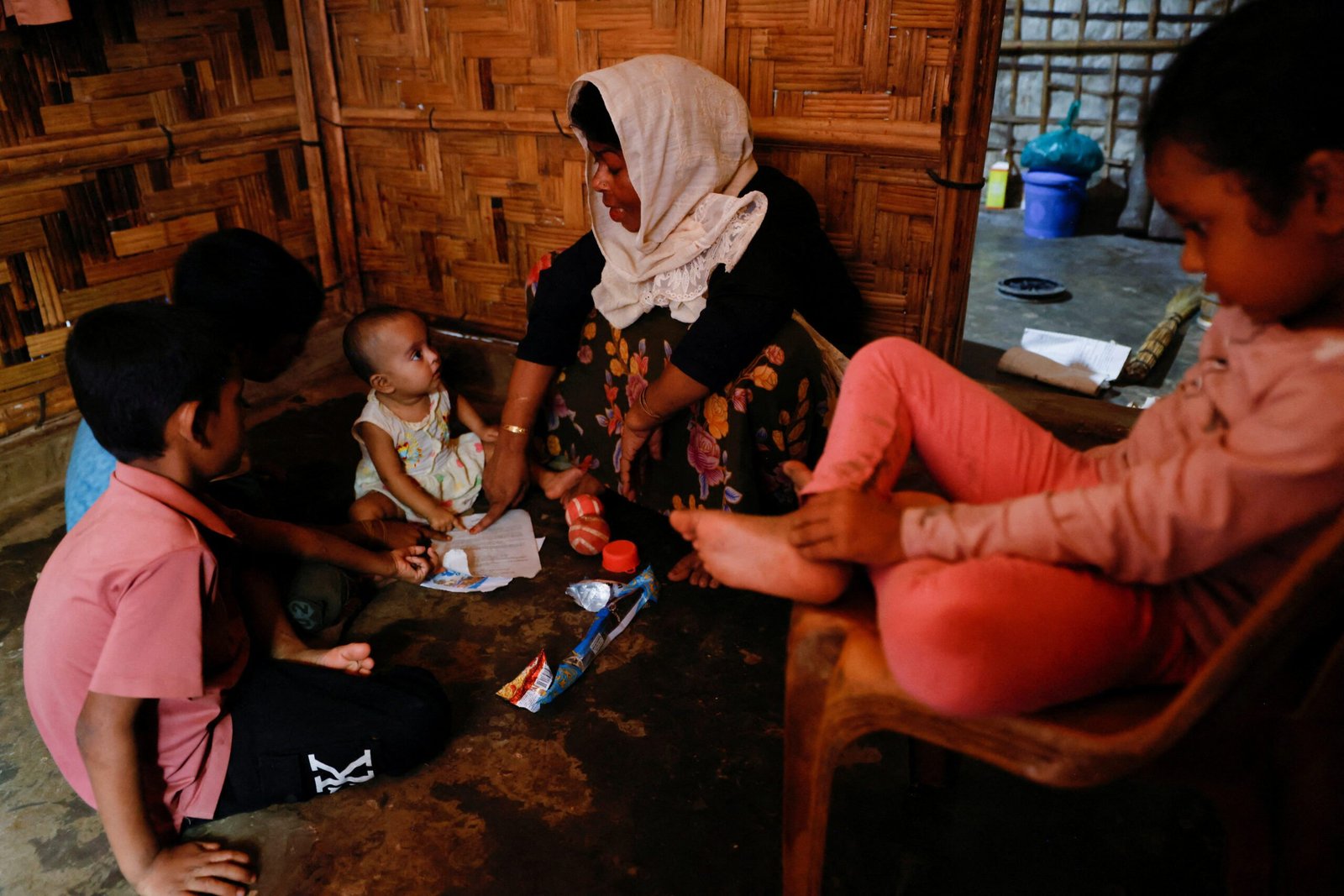
Following attacks by a Rohingya armed group, Myanmar’s military launched a wave of what it called “clearance operations” in northern Rakhine State in late 2017. Many thousands of Rohingya civilians were killed, hundreds of women and girls were raped, villages were burned and more than 740,000 people fled to neighboring Bangladesh.

But genocide has a narrow legal meaning, and mass violence alone is not enough. The acts must be carried out with the intent to destroy the group, in whole or in part.

While it is possible to gather evidence of the physical acts of genocide, proving intent is difficult. Genocidal plans are rarely recorded in official documents.

The court had to infer Myanmar’s intentions from its conduct. The court made clear that an intention to destroy can coexist with other intentions. What matters is whether the inference of genocide explains all of the evidence taken together.

The Myanmar military and former Myanmar leader Aung San Suu Kyi did not deny that people died. Instead, they argued they were fighting terrorism and had no intent to destroy the Rohingya ethnic group.

Myanmar also argued the case is “flawed and unfounded”, claiming it was committed to returning and resettling the Rohingya from Bangladesh.

The ICJ rejected Myanmar’s arguments. It found much of what the military did could not be explained by fighting an insurgency.

There was no evidence it distinguished between civilians and fighters, for example. Men and boys were executed, women and girls were raped on a mass scale, babies and small children were targeted, villages were burned methodically, and people were shot at as they fled their homes.

The only reasonable inference to draw from the evidence, the court held, was an intention to destroy the Rohingya of northern Rakhine State.

Restitution ordered for victims

The court therefore ordered Myanmar must investigate and, where warranted, prosecute those responsible for committing the genocide, including military commanders. It must prohibit genocide in its national law, and provide guarantees this will not happen again. It must also allow the return of displaced Rohingya and the reunification of families, and it must return or replace their property.

Myanmar must also help search for the disappeared and rebury the dead, provide physical and psychological rehabilitation to victims, and protect the Rohingya from further discrimination and persecution. Where these acts of restitution cannot fully repair the damage, Myanmar must offer compensation to the Rohingya, both individually and collectively.

The ICJ settles disputes between states and does not try individuals for their actions. However, prosecutors at the International Criminal Court have sought an arrest warrant for Min Aung Hlaing, Myanmar’s former commander in chief, for alleged crimes against humanity.

Its judges have yet to rule on that request. The ICJ decision may open the door to future prosecutions of individuals for genocide and other crimes against humanity.

Myanmar today

Min Aung Hlaing led the 2021 coup that overthrew Aung San Suu Kyi’s government and became president this April, after elections widely dismissed as a sham.

Five Southeast Asian governments have since received him. The United States, which has declared the atrocities against the Rohingya a genocide, has joined them. A senior US State Department official met with Min Aung Hlaing in Myanmar in September. In addition, a published US strategy has linked peace talks to access to Myanmar’s rare earths.

Despite the legal victory in the ICJ, the Rohingya remain in perilous conditions. Those still in Rakhine State continue to experience torture, abuse and discrimination from the Myanmar military and the Arakan Army, an ethnic armed group which controls most of the state.

And more than a million Rohingya remain in worsening conditions in camps in Bangladesh.

What happens next?

The court has kept the case open to decide further on the amount of compensation to be paid. Myanmar has two years to report back to the court on the steps it has taken to comply with the judgment. The ruling by the ICJ is final and binding, but the court has no police force or security services to enforce it.

The UN Security Council can take steps to compel Myanmar to abide by the decision under Article 94 of the UN Charter, though it has never previously taken this step. And Myanmar’s backers on the Security Council, China and Russia, have routinely provided the junta with diplomatic cover. Whether this support will survive the court’s conclusion that Myanmar has committed genocide remains to be seen.

China is keen to be seen as a responsible global citizen, so this decision may impact its level of diplomatic support for Myanmar’s military government, although geography and history will ensure it remains engaged.

Russia, having been brought in from the cold by the US under US President Donald Trump, will also be keen to avoid being seen to condone genocide. However, defense and security cooperation between the two countries is likely to continue.

Southeast Asia is where diplomatic shifts are most likely. The ASEAN bloc of 11 Southeast Asian nations has recently indicated it could pursue “calibrated engagement” with Myanmar, but the ICJ finding may make that more difficult. Any country pursuing normalization of ties with Myanmar will face significant pressure from the European Union to disengage.

The same government that was found to have attempted the destruction of the Rohingya people is now required to act as the guarantor of their safety.

For now, the court has done what it can, as has The Gambia in bringing the case. Ensuring Myanmar takes up the task of implementing the court’s orders now rests with all states, including those that have so far preferred to look away. – via Reuters/Rappler.com

Similar Posts

  • |

    India’s Independence Day faces protests and boycotts

    NEW DELHI: India’s Independence Day celebrations were met with protests, shutdowns and boycott calls in several regions on Saturday, including Indian Illegally Occupied Jammu and Kashmir (IIOJK) and parts of the country’s northeast. Several political, community and regional groups called for strikes and non-participation in official celebrations, with some organisations observing the day as a “Black Day”. In IIOJK, boycott and shutdown calls were reported ahead of the celebrations. Security was significantly increased in Srinagar, with additional personnel deployed around key locations and routes leading to the main Independence Day venue. The protests and boycott calls were also reported in several northeastern states, including Assam, Nagaland, Manipur and Arunachal Pradesh. In Nagaland, Naga nationalist groups observed August 14 as their own Independence Day, recalling the Naga National Council’s declaration of independence in 1947. The groups continue to emphasise their separate political identity and longstanding demand for self-determination. Naga leader Thuingaleng Muivah reiterated that his group would not compromise on its demands concerning sovereignty, a separate flag and constitution. The Naga Students’ Federation also opposed the mandatory singing of Vande Mataram, citing concerns related to religious freedom and freedom of conscience. In Manipur, several organisations called a 12-hour general strike and shutdown. Black flags were reportedly displayed in parts of the state as groups urged people to stay away from official celebrations. Similar boycott calls were issued in Assam and neighbouring areas. Security forces were placed on alert around sensitive locations and border regions amid concerns over possible disruptions. The developments came as India held nationwide celebrations marking its Independence Day, with Prime Minister Narendra Modi leading the main ceremony in New Delhi. Meanwhile, India’s opposition also remained divided over the official celebrations. Congress president Mallikarjun Kharge and Leader of the Opposition Rahul Gandhi did not attend Modi’s ceremony. Their absence was linked to continuing political differences, including disagreements over seating arrangements and protocol.

  • |

    Hong Kong records hottest day in more than 140 years 

      Hong Kong has experienced an unprecedented heatwave, with temperatures reaching a record high and breaking a more than 140-year-old temperature record. The city endured its hottest day on record as the Hong Kong Observatory recorded a scorching 36.9°C at its headquarters. The extraordinary heat was felt even more intensely in several parts of the region. In Sheung Shui, located in Hong Kong’s New Territories, temperatures climbed to an astonishing 39.8°C, highlighting the severity of the heatwave affecting the territory. According to reports,the extreme weather conditions were linked to subsiding air associated with Tropical Cyclone Dolphin. The atmospheric conditions caused temperatures to rise sharply across Hong Kong, producing exceptionally hot and humid weather. The new temperature record surpassed the previous official high of 36.6°C, which was recorded in August 2017 during the passage of Typhoon Hato. The latest reading therefore represents a significant increase and underscores the intensity of the current heat event. The Hong Kong Observatory serves as the city’s primary reference point for official temperature records. However, temperatures recorded in other areas demonstrate that some communities experienced considerably more severe conditions than the official citywide figure. The 39.8°C recorded in Sheung Shui is particularly notable and reflects the potentially dangerous conditions faced by residents in inland areas. Authorities have urged members of the public to remain cautious as the extreme temperatures continue. Residents have been advised to avoid prolonged exposure to direct sunlight, remain hydrated and take appropriate measures to reduce the risk of heat-related illness. Vulnerable groups, including older people, children and those working outdoors, are particularly susceptible to the effects of extreme heat. Weather officials have warned that the intense heat is unlikely to disappear immediately. Forecasts indicate that the heatwave could continue for the next several days before changing weather conditions potentially bring some relief. Meteorological authorities are closely monitoring the situation as hot and humid conditions remain across the region. The record-breaking temperatures have also renewed concerns about the growing frequency and intensity of extreme heat events. Hong Kong is not alone in facing unusually high temperatures. Several countries across Asia, Europe and the Middle East have experienced severe heatwaves, with temperatures in some locations reaching between 40°C and 55°C. Scientists and climate experts have increasingly warned that extreme heat is becoming a major global environmental challenge. Rising temperatures can place additional pressure on healthcare systems, energy supplies and water resources while increasing risks to people who work or spend extended periods outdoors. Hong Kong’s latest record serves as another reminder of the changing climate and the growing threat posed by extreme weather. As heatwaves become more frequent and intense, authorities and communities are being encouraged to strengthen preparedness and public awareness. With temperatures expected to remain elevated in the coming days, residents across Hong Kong are being urged to follow official weather advisories and take precautions against prolonged heat exposure.

  • |

    Australia, Spain secure victories in Hockey World Cup 2026

      WAVRE: Australia began their FIH Hockey World Cup 2026 campaign with a convincing 3-1 victory over Ireland in Pool C at the Belfius Hockey Arena on Sunday. The Australian side, ranked third in the world, produced a strong attacking display in the opening half and established a commanding three-goal advantage before the interval. Joel Rintala was the standout performer for Australia, scoring twice, while Blake Govers also found the net through a penalty corner. Australia opened the scoring when Rintala successfully converted an opportunity to beat Irish goalkeeper Jamie Carr. The early goal gave Australia confidence, and they continued to apply pressure on Ireland’s defence. Rintala then struck again to double Australia’s advantage and put Ireland under increasing pressure. The Australians continued their dominance before half-time, with Blake Govers adding another goal from a penalty corner. His successful conversion gave Australia a comfortable 3-0 lead at the break and left Ireland facing a difficult task in the second half. Ireland returned after the interval with a much more aggressive approach. The Irish players adopted a higher press and began creating more opportunities around the Australian circle. Luke Witherow came close to reducing the deficit, but Australian goalkeeper Ash Thomas produced an excellent save to deny him. Ireland eventually managed to get on the scoresheet when Ali Empey converted a rebound following a penalty corner. The goal gave the Irish side renewed hope of making a comeback and changed the momentum of the contest. However, Australia’s defence remained composed under pressure. Ireland continued searching for additional goals and created several late opportunities, but Thomas stood firm in front of the Australian goal. With less than three minutes remaining, the goalkeeper made three important saves to prevent Ireland from narrowing the gap further. Australia successfully protected their 3-1 advantage until the final whistle, securing an important victory in their opening Pool C fixture. In the other Pool C match, Spain also made an impressive start to their World Cup campaign by defeating South Africa 3-1. Spain, known as the Redsticks, immediately took control of the contest and put South Africa under considerable pressure. Their attacking efforts produced two goals in quick succession during the first half. Forward Marc Reyne opened the scoring in the 11th minute before Jose Basterra doubled Spain’s advantage just one minute later. Spain continued to dominate possession and maintain pressure on their opponents. Basterra added his second goal towards the end of the second quarter, giving Spain a commanding 3-0 lead at half-time. South Africa fought back after the break and managed to score through Mustapha Cassiem in the third quarter. The goal provided some encouragement, but Spain remained in control and prevented South Africa from producing a stronger comeback. Despite South Africa’s efforts in the latter stages, Spain comfortably held on to their advantage and completed a 3-1 victory. With both Australia and Spain winning their opening matches, Pool C has begun with strong performances from the two sides as the competition for the knockout stages intensifies.

  • | |

    Trump returns to White House correspondents’ din…

    United States President Donald Trump will address the White House Correspondents’ Association at a rescheduled gala on Friday, nearly three months after a shooting outside the Washington Hilton forced the cancellation of the April event. The black-tie dinner, now relocated to the Waldorf Astoria hotel, will take place under heightened security. Secret Service Director Sean Curran said an advance team had implemented a comprehensive plan, acknowledging the risk of hostile actors but stressing that the agency was treating the venue with the same rigor as any presidential site. The April 25 incident occurred as Trump and his cabinet were arriving. A man armed with a shotgun attempted to breach a security checkpoint and opened fire. Secret Service officer Victor Gonzales, credited with stopping the attack, was shot but survived thanks to his protective vest. Gonzales will be honored at Friday’s dinner, along with Hilton staff who assisted guests during the chaos. The suspect, Cole Allen, has pleaded not guilty to charges including attempted assassination of the president. Trump has argued the attack underscored the need for a $400 million ballroom under construction at the White House, saying future events held there would enhance presidential security. The correspondents’ dinner, a century-old Washington tradition, raises funds for journalism scholarships and celebrates the First Amendment. Trump is scheduled to deliver remarks, with entertainment provided by mentalist Oz Pearlman. This year’s event carries added weight. Trump has frequently clashed with the press, denouncing coverage as “fake news,” restricting access for outlets such as the Associated Press, and threatening to revoke broadcast licenses. Yet he has also given reporters more direct access than recent presidents, often taking questions in unscripted settings. Several journalism organizations have urged the WHCA to use the dinner to condemn what they describe as Trump’s attacks on press freedom. WHCA President Weijia Jiang said the gala would send a clear message: “Violence has no place in American life and a free press will not be intimidated into silence.”

  • | |

    Bessent tells allies to pick a side as US ramps up…

    US Treasury Secretary Scott Bessent has told Washington’s allies they must choose between backing or opposing the United States’ push to economically isolate Iran, as President Donald Trump moves to intensify pressure on Tehran. Bessent told a US broadcaster that the campaign would amount to the largest coordinated economic isolation effort in history, framing the choice facing allied nations as a binary one. Asked whether Washington intends to pressure China into joining the effort, Bessent said certain conversations are best conducted privately, while urging Beijing to align itself with the campaign. He said the administration’s plan to sharply escalate sanctions and economic pressure on Iran is ultimately designed to bring down the Iranian government, predicting the strategy would work and lead to the regime’s collapse. Bessent added that expanded economic pressure could actually lower the odds of the United States resuming large scale military action against Iran, arguing that a maximum pressure economic approach makes a return to major combat operations less likely. He said he plans to hold a press conference Monday to detail the administration’s next steps regarding Iran. Iran’s foreign ministry condemned the latest round of US sanctions, calling them a violation of international law and an attempt to undermine the country’s sovereignty. In a statement, the ministry said Washington had unveiled comprehensive economic sanctions despite previously claiming its measures targeted the government rather than ordinary Iranians. Tehran argued there is no legal or economic justification for the sanctions and described them as part of a broader US policy that threatens the international system and undermines rules governing relations between states. The ministry said the sanctions explicitly target Iranian citizens and institutions and represent a continuation of hostile American policy, adding that economic pressure functions as the flip side of military aggression. Iranian officials called the new measures a repeat of a strategy that has already failed and said the country would not bow to the pressure, vowing to defend its sovereignty and respond to what it characterized as hostile US actions. Separately, Egypt and Qatar emphasized the need for continued coordination toward a final, sustainable agreement to end the broader Middle East war while addressing the concerns of Gulf states, according to a statement from Qatar’s foreign ministry. The two countries discussed regional developments and diplomatic efforts aimed at reducing tensions and strengthening stability, and both underscored the importance of reopening the Strait of Hormuz and protecting the security and freedom of maritime navigation, calling uninterrupted trade through the waterway essential to both regional and global economic stability. Qatari Foreign Minister Sheikh Mohammed bin Abdulrahman bin Jassim Al Thani said traffic through the Strait of Hormuz needs to return to pre war conditions, adding that no party to the conflict should attempt to pressure or blackmail the other. Speaking at a press conference following talks in El Alamein, Egypt, he said the war’s consequences have been severe both within the Gulf region and beyond, and called for a return to how things stood before the conflict began, condemning any threats or obstacles standing in the way. Iran’s Revolutionary Guards warned separately that Saudi Arabia will be unable to contain Yemen’s Houthi movement as the group escalates attacks on the kingdom. A Guards spokesman said Saudi Arabia cannot stay safe from Houthi attacks, arguing that recent days have shown that the more the kingdom strikes, the more it gets hit in return. Iranian Foreign Minister Abbas Araghchi dismissed Trump’s economic threats as an attempt to distract American public attention from domestic financial troubles, including record debt levels and rising interest costs. He said Washington’s continued reliance on what he called failed policies would only produce further failures and further alienate the Iranian public, describing US economic pressure as a threat to the global economy and to national sovereignty more broadly. Deputy Foreign Minister Kazem Gharibabadi added that the US has shifted to what he called an economic war after failing to achieve results militarily, arguing that Washington’s need to compensate for miscalculations is driving it toward a bigger failure. Iranian Parliament Speaker Mohammad Bagher Ghalibaf, during a visit to Baghdad, met with Faiq Zaidan, president of Iraq’s Supreme Judicial Council, and blamed the United States for recent regional conflicts and disruptions to Gulf energy routes, while highlighting opportunities for deeper cooperation between Iran and Iraq. Separately, Iranian state media reported that authorities executed a man identified as Qaem Hosseini, a foreign national, over charges tied to his alleged role in nationwide protests in January, including accusations that he participated in events that led to the deaths of security force members. Trump underscored the stakes of the broader campaign in a social media post Wednesday evening, warning that any country allowing its financial institutions, businesses, airports or government entities to provide Iran with any kind of lifeline would face tremendous economic consequences. He promised what he called economic warfare and isolation on an unprecedented scale, though he offered few specific details. The war between the US and Iran, now in its sixth month, has killed thousands of people and drawn in countries across the Gulf, rattling global markets as Iran demonstrated its ability to disrupt shipping through the Strait of Hormuz, a waterway that carried roughly a fifth of the world’s traded oil before the conflict began. Two previous ceasefire agreements between Washington and Tehran, announced in April and June, both collapsed shortly after being reached, even as Israel has largely pulled back from direct fighting with Iran to focus its attacks on civilian infrastructure in Lebanon.

  • |

    England on track to eliminate hepatitis C by 2030

    More than 100,000 people in England have received potentially life-saving treatment for hepatitis C in the past decade, as the NHS steps up efforts to eliminate the virus as a public health threat by 2030. New NHS figures show that more than 100,000 people have been diagnosed and treated since pioneering antiviral medicines were introduced in 2015, putting England among a handful of countries that have already exceeded the World Health Organisation benchmark of treating 80% of known hepatitis C cases. (NHS England) Hepatitis C is a viral infection that can damage the liver and, if left untreated, can lead to serious and potentially life-threatening conditions including cirrhosis, liver failure and liver cancer. The infection can remain undetected for years because many people experience no noticeable symptoms until significant liver damage has already occurred. However, modern treatment has transformed the disease. A free course of antiviral tablets lasting between eight and 12 weeks can cure more than 95% of cases. The NHS says effective treatment could reduce the number of people requiring liver transplants by 80% over the next decade, while also reducing cases of liver cancer and cirrhosis. Deaths from hepatitis C have already fallen by 36% over the past ten years. (NHS England) NHS urges people at risk to get tested The latest figures have prompted the NHS to urge people who may be at greater risk of having undiagnosed hepatitis C to order a free and confidential home-testing kit. Those particularly encouraged to test include people who have moved to England from certain Eastern European countries, anyone who has had a tattoo abroad, and people who currently use or have previously used injectable drugs. Adults born in Ukraine, Romania, Estonia, Latvia, Poland, Albania, Lithuania, Bulgaria, Czechia and Slovakia are also being urged to test. The NHS says some people from these countries may have been exposed to the virus through medical or dental procedures before 1991, when modern sterilisation standards were introduced. The free home-testing service is designed to reach people who may not otherwise come into contact with drug and alcohol services, sexual health services, GPs or A&E departments. Thousands of hidden cases identified The NHS has significantly expanded hepatitis C testing over the past five years. A first-of-its-kind programme offering hepatitis C testing to patients having blood tests in participating A&E departments has identified around 1,900 previously undiagnosed cases since 2022. GP practices are also asking new patients whether they received a blood transfusion before 1996, helping identify people who may have been infected through the contaminated blood scandal. The treatment programme was made possible on a large scale following a landmark 2019 agreement between the NHS and pharmaceutical companies Gilead Sciences, MSD and AbbVie, which enabled access to modern curative treatments. (NHS England) ‘Determined to finish the job’ Professor Frankie Swords, NHS national medical director, said hepatitis C could cause serious harm including liver failure and cancer, while many people could remain unaware they have the virus. He said treating more than 100,000 people in a decade was a major achievement but stressed that the NHS would continue looking for people with undiagnosed infections. “England is now leading the world in the mission to eliminate this disease and on course to beat the WHO’s 2030 target,” Professor Swords said. He added that the NHS was “determined to keep up the momentum and finish the job”. “With hepatitis C curable in more than nine out of ten cases, we are committed to finding and treating everyone who needs support,” he said. (NHS England). Patient urges others to take the test Among those treated is 65-year-old Paul Eatwell from Blackburn, Lancashire, who discovered he had hepatitis C after routine liver-function tests following a change of GP. His new doctor ordered additional tests, including screening for hepatitis C. Paul said he initially could not believe the result because he had no symptoms and could not understand how he might have contracted the virus. The precise source of his infection was never established, although possible risk factors included surgery in South Africa several decades ago. He said the specialist team helped answer his questions and reassured him about the condition. Paul said treatment was far less difficult than he had imagined, involving one tablet a day for 12 weeks and several blood tests. He urged anyone who believes they may have been exposed to hepatitis C to get tested, saying that knowing their status could provide peace of mind. ‘Leading the world’ Health and Social Care Secretary Yvette Cooper said the progress demonstrated the impact of NHS treatment and prevention programmes. She said hepatitis C was now curable in the vast majority of cases and described the UK’s progress as part of efforts to “wipe out this disease for good”. “This is exactly the kind of preventative, forward-looking healthcare that we want the NHS to deliver across the board – catching illness earlier, easing pressure on hospitals, and giving people the chance to live longer, healthier lives,” Cooper said. (NHS England. Dr Sema Mandal, deputy director of Blood Safety, Hepatitis, STIs and HIV at the UK Health Security Agency, said the sharp fall in cases since 2015 demonstrated the impact of expanded testing and access to modern treatments. She said treating more than 100,000 people in ten years had brought England closer than ever to eliminating hepatitis C as a public health threat. The Hepatitis C Trust also called for continued long-term investment to maintain the progress made by the national programme, particularly among marginalised communities that can face barriers to healthcare. Rachel Halford, chief executive of The Hepatitis C Trust, said continued funding would be essential to ensure people at greatest risk were not left behind. Hepatitis B remains a challenge While England’s progress against hepatitis C is described as world-leading, health authorities stress that elimination of viral hepatitis as a whole also includes hepatitis B. Further work is therefore required to improve diagnosis and access to treatment for people living with hepatitis B. A national

Leave a Reply

Your email address will not be published. Required fields are marked *