trump putin release
|

Trump, Xi, Putin release ‘peace declaration’ from unprecedented summit

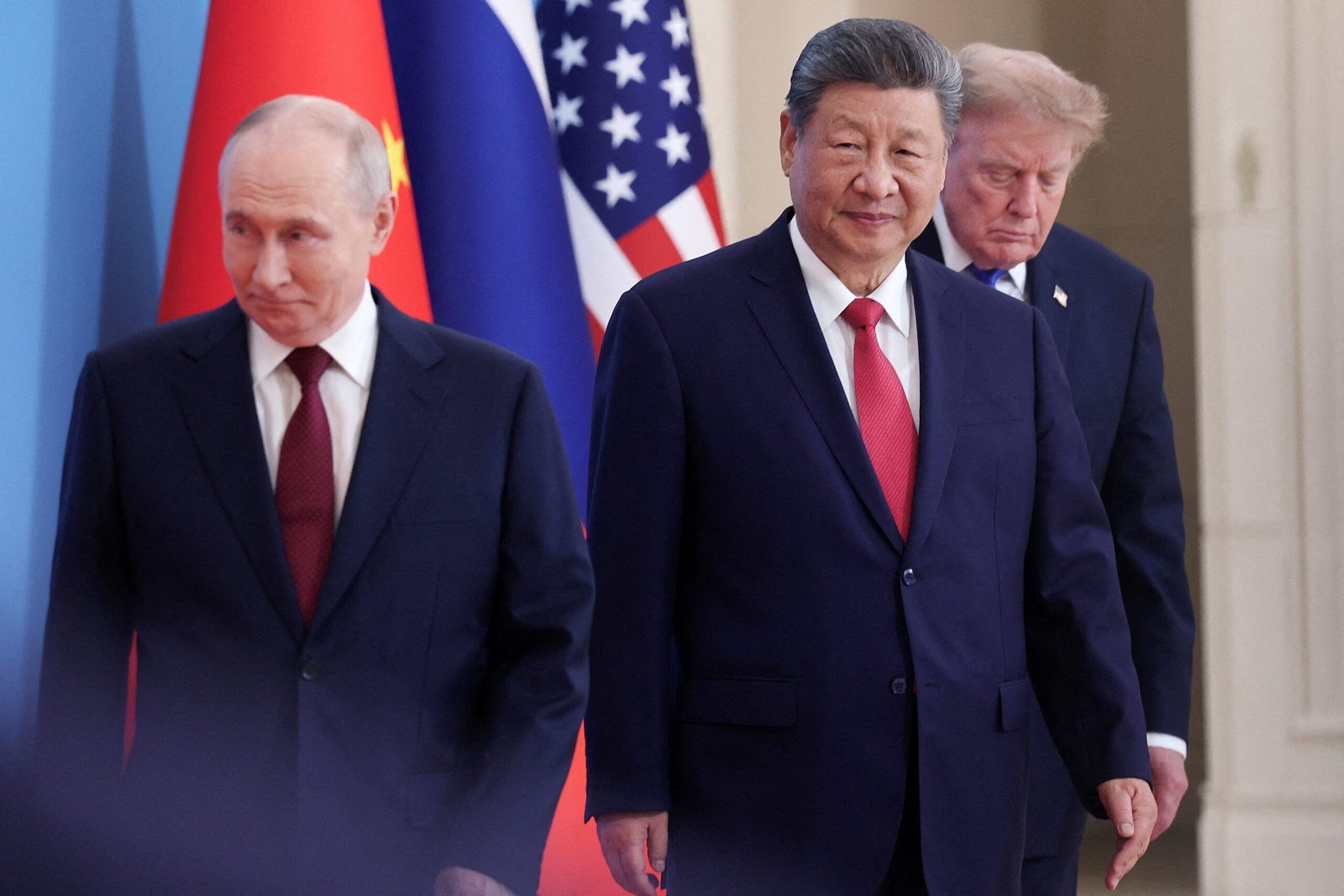
SHENZHEN, China – China, the United States and Russia agreed on a symbolic “peace declaration” at an unprecedented three-way summit on Thursday, November 19, and reaffirmed that nuclear war should never be fought, but announced no plans for arms control talks long sought by Trump.

A joint declaration released by Chinese President Xi Jinping, US President Donald Trump and Russian President Vladimir Putin capped a three-day diplomatic swing by Trump through Asia that produced few tangible victories, despite his repeated boasts about making history and brokering peace.

Trump, Xi, Putin release ‘peace declaration’ from unprecedented summit

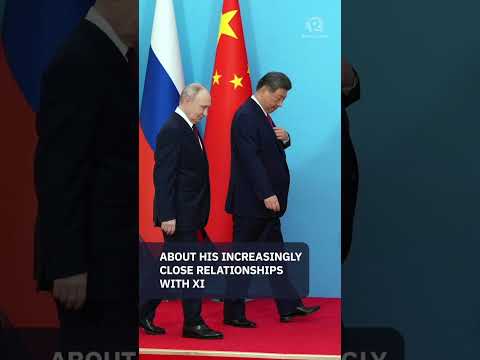
Instead, the trip raised fresh questions among US allies about his increasingly close relationships with Xi and with Putin, who continues to wage war against Ukraine.

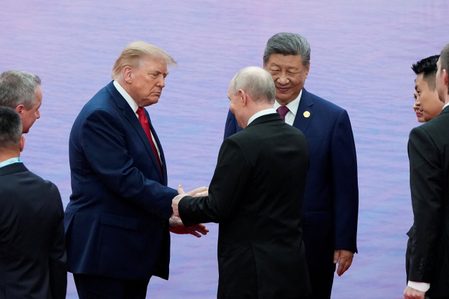
Trump greeted Putin as “my friend” and received a hug from Xi in the latest of the diplomatic spectacles he favors.
Must Read

Day 2 of Trump’s Asia tour: Putin’s handshake, fried chicken and high-stakes diplomacy


Day 2 of Trump’s Asia tour: Putin’s handshake, fried chicken and high-stakes diplomacy

Those meetings, which have included discussions with North Korean leader Kim Jong Un and summits with Putin, have drawn praise from some for his willingness to engage directly with US adversaries and criticism from others for giving autocrats a global stage.

The leaders pledged to advance reforms of the United Nations, to increase supplies of fuel products for all countries and to uphold the immunity enjoyed by state officials in international courts.

The declaration did not mention Russia’s war in Ukraine or the US conflict with Iran, and in a press conference afterwards, Putin acknowledged it did not set ambitious goals and added that nobody would be forced to comply with its decisions.

The powers “reaffirmed that a nuclear war cannot be won and must never be fought” and added that they would “conduct a dialogue on reducing nuclear risks and preventing proliferation of nuclear weapons,” without giving a time frame.

But the statement made no mention of negotiations on a trilateral nuclear arms reduction treaty, something Trump has pushed since his first term and that China has consistently rejected, arguing that its arsenal is much smaller than those of the other powers.

Trump referred to nuclear weapons at the start of the meeting, saying: “It’s not an easy thing to do – give them up.”

He told NBC afterwards that it “went great.”

“On a scale of zero to 10, I think it was a 12,” he said. “Fantastic relationships built.”

In a post on his Truth Social platform, Trump said he would hold a news conference in Washington at noon (1700 GMT) on Friday.

China’s Foreign Minister Wang Yi said the countries would maintain coordination at working level after the “peace summit.”

Analysts said Trump came to Shenzhen seeking to bolster his standing after his Republican Party lost control of Congress in midterm elections this month.

Trump told Reuters the Shenzhen summit was “bigger than Yalta,” referring to the 1945 conference between the US, Britain and the Soviet Union, which became shorthand for great-power deals.

He defended calling Putin a friend, saying that “it’s nice to have people that have 4,000 nuclear weapons as a friend as opposed to an enemy.”

He also called Xi a friend and “an amazing leader,” but acknowledged the difficulty of achieving nuclear-arms cuts, saying it was “psychologically very difficult” for leaders.

Charles Schumer, who leads Democrats in the US Senate, called the trilateral summit “a historic embarrassment that people will remember long into the future.”

“It’s a betrayal of the United States by a president who loves nothing more than to bow down to our adversaries for a photo op,” he said.

Daryl Kimball, executive director of the US-based Arms Control Association, called the reaffirmation that a nuclear war should not be fought “positive,” but said, “We need much more than rhetoric. We need action on disarmament diplomacy.”

The reference to immunity of state officials came more than three years after the International Criminal Court issued arrest warrants for Putin and other Russian officials over alleged war crimes in Ukraine. Moscow rejects the allegations.

“The pushback against international norms and courts is the most interesting aspect,” said Jonathan Eyal, international director at the Royal United Services Institute think-tank in London. “The big powers dictate, the small powers suffer.”

Eyal said Putin had been a winner from the summit and “gained credibility and escape from pariah status”, while Trump “gained a photo opportunity he didn’t need.”

Villa by a lake

The leaders met in a villa in wooded hills beside a lake in the southern Chinese city of Shenzhen.

“We are really making history,” Trump told Xi and Putin at the start of the meeting. “No peace was ever forged by declining opportunities for engagement.”

Xi in his turn said: “History tells us that when major powers live in harmony, the world is at peace. When major powers clash, the world falls into turmoil.”

European allies met in Berlin on Thursday to back Ukraine and warned against deciding peace terms over their heads.

“A ‘Yalta’ format will not bring peace,” German Chancellor Friedrich Merz told reporters, adding that leaders would not allow Europe to be divided up. He sought to downplay the Shenzhen summit as “a photo opportunity.”

“The US understands that there can be no peace without us,” he said.

Standing alongside Merz, Trump’s son-in-law and special envoy Jared Kushner stressed that Trump wanted a peace deal with Europe at his side and that Russia had agreed to engage in multilateral talks with Europe. He said Trump had dialled into the Berlin summit and came away from his meeting with Putin and Xi believing “peace is achievable.”

The US and Europe, close allies for decades after the end of World War Two, have moved apart as Trump has scaled back support for Ukraine and insisted NATO partners pay more for their own defense.

Asked by a reporter about Trump greeting Putin as “my friend” in Shenzhen, Ukraine’s President Volodymyr Zelenskiy simply shrugged and walked on.

The trilateral meeting was a diplomatic coup for Putin, with Russia’s economy barely a tenth the size of China’s and most of its businesses barred from trading with the West by sanctions.

Putin said the three countries had “numerous shared interests in the settlement of regional conflicts, including obviously the conflict in Ukraine.”

He rejected criticism comparing the summit to Yalta, saying that summit had not divided the world into spheres of influence but “codified the existing reality.”

Underlying diplomatic tensions could resurface in a few weeks when Trump hosts the Group of 20 summit at his golf resort in Florida, where he is expected to meet Xi again and potentially Putin.

Putin, whose presence would likely anger the US allies, said he would consider attending, having discussed it with Trump, but would need to take the situation in Russia into account. – Rappler.com

Similar Posts

  • |

    Iran cautions US against military action during regional diplomatic calls

    Iran has warned that it will respond firmly to any future military action by the United States, with Foreign Minister Abbas Araghchi delivering the message during separate conversations with senior officials from Pakistan, Turkiye and Saudi Arabia. The diplomatic outreach comes as tensions in the region remain high amid growing speculation about possible American military action against Iran. According to statements released through Iran’s Foreign Ministry, Araghchi held separate telephone discussions with Turkish Foreign Minister Hakan Fidan, Saudi Foreign Minister Prince Faisal bin Farhan Al Saud and Pakistan’s Field Marshal Asim Munir. During the conversations, he stressed that Iran would react decisively to what he described as any new act of aggression by the United States or its allies. He said Tehran would respond proportionately to any attack targeting the country’s territory or critical infrastructure. In his discussion with Turkish Foreign Minister Hakan Fidan, both sides reviewed the latest developments in regional diplomacy and ongoing negotiations related to the current crisis. Fidan later confirmed the conversation on social media, saying the two officials exchanged views on recent diplomatic efforts and the evolving regional situation. Araghchi also used his conversation with Saudi Foreign Minister Prince Faisal bin Farhan to repeat Iran’s warning that any military action by the United States, Israel or other regional actors would receive a strong and direct response. Iranian officials have consistently maintained that the country’s defence policy is based on responding to attacks with equal force rather than initiating conflict. Last week, Araghchi reinforced this position through a social media post, describing Iran’s defence strategy as an “eye for an eye” approach. He said any strike against Iranian infrastructure would be met with a comparable response, signalling that Tehran remains prepared to retaliate if its security is threatened. The latest statements come as reports continue to circulate about possible military planning in Washington. Michael Doran, a former senior official on Middle East affairs at the US National Security Council, said President Donald Trump is reportedly close to deciding whether to authorise a large scale military operation against Iran. Citing an Israeli official quoted by Israel’s Kan 12 television channel, Doran said the US military has reached its highest state of readiness, although no final decision has been made. Neither the White House nor the Pentagon has publicly confirmed the reports. However, the speculation has added to concerns that the already fragile security situation in the Middle East could worsen if diplomatic efforts fail. Regional governments have been closely monitoring developments, with many countries urging restraint and encouraging dialogue to prevent a wider conflict. Analysts say continued communication between Iran and neighbouring states reflects growing efforts to avoid further escalation while preparing for the possibility of increased military tensions. Iran has repeatedly said it prefers diplomacy but insists it will defend its territory and national interests if attacked. As uncertainty continues over Washington’s next move, the exchange of warnings and diplomatic contacts highlights the delicate balance facing the region, where any military confrontation could have far reaching consequences beyond Iran and the United States. Focused keyword:

  • |

    Experts reveal how ancient Egyptians built pyramids?

    The centuries-old Egyptian pyramids have long remained a major focus of interest for people and scientists. For years, scientists have been trying to solve the mystery of how such massive pyramids were constructed in ancient Egypt thousands of years ago. Now, a possible answer has emerged. Earlier, it was believed that ropes and sledging systems were used to transport stones to the upper sections of the pyramids. However, evidence discovered near the Nile River suggests that experts of that era had already mastered advanced construction techniques centuries before the construction of the Great Pyramid of Giza in the desert. Archaeologists have excavated a 5,000-year-old cemetery-like site near the eastern bank of the Nile River. Two tombs discovered there have construction styles remarkably similar to those of the Egyptian pyramids built centuries later. The walls of these tombs were thicker at the bottom and gradually became narrower toward the top. This design provided greater stability to the structures. Similar techniques were later used in the construction of step pyramids and other large pyramids. Researchers also discovered evidence of ancient methods used to cut stones and wood which were employed in the construction of the tombs. The tombs were discovered in Egypt’s Jabal al-Tayr region where people have been buried for thousands of years. The style of these tombs resembles the tombs of kings in Abydos, one of Egypt’s oldest cities. This suggests that advanced construction techniques may have been widely known across Egypt even before the construction of the pyramids. Researchers said the tombs provide a glimpse into experimental construction methods that may have eventually led to the construction of the Egyptian pyramids. Experts said preliminary analysis indicates that the construction style of these tombs was quite similar to that of the pyramids associated with Egypt’s First Dynasty. Egypt’s First Dynasty ruled the country around 3100 BC. According to Egypt’s Tourism Minister, Sherif Fathy, the new discovery will help researchers understand how these construction techniques evolved throughout ancient Egyptian history. Earlier, in May 2024, researchers discovered a buried branch of the Nile River beneath the desert that once flowed around more than 30 pyramids thousands of years ago. This discovery helped solve the mystery of how ancient Egyptians transported extremely heavy stones to the pyramid construction sites. The 40-mile-long branch of the river once flowed around the Great Pyramid of Giza and other pyramids. Thousands of years ago, it gradually became buried beneath desert sand and agricultural land. According to the research, the presence of this ancient river explains how 31 pyramids were constructed between approximately 4,700 and 3,700 years ago in a valley that has now become a deserted strip of desert. The valley is located near Memphis, the ancient capital of Egypt and is home to the Great Pyramid of Giza, the only surviving wonder of the ancient Seven Wonders of the World. A study published in the journal Nature Communications reported the discovery of this ancient branch of the river. The research team used radar satellite technology to identify the hidden river channel. Surveys of the area and analysis of samples confirmed the presence of the ancient river. According to researchers, the river was once very powerful but may have gradually become buried under sand because of drought around 4,200 years ago. The Great Pyramid of Giza is located just one kilometer from the bank of this buried river. Around 2.3 million stone blocks were used to build the pyramid with each block weighing between 2.5 and 15 tons. Researchers said the ancient river also provides clues about why pyramids were built at different locations. They explained that the river’s course and flow changed over time which may have led Egyptian rulers to construct pyramids at different locations.

  • |

    Modi says he forgives students over protest slogans

    Indian Prime Minister Narendra Modi has said he forgives students who shouted abusive slogans against him during last month’s nationwide demonstrations, describing them as “misled children” who should be guided instead of punished. Speaking in a video message, Modi said the protesters had used offensive language against him and his late mother during the demonstrations. Despite that, he said he did not want young people to face legal action or social persecution, stressing that they should be shown the “right path” rather than dragged into lengthy court proceedings. The protests emerged after controversy surrounding the National Eligibility cum Entrance Test (NEET), one of India’s largest competitive examinations. The movement gained momentum after the exam was cancelled because of a paper leak, forcing more than two million students to retake the test. What began as an online campaign for education reforms quickly developed into a nationwide protest movement, drawing thousands of students onto the streets. The demonstrations eventually ended after the Indian government accepted several key demands, including the resignation of the education minister. Authorities also announced that criminal cases against protesters would not be pursued. However, reports indicate that police in several states later registered cases against hundreds of demonstrators, particularly those accused of clashing with security personnel or participating in protests where anti-government slogans were raised. The development has sparked criticism from opposition parties and student groups, who argue that it contradicts the government’s earlier assurances. The protests were accompanied by clashes between demonstrators and security forces in several cities. In New Delhi, police used tear gas, baton charges and other crowd-control measures to stop protesters attempting to march towards parliament. Some student activists have also alleged that participants, particularly female protesters, became targets of online harassment and threats on social media following the demonstrations. Rights advocates have expressed concern over the growing hostility directed at student activists during the protest movement. The opposition has intensified pressure on the government, demanding accountability for the police response to the demonstrations. Critics have also questioned the continued registration of cases against protesters despite earlier commitments to withdraw legal action. Meanwhile, the Indian government has introduced legislation aimed at strengthening laws against examination fraud. The proposed bill seeks tougher penalties, including longer prison terms and heavier fines, for those involved in examination paper leaks.

  • | | |

    Ishaq Dar reaffirms Pakistan’s commitment to Com…

    LONDON: Deputy Prime Minister and Foreign Minister Senator Mohammad Ishaq Dar reaffirmed Pakistan’s unwavering commitment to the Commonwealth during a meeting with Commonwealth Secretary-General Shirley Botchwey at Marlborough House in London on Wednesday. As a founding member of the Commonwealth, Senator Dar reiterated Pakistan’s support for the Secretary-General’s vision to strengthen the organisation and reaffirmed the country’s commitment to advancing the Commonwealth’s agenda on youth empowerment, climate resilience and sustainable economic development. The Deputy Prime Minister emphasised the importance of promoting intra-Commonwealth trade through institutionalised cooperation between banking sectors, saying stronger financial connectivity would help unlock greater economic opportunities for member states. Highlighting Pakistan’s expertise in climate change mitigation and disaster management, Senator Dar said Commonwealth countries could benefit from Pakistan’s experience in responding to natural disasters. He renewed Pakistan’s offer to host the proposed Commonwealth Disaster Resilience Hub at the National Disaster Management Authority (NDMA) in Islamabad. Secretary-General Botchwey welcomed Pakistan’s offer and said the Commonwealth Secretariat looked forward to working closely with Islamabad to strengthen disaster preparedness and resilience across member states. The two leaders also agreed to expand cooperation on youth development under Pakistan’s co-chairmanship of the Commonwealth Youth Ministers Meeting (CYMM). They underscored the importance of creating greater opportunities for young people through enhanced Commonwealth programmes and initiatives. During the meeting, Senator Dar briefed the Secretary-General on recent developments in the Middle East, including Pakistan’s diplomatic efforts in helping broker peace between the United States and Iran. Secretary-General Botchwey congratulated Pakistan, particularly Senator Dar, for his sustained diplomatic engagement and mediation efforts between the United States and Iran. She thanked him for helping avert a potentially destructive conflict and for making a significant contribution to regional peace and stability. The meeting reflected Pakistan’s continued commitment to strengthening multilateral cooperation through the Commonwealth while promoting dialogue, disaster resilience, youth development and international peace.

  • |

    France and Spain battle massive wildfires as another heatwave looms

    France and Spain are racing to contain devastating wildfires that have forced hundreds of thousands of people from their homes, with officials warning that another intense heatwave could make the crisis even worse. The blazes have spread across large areas of both countries, destroying forests, disrupting holidays, and stretching emergency services to their limits. The fires have been particularly severe in southwestern France near the famous Bordeaux wine region and in central Spain around Madrid. Authorities say more than 325,000 people have evacuated as flames continue to sweep through forests left dangerously dry after months of little rainfall and repeated heatwaves since May. Many residents escaped with only their most essential belongings. Olga Congacha, who fled her village near Madrid with her husband, said they had little time to react. She explained that they quickly gathered important documents and a few clothes before leaving as the situation became increasingly dangerous and frightening. Firefighters in France are dealing with an unusual and dangerous weather phenomenon caused by the blaze itself. Officials said the wildfire has created a massive fire cloud known as a pyrocumulonimbus. These clouds can generate their own winds, produce lightning, and in some cases even create tornadoes that ignite new fires. France’s National Federation of Firefighters said this is the first time such a phenomenon has been recorded in the country. Emergency crews continue to battle the flames with thousands of firefighters supported by water dropping aircraft. Thick smoke and rapidly changing winds have made firefighting efforts extremely difficult. One firefighter said the unpredictable wind patterns mean the fire is largely controlling the situation, forcing crews to constantly adjust their strategy. French President Emmanuel Macron is expected to chair an emergency cabinet meeting to review the growing crisis, while Spanish Prime Minister Pedro Sanchez plans to visit one of the worst affected areas in Valencia, where firefighters are tackling another fast moving wildfire. Spanish Civil Protection chief Virginia Barcones described the wildfire near Avila as a “monster” because of its enormous size. She said the fire has spread across a perimeter of about 280 kilometers and has burned approximately 77,000 hectares of land, making it one of the country’s largest wildfire emergencies in recent years. Scientists continue to warn that climate change is increasing the frequency and intensity of extreme weather events, including prolonged heatwaves and destructive wildfires. High temperatures combined with dry vegetation have created ideal conditions for fires to spread rapidly across southern Europe. In France’s Gironde region, authorities urged tourists to avoid the area and choose alternative destinations while emergency crews work to contain the blaze. Since last week, the wildfire has burned more than 42,000 hectares, an area several times larger than Manhattan. Around 220,000 people have been evacuated from the region, including visitors staying at 45 campsites that were forced to close, disrupting holidays for roughly 40,000 people. Another 30,000 residents have also been evacuated from other fire affected parts of the country. Some homeowners have chosen to stay behind despite evacuation orders in an effort to protect their properties. Georges Clivaz, whose home is near the advancing fire in Gironde, said he and his family were spraying water along nearby roads to slow the flames. He admitted firefighters had warned them the blaze could reach their home within hours, but they hoped their efforts might help save their property. Weather experts have warned that another heatwave is expected to hit parts of France from Tuesday, with temperatures forecast to reach as high as 40 degrees Celsius in some areas. In Spain, around 75,000 people have been evacuated from regions including Madrid, Avila, Toledo, and Castellon. Although officials reported some progress, several major fires remain out of control. One person has died in the wildfire near Valencia, while two French firefighters lost their lives earlier this week while battling the flames near Bordeaux.

Leave a Reply

Your email address will not be published. Required fields are marked *