senate health subcommittee
| |

Senate health subcommittee discusses A-Level, FSc …

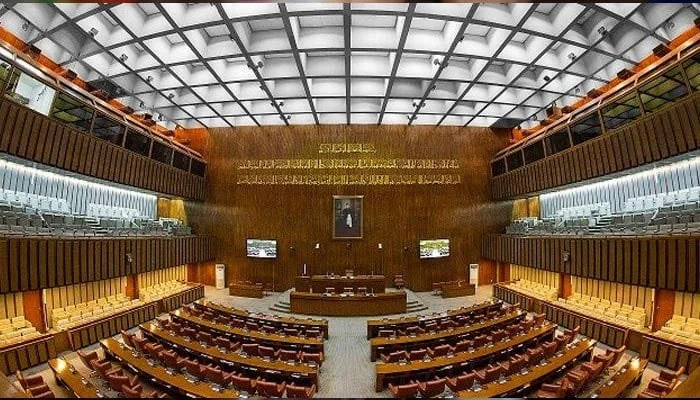
Pakistan’s Senate Health Subcommittee held an important meeting to discuss concerns surrounding the Medical and Dental College Admission Test (MDCAT), the country’s medical education policies, and the increasing number of students pursuing medical education abroad. The session was chaired by Senator Samina Zehri, the convener of the subcommittee, and attended by Federal Health Minister Mustafa Kamal, Senator Anusha Rahman, Senator Shahzaib, and officials from the Pakistan Medical and Dental Council (PMDC).

During the meeting, Senator Samina Zehri highlighted the significant differences between Pakistan’s FSc (Faculty of Science) education system and the internationally recognized A-Level qualification. She remarked that Pakistan’s education system is well known for its challenges and that the disparity between the two academic streams should not be overlooked when formulating admission policies for medical colleges.

Responding to these concerns, Federal Health Minister Mustafa Kamal stated that the MDCAT examination is designed in a way that does not favor either A-Level or FSc students. He explained that the test includes questions that can be answered by candidates from both educational backgrounds, ensuring fairness in the admission process. According to the minister, the examination aims to assess students’ knowledge and aptitude rather than the curriculum they have studied.

Mustafa Kamal further suggested that a detailed analysis should be conducted to determine how students from different educational backgrounds perform in the MDCAT. He pointed out that approximately 95,000 students had passed the examination and proposed collecting data from the past five years to determine how many successful candidates came from A-Level and FSc backgrounds. Such data, he said, would provide evidence-based insights for future policy decisions.

The minister also assured members of the committee that the details of the assessment committee responsible for the MDCAT would be submitted within 24 hours. In response, Senator Anusha Rahman stated that the Senate committee was currently assisting the ministry in reviewing the admission process and therefore required complete information about the committee members involved in preparing and evaluating the examination.

Following the discussion, Federal Health Minister Mustafa Kamal formally assured the committee that all requested information regarding the assessment committee would be provided within the promised timeframe.

During the meeting, Senator Anusha Rahman also called for a review of the Pakistan Medical and Dental Council’s (PMDC) current policies. She emphasized the need to reassess regulations to ensure they effectively address the concerns of students and maintain the credibility of Pakistan’s medical education system.

Senator Shahzaib raised another important issue regarding Pakistani students who intend to pursue higher medical education abroad. He questioned why graduates of Pakistani universities who plan to enroll in medical institutions overseas are still required to take the MDCAT. Referring to a recently issued advertisement, he noted that the existing policy appears to require these students to pass the admission test even if they have no intention of studying medicine within Pakistan.

In response, Health Minister Mustafa Kamal acknowledged the concern and assured the committee that the policy would be reviewed. Senator Anusha Rahman added that while reviewing the policy, authorities should also ensure that students planning to study abroad avoid enrolling in institutions that have been identified as “red-flag” universities or those lacking proper accreditation.

The Chairman of the PMDC Reforms Committee informed the meeting that students intending to study medicine overseas are required to register with the PMDC before leaving the country. This registration process, he explained, helps the regulatory body monitor students and maintain standards for foreign medical qualifications.

Highlighting another major concern, Health Minister Mustafa Kamal stated that around 40,000 Pakistani students travel abroad each year for medical education, taking an estimated US$800 million out of the country. He stressed that this represents a significant financial outflow and underlined the importance of strengthening Pakistan’s own medical education system.

However, Senator Anusha Rahman offered a different perspective, arguing that many of these students eventually return to Pakistan after completing their education and contribute to the country’s economy through their professional earnings. She suggested that while the government should improve local opportunities, it should also recognize the long-term benefits that internationally educated professionals can bring back to Pakistan.

Similar Posts

  • |

    Pakistan eyes PNSC ships to boost GCC trade amid shipping crisis

    ISLAMABAD: The government is considering a range of emergency measures, including the deployment of Pakistan National Shipping Corporation (PNSC) vessels, to keep Pakistan’s trade links with Gulf Cooperation Council (GCC) countries operational amid severe disruption to maritime traffic. The move comes as Pakistan’s exports to the GCC region declined significantly in July 2026, while imports also recorded a sharp fall compared with the same month last year, according to data shared by the Ministry of Commerce. The ministry’s figures show that exports to GCC countries dropped by around 12% year-on-year in July, reflecting the impact of heightened maritime security concerns and disruptions to established shipping routes. Exports to major Gulf markets decline Pakistan’s exports to the United Arab Emirates (UAE), its largest GCC trading partner, fell 9.5% in July 2026, reaching $144.6 million compared with $159.8 million recorded in July 2025. Exports to Saudi Arabia witnessed a steeper decline of 20.5%, falling to $42 million from $52.8 million a year earlier. Shipments to Oman decreased 3.7% to $15.8 million from $16.4 million. Pakistan’s exports to Bahrain suffered the sharpest percentage decline among the GCC markets, dropping 50.8% to $2.3 million from $4.2 million. Exports to Kuwait declined 7.4% to $7.4 million, while shipments to Qatar fell 4.2% to $8.7 million from $9 million in the corresponding month of 2025. The decline has raised concerns over the ability of Pakistani exporters to maintain regular deliveries to Gulf markets, particularly for goods that depend heavily on maritime transportation. GCC imports also fall sharply Pakistan’s imports from GCC countries also recorded a substantial decline during July. The Commerce Ministry reported that imports fell 32.5% year-on-year to $1.0009 billion from $1.4825 billion in July 2025. Imports from the UAE decreased 34.2%, falling to $380.7 million from $576.5 million. Imports from Saudi Arabia declined 4.7% to $295.3 million from $310 million, while purchases from Bahrain dropped 44.4% to $15.1 million from $27.2 million. The most significant declines were recorded in imports from Kuwait and Qatar. Imports from Kuwait plunged 92.8% to $9.5 million from $132.1 million, while those from Qatar fell 96.1% to $10.2 million from $261.8 million. Oman was the exception, with Pakistani imports from the country increasing 67.7% to $290.2 million from $173 million a year earlier. Month-on-month trade also weakens The trade slowdown was also visible on a month-on-month basis. Pakistan’s exports in July were 2.7% lower than in June 2026. However, the performance varied considerably across GCC destinations. Exports to the UAE increased 15.7%, while shipments to Kuwait and Qatar rose 19.4% and 88%, respectively. In contrast, exports to Saudi Arabia declined 34.5% during the month. Shipments to Oman fell 34.6%, while exports to Bahrain decreased 18.2%. Imports recorded an even sharper monthly decline, falling 32.5% in July compared with June. Imports from the UAE decreased 17.9%, while those from Saudi Arabia fell 41.4%. Imports from Oman declined 49.9%, and purchases from Qatar plunged 93.2%. Imports from Bahrain and Kuwait, however, increased during the month, rising 295.8% and 72%, respectively. Maritime security disrupts Gulf trade The Commerce Ministry linked the deterioration in trade flows to the worsening maritime security situation following the breakdown of an interim truce between the United States and Iran in July 2026. According to the ministry, the resulting security concerns severely affected international shipping movements through key maritime routes and created uncertainty for commercial vessels operating in and around the Gulf. The ministry said the waterway normally accommodates between 70 and 80 commercial vessel crossings each day. However, traffic reportedly dropped to as few as six vessels a day during the disruption, leaving hundreds of ships waiting outside the Strait of Hormuz. The ministry also referred to statements attributed to Iran’s Islamic Revolutionary Guard Corps (IRGC), according to which vessels were required to obtain permission to pass through the strategic waterway. Such developments, coupled with threats against shipping, significantly increased the risks and costs associated with maritime trade. Red Sea tensions add to shipping risks The Commerce Ministry also highlighted the impact of attacks attributed to Houthi militants on Saudi oil facilities and areas along the Red Sea coast. The resulting security threats to Saudi-linked vessels have increased concerns surrounding shipping through the Bab al-Mandab Strait, another critical maritime gateway connecting the Red Sea with the Gulf of Aden. With shipping operators facing heightened security risks, commercial maritime movement between Pakistan and GCC markets has been severely disrupted. The ministry said some Pakistani exports had consequently been shifted to air freight to ensure the delivery of goods to Gulf customers. However, air transport is considerably more expensive than sea freight, creating additional pressure on exporters and potentially reducing the competitiveness of Pakistani products in GCC markets. Government considers alternative shipping routes To reduce the impact of the disruption, the Commerce Ministry has proposed establishing dedicated feeder links between Karachi and safer maritime nodes outside the immediate Hormuz chokepoint. The proposed connections include Fujairah and Khor Fakkan in the UAE, as well as suitable Omani ports located outside the affected maritime corridor. Such routes could provide Pakistani exporters with alternative channels for moving cargo to the Gulf while reducing their exposure to disruptions around the Strait of Hormuz. The ministry has also recommended accelerating the operationalisation of multi-purpose passenger and cargo ferry services between Gwadar and GCC ports. The proposed ferry network is intended to provide another avenue for transporting commercial goods and passengers while strengthening Gwadar’s role as an alternative regional logistics hub. PNSC vessels under consideration Another option being examined by the government is the use of vessels operated by the Pakistan National Shipping Corporation to maintain trade connectivity with GCC destinations. The deployment of national-flag shipping capacity could provide greater control over cargo movement at a time when private commercial operators are facing security and logistical constraints. Officials believe that maintaining reliable access to Gulf markets is important because GCC countries remain a major destination for Pakistani exports and a key source of energy and other imported commodities. The proposed measures are therefore aimed

  • |

    Myanmar’s detained former leader Aung San Suu Kyi meets Red Cross official

    Myanmar’s ousted leader Aung San Suu Kyi met with Arnaud de Baecque, the International Committee of the Red Cross (ICRC) resident representative, in her first publicised meeting with a foreign official since the 2021 military coup. Government-released photographs show the 81-year-old Nobel Peace Prize winner in Naypyitaw alongside images of her celebrating her June birthday under house arrest, where she is currently serving an 18-year sentence following commuted convictions. While Myanmar authorities maintain Suu Kyi is in good health, international bodies and her opposition supporters continue to demand her unconditional release and independent verification of her well-being.

  • | |

    Hamza Shehbaz set for key coordination role at PM …

    Hamza Shehbaz, son of Prime Minister Shehbaz Sharif and a former chief minister of Punjab, is expected to assume a more active political role at the federal level, according to informed sources. Sources said an office has been allocated to Hamza Shehbaz at the Prime Minister’s Office. Although he has not yet been given any formal government position, he is likely to play an important role in coordinating between the prime minister and ruling party lawmakers. His main responsibility will be to engage with members of the National Assembly (MNAs) and address issues related to their constituencies. He will work to ensure that development projects, administrative matters and public concerns raised by lawmakers are communicated to the relevant authorities for timely resolution. Government legislators often seek meetings with the prime minister to discuss problems faced by their constituencies. However, due to Prime Minister Shehbaz Sharif’s busy official schedule, it is not always possible for him to meet every lawmaker. Hamza Shehbaz is expected to help manage this coordination process and facilitate communication between the government and parliamentary members. Sources said his office is located on the sixth floor of the Prime Minister’s Office. A meeting room has also been allocated alongside his office, where he is expected to hold meetings with lawmakers, party representatives and visiting delegations. Hamza Shehbaz is currently an MNA from Lahore’s NA-118 constituency. He has previous experience in coordinating with elected representatives, having performed a similar role during Shehbaz Sharif’s tenure as Punjab chief minister. Sources further said that office staff has also been assigned to assist him in carrying out his responsibilities. There is currently one vacant adviser position in the Prime Minister’s team. Under the Constitution, the prime minister can appoint up to five advisers. At present, four adviser positions are occupied. However, sources indicated that Hamza Shehbaz may not immediately receive the status of adviser or special assistant. Instead, the government is considering assigning him the title of coordinator to avoid political criticism over his appointment. If approved, he is expected to perform his responsibilities from behind the scenes while assisting the government in maintaining close coordination with lawmakers and resolving constituency-related matters.

  • | |

    Sharmila Faruqui warns of growing PPP-PML-N tensio…

    Pakistan Peoples Party (PPP) lawmaker Sharmila Faruqui has warned that relations between the PPP and Pakistan Muslim League-Nawaz (PML-N) have become increasingly tense following the Azad Jammu and Kashmir (AJK) elections. Speaking to journalists outside Parliament, Faruqui said the situation between the two coalition partners was currently strained. She added that it was difficult to predict how the political situation would develop in the coming days. Her remarks came amid discussions over the political relationship between the PPP and PML-N and growing differences on several issues. Faruqui said the issue of creating new administrative units should be handled through Parliament. She opposed turning the matter into a debate primarily conducted through television channels. She said any proposal to create new administrative units should be formally brought before the National Assembly and the Senate. According to her, Parliament is the appropriate forum for discussing matters that could have major constitutional and administrative implications. The PPP leader stressed that such issues require detailed debate and consultation. She said lawmakers should have the opportunity to examine the proposals and discuss their possible political, administrative and constitutional consequences. Faruqui also highlighted the impact of the AJK elections on relations between the PPP and PML-N. She said the situation between the two parties had become “very tense” after the elections. She warned that the political developments could take different turns. Her comments indicate that differences between the coalition partners may become more prominent if the issues are not addressed through dialogue. The PPP and PML-N have remained key political partners at the federal level. However, differences between the two parties have surfaced on various political and administrative matters. Faruqui’s comments come at a time when the question of new administrative units has also generated political debate. The proposal has attracted attention because any major change in the administrative structure could have wider political and constitutional implications. The PPP lawmaker maintained that such a sensitive issue should not be settled through media discussions. She called for the matter to be brought before both houses of Parliament for a proper debate. Her statement also reflects the growing political uncertainty following the AJK elections, with questions emerging over the future course of relations between the PPP and PML-N.

  • | |

    Evergrande founder handed life sentence as court s…

    The founder of Evergrande, the Chinese property giant whose collapse triggered a nationwide housing market crisis, has been sentenced to life in prison and stripped of all personal property. Hui Ka Yan pleaded guilty in April to multiple charges, including embezzling assets and corporate bribery. The Shenzhen Intermediate People’s Court also imposed fines totaling 15.82 billion yuan, roughly £1.73 billion or $2.35 billion, on his former companies over a range of offenses that included falsifying financial records and concealing debt. The sentencing marks a major turning point in the fallout from Evergrande’s collapse, which shook China’s property sector and inflicted heavy losses on investors and domestic banks alike. The court said Hui and his businesses seriously disrupted the Chinese property market, causing significant economic damage. Other former Evergrande executives, including Hui’s two sons Xu Zhijian and Xu Tenghe, received jail terms ranging from 22 months to 18 years, according to Chinese state media. Once ranked as Asia’s richest man, Hui has watched his fortune and influence collapse alongside his company. Also known as Xu Jiayin, he grew up in rural China raised by his grandmother before entering the property industry and founding Evergrande in 1996. He guided the company through a period of rapid expansion fueled by heavy borrowing, eventually building Evergrande into China’s largest real estate developer with a stock market valuation exceeding $50 billion, roughly £36.7 billion. At his peak, Hui held the distinction of being Asia’s wealthiest individual. The company suffered a major setback when Beijing introduced new measures in 2020 aimed at curbing debt across the property sector. As Evergrande struggled to keep up with interest payments, it began selling properties at steep discounts to stay afloat before ultimately collapsing in 2021. Court proceedings in April revealed that the company had taken in millions of dollars in pre sale funds from prospective homebuyers that were never used for the construction they were intended to finance. Instead, that money was redirected toward new development projects, leaving hundreds of housing projects unfinished. In March 2024, Hui was separately fined $6.5 million and banned for life from China’s capital markets after regulators found the company had overstated its revenue by $78 billion. Evergrande’s stock market value shrank by 99 percent before the company’s shares were delisted from the Hong Kong exchange in August 2025, ending more than fifteen years of trading. The company’s implosion is widely seen as a key trigger for the broader downturn in China’s property market that continues to weigh on the country’s economy. At its peak, Evergrande stood as the largest firm in an industry that accounted for roughly a third of China’s gross domestic product, serving as both a major driver of economic growth and a critical revenue source for local governments. The sector’s ongoing troubles have continued to pressure the world’s second largest economy, with several other major developers facing their own financial distress in the years since Evergrande’s fall.

  • | |

    Two children killed, mother injured as dilapidated…

    A tragic incident occurred in Chak 33 SP, a village in Pakistan’s Pakpattan district, where the roof of an old and dilapidated house collapsed during heavy rainfall, claiming the lives of two young children and leaving their mother seriously injured. The heartbreaking accident has once again highlighted the dangers posed by weak and poorly maintained structures, particularly during the monsoon season when continuous rain often weakens aging buildings. According to rescue officials, the incident took place while rain was falling in the area. The roof of the deteriorating house suddenly gave way, trapping members of the family beneath the debris. Neighbors rushed to the scene immediately after hearing the loud crash and attempted to help the victims before emergency rescue teams arrived. Rescue personnel quickly launched an operation to remove the debris and recover those trapped inside the collapsed house. After an intensive rescue effort, two children were pulled from the rubble but were found to have died from their injuries. Their mother, who was also trapped under the collapsed roof, was rescued alive but sustained serious injuries. Rescue sources confirmed that the bodies of the deceased children and the injured woman were shifted to a nearby hospital. Medical teams provided emergency treatment to the injured mother, while the children’s bodies were handed over for the necessary legal and medical procedures before being released to the family for burial. The tragic deaths have left the local community in deep shock and mourning. Residents gathered at the site to assist rescue workers and expressed grief over the heartbreaking loss of two innocent lives. Many locals also voiced concerns about the condition of old houses in the area, noting that numerous families continue to live in unsafe structures because they cannot afford repairs or reconstruction. Heavy monsoon rains frequently expose the vulnerability of aging homes across many parts of Pakistan. Weak roofs and deteriorating walls become increasingly unstable after prolonged rainfall, increasing the risk of collapse. Such incidents often result in injuries, fatalities, and significant property damage, particularly in rural areas where many houses are built with older construction materials and receive little maintenance. Authorities have repeatedly advised residents living in damaged or structurally weak buildings to take precautionary measures during periods of heavy rainfall. However, financial constraints often prevent families from repairing or rebuilding their homes, leaving them exposed to life-threatening risks whenever severe weather strikes. Disaster management experts stress the importance of inspecting old buildings before and during the monsoon season. Timely repairs, stronger construction standards, and public awareness campaigns can help reduce the likelihood of similar tragedies. Local administrations are also encouraged to identify vulnerable structures and provide assistance to families living in hazardous conditions. The incident in Chak 33 SP serves as another painful reminder of the devastating consequences that aging infrastructure and extreme weather can have on vulnerable communities. As the injured mother continues to receive medical treatment, the family and the entire village are grieving the loss of the two children whose lives were cut short in the tragic roof collapse. The unfortunate event underscores the urgent need for improved housing safety measures and greater support for families residing in unsafe homes, particularly during Pakistan’s annual monsoon season.

Leave a Reply

Your email address will not be published. Required fields are marked *