smeda partners paapam
| |

SMEDA partners with PAAPAM for auto show 2026

LAHORE: The Small and Medium Enterprises Development Authority (SMEDA) has partnered with the Pakistan Association of Automotive Parts & Accessories Manufacturers (PAAPAM) as a strategic partner for the 21st Pakistan Auto Parts Show (PAPS) 2026.

The three-day exhibition will take place from September 18 to 20 at the Expo Centre Lahore, bringing together stakeholders from Pakistan’s automotive and engineering sectors as well as potential international business partners.

The partnership reflects SMEDA’s continued efforts to strengthen micro, small and medium enterprises (MSMEs) in line with the policy direction of the Ministry of Industries and Production and the SMEDA Board of Directors. The initiative aims to help local businesses expand their market reach, develop new partnerships and become part of regional and global industrial supply chains.

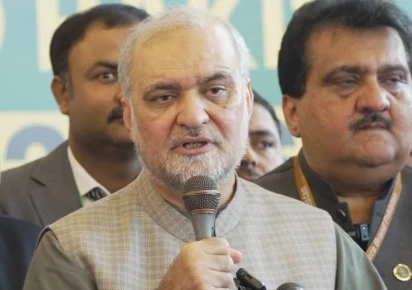
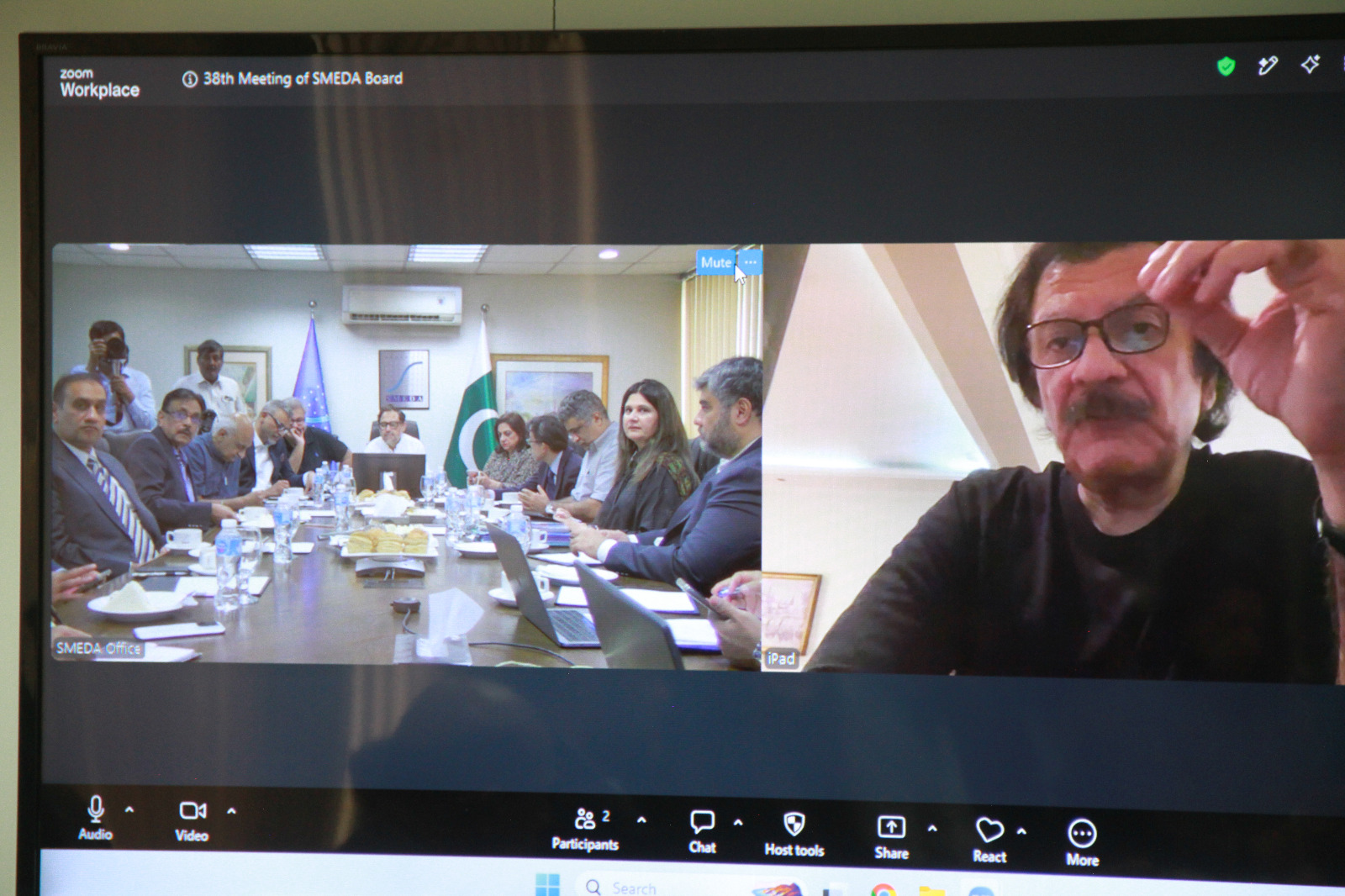
Special Assistant to the Prime Minister for Industries and Production Haroon Akhtar Khan chaired a meeting on SMEDA’s collaboration with PAAPAM. Secretary of Industries and Production Saif Anjum, SMEDA Board members, CEO Nadia Jahangir Seth, Pak Suzuki head Hiroshi Kawamura and representatives of PAAPAM attended the meeting.

Haroon Akhtar Khan said the government wanted to transform Pakistan into a competitive manufacturing hub by empowering MSMEs and strengthening domestic industrial value chains.

He highlighted the resilience and growth potential of Pakistan’s automotive sector, saying events such as the Pakistan Auto Show could help promote local manufacturing, encourage innovation and attract investment.

The SAPM called for the 2026 exhibition to become a major international platform with a strong focus on business-to-business engagement, memorandums of understanding and joint ventures. He also ordered the formation of a private-sector-led committee to prepare a comprehensive plan for making the event a landmark occasion.

Khan further directed SMEDA to provide full support to PAAPAM and engage with foreign embassies and local MSMEs to facilitate effective business matchmaking during the exhibition.

He said the government wanted to give MSMEs better access to markets, stronger commercial connections and greater opportunities to join regional and international value chains.

Secretary MoI&P Saif Anjum said the event should help local auto parts manufacturers gain greater exposure and establish business links with international competitors. He called for SMEDA, PAAPAM, the Trade Development Authority of Pakistan (TDAP) and the Engineering Development Board (EDB) to work together to achieve the exhibition’s objectives.

SMEDA CEO Nadia Jahangir Seth described the automotive sector as one of Pakistan’s most dynamic industries, with significant potential for SME-driven growth.

She said numerous MSMEs play a key role in the country’s auto parts and engineering ecosystem. Through its partnership with PAAPAM, SMEDA aims to help these businesses present their capabilities, establish strategic alliances, adopt modern technologies and explore new opportunities in domestic and international markets.

PAPS 2026 Convener Salman Saleem welcomed SMEDA’s participation, saying the partnership would strengthen efforts to present Pakistan’s automotive industry to the global market.

He said SMEDA’s support would increase SME participation and reinforce efforts to promote local manufacturing under the “Make in Pakistan” vision.

A symposium will also take place on September 19 alongside the exhibition. Organisers expect the session to contribute to discussions on the future of Pakistan’s automotive industry and help develop a roadmap for further growth and collaboration.

Similar Posts

  • Pakistani team wins 1 gold, 2 silver medals at Nuclear Olympiad

    The Pakistani team has won one gold and two silver medals at the International Nuclear Science Olympiad. The International Nuclear Science Olympiad was held in Jeddah from August 2 to 8 with 120 students and experts from 19 countries participating in the competition. Students from China, Japan, Russia, Türkiye, Malaysia, Indonesia and Saudi Arabia also took part. The Pakistan Atomic Energy Commission team won one gold and two silver medals. Muhammad Ali from Government College University Lahore won the gold medal while Muhammad Usman from FG Sir Syed College Rawalpindi won a silver medal. Seerat Fatima Bhatti from Nixor College Karachi also won a silver medal. According to a statement issued by the Pakistan Atomic Energy Commission, Pakistan will host the 4th International Nuclear Science Olympiad in 2027.

  • | |

    Shania Twain reveals the secret behind her happy m…

    Shania Twain has shared the simple philosophy that has helped her build a happy and lasting marriage with husband Frédéric Thiébaud, nearly 15 years after the couple tied the knot. The country music icon recently reflected on her relationship, revealing that genuine friendship and mutual appreciation remain the foundation of their marriage. According to Twain, having a partner who supports and respects her has made all the difference. “We really like each other,” Twain said with a smile, explaining that enjoying each other’s company is one of the biggest reasons their relationship has remained strong over the years. She added that laughter, kindness and never taking one another for granted have become essential parts of their everyday life. (people.com⁠) Twain married Swiss businessman Frédéric Thiébaud on January 1, 2011, following one of the most difficult periods of her personal life. Their romance blossomed after both experienced heartbreak involving their former spouses. Over time, the shared experience brought them closer, eventually leading to a relationship built on trust and understanding. Looking back, the singer says she feels incredibly grateful for the life they have created together. Rather than focusing on grand romantic gestures, Twain believes that showing appreciation every day is what keeps a marriage healthy. She explained that making each other laugh and remaining close friends are just as important as being romantic partners. (people.com⁠) The five-time Grammy winner also acknowledged that every relationship requires effort. She believes successful marriages are built through patience, honest communication and choosing to support one another through life’s highs and lows. Those values, she says, have strengthened their bond with each passing year. Twain has often spoken positively about Thiébaud’s calm and dependable personality. She credits him with providing stability while encouraging her career and personal growth. Their ability to respect each other’s independence while remaining deeply connected has helped them navigate fame and the challenges that come with it. Fans have long admired the couple’s enduring relationship, especially given the difficult circumstances that first brought them together. Twain’s latest comments offer a reminder that lasting love is often rooted in everyday habits rather than dramatic declarations. As the couple approaches another wedding anniversary, Twain says she feels just as thankful as she did when they first exchanged vows. For her, the secret to a happy marriage is refreshingly simple: cherish your partner, keep laughing together and never stop being best friends.

  • |

    China missile test deepens pacific’s struggle fo…

    SUVA: A Chinese ballistic-missile test in the Pacific has exposed a growing dilemma for the region’s small island nations: how can they preserve their vision of an “Ocean of Peace” while increasingly finding themselves caught between the military ambitions of major powers? China’s July missile launch, its first known ballistic-missile test into the Pacific since September 2024, has intensified concerns about the region’s rapid militarisation. The test came just hours after Fiji signed a major defence agreement with Australia, its first-ever military alliance. The timing highlighted the competing security interests shaping the Pacific, where the United States and China are increasingly contesting influence. Yet despite widespread concern among Pacific leaders, the region failed to agree on a joint statement condemning the Chinese missile test during a meeting of foreign ministers in Suva last week. Papua New Guinea Foreign Minister Justin Tkatchenko described the launch as “totally inappropriate”, saying that while China remained a close friend and partner of Papua New Guinea, the missile test was not helpful. Beijing had informed Papua New Guinea about the launch beforehand, Tkatchenko said, but did not provide details about where the missile would land. China defended the exercise at the time. Foreign Ministry spokesperson Mao Ning said the test had been conducted safely and urged other countries not to “over-interpret” the event. Pacific caught between major powers The missile launch was the latest in a series of military developments that have transformed the Pacific into an increasingly contested strategic space. Chinese naval deployments and live-fire exercises, including drills in the Tasman Sea, have become more visible. At the same time, US allies have expanded military exercises around Guam and Hawaii, while Washington maintains major military facilities and forces across Hawaii, Guam and the Marshall Islands. For Pacific island governments, the growing military activity creates an uncomfortable contradiction. Many have repeatedly insisted that their region should not become another battleground for global power competition. In September 2025, Pacific leaders endorsed the Ocean of Peace Declaration, pledging to protect the region and strengthen international peace and security. The initiative was intended to put Pacific countries themselves at the centre of discussions about their security rather than allowing outside powers to define the region’s strategic priorities. David Peebles of the Australian National University’s Pacific Security College said Pacific nations had historically resisted security agendas imposed by larger countries. But the growing number of defence agreements is now testing that principle. Defence deals bring benefits — and fears For some Pacific governments, security partnerships offer practical advantages. They can provide surveillance against illegal fishing, disaster-response capabilities, policing assistance, military equipment and training. Australia’s new defence agreement with Fiji, known as the Ocean of Peace Alliance, reflects that approach. But critics fear that a growing network of bilateral security arrangements could gradually draw Pacific nations deeper into the strategic competition between China and the United States. Tuvalu’s permanent foreign secretary, Pasuna Tuaga, speaking in a personal capacity, expressed concern over increasing militarisation, including security arrangements such as the AUKUS partnership between Australia, Britain and the United States. The concern is not simply about military exercises or missiles. Pacific governments also worry that agreements could eventually influence how their territory, waters and critical infrastructure are used. Solomon Islands Foreign Minister Rick Houenipwela, who chaired the Suva talks, stressed that the region’s security agenda must remain “conceived by the Pacific, shaped by the Pacific”. Yet achieving that unity is becoming increasingly difficult. China divides Pacific consensus The failure to produce a common statement on China’s missile test revealed just how sharply interests differ among Pacific nations. Officials familiar with the discussions said Kiribati and Nauru did not support the wording of a proposed statement. Both countries have strengthened relations with Beijing after switching diplomatic recognition away from Taiwan. New Zealand Foreign Minister Winston Peters attributed the failure to reach consensus to foreign influence, although he did not identify any country. The disagreement reflects a broader challenge. Some Pacific governments, particularly those closer to longstanding US military facilities, favour stronger security ties with Washington and its allies. Others remain cautious about becoming involved in military competition between major powers and maintain close economic or diplomatic relations with Beijing. Fiji faces a difficult balancing act Fiji is now at the centre of this debate. The country signed its defence agreement with Australia and participated for the first time in the US-led RIMPAC military exercises last month. At the same time, Fiji has publicly supported the vision of a peaceful Pacific free from major-power confrontation. Foreign Minister Sakiasi Ditoka acknowledged the tension, saying Pacific nations wanted to be free from “all these war-making paraphernalia” while recognising that some security capabilities were necessary to protect them. For Pacific leaders, the challenge is increasingly about finding the right balance. The region does not want to choose sides in a rivalry between Washington and Beijing. But as military exercises expand, defence agreements multiply and missiles are tested in Pacific waters, remaining completely outside that rivalry is becoming harder. The issue is expected to return to the spotlight when Pacific leaders gather in Palau in three weeks for the Pacific Islands Forum summit. The missile test may have lasted only moments, but its political impact could linger far longer — forcing Pacific nations to confront whether their dream of an “Ocean of Peace” can survive amid an increasingly militarised region.

  • KP youth affairs launch Digital Skills Training Programme for tribal youth

    PESHAWAR: The Directorate of Youth Affairs, Government of Khyber Pakhtunkhwa, in collaboration with TTSK, has launched a one-week Digital Skills Training Programme for youth from the Tribal Districts (Ex-FATA) to equip them with in-demand digital competencies and improve their employment prospects. The training programme provides practical instruction in Artificial Intelligence (AI), Graphic Designing, and Video Editing, enabling participants to develop market-oriented skills, strengthen their creativity, and explore opportunities in freelancing, entrepreneurship, and the digital economy. Director Youth Affairs Khyber Pakhtunkhwa Abbas Khan Afridi said the initiative reflects the provincial government’s commitment to investing in the potential of young people and preparing them for the evolving demands of the digital age. “Our objective is to ensure that the youth of the Tribal Districts have access to modern skills that can help them secure sustainable livelihoods and compete in national and international markets. Digital empowerment is essential for building a prosperous and self-reliant generation,” he said. He said the Directorate of Youth Affairs would continue collaborating with partner organisations to expand access to quality training programmes and create meaningful opportunities for youth across Khyber Pakhtunkhwa. The Directorate said the programme forms part of its ongoing efforts to promote innovation, digital literacy, and skills development, enabling young people to play a greater role in the province’s economic and social development.

  • | |

    UN condemns Swat blast as Pakistan warns of Afghan…

    UNITED NATIONS: The United Nations Security Council has strongly condemned the deadly suicide bombing in Swat, describing the attack as “heinous and cowardly” as Pakistan renewed its warning that terrorist groups continue to operate from alleged safe havens inside Afghanistan. The attack took place outside a police station in Kabal, Swat, on August 2, killing at least 16 Pakistani nationals, mostly civilians, and leaving dozens injured, according to the UN statement cited by Pakistan’s Dawn. The Tehreek-i-Taliban Pakistan (TTP) claimed responsibility for the bombing. In a statement issued through the office of the UN secretary general’s spokesperson, Security Council members expressed deep sympathy to the families of those killed and wished the injured a speedy recovery. The council also stressed that those behind the attack must be held accountable, calling for perpetrators, organisers, financiers and sponsors of terrorism to be brought to justice. The UN body reiterated its longstanding position that terrorism, regardless of its motivation, location or perpetrators, remains a serious threat to international peace and security. It also urged member states to cooperate with Pakistan in accordance with international law and relevant Security Council resolutions. Pakistan Raises Alarm Over Afghan Sanctuaries The condemnation came shortly after Pakistan raised concerns at a UNSC briefing over what it described as the growing threat from terrorist organisations operating from Afghan territory. Pakistan’s Permanent Representative to the UN, Ambassador Asim Iftikhar, said several groups continue to maintain safe havens inside Afghanistan and pose an increasing threat to Pakistan and regional security. He specifically named the banned TTP, Balochistan Liberation Army (BLA) and its Majeed Brigade, Islamic State Khorasan (IS-K), East Turkistan Islamic Movement (ETIM), and Al Qaeda affiliates. Pakistan urged the international community to ensure that Afghan soil is not used to launch terrorist attacks against neighbouring countries, while calling for stronger international cooperation to counter cross-border terrorism. The latest developments have added fresh pressure to an already sensitive security relationship between Pakistan and Afghanistan. They also came after the fourth US-Pakistan Counterterrorism Dialogue in Washington, where officials from both countries reaffirmed their commitment to combating terrorist organisations. For Pakistan, the UNSC condemnation provides international recognition of the seriousness of the Swat attack, while Islamabad continues to push for stronger action against militant networks it says operate across its western border.

  • | |

    River garden residents protest repeated increase i…

      Residents of River Garden Islamabad have strongly protested a fresh increase in monthly maintenance charges after the society’s management, River Garden Development Private Limited (RDPL), once again raised service fees. According to residents, the revised charges have been applied unilaterally in bills issued from July onward, placing an additional financial burden on homeowners. Residents claim that this is not the first time maintenance charges have been increased. They state that RDPL had already raised service charges several times during 2023, 2024, and 2025. As a result of these repeated revisions, the cumulative increase in maintenance fees over the past few years has reportedly exceeded 175 percent, leading to growing frustration among residents. A large number of River Garden residents have previously challenged these increases in court. During 2023 and 2024, several homeowners obtained stay orders against the hikes, arguing that the increases were unjustified and lacked transparency. However, residents allege that despite these court orders, the management has continued to introduce higher maintenance charges and adopt various administrative measures that they believe place pressure on residents to withdraw their legal cases. The latest increase has once again triggered widespread criticism within the community. Residents argue that they continue to pay maintenance charges despite receiving inadequate and below-standard services. They believe that the fees being collected do not reflect the quality of facilities available in the housing society. Residents have demanded that maintenance charges should be determined through a transparent and independent process. They have called for the appointment of a neutral third-party auditor to evaluate the society’s operational expenses and recommend fair service charges. They also insist that the rates should be comparable to those charged by neighboring housing societies offering similar facilities and services. According to the residents, the Capital Development Authority (CDA) regulations emphasize that housing societies must prioritize the provision of essential infrastructure and address the concerns of residents before imposing additional financial burdens. They argue that instead of increasing maintenance charges, the management should first improve the condition of the society and fulfill its basic responsibilities. Residents highlighted several longstanding issues that, they say, remain unresolved. They claim that many roads within River Garden are damaged and require urgent repair. They also pointed out that the boundary wall of the housing society is still incomplete, raising concerns about security. In addition, residents say that the promised community center has yet to be constructed despite repeated assurances. They have also expressed concerns over the increasing number of stray dogs roaming the society, describing the situation as a public safety issue for families and children. Other complaints include poor maintenance of green areas, with grass and wild shrubs reportedly left unattended for extended periods. Residents further criticized the relocation of the society’s cemetery, stating that it has been moved approximately 13 kilometers away from the residential area, making it difficult for families to visit and creating inconvenience during funeral arrangements. The residents have once again appealed to the Chairman of the Capital Development Authority to take immediate notice of the matter. They have urged the authority to review the process used to determine monthly maintenance charges and introduce a transparent mechanism that ensures fairness and accountability. Furthermore, residents have requested the CDA to ensure that RDPL fulfills its obligations by improving infrastructure, completing pending development projects, and providing the essential services promised to homeowners. They believe that only after these basic facilities are delivered should any discussion regarding increases in maintenance charges take place. The issue has become a major concern for many families living in River Garden, who say they are willing to pay reasonable service charges but expect transparency, accountability, and quality services in return. They hope that intervention by the CDA will help resolve the dispute and ensure that residents receive the facilities and standards they were promised when investing in the housing society.

Leave a Reply

Your email address will not be published. Required fields are marked *