supreme court spares

Supreme Court Spares People’s Party Leader and 10 MPs from Suspension

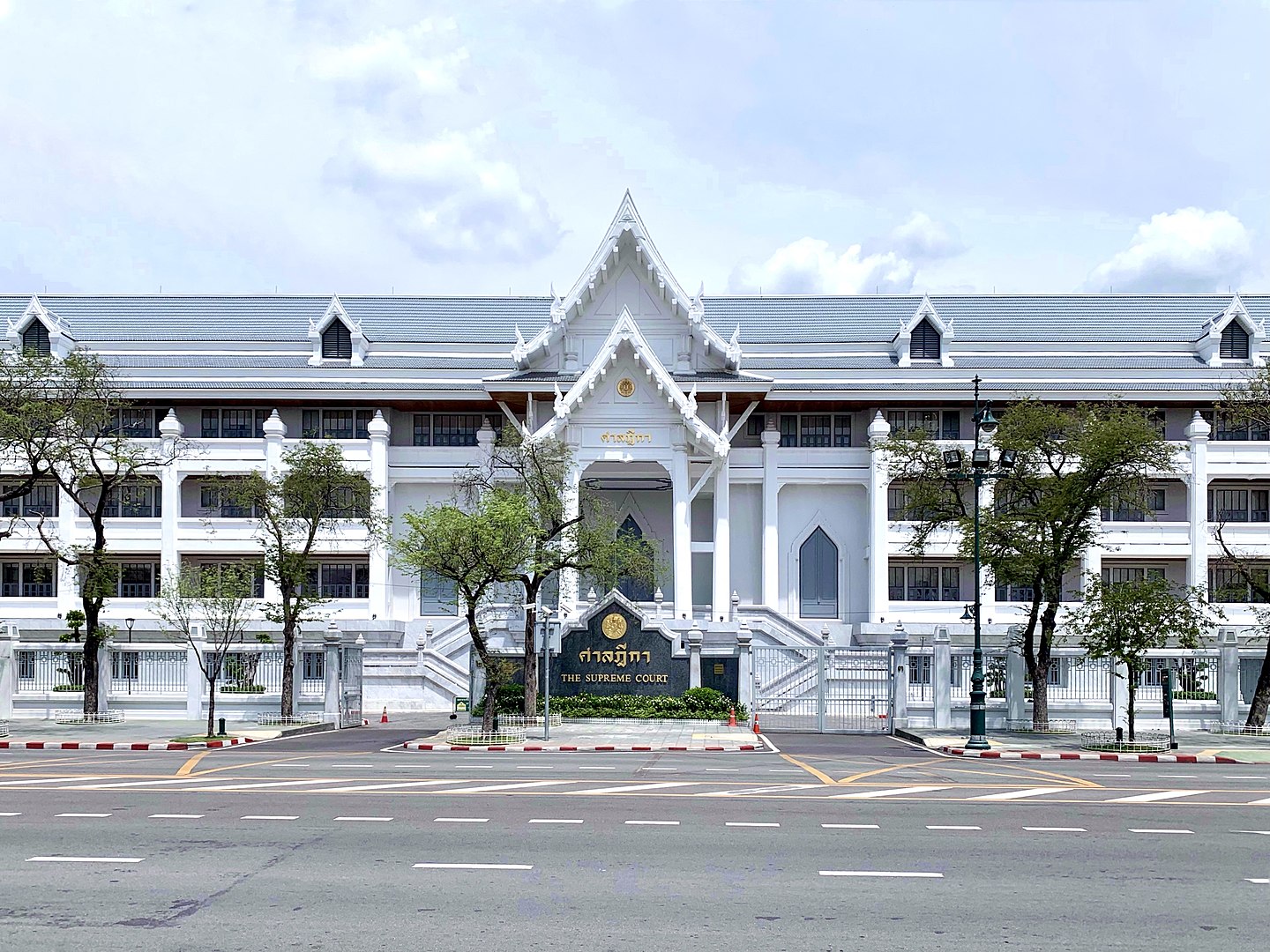
BANGKOK — The Supreme Court’s Criminal Division for Political Officer Holders has spared 10 incumbent MPs of the People’s Party, including its leader Natthaphong Ruengpanyawut, from suspension, while agreeing to consider a case filed by the Election Commission accusing them of gross ethical misconduct for endorsing a bill to amend Section 112 of the penal code, commonly known as the lèse majesté law.

Former People’s Party MP Sentenced to Prison for Draft Evasion

The court, however, issued a stern warning to the 10 MPs, prohibiting them from expressing opinions pertaining to the lèse majesté law and stating that it could review its decision if the prohibition is breached.

The Election Commission had called for the suspension of the 10 serving MPs from performing their parliamentary duties, but the court rejected the request on the grounds that there has been no behaviour suggesting that they have repeated or will commit an offence. The ruling allows Natthaphong and his nine colleagues to continue sitting in parliament while the case proceeds.

The case involves 44 former members of the now-defunct Move Forward Party, including its two former leaders, Pita Limjaroenrat and Chaithawat Tulathon, who have already been banished from politics by the Constitutional Court. Of the 44, only 10 are serving MPs of the People’s Party, Move Forward’s successor. The Election Commission has accused all 44 of gross ethical misconduct for their role in endorsing a bill to amend the lèse majesté law, an issue that has proven politically explosive and has already led to the dissolution of Move Forward and the political banishment of its leadership.

The 44 defendants have 14 days to challenge the court’s ruling. The first hearing in the case is set for June 30, with examination of evidence scheduled for August 4. For the 10 serving MPs, the court’s decision not to suspend them means they can continue their parliamentary work while the legal process unfolds, a significant victory for the People’s Party, which has been operating under the shadow of potential dissolution and mass disqualification.

Late on Thursday night, Natthaphong posted a message on his Facebook page, saying that he and the nine other serving MPs involved in the case will not stop performing their duties. He insisted that their signing of the bill to amend the lèse majesté law is within the rightful duties of an MP according to the Constitution. He added that, in the past ten years, members of the Move Forward Party and its successor, the People’s Party, have had no intention whatsoever to topple or undermine the democratic system with the King as head of state, as alleged by the Election Commission.

Natthaphong urged the public to consider with fairness the ethical standard in question, which he said has often been misused. He also argued that the accusation against the 44 did not stem from the fact that they supported amendments to the lèse majesté law, but from their vocal desire for changes in Thai society, and as such, they were deemed a threat to the powers-that-be.

People’s Party Leader Vows to Continue Pushing for Amendment of Lese-Majeste Law

The case represents the latest chapter in a long-running legal battle between Thailand’s progressive political movement and the conservative establishment. The Move Forward Party, which won the most seats in the 2023 general election, was blocked from forming a government and later dissolved by court order. Its successor, the People’s Party, now faces many of the same legal challenges, including the threat of dissolution and the disqualification of its MPs. For now, the Supreme Court’s decision to spare the 10 MPs from immediate suspension gives the party a breathing space. But the case remains active, and the prohibition on expressing opinions about the lèse majesté law hangs over them like a sword, ready to fall if they breach the court’s order. For Natthaphong and his colleagues, the fight for political survival is far from over.

-Thailand News (TN)
Similar Posts

  • | |

    Rising heat pushes even Africa’s resilient c…

    Camel herders and scientists across Africa say that rising temperatures are now overwhelming animals long regarded as uniquely suited to desert extremes, with herds facing rising death tolls, illness, and shrinking grazing lands. In the Afar region of northeastern Ethiopia, among the hottest and driest places on the planet, nomadic herders traditionally lead camel caravans loaded with salt across the desert. Ali Umer, a 40 year old herder from Semera who owns around 500 camels, said he watches his animals struggle under conditions he has never seen before. He described blistered feet, watery eyes, and burned skin among his herd, and said the sand itself now scorches the animals as they rest. Umer said he lost eight camel calves in a single month due to extreme heat, and added that even the wind no longer brings relief. He said the changes have become noticeably worse in recent years. Umer’s account matches what researchers and veterinarians are documenting across the continent. Scientists and animal welfare specialists point to stress, fatigue, dehydration, and rising disease rates as direct consequences of extreme heat, while indirect effects such as water shortages, vegetation loss, and disappearing shade compound the damage. North Africa and the Horn of Africa are home to roughly 80 percent of the world’s dromedary camel population, the single humped variety that farmers across the region have increasingly relied on because of its reputation for withstanding drought and heat. A 2025 study examining herder perceptions in southern Ethiopia found that climate variability had measurably harmed camel health, productivity, and reproduction. The crisis appears especially acute in Somalia. Research published in June found that drought linked camel deaths have affected nearly 46 percent of camel owning households, based on a survey of almost 6,000 pastoral families. The mortality was heavily concentrated in northern areas, with the Sool region recording a death rate of nearly 73 percent. Experts say extreme heat is the central driver behind the region’s drought conditions, though poor veterinary access and weak herd management make outcomes worse. Atmospheric scientists have linked the severe 2021 to 2022 drought to sustained high temperatures, which accelerate evaporation from soil and water sources and increase the rate at which plants release moisture into the air. Veterinarians on the ground report a growing caseload tied to heat. Hassan Nuya Guyo, a veterinary officer in Marsabit county in northeastern Kenya near the Ethiopian border, said his clinic is seeing a sharp rise in hyperthermia cases that leave camels vulnerable to secondary infections. He said camel deaths in the county have risen more than 15 percent over the past two years due to heat and drought. Separate research from the Horn of Africa links heat stress to higher disease rates and falling milk yields among camel herds. A similar pattern is emerging in North Africa. A study conducted in Algeria and published this year documented a marked rise in camel deaths during summer heatwaves, with researchers noting clear seasonal mortality spikes that they say call for targeted responses such as emergency water supplies, supplemental feeding, and closer disease monitoring during peak summer months. The World Meteorological Organization says extreme heat events have become routine across North Africa, with heatwaves trending upward since 1981. Several countries in the region and the wider Middle East recorded temperatures above 50 degrees Celsius in 2024. The organization’s most recent State of the Climate in Africa report found that North Africa warmed faster than any other subregion on the continent between 1991 and 2025, at a rate of 0.43 degrees Celsius per decade. Camels are naturally equipped to handle heat up to about 40 degrees Celsius. Their bodies allow internal temperature to fluctuate throughout the day, reducing the need to sweat, while concentrated urine, dry waste, and a thick protective coat help limit water loss and block solar radiation. But researchers say those adaptations are no longer enough. Mohammed Bengoumi, a camel health specialist with the United Nations Food and Agriculture Organization who works across North Africa, said summer temperatures in large parts of the Sahara now regularly exceed 50 degrees Celsius, raising the risk of severe heat stress, especially where vegetation, water, and shade are already scarce. Abdelmadjid Chehma, a professor at the University of Ghardaia in Algeria who has conducted experimental research on desert camels, said sustained heat above 41 to 45 degrees Celsius damages the animals at a cellular level, weakening their immune systems and preventing white blood cells from repairing themselves. He said the resulting stress slows the animals’ metabolism as their bodies try to limit internal heat production, which in turn reduces appetite and causes lethargy, lower milk output, and reproductive problems. Mohammed el Khasmi, an animal hydrobiology expert at the University of Casablanca in Morocco, said his team has documented a wide range of heat related harm in camels, including weight loss, inflammation, muscle and bone damage, kidney related chemical imbalances, and parasite driven infections. The combined pressures are forcing some herding communities to abandon land they have used for generations. Daniel Gelan, a pastoralist development researcher at Vision University in Ethiopia, said herders in the country’s north are relocating permanently to southern areas with more reliable water and vegetation, rather than following the seasonal migration patterns of the past, because the northern region can no longer sustain camel herding. The Horn of Africa is still recovering from a severe drought that lasted from 2020 to 2023 and is now facing another period of harsh conditions, according to the charity Oxfam, which reported that water prices in parts of Somalia have jumped by more than 2,000 percent. Back in Afar, Umer said he fears disease could soon begin killing his adult camels as well. Chehma said that concern reflects a broader shift underway across the region, where an animal once seen as the ultimate survivor of desert life is now being pushed toward its own breaking point by the pace and severity of current heatwaves.

  • | |

    SC to hear Imran access pleas on August 18

    The Supreme Court has scheduled five petitions concerning access to jailed former prime minister and PTI founder Imran Khan for hearing on August 18. A three-member bench headed by Justice Shahid Waheed will hear the petitions. Justice Naeem Akhtar Afghan and Justice Ishtiaq Ibrahim are also part of the bench. The cases were previously being heard by a bench headed by Justice Muhammad Ali Mazhar. The bench has now been reconstituted after Justice Mazhar became unavailable at the Supreme Court’s principal seat. The petitions seek permission for Imran Khan’s family members, personal doctors and legal team to meet him in prison. The applicants have also requested access to his medical records and proper arrangements for his medical treatment. The petitions gained renewed attention after PTI lawyers and lawmakers gathered outside the Supreme Court earlier this week, protesting over the continued delay in fixing the cases. A delegation led by PTI lawyer Salman Akram Raja subsequently met the apex court registrar. According to Insaf Lawyers Forum chief organiser Intezar Panjutha, the registrar assured the delegation that five petitions relating to restrictions on meetings with Imran would be listed for hearing. The cause list was expected to be issued ahead of the proceedings. One of the petitions was filed by Imran’s sister, Uzma Khan. She has sought his transfer to Shifa International Hospital, arguing that he requires proper treatment and continuous medical monitoring for an eye-related condition and other health complications. The Supreme Court had earlier directed that details of meetings held by Imran and his wife, Bushra Bibi, with family members, lawyers and party leaders in prison be submitted. The newly constituted bench has attracted attention because of the legal positions previously taken by its members in politically sensitive matters. Justice Afghan has been associated with dissenting opinions on several major constitutional and legal issues. He had opposed the constitutionality of trying civilians in military courts and had also dissented in a case involving the transfer of judges between high courts. He has previously granted post-arrest bail to PTI leaders facing cases related to the May 9 violence. Justice Ibrahim was part of a Supreme Court judgment that overturned an earlier order concerning Imran’s right to defend himself in a defamation case filed by Prime Minister Shehbaz Sharif. Meanwhile, the Islamabad High Court is separately hearing petitions concerning the alleged solitary confinement of Imran Khan and Bushra Bibi. The dispute over access to Imran has remained a major issue for the PTI, which maintains that his family, lawyers and doctors should be allowed regular meetings. The government has continued to face pressure over the prison arrangements surrounding the former prime minister.

  • American siblings reunite with Thai man who saved their family during the Vietnam War

    UBON RATCHATHANI – More than five decades after losing contact, three American siblings have been reunited with a Thai man who protected and cared for their family during their stay in Thailand in the early 1970s. Baby reunited with biological parents a month after hospital mix-up in Samut Sakhon Raoul Butland, 66, Lisaree Butland, 63, […]

  • | |

    Farooq Sattar calls for more provinces in Pakistan

    Muttahida Qaumi Movement-Pakistan (MQM-P) senior leader Dr Farooq Sattar has called for the creation of more provinces, saying Pakistan cannot be effectively governed through the existing four provinces or by the influence of a few political families. Speaking after arriving at the party’s Bahadurabad headquarters in Karachi, Sattar said the country needs a more inclusive and participatory federal structure with additional provinces to ensure balanced governance and fair representation. He said the movement for administrative reforms would continue until the establishment of more provinces across the country. According to Sattar, creating new provinces is essential for improving governance, strengthening the federation and addressing regional disparities. The MQM-P leader also praised the country’s leadership for demonstrating resilience during challenging times. He commended Field Marshal Syed Asim Munir, Prime Minister Shehbaz Sharif and the nation for showing determination and courage. Sattar reiterated that constitutional and administrative reforms are necessary to build a stronger and more representative Pakistan, adding that decentralisation would help improve public service delivery and promote national unity.

  • | | |

    PML-N secures first wins in AJK refugee seats

    Unofficial and provisional results have started coming in following the completion of polling for the second phase of the 2026 Azad Jammu and Kashmir (AJK) Legislative Assembly elections. Early results indicate that the Pakistan Muslim League-Nawaz (PML-N) has secured victory on two refugee constituencies, while vote counting continues across the remaining seats. Polling was held for eight constituencies in the Muzaffarabad Division and 12 refugee seats reserved for Kashmiri migrants living in different cities across Pakistan. Voting in the Muzaffarabad Division began at 8:00 a.m. and, due to high voter turnout, the Election Commission extended polling by one hour until 6:00 p.m. Polling for the refugee constituencies concluded at 5:00 p.m. Early Results from Muzaffarabad Division In LA-25 Neelum Valley-I, with results from 10 of 143 polling stations, PML-N candidate Shah Ghulam Qadir was leading with 1,364 votes, followed by Abid Afzal of the All Jammu and Kashmir Muslim Conference with 951 votes. In LA-26 Neelum Valley-II, after results from 8 of 135 polling stations, PPP candidate Mian Abdul Waheed led with 1,157 votes, while PML-N’s Shah Ghulam Qadir had 940 votes. In LA-29 Muzaffarabad-III, results from 2 of 138 polling stations showed Barrister Iftikhar Ali Gilani of PML-N leading with 379 votes, ahead of PPP’s Sardar Mukhtar Khan, who secured 353 votes. In LA-30 Muzaffarabad-IV, PML-N’s Mustafa Bashir Abbasi was ahead with 247 votes, while PPP’s Mubashir Munir Awan had 206 votes, according to results from 2 of 129 polling stations. In LA-31 Muzaffarabad-V, PML-N candidate Saqib Majeed Raja led with 2,934 votes, while PPP’s Chaudhry Latif Akbar received 1,660 votes, based on results from 14 of 249 polling stations. In LA-32 Muzaffarabad-VI, former AJK Prime Minister Raja Muhammad Farooq Haider of PML-N was narrowly ahead with 892 votes, while PPP candidate Sahibzada Muhammad Ashfaq Zafar had 871 votes, according to results from 5 of 163 polling stations. In LA-33 Muzaffarabad-VII, PPP candidate Diwan Ali Khan Qamar Chughtai was leading with 1,349 votes, followed by PML-N’s Mian Muhammad Rashid, who secured 1,029 votes after counting at 7 of 155 polling stations. Refugee Seats The first complete unofficial results declared PML-N victorious in two refugee constituencies. In LA-43 Kashmir Valley-IV, PML-N’s Muhammad Yasin Lone won the seat with 1,276 votes, defeating PPP candidate Javed Butt, who received 563 votes. In LA-44 Kashmir Valley-V, PML-N’s Muhammad Ahmad Raza Qadri was declared the winner with 1,700 votes, while Mehr-un-Nisa of the All Jammu and Kashmir Muslim Conference secured 650 votes. Vote Counting Continues In LA-34 Jammu-I, PML-N’s Nasir Hussain Dar was leading with 1,690 votes after results from 51 of 131 polling stations, while independent candidate Raja Riaz Ahmad had 741 votes. In LA-35 Jammu-II, PML-N’s Chaudhry Muhammad Ismail maintained a commanding lead with 18,788 votes, followed by independent candidate Sardar Muhammad Ghayas with 5,041 votes, based on results from 100 of 142 polling stations. In LA-36 Jammu-III, PML-N’s Muhammad Ahsan Raza led with 10,002 votes, while PPP’s Ahsan Ismail had 4,756 votes after counting at 50 of 140 polling stations. In LA-37 Jammu-IV, PML-N candidate Maryam Javed was ahead with 19,014 votes, while independent candidate Usman Aleem had 14,734 votes, according to results from 121 of 185 polling stations. In LA-38 Jammu-V, PML-N’s Zeeshan Ali was leading with 5,524 votes, narrowly ahead of Muhammad Akbar Chaudhry of the Muslim League AJK, who had 4,988 votes, based on results from 49 of 115 polling stations. In LA-39 Jammu-VI, PML-N’s Raja Muhammad Siddique secured 3,176 votes, while PPP’s Chaudhry Fakhar Zaman followed with 945 votes after counting at 41 of 157 polling stations. In LA-40 Kashmir Valley-I, PPP candidate Aamir Abdul Ghaffar led with 1,178 votes, while PML-N’s Muhammad Naeem Khan had 65 votes, according to results from 23 of 47 polling stations. In LA-41 Kashmir Valley-II, PML-N’s Muhammad Aamir Shah was ahead with 922 votes, while independent candidate Saba Diwan received 556 votes after counting at 13 of 19 polling stations. In LA-42 Kashmir Valley-III, PML-N candidate Syed Shaukat Ali Shah led with 1,326 votes, followed by PPP’s Muhammad Asim Sharif with 682 votes after results from 13 of 43 polling stations. In LA-45 Kashmir Valley-VI, PPP’s Abdul Majid Khan was leading with 2,444 votes, while Khawaja Muhammad Dilawar of the All Jammu and Kashmir Muslim Conference had 562 votes, according to results from 15 of 41 polling stations. The Election Commission had established 1,483 polling stations across the Muzaffarabad Division. Polling in LA-27 Muzaffarabad-II was postponed because of severe weather and landslides. Voting for the refugee constituencies was held in several cities across Pakistan. Polling for Jammu-I and Kashmir Valley-I took place in Karachi, while Rawalpindi and Islamabad hosted polling for LA-43 Kashmir Valley-IV, LA-44 Kashmir Valley-V, and LA-39 Jammu-VI. Vote counting is continuing, and official results are expected after the completion of the counting process.

  • Thailand, Malaysia Open Sadao-Bukit Kayu Hitam Border Link

    SADAO, Thailand — Thailand and Malaysia have officially opened a vital new border crossing connecting the Sadao customs checkpoint with Malaysia’s Bukit Kayu Hitam post, a monumental infrastructure project designed to serve as a primary economic gateway for the region. The inauguration was jointly presided over by Thai Prime Minister Anutin Charnvirakul and Malaysian Prime […]

Leave a Reply

Your email address will not be published. Required fields are marked *