thai marines reclaim

Thai Marines Reclaim Border Zone in Trat After Sustained Clashes

BANGKOK – Royal Thai Navy marines have secured the border area of Ban Nong Ri in Trat province following several days of fighting, successfully expelling Cambodian forces from what Thailand asserts is its sovereign territory. The navy confirmed the operation on Wednesday.

Thai Soldier Death Toll Reaches 19 as Border Conflict Escalates

Spokesman Rear Admiral Parach Rattanachaiphan stated that the Border Defence Command for Chanthaburi and Trat, supported by the Marine Task Force, executed the mission in Ban Nong Ri, located in Muang district’s Chamrak subdistrict. The area had faced a security threat since early December, necessitating a coordinated military response.

Aerial surveillance had identified that Cambodian troops established a new base in the same vicinity where three previous Cambodian military positions had been dismantled. The operation to reclaim the zone commenced at dawn on December 9 and was conducted in coordination with the Royal Thai Air Force. After days of intense maneuvers, Thai forces secured the target area and restored stability along that section of the border.

Thai Navy Responds to Renewed Cambodian Incursion in Trat

The navy emphasized that the mission was conducted in strict compliance with international law and human rights principles. The integrated effort aimed to safeguard national sovereignty, ensure border security, and protect civilians living in the frontier region. The spokesperson added that all naval and air force units remain mobilized to guarantee peace and prevent further incursions.

-Thailand News (TN)
Similar Posts

  • | | |

    Wheat imports spark farmer anger

    The federal government’s decision to import one million tonnes of wheat has sparked strong criticism from farmers and agricultural experts. The move has raised concerns about Pakistan’s food policy and the country’s continued dependence on imported grain despite being a major wheat producer. Pakistan produces around 31 million tonnes of wheat annually. The crop covers nearly 40 per cent of the country’s cultivated area and remains a major part of the daily diet of millions of people. Punjab is the country’s largest wheat-producing province and contributes almost three-fourths of national production. Farmers and experts say the issue is not simply about wheat availability. They believe repeated imports are linked to weak planning, inaccurate crop estimates, poor storage facilities, post-harvest losses and inconsistent government policies. Population growth and changing weather patterns have also increased pressure on the wheat supply chain. Farmer organisations have strongly opposed the import decision. They say local growers are still struggling to sell their recently harvested wheat. Many farmers claim they are receiving prices below their production costs after spending heavily on seeds, fertiliser, pesticides, diesel and electricity. Growers fear that imported wheat could further reduce local prices. They argue that the government should first ensure that locally produced wheat is purchased at fair rates before turning to international markets. The controversy has also highlighted changes in Pakistan’s wheat procurement system. Under wider economic reforms linked to the International Monetary Fund programme, successive governments have reduced state intervention in agricultural markets. The aim is to limit government losses and encourage greater private-sector participation. The IMF has not directly ordered Pakistan to stop purchasing wheat from farmers. However, governments have moved away from the traditional procurement and support price system. Provincial authorities have also reduced wheat purchases, leaving farmers increasingly dependent on private traders. Farmers say the transition has not been properly managed. They argue that private buyers now have greater influence over prices because of weak market regulation. This has forced some growers to sell their wheat below production costs.

  • Thai Army Says No Proof China is Resupplying Cambodian Forces

    BANGKOK – The Royal Thai Army stated there is currently no evidence to substantiate claims that China is covertly resupplying Cambodian forces with weapons. The announcement comes amid heightened scrutiny following the Thai military’s capture of a significant cache of sophisticated guided anti-tank missiles from the Chong Anh Ma area in Ubon Ratchathani province, Thai […]

  • | | |

    Missile hits ship leaving Strait of Hormuz, UK Mar…

    A commercial vessel sailing out of the Strait of Hormuz was struck by a missile, causing damage to its engine and injuring members of its crew, the United Kingdom Maritime Trade Operations (UKMTO) said on Tuesday. The incident has added to growing concerns over maritime security in one of the world’s most strategically important waterways, where tensions have remained high amid the wider conflict involving Iran and regional powers. According to UKMTO, the vessel was hit after leaving the Strait of Hormuz. The missile caused damage to the ship’s engine, while members of the crew were also affected in the attack. Omani coast guard personnel responded to the incident and are providing assistance to the crew, UKMTO said. No further details about the condition of the vessel or the extent of the injuries were immediately available. The agency did not identify who fired the missile. The circumstances surrounding the attack, including the type of missile used and the exact location of the strike, were also not immediately disclosed. The Strait of Hormuz is a critical global shipping route through which a substantial share of the world’s oil supplies passes. Any attack on commercial shipping in or around the waterway can raise concerns about the safety of international trade and energy supplies. The latest incident comes as tensions remain particularly sensitive around the Gulf. Shipping companies and maritime authorities have been closely monitoring developments, with any disruption in the waterway capable of affecting global markets. Meanwhile, Iranian officials have strongly rejected what they describe as repeated claims and threats concerning the Strait of Hormuz. Ibrahim Azizi, chairman of Iran’s parliament’s National Security Commission, criticised US President Donald Trump over his remarks regarding the strategic waterway. In a statement issued from Tehran, Azizi urged Trump to focus on his own security instead of making what he called baseless and endless claims about the Strait of Hormuz. Azizi also made a provocative reference to Trump’s personal safety, saying the US president should think about ensuring his own security. The latest missile strike remains under investigation, and the identity of those responsible has yet to be established. Further information from maritime authorities is expected as officials assess the vessel, crew and circumstances surrounding the attack. For now, the incident has renewed fears that rising regional tensions could spill over into commercial shipping and threaten vessels using one of the world’s busiest energy corridors.

  • Thailand Prepares To Halve Visa-free Stay For Tourists From 60 To 30 Days

    BANGKOK, Thailand — Thailand’s Foreign Minister Sihasak Phuangketkaew has signaled that the government is moving forward with a proposal to reduce the visa-free entry period for foreign tourists from 60 days to 30 days, citing concerns about misuse of the current arrangement and the need to strengthen border security and immigration oversight. Thailand Launches Crackdown […]

  • | | |

    Israel launches second strike in Syria within a we…

    DAMASCUS: Tensions in the region rose again after an Israeli drone strike near the Syrian capital Damascus injured several people, prompting Kuwait to strongly condemn the attack and call for international action to prevent further Israeli operations on Syrian territory. The strike reportedly targeted a civilian vehicle near a village southwest of Damascus. Several people were injured in the attack, according to reports, although the full extent of the casualties was not immediately clear. Kuwait’s Foreign Ministry condemned what it described as repeated Israeli aggression against Syrian territory and urged the international community, particularly the United Nations Security Council, to fulfil its responsibilities and work to stop further attacks. In a statement, the ministry said the targeting of a civilian vehicle had resulted in injuries among civilians. Kuwait called for an effective international response to what it described as continuing violations of Syria’s sovereignty. The incident is particularly significant because it marks the second Israeli attack in Syria within a week, raising concerns that the cycle of strikes could further aggravate tensions in an already volatile region. Israel, however, defended the latest operation. Israeli officials said the strike targeted what they described as “terrorists” and was carried out in response to an immediate threat faced by Israeli troops. The competing accounts highlight the broader security dispute surrounding Israel’s military operations in Syria. Israel has repeatedly said that its forces act to prevent threats from armed groups and to protect Israeli personnel and territory. Syrian and Arab officials, meanwhile, have frequently condemned such operations as violations of Syrian sovereignty. The latest strike comes at a time when the wider Middle East remains under intense pressure from overlapping conflicts and security crises. Any further escalation inside Syria could complicate efforts to maintain regional stability and increase diplomatic pressure on neighbouring countries. Kuwait’s appeal to the UN Security Council reflects growing calls from Arab states for greater international scrutiny of military operations on Syrian soil. The Kuwaiti ministry urged global powers to take concrete steps rather than allowing repeated attacks to continue unchecked. For residents near Damascus, the latest incident adds to concerns over the possibility of renewed violence. Although the immediate strike caused injuries rather than a large-scale loss of life, the frequency of military operations has raised fears that a wider confrontation could develop. With Israel maintaining that its actions are necessary for security and Arab governments calling for an end to attacks, Syria remains caught at the centre of a tense regional confrontation. The latest strike could therefore become another flashpoint in an increasingly fragile security environment.

  • | | |

    Sister reveals shocking details of Imran’s check…

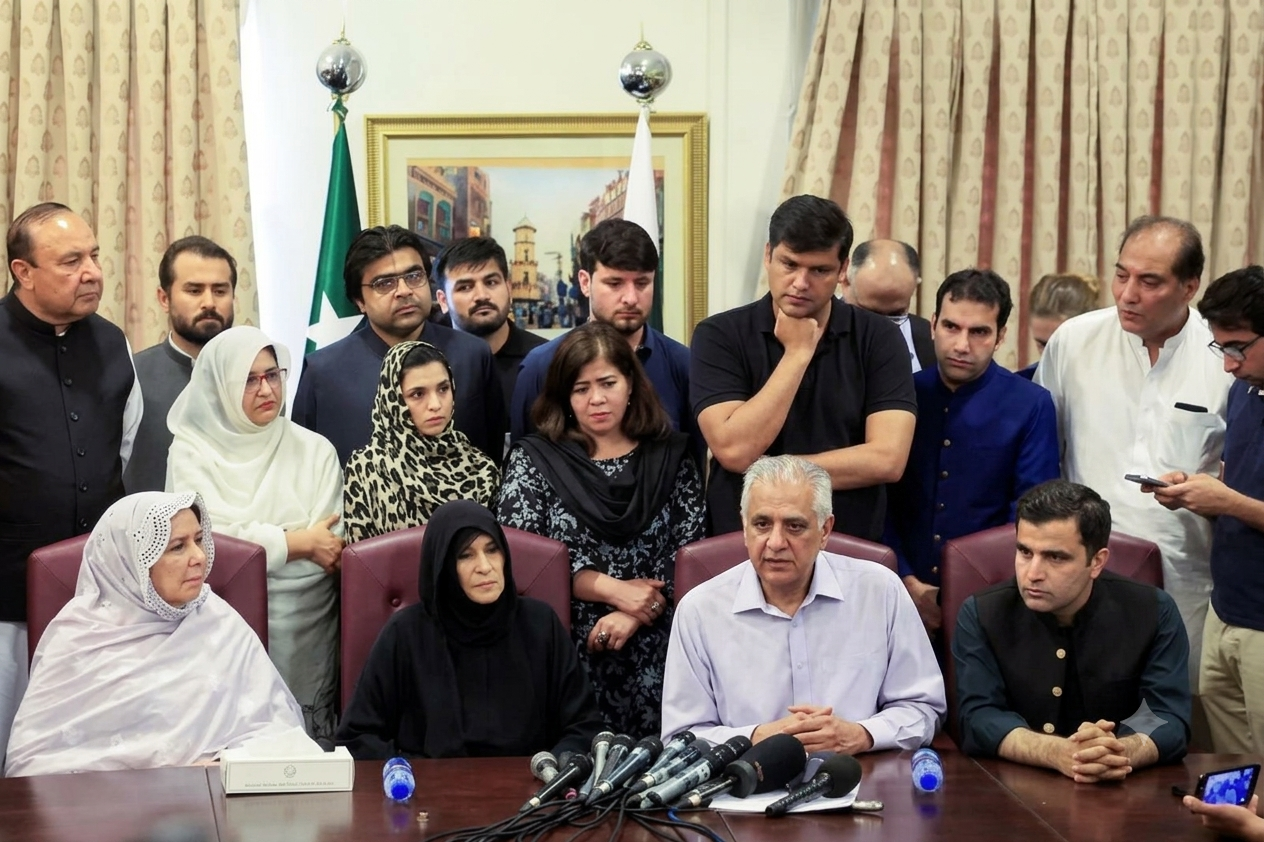
    Uzma Khan, sister of incarcerated former prime minister Imran Khan, said Friday that the PTI founder had complained of health problems that he believed were connected to his prolonged solitary confinement. She made the remarks during a press conference in Islamabad alongside Imran’s personal physician, Dr Faisal Sultan, following his transfer to hospital for a medical examination. Uzma said she and Dr Sultan were asked to reach Adiala Jail on Friday evening after receiving a phone call. According to her, they arrived at the prison at around 8pm to 8:30pm. She said they were taken to a room belonging to a deputy superintendent of police. After some time, she alleged, Dr Sultan was asked to leave the room with a police official while she was taken separately by a female police officer. Uzma said police officers did not explain where she was being taken or provide clear information about Dr Sultan. She was eventually taken to the Pakistan Institute of Medical Sciences (Pims), despite the Supreme Court directing that Imran be shifted to Shifa International Hospital for a medical checkup. According to Uzma, officials told her the visit to Pims was related to a follow-up examination of Imran’s eye condition. She described the hospital environment as unusually dark and said she was taken through the building with the help of a mobile phone flashlight before being brought to an office. Uzma said she was later taken upstairs, where she unexpectedly saw her brother. She recalled that Imran appeared surprised and shocked to see her after a long period apart. He reportedly introduced her to the doctors as his sister, saying they were meeting after about 10 months. Uzma said she informed Imran that he had been brought for a medical examination and was expected to be taken to Shifa International Hospital afterward. She also asked about Dr Sultan but said she was not given a clear answer. The examination eventually focused on Imran’s eye. Uzma said several doctors were present, although she was familiar with only one of them, whom she identified as Dr Arif. Imran has previously received treatment at Pims following the diagnosis of right central retinal vein occlusion, an eye condition identified earlier this year. The Supreme Court had directed authorities to arrange Imran’s medical examination while also instructing that information about his health should not be used for political purposes.

Leave a Reply

Your email address will not be published. Required fields are marked *