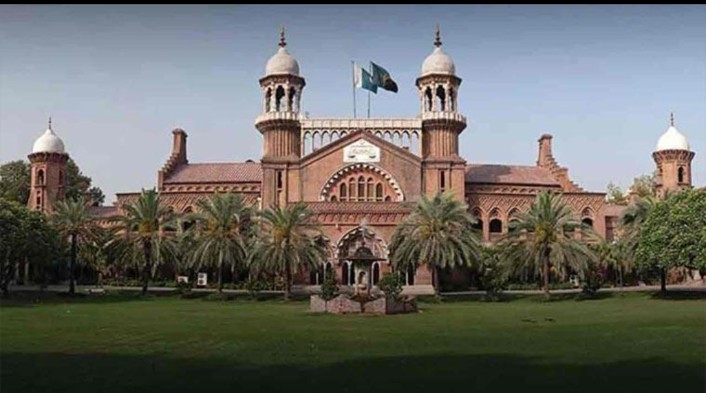
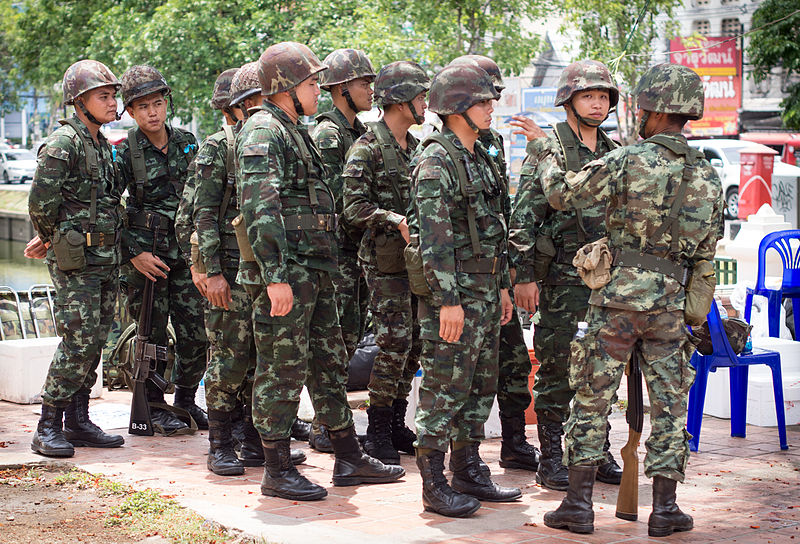
thai soldier death

Thai Soldier Death Toll Reaches 19 as Border Conflict Escalates

BANGKOK – The death toll among Thai soldiers has risen to 19 following intense border clashes with Cambodian forces. Two soldiers were killed in fierce fighting yesterday at Mount 350, a strategic hilltop position near the Prasart Ta Kwai ancient temple ruins in Surin province’s Phanom Dong Rak district.

Civilian Death Toll in Thailand Rises to 16 Amid Continued Border Clashes

The fallen soldiers were identified as Sergeant Major Samroeng Klangprakome and Private Panuphat Saosa, both serving with the 3rd Infantry Battalion of the 23rd Infantry Regiment. Their deaths mark the latest casualties since renewed armed conflict erupted on December 7. Thai troops have not yet been able to retrieve the bodies of the two soldiers from the battlefield.

According to the Second Army Region, Thai forces have regained full control of the Prasart Ta Kwai temple area but continue to face challenges in capturing Mount 350 due to terrain that favors Cambodian defenders. Cambodian troops persist in attacking the Ta Kwai vicinity with BM-21 rockets and explosive-laden drones, prompting the Thai army to issue safety warnings to defense volunteers against handling any drone debris.

In a significant escalation, Thai tank units shelled a casino building in Chong Sai Taku, Cambodia, located opposite Thailand’s Ban Kruat district in Buri Ram province. The building was suspected of being used by Cambodian forces to store drones and ammunition. The strike resulted in a large column of smoke and flames visible from the Thai side of the border.

Hun Sen Denies Reports of Foreign Troops in Cambodia

The conflict shows no signs of abating, with both sides sustaining losses and engaging in sustained artillery and drone exchanges across contested border areas.

-Thailand News (TN)

Similar Posts

  • | | |

    Fake Iranian statements allegedly used to push nuc…

    TEL AVIV: An Israeli journalist has alleged that a fabricated statement attributed to an Iranian official was circulated as part of an effort to portray Tehran as actively seeking to develop nuclear weapons. According to Israeli journalist Ronen Bergman, a false statement was allegedly created and attributed to Ahmad Vahidi, a senior commander of Iran’s Islamic Revolutionary Guard Corps. The fabricated remarks purportedly claimed that Iran was developing nuclear weapons. Bergman said the alleged fake statement was initially circulated through the social media account of a Hindu extremist in India before being amplified by a number of prominent Israeli and US-linked accounts and figures. He alleged that the material was subsequently shared by accounts associated with Israel’s Mossad, an Israeli television channel, Israeli Prime Minister Benjamin Netanyahu and the US ambassador to the United Nations. The claims have raised questions about the role of disinformation in the highly sensitive debate surrounding Iran’s nuclear programme, particularly amid continuing tensions between Tehran and Israel. The allegation is significant because claims about Iran’s nuclear ambitions have repeatedly featured in political and security debates in the region. Any fabricated statement presented as an authentic admission could potentially influence public opinion and international perceptions. However, the reported allegations concern the authenticity and circulation of the statement rather than independently establishing the broader question of Iran’s nuclear intentions. The development highlights how rapidly unverified material can spread across social media and be amplified by influential accounts, especially during periods of heightened geopolitical tension. The claims attributed to Bergman are likely to fuel further debate over information warfare, source verification and the use of alleged intelligence-related material in the ongoing Iran-Israel confrontation.

  • | | |

    Iran sets tough conditions for Strait of Hormuz re…

    Iran has warned that the strategically vital Strait of Hormuz will remain closed until the United States meets a series of conditions under a June memorandum of understanding, raising fresh concerns about the future of a conflict that has already disrupted global energy markets. Iranian Parliament Speaker Mohammad Bagher Ghalibaf said on Tuesday that Tehran would not reopen the waterway until what he described as the full terms of the agreement had been implemented. According to Iranian state media, Ghalibaf said the blockade must first be lifted, Iran’s frozen assets released, oil sanctions removed and military threats and operations on all fronts brought to an end. He also insisted that other provisions of the memorandum must be fully implemented. “Iran is prepared to impose a heavier defeat on the enemy than before,” Ghalibaf said, warning that Tehran’s response would depend on the actions and aggression of its opponents. The statement came as diplomatic efforts to secure a permanent end to the Iran-US conflict appeared increasingly fragile. Iran Claims Victory in War and Diplomacy Iranian Foreign Minister Abbas Araghchi separately declared that Tehran had won both the military confrontation and the diplomatic battle. Speaking at an event, Araghchi said Iran had resisted sustained military pressure before entering negotiations. He claimed that those who initially demanded Iran’s unconditional surrender later sought talks with Tehran. “We fought with strength, and we negotiated with strength,” Araghchi said, according to Iranian media. Araghchi also accused Israel of undermining efforts to implement the June memorandum, saying it had worked to prevent the agreement from being reached and subsequently obstructed its implementation. His comments followed US President Donald Trump’s call for Iran to surrender and “raise the white flag”, further highlighting the sharp divide between Washington and Tehran. Hormuz Becomes Central Dispute The Strait of Hormuz has emerged as one of the most important points of disagreement between the two sides. The narrow waterway links the Persian Gulf with the Gulf of Oman and is a crucial route for global oil and liquefied natural gas shipments. Shipping activity has already fallen dramatically during the conflict. Reuters reported that only a handful of commodity vessels crossed the strait over the weekend, compared with more than 130 daily ship transits before the war began. Iran says provisions of the June memorandum give it authority to manage parts of the waterway, while Washington rejects that interpretation. The disagreement has contributed to renewed tensions after an earlier ceasefire failed to produce a lasting settlement. Vessel Hit by Unknown Projectile The latest tensions were accompanied by another maritime incident. The UK Maritime Trade Operations centre said a vessel travelling outbound through the Strait of Hormuz was struck by an unknown projectile. The impact damaged the ship’s engine room and caused a crew casualty. The remaining crew members were assisted by the Omani Coast Guard, while authorities began investigating the incident. No environmental impact was reported. UKMTO urged vessels operating in the area to exercise caution and report suspicious activity. Back-Channel Diplomacy Continues Despite the increasingly hostile rhetoric, reports indicate that Washington and Tehran have continued exploring indirect channels. Media reports said the Trump administration had established a back channel involving figures connected to Iran’s Islamic Revolutionary Guard Corps. The reported effort reflected US concerns over whether Iranian negotiators had sufficient authority to deliver an agreement acceptable to the country’s powerful security establishment. US special envoy Jared Kushner also indicated that discussions between Washington and different parts of the Iranian government were more extensive than publicly acknowledged. The developments suggest that diplomacy has not completely collapsed, even as official statements from both sides remain confrontational. Iran Faces Economic Pressure Iran’s leaders also face significant economic challenges. The conflict has added pressure to an economy already struggling with inflation, sanctions, currency weakness, energy shortages and structural problems. Disrupted trade, damaged infrastructure and lost production have increased the financial burden of the war, while prolonged restrictions on shipping through Hormuz threaten Iran’s ability to generate export revenue. Global markets have also felt the impact. Brent crude rose sharply during the conflict, reaching a peak of $126 a barrel before later easing. The prolonged disruption has raised concerns over fuel prices and inflation in countries dependent on Gulf energy supplies. Ghalibaf Heads to Iraq Against this backdrop, Ghalibaf is expected to travel to Iraq for talks on regional developments and bilateral cooperation. His discussions are expected to cover security, border management, counterterrorism, economic cooperation and implementation of existing agreements between Tehran and Baghdad. The visit comes after a drone attack targeted the residence and private office of Iraqi Kurdish Regional Government Prime Minister Masrour Barzani. Iran denied involvement and condemned the incident. Araghchi said nothing justified the attack and warned against attempts to create divisions between Iran, Iraq and the Kurdish region. With the Strait of Hormuz still at the centre of the dispute, the coming days could prove crucial. Tehran’s insistence on sanctions relief, the release of frozen assets and an end to military threats leaves little room for compromise unless Washington and its allies are prepared to make substantial concessions. For now, the strategic waterway remains a powerful bargaining tool for Iran — and a major source of uncertainty for the global economy.

  • | |

    Mir Raza’s father raises new questions over son?…

    The father of businessman Mir Raza Ali has raised fresh concerns about the investigation into his son’s death. Speaking to the media on Monday, Mir Hassan claimed that his son’s business partner went missing after being questioned by police. He said police had questioned the business partner once. The man was allegedly not seen again after the questioning. Hassan said the family had not been informed about the investigation involving employees of the guest house in Gulistan-e-Johar. Mir Raza’s body was found near the guest house. “We have not been told what investigations were conducted with the employees,” he said. The victim’s father also questioned why CCTV footage from the guest house had not been made public. The latest concerns have emerged as investigators continue to review the circumstances surrounding Mir Raza’s death. The case took a new turn after the businessman’s body was exhumed for a second post-mortem examination. The second medical examination found a firearm injury and several wounds that had occurred before death. It also reported signs of internal bleeding. According to the findings, a bullet entered the upper right side of Mir Raza’s back and exited through the left side of his chest. The bullet fractured his sixth rib and caused internal bleeding. The report also documented injuries to different parts of his head, face, neck and chest. Following the medical findings, police added Section 302 of the Pakistan Penal Code to the case. The section relates to murder. The original FIR had been registered under Section 365, which concerns kidnapping. Mir Raza, 25, was allegedly abducted from the PECHS area. His body was later found in bushes near a wedding hall in Gulistan-e-Johar. Police had earlier suspected that he may have been tortured before being shot. The case initially faced uncertainty over whether Mir Raza had been murdered or had died by suicide. His family, however, consistently rejected the suicide theory. The second post-mortem has strengthened the family’s claim that Mir Raza was killed. Questions had also been raised about the first post-mortem report. Karachi Police Surgeon Dr Summaiya Syed had pointed out several issues in the initial examination. She had questioned why the body was not X-rayed and why hand swabs were not collected for gunshot residue testing. She had also raised concerns over the scientific measurement and photography of firearm injuries. Questions were further raised about the documentation of the bullet’s path and the examination of the entry and exit wounds. Following these developments, police dissolved the previous investigation team. A new team was formed under the leadership of DIG Crime and Investigation Amir Farooqi. The new team was tasked with conducting a fresh investigation based on the latest medical findings. Investigators were also expected to revisit the crime scene. They were directed to re-question the victim’s family and other relevant individuals. The team was also expected to examine forensic, technical, physical and circumstantial evidence. Mir Raza’s family has repeatedly criticised the handling of the case. They have maintained that he was murdered and demanded that those responsible be identified and brought to justice. The family’s lawyer, Jibran Nasir, had also alleged that investigators pressured the family to accept a suicide theory. He called for an independent and impartial investigation. The Sindh government has meanwhile decided to establish a judicial commission headed by a Sindh High Court judge. The commission is intended to oversee a transparent and impartial investigation into Mir Raza’s death.

  • |

    Grenade blast kills three in Lakki Marwat

    A family dispute in the Bahram Khel area of Lakki Marwat turned tragic when a hand grenade exploded inside a house, killing three people and injuring three children, police said. According to officials, the explosion occurred during an argument between family members. The powerful blast claimed the lives of a man, his sister-in-law, and his nephew on the spot, while three children suffered injuries of varying severity. Residents rushed to the house after hearing the explosion and alerted rescue teams. Emergency responders reached the scene shortly afterward and shifted the victims to a nearby hospital. Doctors are providing medical treatment to the injured children, while the bodies of the deceased have been handed over for legal formalities. Police cordoned off the area and launched an investigation to determine the circumstances that led to the explosion. Investigators are examining how the hand grenade came to be inside the house and whether it was intentionally used during the dispute or detonated accidentally. Authorities have begun collecting evidence from the scene and recording statements from family members and witnesses. Officials said they will determine responsibility after completing the investigation and forensic examination. No arrests have been reported so far, and police said further details will emerge as the inquiry progresses.

  • | | |

    Goods transporters begin indefinite strike across …

    The All Pakistan Goods Transporters Alliance has announced an indefinite strike across Pakistan from Saturday, August 8, in protest against rising fuel prices and additional financial burdens on the transport sector. Alliance President Malik Shehzad Awan confirmed the strike and said goods transporters would continue keeping their vehicles off the roads until further decisions were made. He said the federal government had invited representatives of the transport alliance to a meeting on Monday to discuss their concerns. Awan said a committee had been formed to represent the transporters during talks with government officials. He added that the strike would continue until the meeting was held and the alliance announced its next course of action. According to Awan, earlier negotiations between the transport alliance and government officials at the commissioner’s office had failed to resolve the dispute. Following the unsuccessful talks, the transporters decided to proceed with their planned indefinite strike. The alliance is protesting against higher petrol and diesel prices. It is also opposing the government’s decision to determine petroleum product prices on a daily basis. Another major demand concerns the seven percent withholding tax imposed on the transport sector. Transporters say rising fuel costs and additional taxes have increased their operating expenses and created serious financial difficulties for the industry. They have urged the government to review the current policies and provide relief to the transport sector. The transporters have warned that the strike could affect the movement of goods across the country if the dispute continues. Goods transporters play a major role in supplying food, industrial products, raw materials and other essential items to markets and businesses. A prolonged strike could therefore put pressure on supply chains and affect the availability and transportation of essential goods in different areas. The government’s scheduled meeting with the transport alliance on Monday is expected to determine the next course of action. Transport representatives will present their demands during the talks and seek a solution to the ongoing dispute.

  • | |

    PTI’s Akmal Khan Bari moves LHC over police hara…

    LAHORE: Pakistan Tehreek-e-Insaf (PTI) leader Akmal Khan Bari has approached the Lahore High Court (LHC), accusing the Punjab Police of political victimisation and unlawful harassment, while seeking constitutional protection for himself and his family against what he alleges are repeated illegal actions by law enforcement authorities. The constitutional petition was filed through senior lawyer Sardar Latif Khosa, with the Inspector General of Police (IGP) Punjab and other relevant officials named as respondents. The petition urges the court to intervene, alleging that police actions have exceeded legal limits and infringed upon the petitioner’s constitutional rights. According to the plea, police officials allegedly raided Akmal Khan Bari’s residence at around 10:00 p.m. on July 27. The petitioner claims that officers entered the premises without lawful justification and subjected his family members to intimidation and harassment during the late-night operation. The petition further states that Bari had previously been arrested in what he describes as a fabricated criminal case. It argues that the latest police action is part of a broader pattern of political victimisation aimed at pressuring him because of his affiliation with Pakistan Tehreek-e-Insaf. The petitioner maintains that no criminal allegation currently justifies repeated police raids or coercive measures against him or his family. He contends that such actions violate the fundamental rights guaranteed under Pakistan’s Constitution, including the rights to personal liberty, dignity, privacy, and equal protection before the law. According to the petition, law enforcement agencies are legally bound to operate within the framework of the Constitution and cannot exercise their authority arbitrarily or for political purposes. It alleges that the conduct of the respondents is mala fide, unlawful, and inconsistent with constitutional safeguards designed to protect citizens from abuse of power. Bari has requested the Lahore High Court to issue directions restraining the Punjab Police and other respondents from taking any unlawful coercive action against him. He has also sought specific orders preventing police officials from harassing, intimidating, or interfering with members of his family. Additionally, the petition asks the court to direct all respondents to perform their duties strictly in accordance with the Constitution and applicable laws, ensuring that no individual is subjected to harassment without legal grounds. The Lahore High Court is expected to take up the constitutional petition for preliminary proceedings, where it will determine whether notices should be issued to the respondents and what further legal steps, if any, are warranted. The Punjab Police had not issued an official response to the allegations at the time this report was filed.

Leave a Reply

Your email address will not be published. Required fields are marked *