ptis akmal khan
| |

PTI’s Akmal Khan Bari moves LHC over police hara…

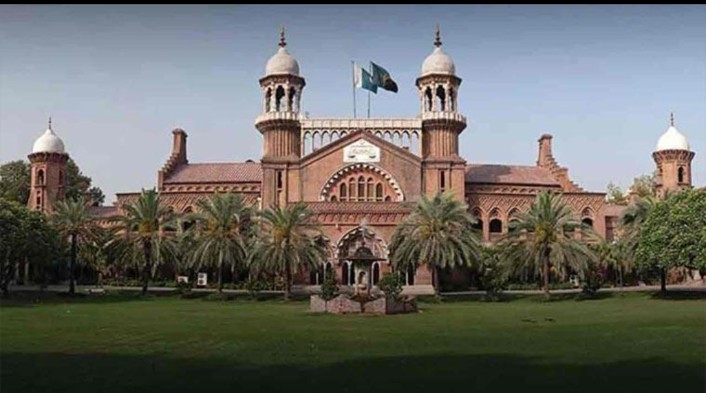
LAHORE: Pakistan Tehreek-e-Insaf (PTI) leader Akmal Khan Bari has approached the Lahore High Court (LHC), accusing the Punjab Police of political victimisation and unlawful harassment, while seeking constitutional protection for himself and his family against what he alleges are repeated illegal actions by law enforcement authorities.

The constitutional petition was filed through senior lawyer Sardar Latif Khosa, with the Inspector General of Police (IGP) Punjab and other relevant officials named as respondents. The petition urges the court to intervene, alleging that police actions have exceeded legal limits and infringed upon the petitioner’s constitutional rights.

According to the plea, police officials allegedly raided Akmal Khan Bari’s residence at around 10:00 p.m. on July 27. The petitioner claims that officers entered the premises without lawful justification and subjected his family members to intimidation and harassment during the late-night operation.

The petition further states that Bari had previously been arrested in what he describes as a fabricated criminal case. It argues that the latest police action is part of a broader pattern of political victimisation aimed at pressuring him because of his affiliation with Pakistan Tehreek-e-Insaf.

The petitioner maintains that no criminal allegation currently justifies repeated police raids or coercive measures against him or his family. He contends that such actions violate the fundamental rights guaranteed under Pakistan’s Constitution, including the rights to personal liberty, dignity, privacy, and equal protection before the law.

According to the petition, law enforcement agencies are legally bound to operate within the framework of the Constitution and cannot exercise their authority arbitrarily or for political purposes. It alleges that the conduct of the respondents is mala fide, unlawful, and inconsistent with constitutional safeguards designed to protect citizens from abuse of power.

Bari has requested the Lahore High Court to issue directions restraining the Punjab Police and other respondents from taking any unlawful coercive action against him. He has also sought specific orders preventing police officials from harassing, intimidating, or interfering with members of his family.

Additionally, the petition asks the court to direct all respondents to perform their duties strictly in accordance with the Constitution and applicable laws, ensuring that no individual is subjected to harassment without legal grounds.

The Lahore High Court is expected to take up the constitutional petition for preliminary proceedings, where it will determine whether notices should be issued to the respondents and what further legal steps, if any, are warranted. The Punjab Police had not issued an official response to the allegations at the time this report was filed.

Similar Posts

  • Artillery and Airstrikes Claim Civilian Lives on Thai-Cambodian Border

    BANGKOK – Heavy fighting along the Thai-Cambodian border has resulted in the deaths of three Thai civilians—the first non-combatant fatalities since hostilities dramatically reignited. The deaths come after a skirmish on Sunday that wounded two Thai soldiers and shattered a U.S.-brokered ceasefire originally established in July and formalized in October. Thai Air Force Ready to […]

  • | | |

    Audit reveals Rs47bn electricity overbilling

    A government audit has uncovered an alleged Rs47 billion electricity overbilling scandal, raising serious concerns over billing practices by power distribution companies (DISCOs). The findings were presented before a subcommittee of the Public Accounts Committee (PAC), where officials said inflated electricity bills were issued to hundreds of thousands of consumers. Audit officials informed the committee that 278,649 consumers received excessive electricity bills in a single month. According to the findings, the overbilling involved nearly 904 million electricity units, creating a major financial burden for households and businesses across the country. The audit report stated that the Lahore Electric Supply Company (LESCO) accounted for the largest share of the overbilling, with consumers allegedly charged around Rs45 billion beyond actual consumption. The Peshawar Electric Supply Company (PESCO) was identified as the second-largest contributor, with overbilling estimated at Rs1.56 billion. Officials told lawmakers that the inflated bills were mainly caused by incorrect meter readings and misuse of authority by field staff responsible for recording electricity consumption. They alleged that overbilling was used to hide electricity theft, transmission losses and inefficiencies within the distribution system. Consumers who regularly paid their bills were reportedly charged extra, while refunds were usually made only after formal complaints were submitted. The Power Division informed the committee that reforms are being introduced to improve the billing system. Smart electricity meters and transformer-based metering technology are being installed in different regions to reduce human error and improve transparency. Officials said these measures have already helped reduce complaints of overbilling in areas where the new system has been implemented. Members of the Public Accounts Committee expressed concern over the scale of the issue and questioned how many similar cases had gone unnoticed. They said the reported figures likely represent only the cases detected through audits, while many more consumers may have suffered from incorrect billing without being aware of it. Lawmakers highlighted the financial difficulties faced by ordinary citizens because of inflated electricity bills. They said many families had been forced to borrow money or sell personal belongings to pay their electricity charges, adding that such practices have increased public frustration over rising utility costs. The committee was also informed that disciplinary action had been taken against officials found responsible for irregularities. According to the management of LESCO, stronger anti-theft operations and stricter monitoring have significantly reduced electricity theft and eliminated overbilling in its service area. Several officers, including an executive engineer and multiple sub-divisional officers, have been dismissed over misconduct. During the same meeting, another audit report highlighted alleged financial irregularities in the Hyderabad Electric Supply Company (HESCO). The report claimed that Rs1.06 billion was misappropriated through payments made to ghost employees and retired staff, with investigators pointing to possible collusion among officials involved in financial administration.

  • Thailand Launches Fast Online Criminal Background Checks

    BANGKOK – Checking a criminal background record in Thailand is now much easier than ever before. A brand-new digital system will soon replace long police station lines and confusing paper forms. This very helpful change allows everyday citizens to securely request their official legal documents from home. The Criminal Records Division recently announced this exciting […]

  • |

    Trump cuts childhood vaccine recommendations as doctors warn of health risks

    US President Donald Trump signed an executive order on Monday calling for fewer childhood vaccinations, limiting core federal guidance to immunisations against 11 diseases. Trump stated the adjustments would offer children “gold-standard” protection while bringing US policies in line with foreign nations that recommend fewer routine shots. The executive directive advises breaking up the combined measles, mumps, and rubella (MMR) vaccine into three distinct doses administered across separate clinical visits. Health Secretary Robert F. Kennedy Jr. has long advocated for reductions in the pediatric vaccine schedule. Medical researchers and global health bodies have repeatedly debunked claims championed by Kennedy alleging a causal link between routine childhood vaccines and autism. The American Academy of Pediatrics and pharmaceutical manufacturer Merck sharply criticised the executive action. “We are evaluating our next steps,” stated Richard Hughes IV, lead legal counsel for the American Academy of Pediatrics. Merck noted there is no published scientific evidence demonstrating clinical advantages to unbundling the MMR vaccine, warning the mandate could induce delayed or skipped immunisations. Republican Senator Bill Cassidy, a practicing physician, publicly broke with the administration over the decree. “I’m a doctor. This executive order is wrong. The president does not have the expertise to make these changes,” Cassidy said. Cassidy cautioned that unbundling combination shots will force children to endure a higher volume of individual injections to secure identical protection.

  • | | |

    Ravi Valecha reveals childhood abuse during his ti…

    Former child actor Ravi Valecha has opened up about a painful chapter of his childhood revealing that he experienced sexual abuse while working in the Indian film industry. Valecha became known for portraying younger versions of Amitabh Bachchan’s characters in several popular Hindi films. Speaking to Indian media, Valecha said the incidents began when he was around eight years old. He recalled that the abuse happened three times and said it was extremely difficult for him to tell anyone what he was experiencing. Valecha described one incident that allegedly took place at a dubbing studio. He said an older person associated with the film industry behaved inappropriately toward him. He also recalled another distressing experience involving a young secretary when he was around 11 or 12 years old. The former child actor said fear kept him silent for years. He was worried about speaking out because his work required him to continue travelling with people connected to the industry. He also feared that his parents might not believe him if he told them what had happened. As a result, Valecha carried the memories and emotional pain into adulthood. He said the anger connected to those experiences eventually affected his personal life and made it difficult for him to move beyond the past. After years of struggling with the trauma, Valecha sought professional help. He said he underwent six months of therapy, which helped him process his childhood experiences and begin recovering emotionally. Valecha was a well-known child performer during the 1970s and 1980s. He reportedly appeared in around 300 films made in different Indian languages. During his career he frequently played childhood versions of characters portrayed by Amitabh Bachchan. His film credits include Coolie, Amar Akbar Anthony, Mr. Natwarlal, Fakira, Tumhare Bina, Khud-Daar, Nastik, Parichay, Yaadon Ki Baaraat, Karz, Seeta Aur Geeta and Desh Premee. His appearance in Coolie, released in 1983, remains one of the notable highlights of his childhood acting career. Working alongside major Bollywood stars made Valecha a familiar face to audiences at a young age. Despite his extensive work in films Valecha eventually left acting. His recent decision to speak publicly about his experiences has brought attention to the challenges faced by children working in the entertainment industry. His account also highlights the importance of creating safe working environments for young performers and ensuring that children have trusted adults and professional support available when they experience abuse or exploitation. Valecha’s story serves as a reminder that childhood fame and professional success do not necessarily protect young performers from difficult experiences behind the scenes. By discussing his past after many years he has also encouraged greater awareness of the emotional impact that childhood trauma can have later in life.

  • | |

    Experts call for gender-responsive water policies …

    LAHORE: The growing impact of water insecurity and climate change on women took center stage at a dialogue titled “Women and Water,” jointly organized by Women in Struggle for Empowerment (WISE) and the University of Home Economics, Lahore. The event brought together academics, development professionals, and civil society representatives to advocate for inclusive and gender-responsive water governance in Pakistan. Addressing the gathering, Vice Chancellor of the University of Home Economics, Prof. Dr. Zaib-un-Nisa, underscored the urgent need to tackle water pollution, plastic waste, and inadequate water treatment systems. She stressed that sustainable solutions require greater investment in scientific water management, wider adoption of rainwater harvesting, improved household water storage, advanced recycling technologies, and university-led awareness campaigns to encourage responsible water use. Executive Director of WISE, Bushra Khaliq, said that Pakistan’s water challenges cannot be effectively addressed without recognizing their disproportionate impact on women and girls, who often bear the greatest burden of water scarcity. She emphasized the importance of drawing lessons from organizations working directly in urban water management and called for stronger collaboration among government institutions, academia, civil society, and local communities. She also urged policymakers to ensure women’s voices, experiences, and leadership are fully integrated into water governance at every level. Speaking on the occasion, Dr. Iram Rubab, Head of the Sociology Department at the University of Home Economics, described water as a multidimensional issue linked to health, agriculture, family welfare, livelihoods, sociology, and environmental sustainability. She encouraged interdisciplinary dialogue and collaborative research, noting that adopting a gender perspective in water management leads to more effective identification of challenges and practical solutions, particularly as women remain the primary managers of household water resources. The participants agreed that addressing Pakistan’s growing water crisis requires policies that not only strengthen water management but also recognize the vital role of women in ensuring sustainable and equitable access to this essential resource.

Leave a Reply

Your email address will not be published. Required fields are marked *