pti seeks lhc
| | |

PTI seeks LHC order for August 5 Minar-e-Pakistan …

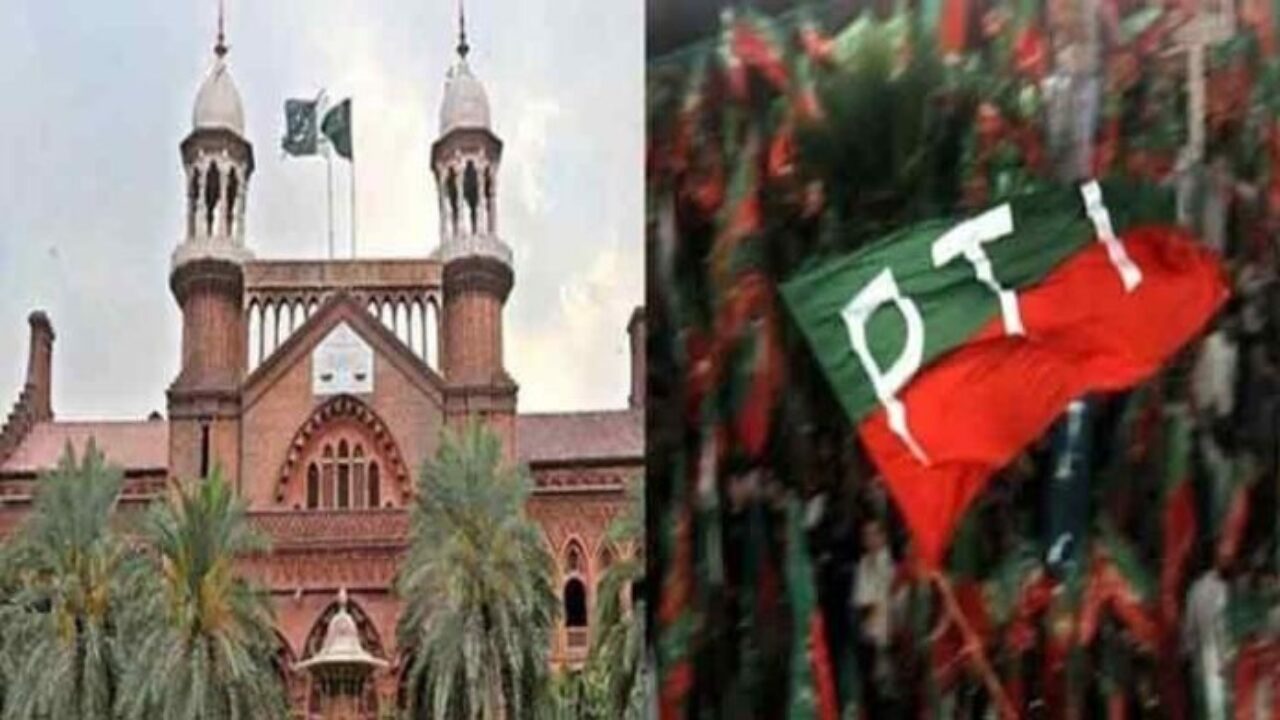
LAHORE: Pakistan Tehreek-e-Insaf (PTI) has moved the Lahore High Court (LHC), seeking judicial intervention after the Lahore district administration allegedly failed to decide its application for permission to hold a public rally at Minar-e-Pakistan on August 5.

The constitutional petition, filed by PTI Lahore President Mian Usman Akram through legal counsel, names the Deputy Commissioner Lahore and other relevant government authorities as respondents. The party argues that the delay has created uncertainty over one of its planned political gatherings at a time of increasing political activity across the country.

According to the petition, PTI submitted its application to the Deputy Commissioner’s office on July 22, requesting official permission to organize a peaceful public rally at the historic Minar-e-Pakistan. However, despite the passage of several days, the district administration has neither approved nor rejected the request.

The petitioner contends that the prolonged silence from the authorities amounts to an arbitrary exercise of power and effectively prevents the party from exercising its constitutional rights. It argues that every citizen and political party is entitled to hold peaceful public meetings and political gatherings, subject to reasonable restrictions imposed by law.

PTI maintains that administrative authorities cannot deny constitutional freedoms simply by delaying decisions on lawful applications. The petition states that the failure to issue a timely decision has deprived the party of sufficient time to make arrangements for the proposed gathering and has created unnecessary legal uncertainty.

The petition further argues that public assemblies are an essential component of a democratic society, allowing political parties to communicate with supporters and present their views peacefully. It says government officials are legally required to act fairly, transparently, and within a reasonable timeframe while deciding such applications.

Seeking judicial relief, PTI has asked the Lahore High Court to direct the Deputy Commissioner Lahore to decide the pending application for the August 5 rally without further delay. The party has also requested the court to declare the prolonged inaction unconstitutional, unlawful, and without legal authority.

In addition, the petition urges the court to ensure that the respondents perform their statutory duties in accordance with the Constitution and applicable laws, enabling the party to exercise its democratic and political rights through a peaceful public gathering.

The case is expected to come before the Lahore High Court in the coming days. The court’s decision could determine whether the district administration must promptly rule on PTI’s request ahead of the proposed August 5 rally. At the time of filing, no official response had been issued by the Lahore district administration regarding the allegations made in the petition.
Similar Posts

  • | |

    IHC issues cause list with eight benches for next …

    The Islamabad High Court (IHC) Registrar’s Office has issued the cause list for the upcoming week. According to the cause list, eight benches will be available to hear cases during the week. These include six single benches and two division benches. The court has constituted two division benches to hear cases involving matters requiring consideration by two judges. The first division bench will comprise Justice Khadim Hussain Soomro and Justice Umair Majid Malik. The second division bench will consist of Justice Muhammad Asif and Justice Shah Rukh Arjumand. The cause list also includes six single benches. These benches will hear cases assigned to individual judges during the upcoming week. The six single benches will comprise Justice Sarfraz Dogar, Justice Khadim Hussain Soomro, Justice Muhammad Asif, Justice Ayaz Shaukat, Justice Umair Majid Malik and Justice Shah Rukh Arjumand. The Registrar’s Office has issued the schedule as part of the court’s regular judicial proceedings. Cases listed before the respective benches will be taken up according to the cause list. The cause list determines which cases are scheduled for hearing and which judges will hear them. Lawyers and litigants will appear before the relevant benches on the dates fixed by the court. The Islamabad High Court will continue hearing cases through the six single benches and two division benches during the coming week.

  • | | | |

    Iran targets US bases across Gulf

    The conflict between Iran and the United States intensified on Wednesday after Iran claimed it carried out a new wave of drone attacks on US military bases in Jordan, Bahrain and Kuwait. The latest attacks marked another major escalation in the ongoing regional conflict that has continued for months. Iranian military officials said attack drones targeted Al-Azraq Air Base in Jordan, Sheikh Isa Air Base in Bahrain and Camp Doha in Kuwait. According to Iranian authorities, the strikes focused on military warehouses, logistics facilities, aircraft maintenance centers and ammunition depots used by US forces. Jordan confirmed that its air defense systems intercepted several missiles and drones after they entered the country’s airspace. Officials said four missiles were destroyed while two landed in remote desert areas. No casualties or property damage were reported. Air raid sirens also sounded in Jordan’s southern port city of Aqaba. Videos circulating on social media showed smoke rising over the area. Authorities urged residents to remain alert but confirmed that the situation was under control. Bahrain’s military said its air defense systems successfully intercepted several incoming aerial threats after warning sirens were activated across the country. Officials did not report any casualties or major damage. Iran also claimed it launched a large number of drones against Camp Doha in Kuwait. Iranian media said the attack targeted US ammunition storage sites and military logistics equipment. Kuwait had not issued an official response at the time of reporting. The latest attacks came only a day after Iran launched missile strikes against US-linked military facilities in Jordan and Bahrain, increasing fears that the conflict could spread further across the Gulf region. Meanwhile, US Secretary of State Marco Rubio said Washington remains prepared to negotiate with Iran if Tehran shows genuine willingness to engage in serious talks. Speaking during a regional meeting in Manila, Rubio said the United States continues to support diplomacy but believes Iran is not currently committed to meaningful negotiations. He warned that Iran must not be allowed to threaten international shipping through the Strait of Hormuz. Rubio said any attempt to control one of the world’s busiest shipping routes would create a dangerous precedent and threaten global trade. The security situation has already affected international energy markets. Global oil prices climbed again as fears grew over possible disruptions to oil supplies from the Gulf. Brent crude traded above $91 per barrel, while fuel prices also increased in international markets. The crisis worsened after Yemen’s Houthi movement announced a naval blockade targeting Saudi Arabia. The move forced several oil tankers carrying Saudi crude to change their routes in the Red Sea because of growing security concerns. French shipping company CMA CGM announced an emergency surcharge on cargo shipments starting August 1. The company said the worsening security situation around the Strait of Hormuz has significantly increased fuel and transportation costs. At the same time, US forces carried out another round of airstrikes inside Iran. American military officials said the strikes targeted command centers, drone storage facilities, aircraft hangars, logistics sites and maritime capabilities. The operation marked the 11th consecutive night of US military attacks. Iranian media reported explosions in Tehran, Bushehr, Chabahar, Konarak and parts of Ilam province. Officials said a missile strike damaged an electrical substation supplying power to the Bushehr nuclear power plant. Electricity was restored after several hours, and authorities reported no casualties. US President Donald Trump said 18 American service members have been killed since the conflict began, including four who died in recent Iranian attacks on US military bases in Jordan and Iraq. He said the United States would continue protecting its forces and allies in the region. Iran also claimed it targeted infrastructure linked to a major American technology company operating in Bahrain. However, the claim has not been independently verified. The conflict began in late February following US and Israeli strikes on Iran. Since then, military operations have expanded across several countries in the Middle East. Despite ongoing mediation efforts by regional countries, including Pakistan, no ceasefire agreement has been reached

  • | |

    Israel raises concerns over Trump’s Gaza plan

    Israel has raised concerns with the United States over a Gaza peace plan praised by President Donald Trump after Hamas reportedly agreed to discuss disarmament. Prime Minister Benjamin Netanyahu’s office said Israel had shared its objections with US officials and stressed that the publicly released version of the proposal did not reflect its position. Israeli officials also accused Hamas of rebuilding its military capabilities and recruiting fighters since a ceasefire announced by Trump in October. Israel has continued carrying out strikes in Gaza despite the truce, while the conflict has seen a reduction in overall violence. Trump described Hamas’s reported agreement as a “major milestone” in efforts to end the war and claimed that Israel welcomed the development. However, Netanyahu’s office said Hamas’s alleged military preparations showed that the group could still pose a serious threat to Israel. It argued that any long-term agreement must include the complete, verifiable and irreversible disarmament of Hamas. An Israeli official said Israel would not withdraw its forces from Gaza under the proposed framework until it could confirm that Hamas had fully surrendered its weapons. Meanwhile, Israeli strikes continued after the Hamas announcement. Palestinian authorities said Israeli attacks on Sunday killed at least 13 people. According to Palestinian authorities, more than 73,000 Palestinians have died in Israel’s military campaign in Gaza since October 7, 2023.

  • | |

    Pakistan standing tall: realising Jinnah’s visio…

    Shehbaz Sharif and Asim Munir: Advancing the Vision of Quaid-e-Azam As Pakistan celebrates its 79th Independence Day, there is a growing sense that the country is witnessing a moment that would have deeply pleased its founding father, Quaid-e-Azam Muhammad Ali Jinnah. For decades, Pakistanis have carried Jinnah’s vision of a strong, sovereign and respected Pakistan in their hearts. Today, as Pakistan’s diplomatic and strategic importance continues to grow, that vision appears increasingly visible on the international stage. Prime Minister Muhammad Shehbaz Sharif and Field Marshal Syed Asim Munir are working together to translate that vision into reality. Their close coordination has provided Pakistan with a sense of direction, unity and confidence at a time when the world itself is undergoing profound geopolitical change. The Pakistan of today is increasingly being recognised as a country whose voice matters. Jinnah envisaged a Pakistan that would not merely exist on the world map, but would stand with dignity, sovereignty and confidence among the nations of the world. His vision was of a country capable of determining its own destiny and making a meaningful contribution to international affairs. There is a powerful resonance between that vision and the Pakistan we are witnessing today. Jinnah once spoke of a future in which the world’s decisions would be influenced by Pakistan. For many years, that aspiration seemed distant. But recent developments suggest that Pakistan is moving closer to that position. From facilitating dialogue between major powers to strengthening strategic partnerships with Türkiye, Saudi Arabia and China, Pakistan is demonstrating that it can engage with countries across different geopolitical blocs while protecting its own national interests. The country’s ability to host US-Iran talks is particularly significant. In an increasingly polarised world, being trusted to provide a platform for dialogue is itself an indication of diplomatic relevance. Pakistan’s relationship with China remains a cornerstone of its foreign policy, while ties with Türkiye and Saudi Arabia continue to deepen. At the same time, engagement with the United States has entered a phase in which Washington is once again recognising Pakistan’s strategic importance. The positive remarks by US President Donald Trump about Prime Minister Shehbaz Sharif and Field Marshal Asim Munir have also attracted international attention. Perhaps most importantly, Pakistan is projecting itself with greater confidence. The scenes in Islamabad surrounding the inauguration of Yadgar-e-Fateh, commemorating the sacrifices and achievements associated with Operation Bunyan-un-Marsoos, captured this changing mood. Political and military leaders standing together alongside the families of martyrs and veterans conveyed a powerful message that Pakistan’s strength lies in unity. As an overseas Pakistani who has lived in the West for more than two decades, this transformation is particularly striking. I have witnessed different phases of Pakistan’s image abroad. There were years when Pakistan was frequently discussed through the prism of instability, terrorism and political uncertainty. Today, the conversation is different. Pakistan is increasingly being discussed in terms of its strategic importance, diplomatic role, defence capabilities, regional influence and economic potential. This should make every Pakistani proud—but it should also make us more responsible. International recognition alone cannot build a prosperous Pakistan. The next challenge is to convert diplomatic and strategic gains into economic prosperity, stronger institutions, better education, employment opportunities and an improved quality of life for ordinary Pakistanis. That is where Jinnah’s vision must ultimately lead. At 79, Pakistan has every reason to celebrate. The country is standing taller on the world stage, and the partnership between Prime Minister Shehbaz Sharif and Field Marshal Asim Munir has helped project a message of unity and national purpose. But this is not the end of the journey. It is the beginning of a new chapter. Jinnah gave Pakistan a dream. The responsibility of this generation is to turn that dream into a lasting reality. Pakistan Zindabad.

  • |

    PM Shehbaz returns after three-day Saudi Arabia vi…

    Prime Minister Shehbaz Sharif returned to Pakistan on Saturday after completing a three-day official visit to Saudi Arabia, where he held important engagements and participated in discussions focused on regional security and bilateral cooperation. According to the Prime Minister’s Office, Shehbaz departed Madinah after concluding his visit to the Kingdom. Madinah Governor Prince Salman bin Sultan bin Abdulaziz Al Saud was present at the airport to bid farewell to the prime minister and the Pakistani delegation. During his stay in Madinah, Prime Minister Shehbaz visited Al-Masjid an-Nabawi and offered prayers alongside members of his delegation. He also performed prayers at Riyaz-ul-Jannah and prayed for the progress, prosperity and well-being of Pakistan and its people. The prime minister was also given the opportunity to visit the Roza-e-Rasool (PBUH) at the Prophet’s Mosque. Shehbaz was accompanied during the visit by Deputy Prime Minister and Foreign Minister Ishaq Dar, Defence Minister Khawaja Asif, Information Minister Attaullah Tarar and Special Assistant Tariq Fatemi. Earlier, the prime minister travelled to Makkah, where he performed Umrah along with Chief of Army Staff and Chief of Defence Forces Field Marshal Asim Munir. The visit was undertaken at the invitation of Saudi Crown Prince and Prime Minister Mohammed bin Salman. A major outcome of the trip was the signing of the Makkah Joint Defence Agreement between Pakistan, Saudi Arabia and Türkiye. The agreement aims to strengthen defence coordination, collective security and regional stability among the three countries. Under the pact, an armed attack against any one of the signatories will be considered an attack against all three, establishing a framework for collective deterrence. The agreement marks a significant step in strengthening strategic and defence cooperation among Pakistan, Saudi Arabia and Türkiye amid growing security challenges in the region.

  • |

    Pakistan announces Hajj 2027 packages, 107,526 government seats

    ISLAMABAD: The federal government has announced the initial arrangements for Hajj 2027, allocating 107,526 seats under the Government Hajj Scheme and introducing a fully digital application and payment system aimed at making the pilgrimage process easier and more transparent for applicants. Federal Minister for Religious Affairs Sardar Muhammad Yousaf said the government has set the estimated cost of the 40-day Hajj package at Rs1.2 million, while the 20 to 25-day package will cost Rs1.3 million. According to the minister, the Hajj 2027 process has been transformed into an end-to-end digital system on the directions of Prime Minister Shehbaz Sharif, with the Ministry of Religious Affairs working in coordination with the Ministry of Information Technology and the National IT Board. The new arrangements are designed to allow intending pilgrims to complete most of the necessary procedures without repeatedly visiting government offices or banks. Applicants will be able to submit their Hajj applications from their homes, deposit the required dues through digital channels and access information and other facilities through the Pak Hajj App and Hajj Portal. Yousaf said the ministry’s primary objective was to reduce the difficulties traditionally faced by pilgrims during the application process. He said the digital system would help eliminate lengthy queues, unnecessary journeys and waiting periods while also making the overall process more convenient for applicants. First instalment to be collected from August 17 The minister announced that the first phase of payments under the approved Hajj Policy 2027 would begin on August 17. Applicants selected under the relevant phase will be required to deposit 50% of the total package cost as the first instalment. The government will subsequently demand the second instalment during the first week of October. The authorities have also opened the final application phase for Hajj 2027. Around 400,000 pilgrims who have already completed the pre-registration process will now be eligible to proceed with their formal applications. Officials expect the digital registration mechanism to simplify verification and reduce delays as the large number of pre-registered applicants move into the next stage. Passport information to be verified digitally The Religious Affairs Ministry has also established a data-sharing arrangement with the Passport Office as part of the government’s efforts to strengthen the digital Hajj registration system. Through the integration, applicants’ passport information can be verified more efficiently, potentially reducing paperwork and manual intervention during the application process. Yousaf said linking databases of different government institutions would improve the accuracy and speed of processing while increasing transparency. The minister maintained that the use of digital verification would also reduce the possibility of errors arising from manual data entry and repeated documentation. HBL named banking partner Habib Bank Limited (HBL) has been designated as the authorised banking partner for the Government Hajj Scheme. According to the minister, the Ministry of Religious Affairs and HBL have signed a Memorandum of Understanding covering the banking arrangements associated with Hajj applications and payment of dues. Pilgrims will have three digital payment options available under the government scheme. They can pay through a OneLink PSID, use a credit or debit card, or download a digital challan through the Pak Hajj App and deposit the required amount at any HBL branch. The government has stressed that applicants should use only the officially prescribed channels when making payments. Seats to be confirmed on first-come, first-served basis Under the Government Hajj Scheme, applicants who successfully deposit the required amount through the online payment system will have their seats confirmed on a first-come, first-served basis. Once the allocated seats are filled, the authorities will stop accepting further payments for that category. The government has separately allocated 30,000 seats for the Short Hajj Scheme. Online payments for the short-duration package will be closed once the allocated quota is exhausted. Authorities have also outlined arrangements for applicants who are unable to secure a seat during the current phase. If the available Hajj 2027 quota is filled, remaining registered applicants will be placed on a waiting list for the following year. At the same time, registration for the Hajj 2028-2030 period will continue according to the announced policy. The minister said details concerning the 10% payment requirement for the Long-Term Hajj Scheme would be announced after completion of the current application phase. Private Hajj Scheme gets 71,684 seats Alongside the government programme, the federal government has allocated 71,684 seats for the Private Hajj Scheme for 2027. Under the new digital mechanism, pilgrims opting for the private scheme will be able to compare packages offered by 25 government-approved authorised Hajj organisers. The available packages and participating companies will be displayed through the official Hajj Portal and Pak Hajj App, allowing intending pilgrims to choose an organiser and package according to their preferences. The government has made it clear that the selection of private Hajj organisers and payments must also be completed through the designated official digital system. Pilgrims warned against direct payments The Religious Affairs Ministry has issued a specific warning to intending pilgrims against handing over money directly to private Hajj operators or tour companies. Yousaf said any payment or financial transaction conducted outside the officially designated government system would not be recognised. Pilgrims have therefore been advised to verify the status of Hajj organisers through the official digital platform before making any payment. The government believes that centralising the selection and payment process through the digital Hajj system will help protect pilgrims from potential fraud, unauthorised operators and disputes over payments.

Leave a Reply

Your email address will not be published. Required fields are marked *