thai welfare card

Thai Welfare Card Overhaul Leaves Millions Appealing Rejected Applications

BANGKOK, Thailand — Approximately 2.76 million Thai citizens who were initially disqualified from the 2026 state welfare card scheme have formally appealed for a review of their eligibility, the Ministry of Finance has announced. The surge in appeals highlights the significant impact of the government’s revised and stricter screening criteria for the social safety net program.

Thailand’s Co-payment Scheme Falls Short Of 30 Million Participant Target

The appeals, submitted on July 17 and 18, represent roughly 30 percent of the applicants who failed the initial eligibility screening. The Finance Ministry has advised that an additional 6.55 million unsuccessful applicants still have until the July 31 deadline to submit their requests for review. Out of the 18.8 million individuals who applied for the 2026 program, only 9.5 million successfully qualified, marking a substantial decrease from the 13.2 million beneficiaries who received support under the previous iteration of the scheme.

According to ministry data, the most prevalent reason for disqualification was the ownership of a vehicle that exceeded the program’s strict eligibility thresholds, which affected approximately 1.45 million applicants. Another 668,000 individuals were rejected because their combined outstanding debts surpassed the 100,000-baht limit. Additional grounds for disqualification included applicants reporting an annual income or receiving financial transfers exceeding 100,000 baht, owning property beyond the permitted limits, holding bank deposits of more than 100,000 baht, or possessing active credit cards.

To contest these decisions, applicants who believe the automated screening results do not accurately reflect their current financial circumstances are encouraged to file an appeal through the program’s official website, the Paotang and Tang Rat mobile applications, or at participating state-owned bank branches. Authorities have also strongly advised citizens to ensure their personal and financial information is fully updated across all relevant government databases to prevent future discrepancies.

For those whose appeals are successfully processed and who complete the required electronic identity verification, welfare benefits are scheduled to commence in October. Meanwhile, existing welfare cardholders who have already confirmed their continued eligibility under the new criteria will be able to seamlessly continue utilizing their benefits starting August 1.

The Ministry of Finance has previously defended the overhaul of the registration process and screening criteria, emphasizing that the adjustments were necessary to ensure that finite state resources are directed exclusively toward the most vulnerable and economically disadvantaged citizens. The state welfare card program operates with an annual budget of approximately 45 billion baht, a figure the government aims to optimize through more precise targeting.

Thai Government to Roll Out 10,000 Baht Cash Payments in Digital Wallet Scheme

As the appeal window remains open, government agencies are preparing for a high volume of applications in the coming weeks.

-Thailand News (TN)
Similar Posts

  • | |

    Israel raises concerns over Trump’s Gaza plan

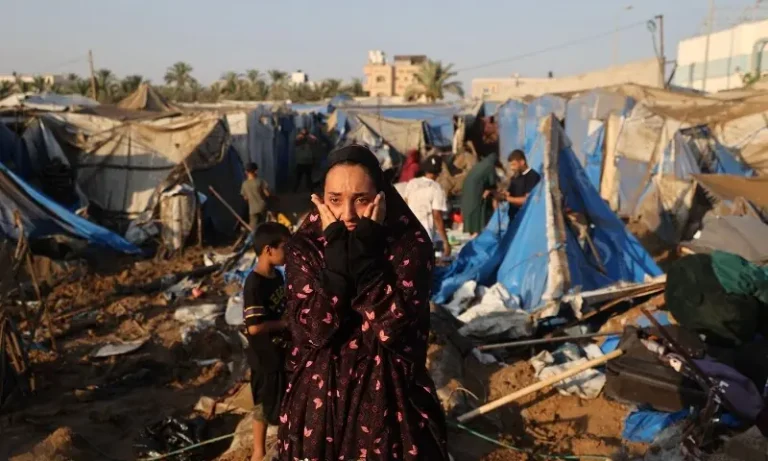
    Israel has raised concerns with the United States over a Gaza peace plan praised by President Donald Trump after Hamas reportedly agreed to discuss disarmament. Prime Minister Benjamin Netanyahu’s office said Israel had shared its objections with US officials and stressed that the publicly released version of the proposal did not reflect its position. Israeli officials also accused Hamas of rebuilding its military capabilities and recruiting fighters since a ceasefire announced by Trump in October. Israel has continued carrying out strikes in Gaza despite the truce, while the conflict has seen a reduction in overall violence. Trump described Hamas’s reported agreement as a “major milestone” in efforts to end the war and claimed that Israel welcomed the development. However, Netanyahu’s office said Hamas’s alleged military preparations showed that the group could still pose a serious threat to Israel. It argued that any long-term agreement must include the complete, verifiable and irreversible disarmament of Hamas. An Israeli official said Israel would not withdraw its forces from Gaza under the proposed framework until it could confirm that Hamas had fully surrendered its weapons. Meanwhile, Israeli strikes continued after the Hamas announcement. Palestinian authorities said Israeli attacks on Sunday killed at least 13 people. According to Palestinian authorities, more than 73,000 Palestinians have died in Israel’s military campaign in Gaza since October 7, 2023.

  • Cambodian rocket attack on Sisaket village injures civilians and damages homes

    SISAKET – Cambodian forces fired salvos of BM-21 rockets into a residential community in Thailand’s Si Sa Ket province on Saturday morning, injuring multiple civilians and setting houses ablaze. The attack marked a significant escalation by targeting a populated area far from the immediate frontline. Four Thai Soldiers Killed, Three Wounded in Battle for Strategic […]

  • Thai Embassy Seeks Clearance as Cambodia Blocks Thais from Returning Home

    SA KAEO – Tensions at a primary border crossing escalated on Wednesday as Cambodian immigration officials refused to allow Thai nationals to leave Cambodia through the Poipet-Klong Luk checkpoint in Sa Kaeo province, stranding an unknown number of Thai citizens. The reasons for the refusal were not immediately clarified by Cambodian authorities. Thai Army Accuses […]

  • | |

    Bessent says Hormuz shipping deal with Iran could …

    US Treasury Secretary Scott Bessent said on Tuesday that a deal to reopen the Strait of Hormuz to normal shipping traffic could be reached within a day or two, as diplomatic activity intensified across the Gulf region. Speaking in a television interview, Bessent said American officials are in active discussions with Iranian counterparts and expressed optimism about a near term breakthrough. “There is a chance we may have a deal today or tomorrow,” he said, adding that the goal is to move toward a more normalized posture in the conflict. Asked whether any agreement would let Iran charge ships a toll for using the waterway, Bessent said he expects the outcome to guarantee freedom of movement rather than a fee based system. He noted that vessel traffic through the strait has picked up in recent days despite lingering danger, and predicted that energy prices would ease once a deal takes hold. His comments followed a report from The New York Times saying Iran and Oman have moved close to an arrangement that would restore commercial shipping through the strait. Under the terms described in that report, inbound vessels would travel through a corridor close to the Iranian coast while outbound ships would use a route nearer Oman. Iranian officials told the newspaper that no formal tolls would apply, though they said a service charge tied to environmental protection, cargo security and staffing costs would be split evenly between Tehran and Muscat. A US official pushed back on that characterization, calling the Iranian version inaccurate and insisting any temporary shipping lanes would not need Iranian sign off or involve fees. The report also noted that some Pentagon officials worry the arrangement could look like a concession to Tehran, while some Iranian officials privately questioned whether it would actually stop further American strikes. Qatar’s Foreign Ministry said Tuesday that mediators including Doha, Pakistan and Oman continue to coordinate closely to bridge the gap between Washington and Tehran, exchanging draft proposals between the two sides. Ministry spokesperson Majed Al Ansari said there is still no clear timeline for a final agreement, and Qatar separately called for a return to normal conditions in the strait while diplomacy continues. Tension over the waterway remained visible even as talks progressed. A dry bulk carrier called the Minoan Pioneer, sailing under the Liberian flag, was struck by an unidentified projectile near Oman’s coast on Tuesday, according to maritime security sources. The strike reportedly hit the engine room and sparked a fire in the crew’s living quarters, forcing the entire crew to abandon ship. One crew member, the vessel’s third engineer, was reported missing. The ship’s Greece based operator did not immediately respond to requests for comment. The incident followed an earlier report from the UK Maritime Trade Operations center, which said a separate cargo vessel had broadcast that it was hit by an unknown projectile about 20 nautical miles northeast of Khasab, Oman. No group has claimed responsibility for either strike, and authorities have opened an investigation. In Tehran, President Masoud Pezeshkian used a televised address to reject reports that he had offered his resignation amid the ongoing standoff with Washington. “If I were going to resign, I would announce it publicly,” he said, denying any rift with Supreme Leader Ali Khamenei or the armed forces and insisting the leadership is working in full coordination. He separately said Iran intends to defend its territorial integrity but has no interest in expanding the conflict, while claiming Iranian missile and drone strikes had disrupted US military goals during a recent 17 day period of fighting. The regional picture grew more complicated elsewhere. Yemen’s Houthi movement claimed responsibility for a drone strike on Najran Airport in southern Saudi Arabia, with military spokesman Yahya Saree saying the attack struck its target accurately. He described the strike as retaliation for alleged Saudi drone incursions over Yemen’s Saada and Hajjah provinces and warned that further violations would draw a response. Saudi authorities had not commented on the claim as of Tuesday. In Lebanon, a seventh round of direct negotiations with Israel opened in Rome under American sponsorship, continuing talks tied to a framework agreement the two sides signed in June covering a phased Israeli withdrawal from Lebanese territory in exchange for Lebanese army deployment and the disarming of armed factions, a clear reference to Hezbollah. Hezbollah Secretary General Naim Qassem used a speech at an Arbaeen commemoration in Baalbek to criticize the talks, saying they have delivered only “shame, humiliation, despair and repeated concessions” for Lebanon. He accused Lebanese President Joseph Aoun of acting with bias rather than serving as a unifying figure and argued that only the earlier US brokered truce between Washington and Tehran had kept Israeli strikes at bay. Financial markets showed relief at the signs of diplomatic movement. Brent crude futures fell about 7 percent to near $83.77 a barrel on Monday, while the Dow Jones Industrial Average closed at a record high. Asian stocks and oil prices ticked higher again on Tuesday. In a Truth Social post, Trump described Iran’s leadership as “unbelievably duplicitous” while claiming more talks were scheduled for the near future. He also reasserted that the US Navy maintains full control over the strait, writing that nothing passes through unless Washington allows it. The exchange fits a broader pattern that has defined the conflict since it began roughly five months ago under the codename Operation Epic Fury. Trump has repeatedly threatened major military escalation only to step back and cite diplomatic openings, while Iran has publicly refused direct talks with Washington since a memorandum of understanding both sides signed collapsed in early July. Washington maintains that June’s memorandum obligated Iran to open the Strait of Hormuz to shipping, while Tehran insists the agreement preserved its authority over traffic through the waterway, a disagreement that continues to sit at the center of the standoff.

  • | | | |

    President Masoud Pezeshkian meets Supreme Leader M…

    TEHRAN: Iranian President Masoud Pezeshkian has held an important meeting with Supreme Leader Ayatollah Mojtaba Khamenei as speculation over the president’s future continues to attract attention amid heightened tensions with the United States and Israel. The meeting reportedly came as Pezeshkian entered the third year of his presidency. It also followed reports suggesting that the Iranian president was considering stepping down, claims he has rejected. Iranian authorities have previously dismissed resignation reports as unfounded, while Pezeshkian has publicly indicated that he intends to continue serving. According to statements attributed to Mojtaba Khamenei on social media, the discussions covered a wide range of economic, military and strategic issues facing Iran. Among the topics were the economic needs of ordinary Iranians, the country’s military situation, access to resources and management of the Iranian rial, foreign currency and energy costs. The two leaders also discussed economic relations with foreign partners and the wider implications of the confrontation with Washington and Israel. The meeting comes at a particularly sensitive moment for Tehran. Iran remains under pressure from the continuing regional conflict and economic difficulties, while efforts to engage Washington have faced repeated obstacles. The reported contact is also notable because Pezeshkian recently said that reaching Mojtaba Khamenei had been difficult, prompting speculation about the supreme leader’s health and whereabouts. Reports in recent days have offered conflicting accounts about how and where senior Iranian officials have been able to meet him. Meanwhile, Iran’s diplomatic efforts with the United States remain uncertain. According to the material cited by Iranian officials, negotiations have been reduced largely to messages exchanged through intermediaries after earlier attempts failed to produce a lasting agreement. The political backdrop has also been complicated by reported tensions between the presidency and powerful military-security institutions. Some reports have suggested disagreements over decision-making and the conduct of Iran’s response to the conflict, although details remain contested. Pezeshkian’s political position has therefore become a subject of renewed attention. He was elected president in July 2024 following the death of former President Ebrahim Raisi in a helicopter crash. Mojtaba Khamenei, meanwhile, became Iran’s supreme leader in March 2026 following the death of his father, Ayatollah Ali Khamenei, during the conflict. Against this backdrop, the latest meeting between the president and supreme leader carries significance beyond routine government business, particularly as Iran confronts economic pressures, military uncertainty and difficult relations with Washington. For now, however, Pezeshkian remains in office, while reports of his resignation have been publicly rejected.

  • | | |

    PM Shehbaz says Makkah pact sends message of unity…

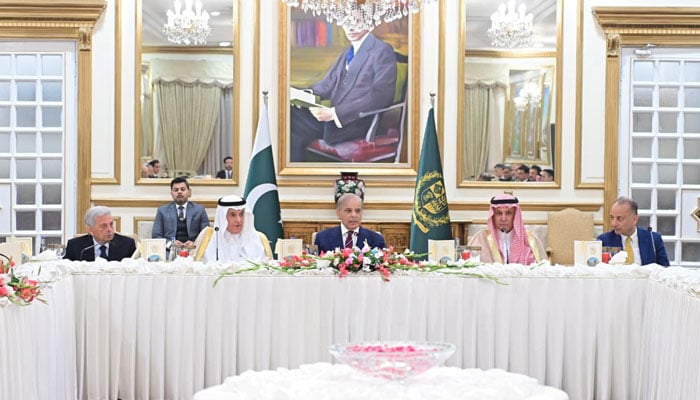
    ISLAMABAD: Prime Minister Shehbaz Sharif has described the recently signed Makkah Joint Defence Agreement between Pakistan, Saudi Arabia and Türkiye as a significant step towards greater regional unity and peace, saying the pact has brought the three countries closer. The prime minister made the remarks on Friday during a meeting with Saudi Arabia’s Minister of Environment, Water and Agriculture, Engineer Abdulrahman bin Abdulmohsen Al-Fadley, who called on him at the Prime Minister’s House in Islamabad. The Makkah agreement was signed on Aug 7 by Saudi Crown Prince and Prime Minister Mohammed bin Salman, Turkish President Recep Tayyip Erdogan and Prime Minister Shehbaz Sharif in Makkah. The agreement provides a framework for stronger collective defence cooperation and states that an armed attack against any one of the three countries will be regarded as an attack against all. Sharif said the agreement had further strengthened the strategic relationship among Pakistan, Saudi Arabia and Türkiye while conveying a message of unity and peace across the region. The prime minister also stressed that Pakistan and Saudi Arabia should now build on their strategic partnership by expanding economic and agricultural cooperation. He said stronger trade and investment ties could help transform the longstanding relationship between the two countries into a broader and more mutually beneficial economic partnership. Focus on agriculture and food security Agriculture emerged as a key area of discussion during the meeting, with both sides reviewing ways to increase cooperation in agricultural productivity, technology, research and development, and efficient water management. Sharif expressed satisfaction with the ongoing cooperation over Pakistani agricultural exports to Saudi Arabia. He said Islamabad was keen to expand the range and volume of agricultural products supplied to the Kingdom. Pakistan has increasingly sought to strengthen its economic relationship with Saudi Arabia beyond traditional financial and energy cooperation, with agriculture and food security offering significant opportunities for both sides. The prime minister announced that a delegation of Pakistani agricultural experts would soon travel to Riyadh to continue discussions and explore practical areas of cooperation. The delegation is expected to focus on improving agricultural productivity through modern technology, research and more efficient use of water resources. The Saudi minister, meanwhile, reaffirmed Riyadh’s commitment to expanding cooperation with Pakistan in agriculture, water management and food security, according to the Prime Minister’s Office. A broader strategic partnership The meeting reflects Islamabad’s effort to translate its close political and strategic ties with Riyadh into greater commercial and economic engagement. Saudi Arabia has historically remained one of Pakistan’s most important partners, providing financial support and assistance during periods of economic pressure. In recent years, however, both countries have increasingly emphasised investment, trade and private-sector partnerships. The latest discussions also come shortly after the signing of the Makkah Joint Defence Agreement, which marked a new phase in security cooperation among Pakistan, Saudi Arabia and Türkiye. Pakistan’s Foreign Office has described the agreement as defensive in nature, saying it is intended to strengthen collective deterrence and promote regional peace and stability rather than target any particular country. For Islamabad, the challenge now will be to convert the political momentum generated by the Makkah pact into tangible economic gains. The planned visit by Pakistani agricultural experts to Riyadh could provide an early test of that approach, particularly as both countries seek greater cooperation in food security, water management, agricultural technology and exports. The meeting therefore carried significance beyond diplomatic messaging, highlighting Pakistan and Saudi Arabia’s shared interest in developing a relationship that combines strategic cooperation with stronger economic ties. As regional security concerns continue to shape diplomacy in the Middle East and beyond, Islamabad appears keen to present the Makkah pact not simply as a defence arrangement, but as part of a wider push for stability, cooperation and closer partnerships among the three countries.

Leave a Reply

Your email address will not be published. Required fields are marked *