thailand fuel prices

Thailand Fuel Prices Hit by Middle East Unrest and Shipping Disruptions

BANGKOK, Thailand — Fuel prices in Thailand have surged for a second consecutive day, driven by escalating geopolitical conflicts in the Middle East and severe disruptions to global maritime shipping routes. The cumulative two-day increase has added 1.75 baht per litre to pump prices, prompting the Fuel Fund Executive Committee to implement urgent adjustments to retail prices and domestic subsidy structures.

Thai Fuel Prices Projected To Remain Elevated Until Fourth Quarter

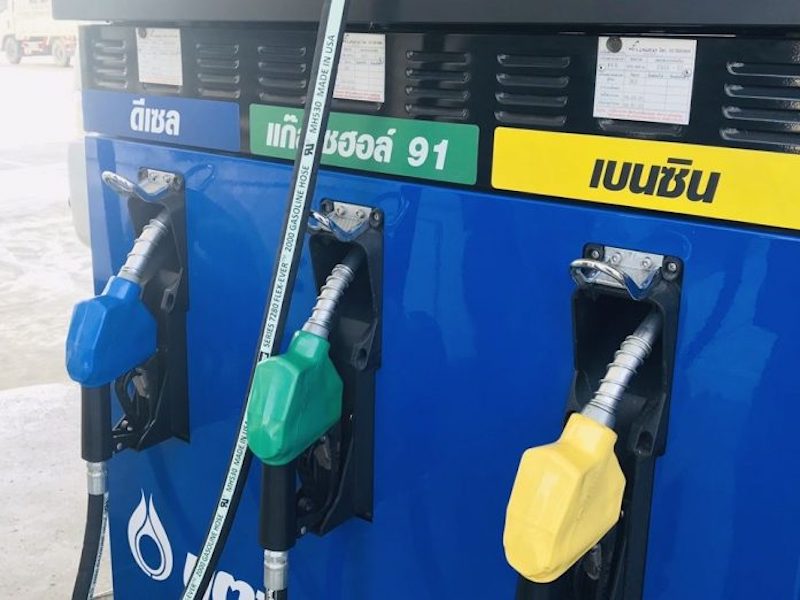
The upward trajectory began on July 22 with an initial increase of 0.85 baht per litre, followed by a further 0.90 baht per litre hike effective from 5:00 a.m. on Thursday, July 23. Following this latest adjustment, the retail price of standard high-speed diesel reached 36.69 baht per litre, while diesel B20 rose to 31.69 baht. Prices for ethanol-blended fuels also climbed, with Gasohol 95 reaching 36.69 baht, Gasohol 91 at 36.32 baht, and Gasohol E20 at 31.69 baht per litre. Additionally, Gasohol E85 increased to 27.63 baht, and standard petrol rose to 45.68 baht per litre. These quoted retail prices exclude Bangkok’s local maintenance tax, and premium fuel products were notably excluded from the 90-satang retail increase announced by major distributors.

The Fuel Fund Executive Committee approved these adjustments during a meeting on Wednesday, citing renewed volatility in international energy markets. The primary catalyst for the surge is the breakdown of diplomatic negotiations in the Middle East, leading to widening regional attacks and Iran’s confirmation of its intent to close the Strait of Hormuz, a critical chokepoint for global oil shipments. Compounding this pressure, conditions in the Red Sea have deteriorated significantly. Yemen’s Houthi movement has intensified its maritime blockade, threatening oil tankers and cargo vessels utilizing ports along the Red Sea coast. These security threats have forced numerous commercial vessels to divert to longer, alternative routes, immediately driving up maritime transport costs and exerting further upward pressure on international crude and refined product prices. Reflecting this global strain, the Singapore benchmark price for diesel reached 163.59 US dollars per barrel on July 22, while petrol climbed to 124.92 US dollars per barrel.

The sustained high cost of global fuel has placed a severe financial strain on Thailand’s Oil Fuel Fund, which is currently shouldering an estimated subsidy burden of approximately 651.31 million baht per day. To ensure the fund can continue coping with this extreme market volatility, the committee deemed it urgently necessary to revise its levy and subsidy rates. Under the newly revised structure, the subsidy for standard high-speed diesel was increased by 0.78 baht to 8.57 baht per litre, directly supporting the adjusted retail price of 36.69 baht. Similarly, the subsidy for high-speed diesel B20 was raised by 0.56 baht to 12.95 baht per litre, bringing its retail price to 31.69 baht. Meanwhile, premium diesel remains subject to a fund levy of 1.50 baht per litre.

Missing 57 Million Litres of Fuel Off-Loaded at Sea, Justice Minister Says

As global geopolitical tensions remain unresolved, Thai authorities are closely monitoring international market developments. The Fuel Fund Executive Committee has indicated it will continue to evaluate the financial health of the subsidy mechanism and may implement further adjustments to balance consumer protection with fiscal sustainability.

-Thailand News (TN)
Similar Posts

  • | |

    ML-1 railway modernisation project moves closer to…

    LAHORE: Pakistan’s long-delayed Main Line-1 (ML-1) railway modernisation project has entered a crucial stage, with the government setting October 30, 2026, as the deadline for completing the ongoing review process and announcing plans to begin the second round of market consultations next month. The latest developments are expected to help resolve outstanding technical, financial and procedural matters and move the country’s largest railway infrastructure initiative towards formal implementation. The second round of market consultation is scheduled to commence on September 8. International experts, prospective investors and other relevant stakeholders will be consulted during the process to seek their views on project preparation, implementation arrangements, financing and the future course of the scheme. The consultations are considered an important step before the government proceeds towards the execution stage of the project, which has faced repeated delays over the years because of financing, technical and procedural challenges. Weekly reviews ordered Pakistan Railways Chairman Syed Mazhar Ali Shah chaired a high-level meeting at the railway headquarters on Saturday to review progress on ML-1. During the meeting, the chairman directed international design consultants, review consultants and senior railway officials to maintain close coordination and ensure that work on the project continues without unnecessary interruptions. He also ordered weekly progress reviews, instructing officials to identify unresolved matters at an early stage and take immediate steps to remove bottlenecks. The Karachi-Rohri segment received particular attention during the meeting as it has been identified as the first section to be developed under the revised ML-1 plan. Karachi-Rohri section According to official documents presented before the National Assembly, the Karachi-Rohri portion covers approximately 480 kilometres and has an estimated cost of $2.04 billion. Construction of the section is expected to take around three years once the project moves into the implementation phase. The government has engaged the Asian Development Bank (ADB) to arrange financing for this segment. Pakistan has also secured a $10 million Project Readiness Financing loan to support preparatory work required before full-scale implementation. The Karachi-Rohri corridor is strategically significant because it handles a substantial volume of both passenger and freight traffic. Its modernisation is therefore expected to provide an immediate improvement to the efficiency of the national railway network while creating a foundation for upgrades on the remaining sections. Government optimistic about launch Federal Minister for Railways Hanif Abbasi has expressed optimism that the flagship project could finally enter the implementation phase during the current year. The minister said progress on ML-1 had improved and that the government was working to ensure that the remaining requirements were completed within the agreed timelines. He said Prime Minister Shehbaz Sharif was closely monitoring the project and had directed the relevant authorities to ensure its completion according to schedule. According to the minister, ML-1 represents the foundation of Pakistan Railways’ long-term modernisation strategy. He said upgrading the railway corridor would help increase train speeds, improve passenger services and enhance the overall operational efficiency of the rail network. The minister also stressed that transparency, merit and competitive procedures would be followed during the project. He added that recommendations from international experts, market participants and technical consultants would be considered while finalising the implementation strategy. 1,726-km railway corridor The ML-1 project covers the modernisation of the 1,726-kilometre Karachi-Peshawar railway corridor, which serves as the backbone of Pakistan’s railway system. Under the rationalised plan, the corridor has been divided into five major sections:  Karachi-Rohri  Rohri-Multan Multan-Lahore Lahore-Rawalpindi Rawalpindi-Peshawar The government has estimated the total cost of the rationalised ML-1 project at approximately $6.66 billion. The scheme is intended to transform the existing railway infrastructure by improving track quality, signalling systems, operational capacity and train speeds. Higher speeds and improved capacity Earlier official plans for ML-1 envisaged allowing passenger trains to operate at speeds of up to 160 kilometres per hour on upgraded portions of the corridor. The project also includes improvements in axle-load capacity, rehabilitation and strengthening of railway tracks, modern signalling and communications systems, as well as doubling of single-track sections wherever necessary. These improvements are expected to reduce journey times and increase the number of trains that can operate on the corridor. For Pakistan Railways, the project is also viewed as an opportunity to strengthen freight operations and improve the movement of goods between the country’s major commercial centres and ports. Financing remains crucial Despite the renewed momentum, financing remains one of the most important requirements for taking ML-1 into full-scale construction. The government has been working with international development partners to secure funding for different components of the project, while the completion of technical studies, project documentation and financial arrangements remains essential before construction can begin. The ADB-backed Karachi-Rohri section is expected to serve as the starting point for the wider modernisation programme. Officials have previously indicated that preparatory work for the section could begin in 2026, provided the remaining financial and documentation requirements are completed. A long-awaited railway overhaul ML-1 has been discussed for years as a transformative project for Pakistan’s railway sector, but its implementation has repeatedly been delayed because of the scale of investment involved and disagreements over financing and project structure. The government’s decision to set a firm deadline for completing the review phase and hold another round of market consultations signals an effort to bring the project back on track. Regular monitoring by Pakistan Railways, engagement with international consultants and consultation with potential stakeholders are now expected to play a central role in finalising the project. If the remaining technical and financial hurdles are addressed according to the new schedule, the Karachi-Rohri section could become the first major construction phase of the broader ML-1 programme. The government believes that successful implementation of ML-1 would not only modernise the country’s ageing railway infrastructure but also improve passenger connectivity, strengthen freight transportation, reduce travel times and enhance the competitiveness of Pakistan Railways.

  • |

    Moscow restaurant bomb blast kills three, injures …

    MOSCOW: A powerful explosion caused by a homemade bomb killed three people and injured at least 21 others outside an upscale restaurant in central Moscow on Saturday evening, prompting a major security operation and a high-level investigation by Russian authorities. According to Russia’s Anti-Terrorism Committee, the blast occurred shortly before 8pm local time near the Balzi Rossi Italian restaurant, located in one of Moscow’s iconic Stalin-era skyscrapers at Kudrinskaya Square. Officials said an unidentified woman carrying the explosive device attempted to enter the restaurant but was stopped by a security guard. Moments later, the bomb detonated, killing the woman, the security guard and a restaurant customer. Police said the injured suffered wounds of varying severity and were rushed to nearby hospitals, while emergency responders secured the area and searched for further threats. Video released by Russia’s state news agency RIA showed heavily armed security personnel and emergency crews surrounding the blast site, which was immediately sealed off as investigators gathered evidence. Authorities have not disclosed the identities of the victims or indicated who may have been behind the attack. Investigators are examining multiple possibilities as the probe continues. The incident comes amid heightened security concerns in Russia, more than four years after the escalation of the war in Ukraine. Earlier this year, Russia’s Federal Security Service (FSB) announced enhanced protection measures for senior military officials following a series of assassinations and attempted attacks that Moscow blamed on Kyiv. Meanwhile, Russian newspaper Kommersant, citing unnamed sources, reported that investigators suspect the explosive device may have been intended to target guests gathered on the restaurant’s outdoor summer terrace. The report also suggested the bomb could have been detonated remotely, raising the possibility that the woman carrying it may not have known she was transporting an explosive. The restaurant’s official website stated that it had been closed to the public on Saturday due to a private event, adding another layer of mystery to the incident. As forensic teams continue examining the scene, authorities have urged the public to avoid speculation while the investigation remains underway. The blast has once again highlighted ongoing security challenges in the Russian capital and raised fresh concerns about public safety in crowded urban areas.

  • | |

    Government allows cheaper export of costly importe…

    The federal Ministry of Industries and Production has allowed the export of imported sugar at a lower price, a decision that could cause billions of rupees in losses to the national exchequer, according to ministry sources. Sources said the government has permitted the export of 100,000 tonnes of sugar. However, a decision on exporting 250,000 tonnes of cheaper locally produced sugar has not yet been taken. The sources described the decision to allow the export of only 100,000 tonnes as disappointing. They said the move could create financial losses because the sugar being exported was imported at a comparatively higher cost. The sources further warned that the decision could also affect sugarcane procurement in the country. According to them, sugar mills may face difficulties in purchasing sugarcane from farmers if the current situation persists. Sugar mill owners had already informed the Ministry of Industries and Production about the issue, sources said. They had reportedly warned the ministry that the limited export decision could make it difficult for mills to manage their stocks and purchase the upcoming sugarcane crop from farmers. The government is now facing a challenge in balancing sugar exports, domestic prices, the interests of farmers and the financial impact on the national exchequer. Sources said further decisions regarding the export of locally produced sugar are expected after reviewing the market situation and available stocks.

  • | |

    Dar holds key talks with Australia, Oman on region…

    Deputy Prime Minister and Foreign Minister Ishaq Dar held important diplomatic meetings in Manila during the ASEAN Regional Forum 2026, discussing regional security, global developments, and ways to strengthen Pakistan’s relations with other countries. Dar met Australian Foreign Minister Senator Penny Wong and reviewed the current state of Pakistan-Australia relations. Both sides agreed to further expand cooperation through regular high-level contacts and closer engagement. The two foreign ministers also discussed recent regional tensions and international challenges. They stressed that dialogue, diplomacy, and respect for international law are essential for achieving long-term peace and stability. Australia appreciated Pakistan’s efforts to support dialogue and reduce tensions in the region. Both countries agreed to continue cooperation on matters of mutual interest. During another meeting, Dar held talks with Oman’s Foreign Minister Sayyid Badr bin Hamad Al Busaidi. The two leaders expressed satisfaction over the positive progress in Pakistan-Oman relations and agreed to strengthen bilateral cooperation. The discussions focused on increasing trade, promoting investment, improving business-to-business links, expanding people-to-people contacts, and enhancing cooperation through international forums. Both sides also exchanged views on regional and global developments. They emphasised the need to uphold ceasefires, respect international law, and work together to promote peace and security. Oman praised Pakistan’s constructive role in encouraging dialogue and supporting regional stability. The two ministers agreed to remain in close communication on important issues. Earlier in Manila, Dar also met senior officials of the Asian Development Bank and called for faster progress on financing for Pakistan’s Main Line-1 railway project. He highlighted the long-standing partnership between Pakistan and the development institution and discussed expanding cooperation in different sectors. Dar also held separate meetings with Russian Foreign Minister Sergei Lavrov and Bangladesh Foreign Minister Khalilur Rehman. The discussions covered bilateral relations, trade, energy cooperation, connectivity, and future diplomatic engagement. The ASEAN Regional Forum has brought together foreign ministers and senior officials from several countries to discuss major global and regional challenges, including security issues, energy supplies, trade, food security, and ongoing conflicts.

  • Chinese National Arrested in Chiang Mai Over Altered Passport

    CHIANG MAI – Immigration officers in Chiang Mai arrested a Chinese male national on July 17, 2026. The suspect allegedly tried to extend his stay in Thailand by using a heavily altered fake passport. Local officers discovered the forged travel document during a routine review at the local office. The suspect quickly admitted to changing the […]

  • | |

    Four held after Haripur child found dead in abando…

    HARIPUR: Police have arrested four suspects in connection with the alleged abduction, sexual assault and murder of a five-year-old girl whose body was recovered from a deserted well in Haripur after an extensive search operation. Haripur District Police Officer Shafiullah Gandapur said the child was reported missing by her father on August 10. Police registered a case under relevant provisions of the Pakistan Penal Code and launched a search operation to trace her. A special investigation team was subsequently formed, comprising senior police officers, investigators and female police officials. A separate technical team was assigned to examine digital evidence, including CCTV footage, call records and geofencing data. Police reviewed footage from around 200 cameras and examined the records of 20 suspected telephone numbers. Investigators said footage from 12 cameras proved particularly significant in reconstructing the child’s movements after she left home and identifying individuals allegedly travelling in the area on foot and on a motorcycle. Three suspects were initially arrested, and police also recovered a motorcycle allegedly used in the incident. According to police, one suspect recorded a statement before a court admitting his involvement in the alleged abduction and sexual assault. The other suspects were produced before the court for further legal proceedings. Police later arrested a fourth suspect. Information obtained during the investigation led officers to a deep, dry and overgrown well located on a vacant plot near Link Road on University Road, close to a warehouse. A search team, assisted by Rescue 1122 personnel, recovered the child’s body from the well. The recovery operation was monitored by the DPO and senior members of the investigation team. The body was shifted to the Rescue 1122 Trauma Centre in Haripur, where a post-mortem examination was conducted. Doctors collected X-rays and samples for DNA and other forensic examinations. The results are awaited. The investigation has faced additional difficulties because some suspects are reportedly underage and did not possess identity documents. Police said they therefore examined telephone records linked to their family members and other numbers considered relevant to the case. The search for the missing child involved hundreds of personnel. More than 400 police officials, along with staff from the Tehsil Municipal Administration and Water and Sanitation Agency, participated in searches covering drains, sewerage lines, vegetation, vacant plots and deserted locations around the University of Haripur, Pathan Colony and nearby areas. Khyber-Pakhtunkhwa Inspector General of Police Zulfiqar Hameed took notice of the case, while Hazara DIG Nasir Mahmood Satti visited Haripur to review the investigation. The DPO briefed him on the evidence collected, CCTV findings and progress in identifying and arresting the suspects. The DIG also met the victim’s family and assured them that the investigation would be pursued according to law. Meanwhile, K-P Chief Minister Sohail Afridi condemned the alleged crime and ordered a comprehensive investigation. He directed authorities to ensure that every aspect of the case was examined and that those found responsible were dealt with strictly under the law. The chief minister expressed condolences to the child’s family and said crimes against children would not be tolerated. He assured the family that the provincial government would support them and that the suspects would face legal consequences if found guilty.

Leave a Reply

Your email address will not be published. Required fields are marked *