thailand secures oil

Thailand Secures Oil Supply to Keeps Gas Prices Stable Amid Middle East Conflict

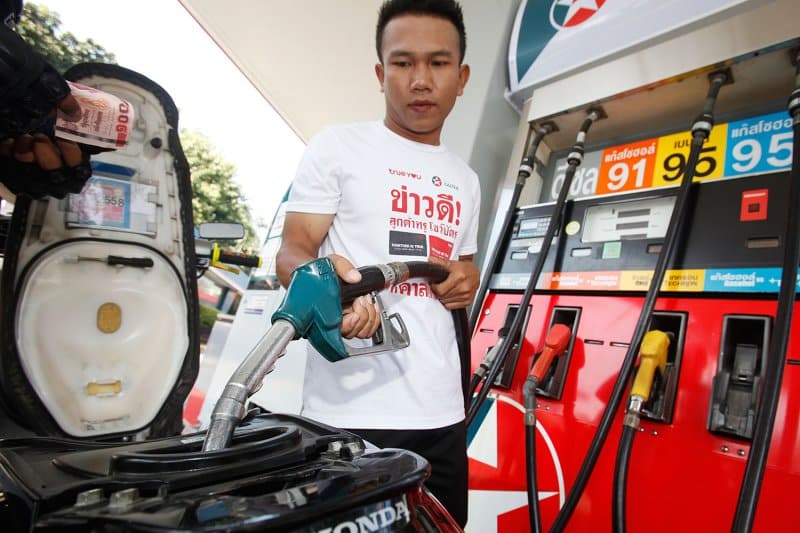
BANGKOK – The Department of Energy Business confirms Thailand will avoid a crude oil shortage this August despite the Middle East war. All six domestic refineries have sufficient supply because the nation is actively purchasing crude oil from the United States. This smart shift keeps local gas prices stable and reduces heavy reliance on risky global shipping lanes.

Global energy markets are certainly feeling the heat right now as foreign tensions continue to rise. The ongoing conflict has raised serious fears of major oil supply cuts across the world. However, Thai drivers absolutely do not need to worry about empty gas stations today.

Key Takeaways

  • Thailand has safely secured enough crude oil for all six domestic refineries this August.
  • The nation successfully cut its Middle East oil imports from 58% down to just 30%.
  • Purchasing more crude oil from the United States actively helps keep local gas prices stable.

Smooth Sailing for All Six Thai Refineries

The Department of Energy Business (DOEB) shared very reassuring news for the country this week. DOEB Director-General Sarawut Kaewtathip stated that important global shipping routes clearly remain open. This means essential crude oil is still reaching Thailand on time without any major delays.

The famous Strait of Hormuz is still allowing large cargo ships to pass safely. This narrow waterway is a highly critical path for worldwide oil transport and international trade. Even with the Red Sea tension, transport vessels are successfully navigating through the area.

Because of this continued access, Thailand’s six major oil refineries are operating completely normally. Three of these busy facilities belong to the well-known and highly respected PTT Group. The other three belong to the Bangchak Group and the Star Petroleum Refining company.

None of these energy companies are facing dangerous supply drops at the present moment. They currently have enough crude oil to easily meet the daily needs of the whole country. As a direct result, everyday consumers will see absolutely no fuel shortage at the pump this month.

The Thai government will continue to actively monitor these vital global shipping routes around the clock. Officials want to be sure that the steady flow of oil does not stop unexpectedly. This careful, proactive planning keeps the entire country running smoothly during these difficult global times.

A Smart Shift to United States Oil Imports

To stay perfectly safe, Thailand completely changed its long-term oil buying strategy recently. In the past, the country bought about 58% of its crude oil from the Middle East. Now, that massive number has successfully dropped to a much safer 30% overall.

To make up the important difference, Thailand is actively buying crude oil from the United States. This bold, strategic move helps the country completely avoid risky shipping lanes. It is a major step toward building real, long-term energy security for the growing nation.

Buying American oil currently provides a much safer and highly reliable backup plan for the nation. Large cargo ships coming from the United States do not need to cross the troubled Red Sea. This wise purchasing decision keeps the national supply chain totally safe from sudden, unexpected blockades.

Furthermore, some local Thai refineries are also buying oil from Australia and Malaysia. By spreading out its massive purchases, Thailand strongly protects itself from local foreign wars. It is a classic, brilliant strategy of not putting all your important eggs in one basket.

This smart diversification proves that the country is preparing exceptionally well for the future. By relying on multiple countries, the risk of a sudden energy crisis drops significantly. Drivers can always trust that the national fuel supply will remain steady and highly reliable.

Why Gas Prices Will Remain Stable This Month

Many drivers naturally worry that a foreign war means instant, painful fuel price hikes. Fortunately, that stressful scenario will absolutely not happen in Thailand this particular August. The highly stable national oil supply directly leads to very stable, highly predictable gas prices.

When a country has more than enough oil, daily consumer prices do not spike. The DOEB closely watches the daily supply chain to prevent sudden, unfair price shocks. They consistently make sure local refineries have exactly what they need to keep consumer costs low.

Also, the global oil market is reacting quite calmly to the world news right now. Prices around the world have actually dropped slightly throughout this current calendar month. This helpful global trend directly keeps local Thai gas prices very steady and fair.

You can drive to work every single day without fearing a massive fuel bill. The local government is working incredibly hard to protect ordinary consumers from high energy costs. Stable gas prices ultimately give local families and growing businesses total peace of mind.

Looking ahead, Thailand will certainly continue to play it incredibly safe and smart. The country might even explore using more local biofuels to reduce imported oil further. For now, the strong purchasing partnership with the United States is working absolutely perfectly.

Trending News:

Gas Cars vs Electric in Thailand: Cost, Range & Repairs

Thailand’s Domestic Gas Production Remains Key to Long-Term Energy Security


Similar Posts

  • | | |

    PSX gains nearly 1,380 points in early Friday trad…

    The Pakistan Stock Exchange (PSX) staged a strong recovery during the first half of trading on Friday, with the benchmark KSE-100 Index climbing nearly 1,380 points before trading was temporarily suspended for the weekly Friday prayer break. The market opened on a positive note, extending gains throughout the morning session as investors returned to selective buying following recent losses driven by regional geopolitical tensions. By midday, the KSE-100 Index had risen 1,378 points, or 0.79%, to reach 176,926. During intraday trading, the benchmark touched a high of 177,108.66 before easing slightly. The index also found support around 176,405.33, indicating sustained buying interest across key sectors. Trading activity remained steady, with more than 101.8 million shares changing hands during the morning session. The total value of traded shares reached approximately Rs6.96 billion, reflecting healthy market participation despite the shortened trading period. Trading was suspended at midday in line with the Pakistan Stock Exchange’s routine Friday prayer break and was scheduled to resume later in the afternoon. The market’s rebound followed a volatile trading week shaped by uncertainty in the Middle East and fluctuations in global oil prices. Investors appeared to set aside concerns over rising regional tensions and instead focused on attractive valuations in selected stocks. On Thursday, the benchmark index had closed at 175,547.98 after selling pressure weighed on investor sentiment. Friday’s recovery helped the market regain a significant portion of those losses. Broader market performance also remained positive, with the All-Share Index and several sectoral indices posting gains during the morning session. Market participants are expected to closely monitor both domestic economic developments and geopolitical events in the Middle East as trading resumes, with investors assessing their potential impact on market sentiment in the coming sessions.

  • | | | |

    NAB clarifies Rs500 million jurisdiction threshold

    ISLAMABAD: The National Accountability Bureau (NAB) has internally clarified that inflation-based adjustments to the value of liabilities cannot be used retrospectively to bring older, lower-value corruption cases under its jurisdiction. The clarification follows the enforcement of the National Accountability (Amendment) Act 2026 on March 5. NAB has issued internal guidance for prosecutors and investigators to ensure a uniform legal position on the revised Rs500 million threshold. Under the amended law, an offence falls within NAB’s jurisdiction when it involves corruption or misconduct involving at least Rs500 million. The law also links the financial threshold to annual inflation indicators issued by the Pakistan Bureau of Statistics, with the adjustment taking effect from July 1, 2026. However, NAB’s internal interpretation distinguishes between the statutory jurisdictional threshold and the inflation-adjusted value of liabilities. The Rs500 million figure remains the basic test for determining jurisdiction. Inflation adjustment is applied only after the actual liability involved in a case has been finally determined. The guidance identifies three situations based on when the alleged offence occurred. For offences committed before July 2022, the original amount involved will be assessed according to the year in which the offence took place. No inflation adjustment will be applied retrospectively. If the final liability is Rs500 million or more, NAB will retain jurisdiction. If it is below Rs500 million, the case will fall outside NAB’s jurisdiction and may be transferred to the ordinary courts. For offences committed after July 2022, the Rs500 million threshold will initially determine NAB’s jurisdiction. Once an inquiry or investigation establishes the final amount involved, the relevant inflation index for the year in which the case reaches its final stage will be applied if the original liability is at least Rs500 million. The final reference will therefore contain both the original liability and its inflation-adjusted value. If the original liability is below Rs500 million, no inflation adjustment will be made and NAB’s jurisdiction will cease. The third category concerns continuing offences that began before July 2022 but continued after that date. Such cases will be treated in the same manner as offences committed after July 2022. The guidance further states that once the original liability has been finally established and the inflation-adjusted amount has been calculated, the resulting figure will be considered final. It will not be repeatedly revised on the basis of inflation increases in subsequent years. According to the internal legal position, linking the financial threshold to inflation was intended to keep the threshold realistic and relevant over time and prevent inflation from reducing its practical value. NAB has also clarified that the amendment was not intended to retrospectively expand the bureau’s jurisdiction or disadvantage accused persons. The 2026 amendments made another significant change by expanding provisions concerning the transfer of cases falling outside NAB’s jurisdiction. The relevant provision now extends to pending appeals as well, whereas the earlier framework was primarily limited to inquiries, investigations and trials.

Leave a Reply

Your email address will not be published. Required fields are marked *