thailand tightens borders

Thailand Tightens Borders with Enhanced Biometric Screening to Combat Crime

In a significant move to bolster national security, Thai Immigration announced on 25 November enhanced screening and verification measures for all foreign nationals entering and exiting the kingdom. The initiative, which applies across all international airports and land border checkpoints, is designed to prevent individuals from disguising themselves as tourists to commit crimes or engage in unlawful activities.

Thailand Launches National Crackdown on Foreigners Abusing Visa-Free Entries

Police Major General Jaturapat Bhiromkaew, the Deputy Spokesperson, stated that these are preventive measures applied equally to all nationalities without targeting any specific group. The screening process will focus on identifying high-risk behaviours, including unusually frequent entries and exits, the misuse of visas, or individuals flagged by INTERPOL and other international security intelligence agencies.

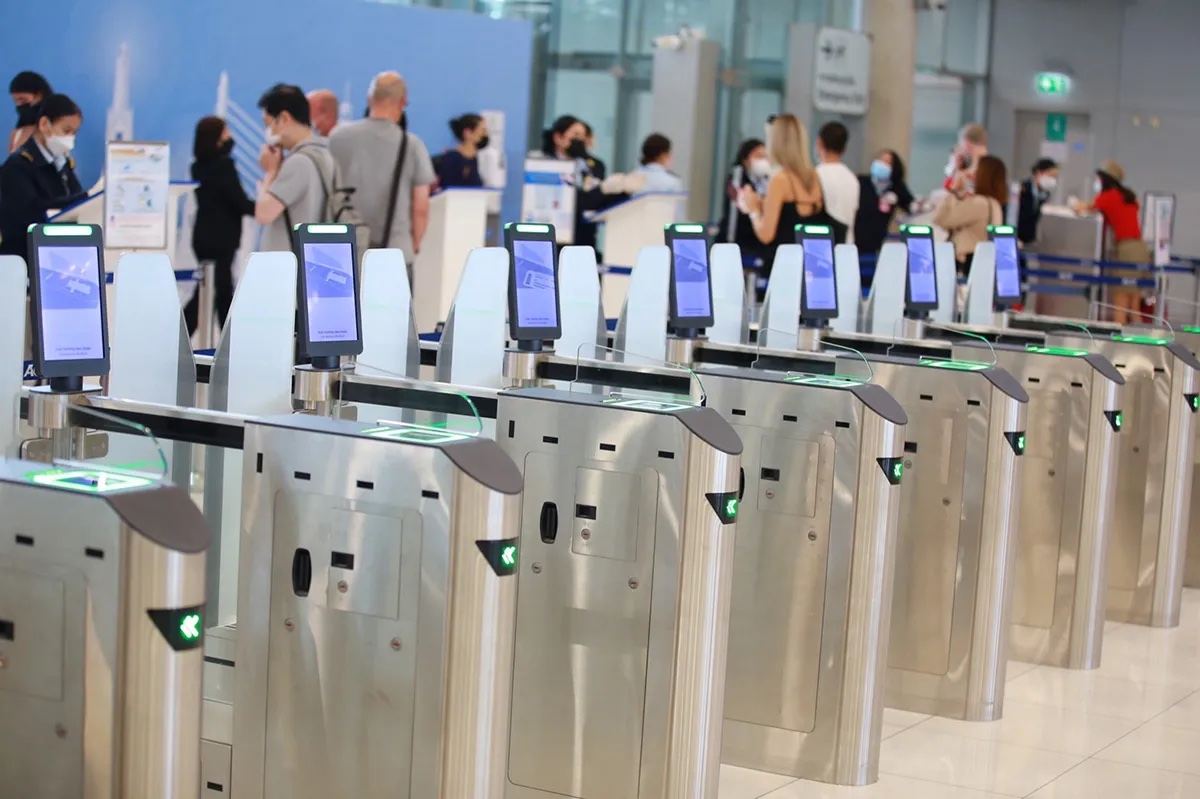
Operationally, immigration officers have been instructed to increase the thoroughness of inspections by leveraging advanced biometric systems and international databases. This technological approach aims to prevent document forgery, illegal entry, and the movements of individuals potentially linked to serious transnational crimes such as human trafficking, illegal labour, call-centre fraud, and money laundering.

Authorities have emphasised that despite the increased scrutiny, the measures will adhere to human rights standards to ensure law-abiding tourists are not adversely affected. Police General Kittharath Punpetch, Commissioner-General of the Royal Thai Police, reinforced this by stating that all officers are strictly prohibited from soliciting or accepting any benefits, with any violations resulting in immediate criminal and disciplinary action.

A key focus of the new protocol is to block foreigners, particularly scammers, who exploit Thailand’s visa-free entry scheme by making repeated “visa runs” to extend their stay indefinitely. Pol Maj Gen Choengron Rimpadee, deputy chief of the Immigration Bureau, explained that officers will now carefully question foreigners making a third consecutive visit with back-to-back visa-free stays. Individuals who have remained in the country for extended periods, such as 45 days or more per visit, will also face greater examination.

“These foreigners do not visit Thailand for tourism. Many of them work or operate businesses with Thai nominees as fronts,” said Pol Maj Gen Choengron. He revealed that some visitors have made as many as seven visa runs in a row, accumulating stays exceeding 200 days while avoiding official visa channels that would place them within Thailand’s systems for occupational and tax control.

The deputy commissioner added that immigration police would deny repeated entry to such visitors to prevent scammers from relocating their illicit businesses to Thailand. He also addressed misinformation, noting that those profiting from visa-run services have begun spreading false claims that immigration is targeting specific nationalities.

Thai Officials Assess 60-Day Visa-Free Policy’s Economic and Security Impacts

The Immigration Bureau has affirmed its commitment to continuously monitor and refine the screening procedures to ensure they effectively target high-risk individuals while safeguarding the travel experience of genuine tourists, who are always welcomed.

-Thailand News (TN)
Similar Posts

  • Death Toll In Bangkok Chatuchak Pub Blaze Rises To 30

    BANGKOK, Thailand — The death toll from the devastating fire at a Chatuchak district pub has risen to 30 after two critically injured victims succumbed to their injuries in the hospital, according to an update from the Chatuchak District Office. Authorities have formally identified 27 of the deceased, including one Laotian national, while forensic teams […]

  • | |

    Met Gala 2027 theme sparks backlash after John Gal…

    The Met Gala 2027 is already generating heated debate months before the event, following the announcement that legendary fashion designer John Galliano will be the focus of next year’s Costume Institute exhibition. The Metropolitan Museum of Art and Vogue revealed that the 2027 exhibition will be titled “John Galliano: Horizon,” a decision that has drawn both praise for Galliano’s creative legacy and criticism over his controversial past. (vogue.com⁠) The annual Costume Institute exhibition serves as the inspiration for the Met Gala dress code, making the announcement one of the fashion industry’s biggest events. Organizers described John Galliano: Horizon as a celebration of the designer’s extraordinary impact on fashion, highlighting his groundbreaking work at fashion houses including Givenchy, Dior and Maison Margiela. The exhibition is expected to showcase his most influential collections and explore his decades-long contribution to haute couture. (metmuseum.org⁠) However, the announcement quickly sparked criticism online. Many social media users questioned the decision to honor Galliano because of his highly publicized antisemitic remarks made in 2011. At the time, the British designer was dismissed from Christian Dior after a video emerged showing him making offensive comments. He was later convicted by a French court for public insults based on religion and ethnicity. (bbc.com⁠) Supporters of the exhibition argue that Galliano has spent years rebuilding his career and taking responsibility for his actions. Following the scandal, he publicly apologized, sought treatment for addiction and gradually returned to the fashion industry. His creative revival at Maison Margiela has been widely praised, with many critics describing his recent couture collections as some of the finest work of his career. (vogue.com⁠) Critics, however, believe that celebrating Galliano with one of fashion’s highest-profile exhibitions sends the wrong message. Some argue that his past should not be separated from his artistic achievements, while others say the exhibition should provide broader context rather than simply celebrating his influence. The debate has quickly spread across social media, with fashion enthusiasts, journalists and cultural commentators expressing differing views. (theguardian.com⁠) Despite the controversy, the Metropolitan Museum of Art and Vogue have defended their decision by emphasizing Galliano’s lasting impact on fashion history. They say the exhibition aims to examine his artistic vision and transformative role in modern design rather than overlook the complexities of his career. (vogue.com⁠) As anticipation builds for the 2027 Met Gala, discussions surrounding John Galliano: Horizon are likely to continue. While some view the exhibition as a celebration of one of fashion’s most imaginative designers, others believe it raises important questions about accountability, redemption and the legacy of influential public figures. The conversation has ensured that next year’s Met Gala will be about more than glamorous red-carpet looks—it will also be a reflection of the ongoing debate over art, history and responsibility.

  • Thai Army Accuses Cambodia of Using Ancient Temple as Military Base

    SURIN – The Thai army has accused Cambodian forces of using a historic border temple as a military base to launch operations against Thailand, in what it says is a violation of international law. The Second Army Region, responsible for security along the Cambodian border, stated that Cambodian troops equipped with heavy weapons have been […]

  • | |

    Pakistan, Saudi Arabia, Türkiye form military pow…

    According to the Global Firepower Index, the combined military capabilities of Pakistan, Saudi Arabia and Türkiye have become more significant following the signing of a mutual defence agreement between the three countries. The assessment describes the agreement as more than a conventional defence arrangement, saying it represents an effort to bring the military capabilities of three major regional powers into a coordinated defence partnership. Together, the three countries have approximately 1.4 million active military personnel, around 3,415 military aircraft, 6,046 tanks and 344 naval assets, according to the assessment. Pakistan plays a major role in the partnership, with around 660,000 active military personnel and a nuclear capability that significantly strengthens the combined strategic deterrence of the three countries. Türkiye contributes a strong defence industry and advanced military capabilities. It has around 192 naval assets and substantial expertise in drones, missiles, sensors and electronic warfare. Saudi Arabia, meanwhile, provides the largest financial contribution to the partnership. Its annual defence budget is estimated at around $63.9 billion. The kingdom’s strategic geographical position also gives it considerable importance within the proposed defence partnership. The combined annual defence spending of Pakistan, Saudi Arabia and Türkiye is estimated at approximately $124.4 billion. The figures indicate that the three countries collectively possess substantial manpower, air power, land forces and naval capabilities. Their combined resources could provide the partnership with greater strategic weight in regional security matters. The assessment also highlights the different strengths each country could bring to the alliance. Pakistan contributes significant manpower and nuclear deterrence, Türkiye offers defence technology and military-industrial capabilities, while Saudi Arabia provides substantial financial resources and strategic geographic importance. Together, these capabilities could create a broader and more diversified defence partnership among the three countries.

  • | |

    Turkey submits bill to parliament aimed at reinteg…

    Turkey’s governing coalition put forward a draft law before parliament on Wednesday designed to secure lasting peace with the Kurdistan Workers’ Party, offering legal protection from prosecution to many former fighters and suspending prison terms for others. The legislation represents a significant step toward closing out an insurgency that has claimed more than 40,000 lives since 1984, deepened political divisions inside Turkey and spilled violence into neighboring Iraq and Syria over four decades. The bill aims to bring the long running conflict to a close in part by clearing the way for potentially thousands of former PKK fighters and civilians to return to Turkey from hideouts in northern Iraq. The measure carries support from a majority of lawmakers and is expected to clear parliament later this week, though public opinion polls suggest many Turks remain doubtful it will deliver a durable peace. Under the bill, Turkey’s national security council would confirm the group’s disarmament, while a dedicated committee, including the vice president, several cabinet ministers and the head of the MIT intelligence service, would supervise the surrender and disarmament of militants. That committee would then report on the process to a parliamentary oversight commission. According to the text of the legislation, the bill would suspend prison sentences for individuals convicted of PKK membership or of assisting the organization. It would also extend legal protection to fighters who were not involved in killings, provided they return to Turkey within six months of the law taking effect. PKK figures convicted of more serious offenses, including leading a terrorist organization or sentenced to aggravated life terms before 2005, would fall outside the scope of these protections and would not receive suspended sentences. That exclusion means PKK founder Abdullah Ocalan, who has been imprisoned since 1999 under an aggravated life sentence, would remain behind bars even as the broader peace process moves forward. Ocalan called on the PKK to lay down its weapons and dissolve last year, a call the group’s leadership accepted. President Tayyip Erdogan’s governing AK Party secured backing for the bill, formally titled the national solidarity and social integration law, from its nationalist ally the MHP as well as the pro Kurdish DEM Party. Most other parties in parliament, including the main opposition, have also expressed support for the legislation. DEM co chair Tuncer Bakirhan described the vote as an important first step, saying he hopes the process continues forward in a constructive direction. The peace initiative between Turkey, which fields NATO’s second largest army, and the PKK first got underway in late 2024. It nearly stalled earlier this year, however, as the war involving Iran raised fears of wider regional instability and diverted attention from the domestic peace effort. Turkey, along with the United States and the European Union, classifies the PKK as a terrorist organization. The group launched its armed campaign in 1984, initially demanding an independent Kurdish state in southeastern Turkey before later shifting its goals toward greater autonomy and expanded political rights for Kurdish communities within Turkey. The legislation now heads toward a parliamentary vote expected within days, marking one of the most consequential efforts yet to formally end a conflict that has shaped Turkish domestic politics and regional security dynamics for more than a generation.

  • | | |

    Ministers seek PM’s approval for prices of 52 vi…

    ISLAMABAD: The federal health ministry has sought an urgent meeting with Prime Minister Shehbaz Sharif to obtain approval for the pricing of 52 newly registered life-saving medicines. Health Minister Syed Mustafa Kamal and Finance Minister Senator Muhammad Aurangzeb are expected to attend the meeting along with Federal Health Secretary Muhammad Aslam Ghauri and Drug Regulatory Authority of Pakistan (DRAP) Chief Executive Officer Dr Obaidullah. Officials said the health ministry has contacted the prime minister’s adviser, Tauqeer Shah, requesting an early appointment for the delegation. The Cabinet Committee on Drug Pricing had already approved prices for the 52 medicines during its meeting on July 24. However, the medicines cannot be legally marketed in Pakistan until the federal cabinet gives its final approval. After cabinet approval, DRAP will be able to issue notifications fixing the maximum retail prices of the medicines, allowing pharmaceutical companies to formally launch the products in the regulated market. Health ministry officials said the proposed meeting with the prime minister is aimed at obtaining his support for placing the pricing decision before the federal cabinet at the earliest. The delegation is also expected to raise the issue of hardship cases involving several essential medicines. Manufacturers and importers of these medicines have requested price adjustments, arguing that continued production or imports at the existing prices have become increasingly difficult. A senior health ministry official said the government was concerned because several registered medicines remained unavailable in the regulated market despite their prices having been approved by the drug pricing committee. The official said the delegation would brief the prime minister on the situation and seek immediate action to prevent further shortages. Among the medicines facing supply pressure are essential products such as influenza vaccines and morphine used in cancer treatment, along with other drugs whose manufacturers have reported difficulties in maintaining supplies at existing prices. The Cabinet Committee on Drug Pricing, chaired by Finance Minister Muhammad Aurangzeb, approved the 52 pricing cases after reviewing recommendations submitted by DRAP’s Drug Pricing Committee and Policy Board. All 52 cases forwarded by the Drug Pricing Committee and endorsed by the DRAP Policy Board were approved by the cabinet committee. However, the committee’s decision is not the final step in the process. The federal cabinet must endorse the recommendations before DRAP can officially notify the maximum retail prices. The medicines covered by the proposed pricing decision are used to treat a range of serious and chronic conditions. They include medicines for cancer, diabetes, haemophilia, Parkinson’s disease, autoimmune disorders, blood-clotting conditions and severe infections. Some are also used in intensive-care units and emergency treatment. Officials believe timely approval could help bring the newly registered medicines into the regulated market and improve availability for patients requiring specialised treatment.

Leave a Reply

Your email address will not be published. Required fields are marked *