trump approval falls
|

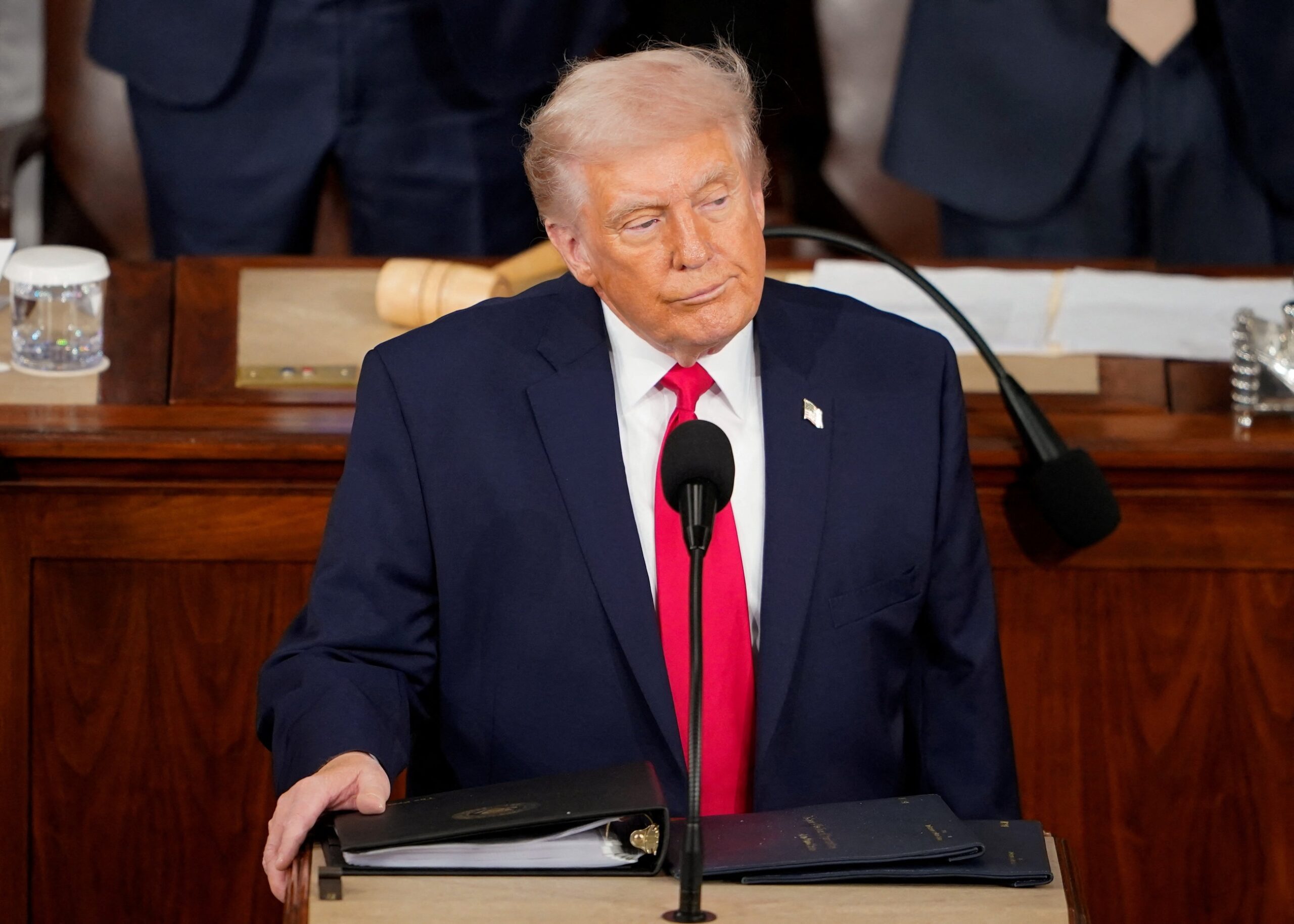
Trump approval falls to 33%, lowest of his presidency, poll finds

WASHINGTON, USA – President Donald Trump’s approval rating fell to the lowest level of his presidency, with an overwhelming majority of Americans concerned the US war with Iran will last a long time, according to a Reuters/Ipsos poll that concluded on Monday, August 17.

Just 33% of respondents in the four-day survey said they approved of Trump’s performance in the White House, while 64% disapproved. Trump’s approval rating, down from 35% in a poll that closed earlier this month and lower than at any point in his current term, has now tied the lowest level of his prior term reached in December 2017.


Trump approval falls to 33%, lowest of his presidency, poll finds

After returning to the White House in 2025 with just under half the country approving of his presidency, Trump’s popularity this year took a hit after he ordered strikes on Iran alongside US ally Israel. The ensuing conflict paralyzed a fifth of the global oil trade, triggering a surge in the price of gasoline that is weighing on US households – and on Trump’s Republican allies defending congressional majorities in November midterm elections.

Must Read

US rules out extending ceasefire deal as Iran threatens new offensive


US rules out extending ceasefire deal as Iran threatens new offensive

Trump, who campaigned on promises to keep inflation in check and avoid long-lasting wars, initially pledged the conflict with Iran would take a few weeks. But Iran has proved resilient and has kept the oil trade through the Strait of Hormuz largely bottled up even as the conflict has cooled.

Some 80% of Americans – including 87% of Democrats and 71% of Republicans – think US involvement in Iran “will go on for an extended period of time,” the Reuters/Ipsos poll found. Just 16% said the conflict would likely end in a few weeks.

Trump justifies high gas prices

Trump told a political rally in Garden City, New York, on Friday, August 14, that paying “a tiny little bit more for your gasoline” is worth the cost of ensuring “a very evil country” could not have a nuclear weapon, one of his stated rationales for the war.

Throughout the conflict, the president has alternated between threats of escalation and assertions that a peace deal is imminent. Only one in five Americans – and just half of Republicans – think the war has been worth it, the latest Reuters/Ipsos poll found.

Concerns about the war and gasoline prices have Republicans nervous about their hopes of defending their slim majority in the US House of Representatives in the November 3 elections, and Democrats increasingly see the US Senate also within their grasp.

Reuters/Ipsos polling this month has shown voters prefer Democrats over Republicans as better stewards of the economy for the first time in about a decade. The latest poll showed 38% of voters think Democrats will handle the economy better, compared to 35% who prefer the Republican approach. Democrats are also seen as better equipped to manage the cost of living.

The Republican approach to immigration has remained more popular than that of Democrats throughout Trump’s term, with a sharp fall in border crossings and sustained nationwide crackdown ordered by Trump. But Republicans are losing ground amid deadly confrontations and a surge in detainees, including children.

Some 40% of registered voters said Republicans have the better approach on immigration policy, compared to 38% who pick Democrats, according to the latest Reuters/Ipsos poll. That 2 percentage point spread is the lowest of Trump’s term. Republicans led by 26 points in January 2025.

The Reuters/Ipsos poll, which was conducted online, gathered responses from 1,166 US adults nationwide and had a margin of error of 3 percentage points in either direction. – Rappler.com

Similar Posts

  • |

    US Senate moves forward with bipartisan Russia sanctions bill

    The US Senate has taken the first major step toward approving a bipartisan sanctions package aimed at increasing pressure on Russia by targeting its energy sector and financial network. The legislation advanced with strong support on Tuesday as Ukrainian President Volodymyr Zelensky visited Washington to urge American lawmakers to strengthen measures against Moscow and continue backing Ukraine. Senators voted 86 to 12 to begin formal debate on the bill, allowing it to clear its first procedural stage. Although the proposal still requires further discussion and a final vote before becoming law, the overwhelming support highlighted broad agreement in the Senate on increasing economic pressure against Russia as the war in Ukraine continues. The proposed legislation would expand sanctions on Russian government officials, wealthy business figures, financial institutions and the network of ships often referred to as the shadow fleet. These vessels have been used to transport Russian oil while avoiding existing international restrictions. Lawmakers believe cutting off these channels would reduce Russia’s ability to earn revenue from energy exports. Another major feature of the bill would give President Donald Trump the authority to impose tariffs of up to 100 percent on imports from countries that continue buying large amounts of Russian oil and natural gas. Nations such as China and India could be affected if the measure is implemented. Supporters argue that reducing demand for Russian energy is one of the most effective ways to weaken Moscow’s financial resources and limit its ability to fund military operations in Ukraine. The Senate vote came only hours after Zelensky met President Trump at the White House during his visit to the United States. The Ukrainian leader also attended the funeral of Republican Senator Lindsey Graham in Washington. Graham had been one of Ukraine’s strongest supporters in Congress and spent more than a year helping build bipartisan backing for the sanctions proposal before his death earlier this month. After meeting with lawmakers, Zelensky urged senators to maintain strong support for Ukraine and approve tougher sanctions against Russia as fighting on the battlefield continues and diplomatic efforts led by the United States remain at a standstill. Ukrainian officials have repeatedly argued that increasing economic pressure on Moscow is necessary to reduce Russia’s ability to continue the conflict. The legislation has been named in honor of Senator Graham, whose work played a key role in shaping the proposal. Shortly before his death, he reached an agreement with the White House on a revised version of the bill. In a joint statement, six Republican and Democratic senators said moving the legislation forward was the best way to recognize Graham’s commitment to supporting Ukraine and strengthening sanctions against Russia. The updated measure also includes provisions requested by President Trump to extend existing sanctions authority related to Iran’s energy and weapons sectors. Lawmakers said the changes broaden the scope of the legislation while maintaining its primary focus on increasing pressure on Russia. Despite receiving strong bipartisan backing, the proposal has faced some criticism from Democratic lawmakers. Some have expressed concern that allowing the president to impose high tariffs gives the White House too much authority. Others warned that such tariffs could increase costs for American consumers and create economic difficulties for European allies that maintain trade relationships with countries affected by the measure. Even if the Senate approves the bill, it will not become law immediately. The House of Representatives has already begun its summer recess and is not expected to return to Washington until September. As a result, final congressional action on the legislation is likely to be delayed for several weeks before lawmakers can decide whether to send it to the president for approval.

  • |

    Romania shuts final nuclear reactor as severe Danube drought forces emergency energy measures

    Romania has completed a full shutdown of its Cernavoda nuclear power plant after severe drought dropped water levels in the Danube River to historic lows. The plant, which relies on the Danube for cooling and typically provides 20% of the country’s electricity generation, took its second reactor offline following the prior closure of its first reactor in late July. State operator Nuclearelectrica stated that the second reactor was shut down due to the ongoing drop in water levels, with no restart anticipated for at least ten days. To mitigate the energy shortfall, Romania declared a state of emergency for August, activated a 330-megawatt lignite-fired power plant, and requested that major industrial consumers and households curb power use during peak hours. Major automakers including Dacia and Ford have paused domestic production to help conserve power. The total shutdown immediately threatens energy security in neighbouring Moldova, which relies on Romanian imports to cover up to 60% of its electricity deficits. Moldovan authorities warned of potential rolling power cuts if alternative supplies cannot be secured from Ukraine or Western Europe. Across Europe, low river levels have similarly forced nuclear output reductions in France and triggered emergency engineering interventions in Hungary.

  • | | | |

    Mojtaba Khamenei appears in new video as health qu…

    TEHRAN: A new video showing Iran’s Supreme Leader Mojtaba Khamenei has emerged, offering a rare public glimpse of the Iranian leader amid heightened attention over his health and whereabouts. The footage was released by Iran’s semi-official Mehr News Agency and appears to show Khamenei sitting with several people and engaged in conversation. The agency did not disclose when or where the recording was made, nor did it identify the other individuals seen alongside him. Khamenei appears in normal condition in the short footage. The release comes after reports and speculation about his health had circulated in recent days, making the video particularly significant for observers following developments in Tehran. Iranian media presented the footage as evidence of the Supreme Leader’s continued presence and activity. The video does not provide independent confirmation of when it was recorded, however, leaving some questions unanswered about Khamenei’s current condition and location. The appearance comes as tensions surrounding Iran remain high. Iranian Foreign Minister Abbas Araghchi has reiterated Tehran’s determination to withstand pressure and continue what he described as resistance. “We are fully prepared for resistance despite all pressures,” Araghchi said, according to the statement cited by Iranian media. He also said Iran would not forget what he described as the unjust bloodshed of its martyrs, adding that those responsible would not be forgiven. Khamenei’s limited public appearances have attracted considerable attention since he became Iran’s Supreme Leader earlier this year. The latest footage is therefore likely to be closely examined both inside Iran and abroad as questions continue over the country’s leadership and its response to mounting regional pressures. For now, the exact timing and location of the recording remain undisclosed.

  • |

    CIA chief John Ratcliffe makes surprise Moscow vis…

    MOSCOW: CIA Director John Ratcliffe has made an unannounced visit to Moscow, drawing international attention as the United States and Russia remain locked in tensions over the Ukraine war and wider geopolitical disputes. Ratcliffe reportedly arrived in the Russian capital on Tuesday aboard a US Air Force Boeing C-17A Globemaster III military transport aircraft. The plane had earlier travelled from Andrews Air Force Base near Washington to Riga, Latvia, before continuing to Moscow. The unusual flight immediately raised questions about the purpose of the visit. US and Russian officials have not publicly disclosed details of Ratcliffe’s schedule, while the CIA has also declined to provide information about his meetings. US media reports said the CIA chief was in Moscow for discussions with Russian officials. However, the identities of those involved and the subjects discussed remain unclear. The visit is particularly significant because direct, high-level contacts between senior US intelligence officials and Moscow have become rare since Russia’s invasion of Ukraine. Ratcliffe’s trip is believed to be the first known visit to Russia by a sitting CIA director since William Burns travelled to Moscow in November 2021. Burns held talks with Russian President Vladimir Putin at the time. The latest development comes amid continuing diplomatic efforts surrounding the Russia-Ukraine conflict and broader disagreements between Washington and Moscow. It also follows growing tensions linked to Russia’s relationship with Iran and the wider security situation in the Middle East. Reports have also indicated that Washington asked Ukraine to avoid strikes on Moscow and St Petersburg during the period of the senior US official’s visit. US officials have not publicly confirmed the request or explained its circumstances. The secrecy surrounding Ratcliffe’s journey has fueled speculation about whether the talks could involve intelligence cooperation, Ukraine-related diplomacy, security concerns or other sensitive matters. No official confirmation has emerged to support any particular explanation. For now, the CIA director’s unexpected appearance in Moscow remains shrouded in mystery, but the trip underscores that high-level channels between Washington and Moscow remain active despite deep political and military differences.

Leave a Reply

Your email address will not be published. Required fields are marked *