trump hints sanctions
| |

Trump hints at sanctions on Chinese banks over Ira…

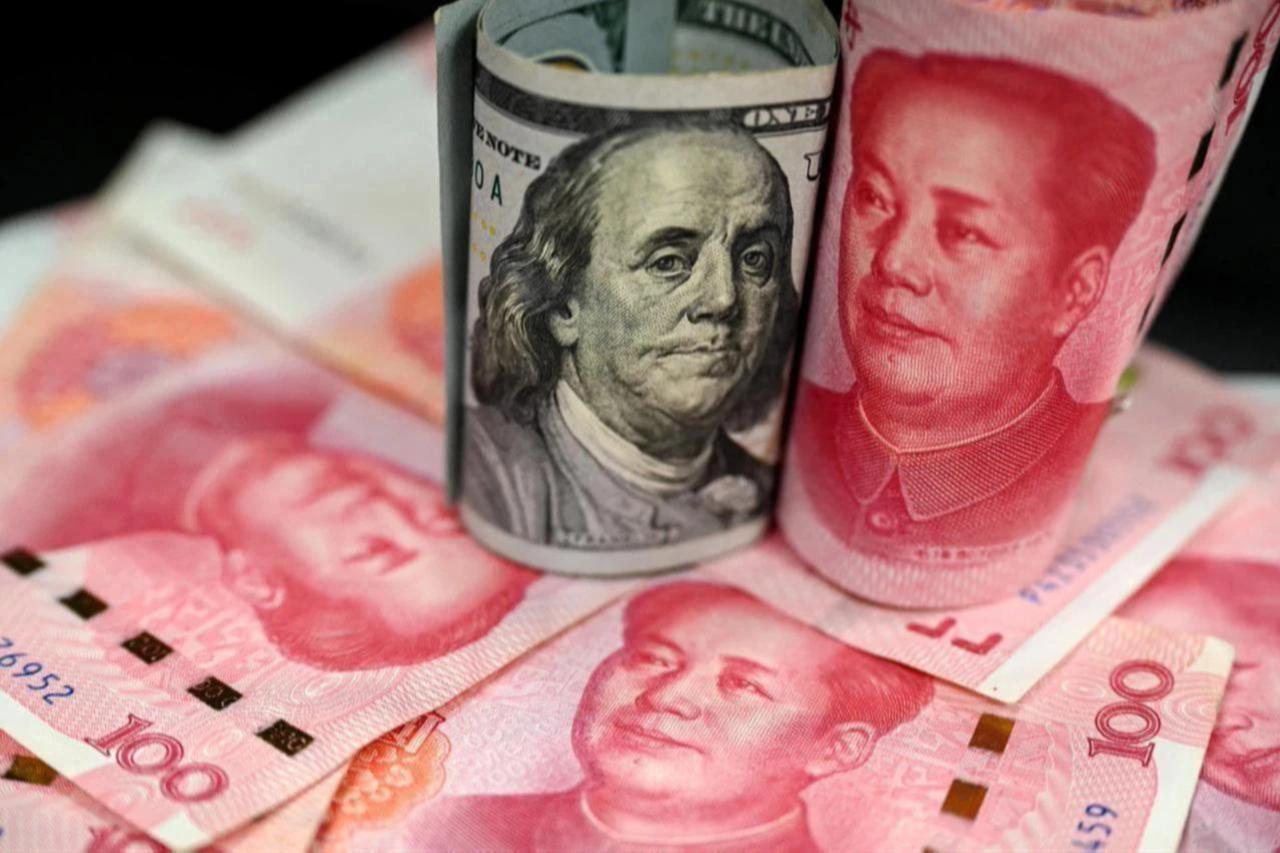
WASHINGTON: US President Donald Trump has hinted that Chinese banks dealing with Iran could face American sanctions, raising fresh concerns over the future of one of the most important financial channels supporting Iran’s oil trade.

Speaking to reporters in the Oval Office, Trump was asked whether his administration could target Chinese banks involved in transactions with Iran. Rather than ruling out such action, he responded by questioning why anyone would assume the United States would not impose sanctions.

Trump also suggested that Washington does not necessarily reveal its plans before taking action, leaving open the possibility that the administration could expand its pressure campaign against Iranian trade and the financial institutions that facilitate it.

The warning comes at a sensitive time for relations between Washington and Beijing. China is Iran’s largest trading partner, while Iranian crude oil remains an important component of their economic relationship. Chinese companies and financial institutions play a significant role in processing payments connected to Iranian oil and other commercial transactions.

Any direct sanctions against major Chinese banks could therefore have consequences far beyond Iran. Financial institutions with significant exposure to the US banking system could face a difficult choice between maintaining business with Iran and protecting their access to American financial markets.

For Tehran, the impact could be substantial. Restrictions on Chinese banks could make it harder for Iranian businesses to receive payments, settle international transactions and maintain oil revenues. Such measures could further isolate Iran from the global financial system and increase pressure on its already restricted economy.

Washington has previously imposed sanctions on Chinese companies and entities accused of supporting Iran or facilitating transactions that the United States considers prohibited. However, major Chinese banks have so far largely avoided direct sanctions of the kind now being suggested.

Targeting a major Chinese financial institution would represent a significant escalation. It could also add another layer of tension to an already complicated US-China economic relationship, particularly as both countries remain engaged in disputes over trade, technology and strategic competition.

For now, the Trump administration has not announced sanctions against any major Chinese bank over dealings with Iran. The president’s remarks remain an indication rather than a formal policy announcement.

Still, the message from Washington is clear: Chinese financial institutions involved in Iran-related trade could increasingly find themselves under scrutiny.

The uncertainty is likely to be closely watched by oil traders, banks and governments across the region, as any major disruption to Iran-China financial channels could affect both Iranian oil exports and wider energy markets.

Similar Posts

  • |

    Jayden Seales strikes early to put Pakistan in tro…

    West Indies pacer Jayden Seales struck twice before lunch to leave Pakistan reeling in pursuit of 211 on day four of the first Test at the Brian Lara Cricket Academy on Tuesday. Imam-ul-Haq made five while Azan Awais could only manage three, leaving Pakistan at 21-2 inside five overs. Salman Ali Agha could not open his account and was pinned lbw by Seales, reducing Pakistan to a dire 25-3. Babar Azam and Mohammad Rizwan then negotiated the remainder of the session to steady the innings. Earlier, Mohammad Abbas produced a superb bowling performance, taking a five-wicket haul to bowl out West Indies for 181 in their second innings after they had resumed the day on 126-7. The home side’s tail frustrated Pakistan early on, with Shamar Joseph and Kemar Roach adding 28 more runs in four overs during a 61-run stand that took West Indies’ lead past the 180-run mark. Joseph top-scored with a useful 38 off 27 balls, striking four sixes and a four, before Mohammad Ali eventually dismissed him with a slower delivery to break the partnership. The West Indies tail continued to frustrate Pakistan as Roach added another 15 runs with Jomeel Warrican to take the lead closer to 200. Mohammad Abbas then snared Roach, who made 18, to claim his fourth wicket before bowling Warrican for 14 to complete his seventh five-wicket haul in Test cricket. For Pakistan, Abbas returned figures of 5 for 22 in 15.5 overs, while Mohammad Ali and Khurram Shahzad claimed two wickets apiece. With Pakistan’s chase off to a disastrous start, the pressure now falls on Babar Azam and Mohammad Rizwan to rebuild the innings and guide their team towards the 211-run target on a challenging pitch.

  • Thai Citizens Use Shoes To Reserve Places In Bank Queues

    BANGKOK, Thailand — Thai citizens in multiple provinces have adopted an unconventional approach to securing their place in line at Krung Thai Bank branches, placing their footwear in queues stretching from bank entrances as they wait to register for the government’s ‘Thai Chuay Thai Plus’ welfare scheme, according to social media reports and local media […]

  • |

    Booker calls for diplomacy, says Pakistan can help promote Middle East peace

    Democratic US Senator Cory Booker has called for diplomacy and dialogue instead of military action, saying the United States needs diplomacy, not bombs, to address conflicts in the Middle East. Speaking at a Pakistan Independence Day event in New York, Booker said Pakistan was in a strong position to play a constructive role in promoting peace across the Middle East. He stressed that dialogue should take precedence over war and urged greater diplomatic efforts to resolve ongoing conflicts. Booker also highlighted the humanitarian consequences of conflicts in the region, saying every human being deserves dignity and respect. He said children in Palestine and Iran deserve the same consideration and protection as American children. “When a humanitarian tragedy is unfolding, none of us should remain silent,” Booker said, emphasizing the need to continue raising voices for a just and lasting peace in Palestine and Iran. The senator also praised the role of Pakistani Americans in strengthening ties between the United States and Pakistan. Referring to the efforts of the American Pakistani Public Affairs Committee (APPAC), he said the organization had worked to bridge communities and ensure that Pakistani Americans receive their rightful place and representation at the local level. Discussing bilateral relations, Booker said the friendship between the United States and Pakistan began soon after Pakistan’s independence and has continued to develop over the decades. He noted that Pakistani Americans have made significant contributions in a wide range of fields, including medicine, engineering, public service and business. He said the success of Pakistani Americans also contributes to the strength and prosperity of the United States, stressing the importance of ensuring that the community has a strong and influential voice in American society. Booker further spoke out against discrimination and Islamophobia, saying that when a Muslim faces prejudice in the United States, it is not only a problem for the individual or the Muslim community but a problem for the entire country. He recalled his efforts to combat anti-Muslim hatred and said he had introduced legislation aimed at addressing Islamophobia and protecting Muslims from discrimination. The senator’s remarks came as Pakistani Americans gathered in New York to mark Pakistan’s Independence Day and celebrate the community’s contributions to American society. The event, organized by APPAC, brought together senior officials, community leaders and prominent Pakistani Americans. APPAC Chairman Dr. Ijaz Ahmad and other speakers also addressed the gathering, highlighting the role of the Pakistani-American community in strengthening people-to-people ties and promoting closer relations between Pakistan and the United States. The event also underscored the growing role of Pakistani Americans in civic and public affairs, with speakers calling for greater representation and continued engagement between the two countries.

  • | |

    More provinces or better governance? In Sindh, div…

    “Start With Punjab”: Saeed Sarbazi Calls for Pilot Model Karachi: Once again, the demand for new administrative units and provinces has been sparked — this time from within the government itself. Interior Minister Mohsin Naqvi’s recent statement has reignited the debate, raising questions about governance, service delivery, and political intent. Coming at a time when the current setup is widely described as a “hybrid system,” Naqvi is seen by many as representing the other partner in that arrangement. His call therefore carries weight beyond routine political rhetoric, forcing both parliament and the public to ask: is this about bringing the state closer to the people, or about redrawing Pakistan’s political map? MQM-P Backs Demand: “Engine of Pakistan’s Economy” The debate found immediate backing from MQM-Pakistan, which has once again strongly supported the idea of separating Karachi from Sindh. The party argues that the city, which generates the bulk of Pakistan’s revenue, should have control over its own resources so that what is earned in Karachi is spent on Karachi. Calling it the “engine of the entire Pakistan economy,” MQM-P maintains that an independent administrative setup for the metropolis is the only way to fix its decades-old issues of infrastructure, water, transport and governance. Sindh Government Rejects: “Dangerous Precedent” However, the Sindh government has strongly opposed the idea. Provincial leaders and ministers like Sharjeel Memon, Saeed Ghani and Nasir Hussain argue that carving out Karachi from Sindh will only deepen existing fault lines and promote hate and division among communities. They maintain that Karachi is an integral part of Sindh’s history, culture, and economy, and that separating it administratively would set a dangerous precedent for the federation. For them, the solution lies in better governance and resource allocation within the existing provincial structure, not in division. PML-N Opposition: “Will Never Be Approved” The Pakistan Muslim League-Nawaz has also come out in opposition to the proposal. A senior PML-N minister and veteran politician, Rana Sanaullah, Special Assistant to the Prime Minister on Political Affairs, stated in a TV talk show that any legislation aimed at dividing provinces into units would “never be approved” in the National Assembly. He also asserted that such proposals were never discussed in cabinet or in parliament. The party argues that such moves risk destabilizing national harmony, and that the focus should remain on strengthening local government systems within provinces rather than redrawing administrative boundaries. MQM-P Counter: Parliamentary Precedent Cited Commenting on PML-N’s remarks, MQM-Pakistan head Mustafa Kamal fired back, saying those who want to reorganize Pakistan into smaller administrative units have the political strength to do so. He argued whether the 26th or 27th amendment bills were discussed in cabinet before they were floated for approval in parliament. He disclosed that both the bills were presented on the day of passing and were passed unanimously even before discussion. “If a bill for new provinces is brought to the floor of the National Assembly, it would be passed — just as the 26th and 27th constitutional amendments were,” Kamal said. His statement signals MQM-P’s confidence that with the right backing, even a contentious legislative move can sail through parliament. Saeed Sarbazi’s Expert View: Ill-timed Debate, Governance Needed, Not Division Talking to this correspondent, senior journalist, news editor at a reputable daily and former president of the Karachi Press Club, Saeed Sarbazi said raising such a subject at this critical stage was ill-timed. With the country going through a severe economic meltdown amid the Iran-US conflict, he argued, separating Karachi from Sindh would not serve any purpose. Sarbazi pointed out a key administrative fact: “More than 65 percent of Karachi belongs to cantonment areas. So blaming the Sindh government for the state of 34 percent of the infrastructure is not fair.” For him, the debate distracts from the real issue of joint responsibility and better coordination between all stakeholders. Federal Responsibility: Revenue vs Investment Gap Sarbazi, a seasoned union worker turned leader, also highlighted the federal government’s obligations in the debate. “If Karachi is mini Pakistan, where the country’s most important ports are located and the entire Pakistan benefits from its structure and institutions, then it is obligatory on the Federal government to provide monetary support,” he stated. He cited the example of the National Highway M9 — a key CPEC project — which still remains a single lane in parts despite years of promises. “Till to-date the federal government has not completed the double lane highway,” Sarbazi said, arguing that Karachi generates the most revenue but gets the least direct federal investment in return. “Start With Punjab”: A Pilot Model Suggested by Sarbazi The former KPC president further added that the discussion should not be limited to Sindh alone. “Punjab Assembly has already passed a resolution to divide Punjab into South and Central Punjab,” Sarbazi noted. “If those who aspire to see how administrative units will function and become a model, then it should start from Punjab. If it presents a good governance model, then perhaps Sindh will follow.” His remarks suggest that instead of confrontation, a pilot model in Punjab could set the tone for the rest of the country. Power Politics and PPP’s Role in Sindh Saeed Sarbazi, who holds the unprecedented record of being elected unopposed along with his entire panel to the Karachi Press Club, stated that such tactics of creating more administrative units are often ignited by power corridors as a tool for arm-twisting political parties. “Though democratically elected governments have flaws, these can only be corrected through good governance,” he said. “Such arm-twisting only brings political instability in Pakistan.” Sarbazi emphasized that the role of the Pakistan Peoples Party in the Sindh government should not be underplayed. “It is serious about improving infrastructure in the province — by providing people with good transport, water at their doorstep, and by improving the sewage and drainage system.” The Way Forward: Merits, Concerns, and Alternatives As the debate over new provinces resurfaces, both merits and concerns demand attention. Proponents argue that smaller administrative units

  • | | |

    Pakistan marks Kashmir Exploitation Day

    Pakistan observed Kashmir Exploitation Day on August 5, with political leaders reaffirming their support for the people of Indian-administered Kashmir and describing India’s actions of August 5, 2019, as illegal and contrary to international law and United Nations resolutions. Deputy Prime Minister and Foreign Minister Ishaq Dar said Pakistan remains committed to supporting the Kashmiri people’s right to self-determination. In his message, he stated that India’s unilateral constitutional changes made on August 5, 2019, were unlawful and pledged Pakistan’s continued moral, political and diplomatic support for Kashmiris. He also urged India to reverse all measures that altered the disputed region’s constitutional status. The Foreign Office said Pakistan continues to observe Kashmir Exploitation Day to highlight the events of August 5, 2019. A spokesperson praised the courage, resilience and sacrifices of the people of Indian-administered Kashmir and reiterated Islamabad’s support for their cause. Punjab Chief Minister Maryam Nawaz paid tribute to the families of those who lost their lives during the Kashmir conflict and urged the United Nations and international human rights organisations to take notice of alleged human rights violations in the region. She said Pakistan would never accept the constitutional changes introduced by India in 2019. Sindh Chief Minister Syed Murad Ali Shah said India’s actions were against United Nations Security Council resolutions and called on the international community to play a greater role in protecting human rights in Kashmir. Senate Chairman Syed Yousaf Raza Gilani condemned India’s August 5 measures, saying attempts to alter the region’s demographic composition and identity were unacceptable. In Peshawar, a solidarity rally led by Khyber Pakhtunkhwa Governor Faisal Karim Kundi was held from the Civil Secretariat to the Governor House. Government employees and people from different walks of life participated in the event. Addressing the rally, Kundi said Pakistan would continue to stand with the people of Kashmir and support their aspirations. Sindh Home and Law Minister Zia-ul-Hassan Lanjar said the use of force and restrictions could not weaken the determination of the Kashmiri people. Sindh Assembly Speaker Owais Qadir Shah also urged the United Nations to play a more effective role in addressing the situation. Jamaat-e-Islami chief Hafiz Naeem ur Rehman said the struggle of the Kashmiri people would continue until the dispute is resolved in accordance with United Nations resolutions. Senator Sherry Rehman praised the resilience and determination of Kashmiris, while Federal Minister Amir Muqam, speaking at a rally in Islamabad, reiterated Pakistan’s support for Kashmir and criticised India’s policies in the disputed territory. PPP Parliamentarians Secretary General Nayyar Bukhari also condemned India’s 2019 constitutional changes, saying they had failed to suppress the Kashmiri people’s demand for self-determination and warning that such policies could undermine regional peace.

Leave a Reply

Your email address will not be published. Required fields are marked *