twothirds england falls

Two-Thirds of England falls into official drought

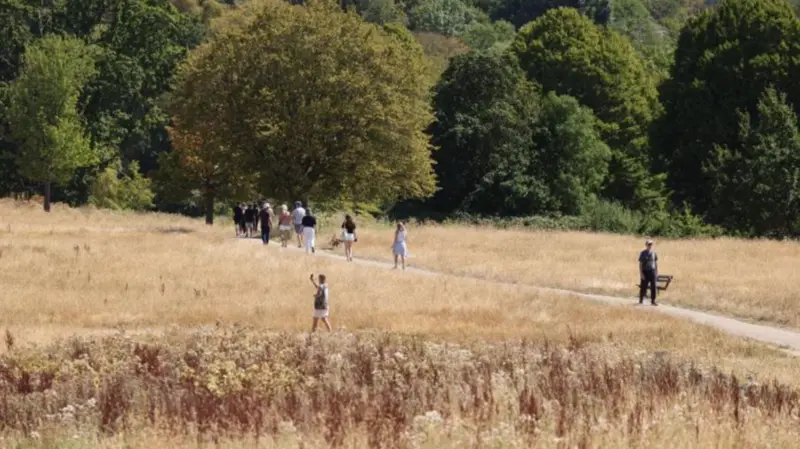
England is facing an escalating environmental crisis as official drought designations now cover more than two-thirds of the country. This is recent announcement according to the National Drought Group and emergency health authorities. Vast regions including the East Midlands, Kent and East Sussex have officially entered drought status. Officials warn that without an immediate period of steady precipitation, these dry conditions will deteriorate further.

The ongoing dry spell has visibly reshaped the countryside. Recent aerial and satellite imagery reveals vast stretches of parched brown landscapes across England and Wales. These landscapes stood in shocking contrast to the noticeably greener conditions in Scotland. The dramatic shift highlights the severity of the moisture deficit that has built up over months of minimal rainfall. This change has left soil depleted, rivers running low and reservoirs depleted.

Water Minister Emma Hardy attended the National Drought Group meeting today.

She says the government is planning to:

  • Increase the national water supply by building nine new reservoirs
  • Reduce leaks in water infrastructure
  • Make it easier for farmers to build more on-site irrigation reservoirs on their land

Hardy says she also expects water companies to take every available step to minimise leakage and support customers in using water wisely.

Adding to the environmental strain, atmospheric conditions are expected to deteriorate further before any relief arrives. Meteorologists report that temperatures could surge toward 36°C (97°F) across south-eastern regions. In response to the imminent surge in temperatures, health authorities upgraded heat health alerts across the majority of England. Several amber heat alerts have been put into effect, prompting the Met Office to evaluate whether high-tier extreme heat warnings will be necessary to protect public health and safety.

The high temperatures combined with prolonged dry spells place immense pressure on water supplies, infrastructure, and local ecosystems. Authorities and environmental agencies are urging the public to practice strict water conservation measures to prevent further depletion of vital reserves. Agricultural sectors are also bearing the brunt of the dry period, with crop yields and livestock management facing heightened stress.

Forecasters indicate that the current weather pattern offers little immediate reprieve. According to meteorologists, England and Wales are unlikely to experience widespread rainfall until late in the weekend at the earliest. Even then, short bursts or localized showers will do little to offset the deep-seated moisture deficit. Hydrologists emphasize that only significant and sustained rainfall over an extended timeframe can truly reverse drought conditions and replenish natural aquifers.


Until atmospheric conditions shift to bring prolonged wet weather, local authorities and water utility companies are preparing for continued operational challenges, potential water restrictions, and intensified efforts to safeguard public health against the extreme temperatures.

Similar Posts

  • | |

    Europe encounters greatest solar eclipse in decade…

    Daylight dissolved across the United Kingdom and continental Europe as millions of onlookers turned to witness the most spectacular solar eclipse the region has seen since 1999. From packed coastal beaches in southwestern England to historical strongholds in northern Spain, the cosmic alignment delivered an breathtaking celestial display that left crowds cheering, whispering, and in some places, standing in complete, awestruck silence. The majority of the UK experienced a deep partial eclipse with the Moon blocking out over 90% of the Sun’s face. A sselected orridor running through Iceland and northern Spain was treated to the coveted prize: a rare total solar eclipse. A Shared Experience Across the British Isles Across Britain, ordinary routines came to a sudden halt as people gathered on hilltops, city plazas, and seafront promenades equipped with protective eclipse glasses and homemade pinhole projectors. In Cornwall, the atmosphere at a seaside beach cafe was described by locals as absolutely buzzing. As the lunar shadow gradually bit deeper into the solar disk, the bright summer sunlight faded into an uncanny, metallic haze, accompanied by a noticeable drop in temperature. Further north in Scotland, grey weather initially threatened to ruin the party. Hundreds had gathered on Edinburgh’s iconic Castle Rock, anxiously watching a thick blanket of cloud. Just as the peak of the eclipse approached, a sudden break in the overcast weather revealed the glowing crescent Sun above, prompting a massive roar of applause and collective relief from the crowd below. Chasing Totality: 84 Seconds of Pure Wonder For those who traveled to the narrow path of totality in Western Europe, the event transformed from a impressive atmospheric novelty into a profoundly emotional moment. In the town of Benavente, located in northwestern Spain, an estimated 84 seconds of complete totality turned day directly into night. As the Moon entirely covered the Sun, revealing the ghostly white halo of the solar corona, the cheering crowd fell completely silent. For nearly a minute and a half, the town stood wrapped in twilight, suspended in a collective hush before the sun’s edge re-emerged and brought back the day. Nearby in Burgos, science journalists and eclipse chasers found themselves caught up in the raw emotion of the event. Even veterans who had traveled the world noted that watching the horizon glow in a 360-degree sunset never loses its magic. They described the sudden arrival of the Moon’s umbral shadow as an experience that triggers goosebumps. A Once-in-a-Generation Celestial Event Solar eclipses themselves are not inherently rare. However, having a total shadow track across populated European landmasses is an event that occurs only a few times a century. For many young observers, this was their very first taste of a major astronomical event. On contrary, older generations recalled the legendary 1999 eclipse that captivated the continent previously.

  • El Niño Drought Forces Water Rationing on Koh Samui

    KOH SAMUI, Thailand — The popular tourist island of Koh Samui has been forced to implement strict water rationing after a prolonged dry spell, exacerbated by El Niño weather patterns, slashed the island’s clean water production capacity to approximately 40 percent of normal levels. ‘Super El Niño’ Puts Thailand on Alert as Drought Threatens Crops […]

  • |

    The dual catalyst of changing climate and human

    France is confronting unprecedented environmental devastation as wildfires swept across the nation’s forests and countryside. The fire burned over 300,000 acres. A level of destruction not witnessed in the country since the aftermath of the Second World War. The communities assess ruined homes, scorched ecosystems and degraded air quality. The French public and authorities are left with an urgent question: what is driving these catastrophic blazes? A Perfect Storm of Climate Conditions At the root of the crisis is a changing global climate driven by greenhouse gas emissions. Rising regional temperatures, combined with prolonged dry spells, have transformed expansive tracts of woodland into dry tinderbox environments. In these prolonged heatwaves, humidity drops sharply, rendering vegetation prone to rapid ignition. Under such extreme drought, even a minor spark can ignite an uncontrollable inferno within minutes. Environmental scientists emphasize that while climate conditions establish the background vulnerability, they do not act alone. Heat and drought create the ideal environment for fires to spread, but the vast majority require an initial ignition source. The Human Factor: Negligence, Accidents and Arson Official records in France reveal a shocking pattern. Approximately nine out of every ten wildfires originate from human activity.  Public concern often focuses on intentional acts of arson. However, investigators note that deliberate fire-setting accounts for only a fraction of total blazes. The overwhelming majority stem from everyday human negligence or accidents. Common accidental triggers include: Discarded Cigarettes: Unextinguished butts tossed from vehicles or thrown onto dry brush. Fire investigators refer to the rule of 30 conditions where ambient temperatures exceed 30°C (86°F), humidity drops below 30%, wind speeds stay below 30 km/h. A remaining cigarette segment retains at least 30% of its length. Under severe drought, these thresholds lower drastically, making ignition almost immediate. Infrastructure and Equipment: Sparks generated by heavy machinery, ongoing construction projects, or faulty electrical equipment operating near dry grass. Recreational Fires: Unattended outdoor barbecues and small campfires in or around forested boundaries. In response to the scale of destruction, the French Interior Ministry has taken aggressive legal action, detaining over 400 individuals suspected of initiating blazes either through reckless behavior or intentional acts. Among those apprehended are scores of minors, as well as individuals facing immediate judicial sentencing for setting fires in protected woodland zones. Mental health professionals and legal experts point out that intentional fire-starters typically fall into distinct categories, including careless individuals, opportunistic actors seeking financial gain (such as insurance payouts), pyromaniacs, or individuals seeking recognition during emergency responses. Looking Ahead: Reconstruction and Forest Adaptation The unprecedented severity of the blazes has sparked intense public debate over state readiness and resource allocation. Critics question whether preventive measures and response mechanisms were adequate for a summer marked by continuous heatwaves. Addressing the national crisis, French President Emmanuel Macron emphasized the necessity of adapting national forestry policy to match evolving climate realities. Rebuilding efforts will require replanting woodlands with more fire-resistant tree species rather than simply restoring vulnerable pine monocultures. As emergency crews continue to monitor remaining hotspots and brace for subsequent heatwaves, France faces a long-term strategy shift: balancing immediate enforcement against negligence with broad ecological adaptation.

  • |

    “The Ark” in an era of ecological reckoning

    In summer 2026, the power plant “Batcave” opened a group exhibition The Ark curated by renowned painter Eric Fischl alongside Powerhouse Arts President Eric Shiner. Bringing together roughly 90 animal sculptures by a multigenerational line-up of international artists. The exhibition uses the ancient narrative of the Great Flood as a mirror for modern ecological and cultural turmoil. The concept behind The Ark draws directly from the myth of the Deluge, an archetypal narrative found across diverse world traditions where catastrophic waters sweep away the old world to test human stewardship and resilience. Yet rather than adopting a purely apocalyptic or alarmist tone, the exhibition framing focuses on empathy, kinship, and survival. Co-curator Eric Fischl notes that animal sculpture offers a unique vehicle for exploring profound existential truths. Animal sculpture also captures raw instinct and sublime wonder through physical form. By placing non-human creatures at the center of the narrative, the exhibition encourages viewers to rethink their place within the broader web of life.  From Historic Whaling Port to Post-Industrial Sanctuary The journey of The Ark mirrors its thematic concern with changing environments. An earlier, smaller iteration of the show debuted at The Church in Sag Harbor, Long Island. A historic coastal town deeply tied to the 19th-century whaling industry. In that seaside context, the sculptures called to mind maritime history and marine life under threat. When relocated and expanded for Powerhouse Arts in Brooklyn, the narrative shifted dramatically toward urban ecology and environmental remediation. Displaying ninety animal figures inside a rehabilitated power plant adjacent to heavily polluted urban waters creates a poignant visual tension. The physical site itself acts as a metaphor: an industrial relic turned creative sanctuary, witnessing the slow process of ecological recovery alongside the artistic preservation of animal life. Masterpieces of Instinct and Form The roster of participating artists spans decades and stylistic movements, uniting legendary figures of contemporary art with bold emerging voices. Pioneering Figures: Works by artists such as Maurizio Cattelan, Kiki Smith, Bruce Nauman, Sarah Lucas, and Jim Dine showcase how animals have long served as psychological stand-ins for human vulnerability, angst, and desire. Expanded Roster for Brooklyn: Newly added works by artists including Wangechi Mutu, Cannupa Hanska Luger, François-Xavier Lalanne, Nohemí Pérez, and Nari Ward introduce critical perspectives on Indigenous land sovereignty, post-colonial environments, and urban material reuse. Craft and Material Labor: Because Powerhouse Arts functions primarily as a fabrication facility, the exhibition doubles as a tribute to artistic craftsmanship. Visitors encounter bronze beasts, woven totems, carved wood, and reassembled found materials, celebrating the tactile labor behind each creation.   By encouraging close physical encounters with these sculpted beasts, The Ark bridges the gap between artistic tradition and ecological activism. It asks visitors to consider what merits saving when tides rise. It is suggesting that compassion for vulnerable creatures may well be our most essential anchor in turbulent times.

  • | |

    Unforgiving July’s heatwaves in the U.S.

    According to a landmark report released by the National Oceanic and Atmospheric Administration (NOAA), the United States just experienced the single hottest month in modern history. Throughout July, atmospheric heat domes locked across vast stretches of the country. The heatwaves drove mean temperatures in the Lower 48 states to an unprecedented average of 76.9 degrees Fahrenheit (24.9 degrees Celsius). This mark sits an incredible 3.3 degrees Fahrenheit above the 20th-century norm, effectively surpassing the legendary heatwaves of July 1936 during the Dust Bowl and July 2012. The data underscores an extraordinary, nationwide thermal surge. Record-breaking conditions spared virtually no region, with all 48 contiguous states logging temperatures well above their long-term monthly averages. States in the Mountain West, the Southwest, the Northern Plains, and the Southeast bore the brunt of the extreme conditions. Across the country, over 600 monthly high-temperature records fell or were matched. 13 individual states logged a July that ranked among their top five hottest ever recorded. Wyoming stood out at the epicenter of the continental heat peak, registering its warmest month on record with temperatures soaring 5.1 degrees Fahrenheit higher than historical baselines. While intense afternoon conditions pushed daytime maximum temperatures to an average of 89.5 degrees Fahrenheit, ranking as the sixth-warmest daytime average in 132 years of record-keeping. Meteorologists emphasize that nighttime behavior represented the most dangerous aspect of this climatic event. Overnights offered almost no thermal relief, as minimum temperatures averaged 64.2 degrees Fahrenheit across the nation. This smashed the previous overnight low-temperature record set in July 2022 by a staggering 0.7 degrees Fahrenheit. Climatologists point out that uncomfortably warm nights are one of the most definitive signatures of human-driven climate change. High concentrations of greenhouse gases trap outgoing longwave radiation close to the Earth’s surface long after sunset. The physiological and infrastructural consequences of these elevated nighttime floors were felt severely across North America. When overnight temperatures fail to cool sufficiently, human bodies, livestock, and urban infrastructure lose their ability to recover from daytime heat stress. The sustained thermal stress strained municipal power grids, triggered localized water delivery alerts, and contributed to scores of heat-related illnesses and hospitalizations. In several western jurisdictions, compounding factors such as lingering droughts and severe heat domes fueled destructive wildfires, while critical water reservoirs like Lake Mead dipped toward critical levels.   Interestingly, temperature patterns across non-contiguous states diverged sharply from the mainland. Hawaii recorded near-average daytime conditions while Alaska experienced its coolest July since 2008, accompanied by record rainfall in regions around Anchorage. However, across the Lower 48, the pattern remained stubbornly hot and generally dry. As federal forecasters look ahead, climate projections suggest that the thermal pressure will persist, with above-average temperatures expected to hold firm across much of the central and southern United States well into late summer.

Leave a Reply

Your email address will not be published. Required fields are marked *