government announces crackdown
|

UK government announces crackdown on subscription traps 


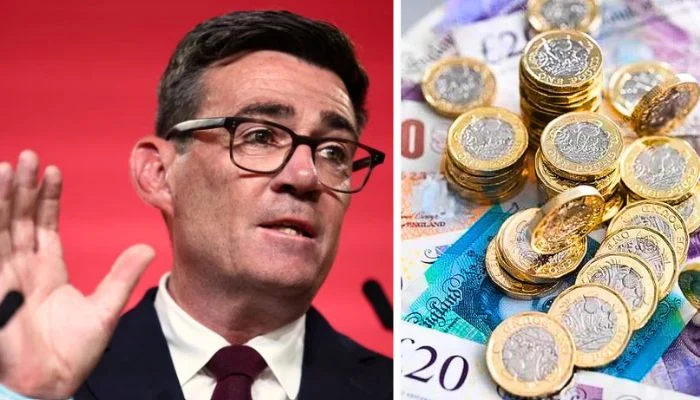
British Prime Minister Andy Burnham has announced a new package of measures aimed at easing financial pressure on households as the UK continues to face concerns over the cost of living. The government says it will take action against business practices that can leave consumers paying more than expected, including misleading discounts and difficult-to-cancel subscriptions.

The measures form part of Burnham’s wider “everyday fixes” agenda, which focuses on addressing common financial frustrations faced by families across the country. One of the first priorities will be an accelerated crackdown on so-called “subscription traps”, under which consumers can find themselves automatically paying for services they no longer want.

The government also plans to tackle misleading pricing practices used by retailers. These include fake “was” prices, invented reductions and misleading recommended retail prices that can make a product appear to offer a much larger discount than it actually does.

The changes are intended to prevent businesses from artificially increasing the price of an item before reducing it, creating the impression that shoppers are receiving a significant bargain.

Burnham said consumers should be able to trust the discounts advertised to them, particularly at a time when household budgets remain under pressure. He argued that if a product is promoted as being half price, customers should be confident that they are genuinely receiving a 50% reduction.

Subscription services are another major focus of the government’s plans. According to government figures, there are approximately 155 million active subscriptions across the UK, while unwanted subscriptions cost consumers around £1.6 billion every year.

The average consumer has several subscriptions, ranging from streaming and entertainment services to magazines, beauty products and other recurring services. Under the new rules, companies will be required to provide clearer information before customers sign up and remind them when free or discounted trials are approaching their end.

Businesses will also have to make cancellation procedures significantly easier. Consumers who sign up online will be able to cancel through a straightforward online process rather than being forced to navigate lengthy telephone calls or complicated cancellation systems.

Another important protection will be a 14-day cooling-off period following the end of certain trials or the renewal of long-term contracts. This will give customers additional time to reconsider a subscription and leave if they no longer want it.

The government estimates that consumers could save an average of £14 a month for every unwanted subscription they successfully cancel early. Overall, the wider consumer-protection measures are expected to provide substantial financial benefits to households.

The subscription rules are being brought forward from the previous timetable, with the government aiming for the new protections to take effect in January 2027. The changes are designed to give consumers greater control over their spending while putting greater responsibility on companies to make their pricing and cancellation policies transparent.

Burnham has described the measures as an effort to make everyday life fairer and less frustrating for British families. While the reforms will not resolve every aspect of the cost-of-living pressures facing households, the government says they are intended to deliver practical savings and prevent consumers from being caught out by unfair commercial practices.
Similar Posts

  • |

    Foreign nationals among victims of Nizhnekamsk attack, Russia says

    At least 13 people were killed in a terrorist attack targeting civilian facilities in Nizhnekamsk, Russia’s Tatarstan region, on August 10, according to the Russian Foreign Ministry. Russian Foreign Ministry spokeswoman Maria Zakharova said most of those killed were foreign nationals. Preliminary information indicated that eight victims were citizens of Uzbekistan, while another victim was from Tajikistan. Around 20 foreign nationals were also reported to have been injured in the attack. Zakharova accused Ukrainian forces of deliberately targeting civilian locations where foreign workers and residents from countries friendly to Russia were present. She claimed the attack was intended to create tensions between Russia and those nations. The Russian official described the incident as a terrorist attack and said such strikes have resulted in the deaths of both Russian citizens and nationals of other countries. The Russian Foreign Ministry expressed condolences to the families and relatives of those killed. It also wished a rapid recovery to those injured. Moscow further urged the international community to condemn what it described as attacks against civilian targets. The accusations were made by the Russian Foreign Ministry as part of its response to the Nizhnekamsk incident. The claims concerning responsibility and the circumstances surrounding the attack could not be independently verified from the statement alone. The incident has raised concerns over the safety of foreign nationals working and living in areas affected by the Russia-Ukraine conflict. Further details about the victims, the extent of the damage and the circumstances of the attack are expected as investigations continue.

  • | | |

    Pakistan’s 79th Independence Day celebrated at H…

    LONDON:  Pakistan’s 79th Independence Day was celebrated with traditional enthusiasm and national spirit at the Pakistan High Commission in London, with Chairman Kashmir Committee Rana Muhammad Qasim Noon attending as the chief guest. Pakistan’s High Commissioner to the UK, Tipu Usman, hoisted the national flag to the national anthem at a ceremony attended by a large number of members of the Pakistani community, media representatives, diplomats and High Commission officials with their families. The ceremony began with the recitation of the Holy Quran, followed by the reading of special messages from the President, Prime Minister and Deputy Prime Minister and Foreign Minister of Pakistan. Addressing the gathering, High Commissioner Tipu Usman paid tribute to Quaid-e-Azam Muhammad Ali Jinnah and the founders of Pakistan, as well as the sacrifices made by millions of men and women during the struggle for independence. He said Pakistanis living in Britain were the country’s “true ambassadors”, playing an important role in strengthening relations between Pakistan and the UK and building bridges between the two countries. The High Commissioner also reaffirmed Pakistan’s moral, political and diplomatic support for the Kashmiri people’s right to self-determination, saying they were entitled to this right under the relevant United Nations Security Council resolutions. The celebrations featured national songs, while British-Pakistani soprano singer Saira Peter delivered a special performance. The enthusiastic participation of children added to the festive atmosphere. The ceremony concluded with High Commissioner Tipu Usman, Rana Muhammad Qasim Noon and other distinguished guests cutting a cake to mark Pakistan’s 79th Independence Day.

  • | |

    COVID-19 legal battle against Anthony Fauci

    On August 6, 2026, the Senate Homeland Security and Governmental Affairs Committee hold Dr. Anthony Fauci in contempt of Congress. The resolution, driven by the committee’s Republican Chairman, Senator Rand Paul of Kentucky, recommends referring the 85-year-old retired public health official to the U.S. Department of Justice for potential criminal prosecution. The panel’s decision follows a contentious appearance by Fauci during an investigation into the government’s COVID-19 response and the origins of the coronavirus. Throughout the session, Fauci repeatedly invoked his Fifth Amendment constitutional protection against self-incrimination, refusing to answer key questions from lawmakers more than 100 times. A Long-Standing Feud Escalates The bitter confrontation represents the latest chapter in a multi-year rivalry between Rand Paul and Anthony Fauci, who served as the prominent face of the federal government’s pandemic response until his retirement in 2022. For years, Paul and conservative lawmakers have accused Fauci of misrepresenting information regarding the origins of the virus, public health guidance, and funding for viral research. Shortly before the hearing, Paul released over 1,000 pages of Fauci’s personal diary entries, claiming they demonstrated hidden doubts about the origins of the outbreak. During his opening statement at the hearing, Fauci delivered a rebuke of the proceedings, characterizing the hearing as a political trap. He accused Senator Paul of harboring an unhinged obsession with sending him to prison, arguing that the true purpose was to force him into a procedural error or perjury. Citing legal advice from his counsel, Fauci stated that pleading the Fifth Amendment was his only prudent option to protect against politically motivated prosecution, despite his history of testifying before Congress across multiple presidential administrations. The Legal Dilemma Over Clemency and Constitutional Rights At the center of the contempt vote lies a unprecedented constitutional debate involving executive clemency and Fifth Amendment rights. Before leaving office in January 2025, former President Joe Biden issued a preemptive pardon to Fauci covering his official actions between 2014 and early 2025, intending to insulate the scientist from what the former administration deemed politically motivated retributive investigations. Senator Paul argued that because Fauci holds presidential immunity for his past government conduct, he no longer faces real legal exposure for those events, rendering his Fifth Amendment claims invalid. “Holding a witness in contempt is a serious thing, and it should be rare,” Paul remarked prior to the vote. “But the contempt power exists for precisely this circumstance.” Conversely, Democratic members of the committee and legal experts contend that because current lawmakers and political figures have repeatedly threatened Fauci with new criminal proceedings, his apprehension regarding self-incrimination remains legally legitimate. Democrats tried to stall the contempt measure by introducing five procedural motions to table or delay the vote, but the Republican majority defeated every motion along party lines. Potential Next Steps With the committee’s approval, the contempt resolution moves forward, though its future path remains uncertain. Typically, a contempt of Congress resolution requires a full vote on the Senate floor, where it would need a 60-vote threshold to clear procedural hurdles, an unlikely outcome given solid Democratic opposition. However, Chairman Paul indicated he may attempt to bypass a full floor vote by referring the resolution directly to the Department of Justice. Whether the Justice Department chooses to take up the referral and pursue criminal charges against the veteran public health official remains to be seen. Regardless of the legal outcome, today’s vote underscores the persistent political divide in Washington over the scientific, social, and policy decisions made during the COVID-19 pandemic.

  • | |

    Canada’s pushback against Trump tests bounda…

    Two days before trade negotiations between the United States and Canada collapsed dramatically over the weekend, Vice President JD Vance told an audience at a private fundraiser that Canadian Prime Minister Mark Carney was, in his words, a very sweet guy. According to a private audio recording obtained by a Canadian news outlet, Vance went on to describe Carney as someone who talks tough and claims he can out tough Donald Trump, before ultimately backing down on major issues, a pattern Vance called hilarious. Those remarks, which drew significant attention across Canada, may not have directly caused Carney’s negotiating team to walk away from the table, but they certainly did not help matters. Carney’s decision abruptly ended talks over a new trade agreement and triggered a fresh round of tariffs between two countries that conduct more than 872 billion dollars in annual bilateral trade. The deepening rift, paired with Vance’s comments, offers the latest example of an American administration willing to apply pressure against both allies and adversaries alike, underscoring how such tactics can produce unpredictable consequences on the world stage. If Trump anticipated that Canada would eventually yield to American pressure, following a pattern seen among other US allies over the past year and a half, that assumption may prove mistaken, and the fallout could shape the remainder of his presidency. Tension between Washington and Ottawa did not begin this weekend. It traces back to the first Trump administration and the negotiations that produced the USMCA, the agreement that replaced the original 1990s era North American Free Trade Agreement. Personal friction between Trump and former Canadian Prime Minister Justin Trudeau complicated those earlier talks. As Trump prepared to return to office in late 2024, he mockingly referred to Trudeau as governor and to Canada as America’s 51st state. Behind those remarks sat a broader worldview in which the United States positions itself as the dominant power within its own hemisphere, entitled to shape political, military and economic outcomes across the region, Canada included. Administration officials have argued that Canada contributes too little to regional defense spending while benefiting disproportionately from trade with its southern neighbor. Within Trump’s framework, where economic and national security are treated as inseparable, Canada and Mexico, two of America’s largest trading partners, emerged as early targets. Drew DeLong, head of corporate statecraft at the Kearney Foresight think tank, said officials across the State, Treasury and Commerce departments frequently repeat the phrase that economic security equals national security. By early this year, as North American trade talks moved forward unevenly, Trump’s focus shifted away from Canada toward military interventions in Venezuela and later the Middle East. Even so, the central thread running through Trump’s foreign policy approach has remained consistent, treating the United States as a dominant power capable of imposing its will for national advantage. That power has limits, however, and Trump’s second term has repeatedly tested where those limits lie. Despite the obvious differences between an active conflict with Iran and a trade dispute with Canada, the underlying dynamics share similarities. In both cases, the United States confronts a counterpart with far less overall power but still capable of retaliation. Iran has leaned on its ability to threaten US allies and disrupt global commerce through chokepoints like the Strait of Hormuz. Canada, meanwhile, has begun testing its own capacity to inflict economic pressure, with this week’s targeted tariffs marking an initial step. Future Canadian measures could include limiting American access to Canadian energy and critical minerals, alongside consumer boycotts targeting US products. DeLong said that as the broader global landscape shifts toward economic security concerns, countries increasingly search for chokepoints and leverage across global supply chains, adding that such opportunities exist for nations willing to look for them. For now, clear paths toward resolution remain limited. Trump has escalated his public rhetoric, repeatedly accusing Canada of ripping off the United States, while Ontario Premier Doug Ford responded sharply, telling the American president to kiss his ass. Imran Bayoumi, deputy director of the GeoStrategy Initiative at the Atlantic Council, said that pushing allies and partners away tends to incentivize them to seek new relationships rather than comply with American demands. Room still exists for tensions to ease. Canada’s new tariffs take effect in two weeks, while the most significant American countermeasure, a 50 percent tariff on Canadian built vehicles and auto parts, will not take effect until early 2027. Escalation cycles in economic or military conflicts can be difficult to reverse, but the several month gap before the next round of US tariffs gives both sides room to potentially resume negotiations, which had shown signs of progress before talks collapsed Friday night. A more immediate deadline looms in November’s US midterm elections. Democratic gains in Congress could limit Trump’s authority significantly, while unexpected Republican success could strengthen his position further. Ottawa currently appears to be betting on the former scenario, calculating that concern over midterm losses in industrial swing states like Michigan and Ohio will pressure Trump to soften his stance before voters head to the polls. Bayoumi said he does not see the kind of internal political division within Canada that the Trump administration may have anticipated, adding that Carney has considerable political room to negotiate a favorable outcome for Canada rather than settle for less. Carney has also raised another possibility publicly since Trump returned to office, suggesting Canada may continue drifting away from the United States altogether and deliberately widen the distance between the two nations. Carney has said Canada cannot depend on traditional alliances now that the rules of engagement have fundamentally shifted. While geographic proximity guarantees the two countries will remain connected in some form, the deeply integrated economic relationship built over recent decades may be approaching its end. This stands in contrast to Mexico, which appears to be pursuing closer economic integration with the United States rather than distancing itself. Meanwhile, other global trading partners, including US allies across Europe and Asia, are closely watching Canada’s assertive stance

  • | |

    Iran leaders plan response to US economic pressure

      Iranian President Masoud Pezeshkian, Parliament Speaker Mohammad Bagher Ghalibaf and the head of the judiciary have held a high-level meeting to discuss the country’s response to growing economic pressure from the United States. According to Iranian media reports, the meeting focused on the situation created by Washington’s announcement of an economic campaign against Tehran and the steps Iran can take to reduce its impact on the economy and ordinary citizens. The three officials, who represent Iran’s executive, legislative and judicial branches, stressed the need for stronger coordination among state institutions. They said government bodies should work more closely to respond quickly to economic challenges and prevent external pressure from creating further difficulties for the public. The leaders also discussed ways to protect people’s purchasing power and prevent economic hardships from placing an additional burden on households. They emphasized that government policies should give particular attention to low-income and vulnerable groups that could face greater difficulties as economic pressure increases. Iranian media reported that the officials called for practical measures to ease pressure on citizens while maintaining economic stability. They also stressed the importance of ensuring that essential needs remain accessible and that government institutions coordinate their efforts instead of pursuing separate or conflicting policies. The meeting also highlighted the importance of protecting Iran’s national interests as tensions with the United States continue. The officials agreed that economic planning should focus not only on dealing with immediate challenges but also on strengthening the country’s ability to withstand external pressure in the longer term. Pezeshkian’s administration has faced the challenge of managing economic difficulties while navigating Iran’s tense relations with Washington. The latest meeting reflects an effort by the country’s top leadership to present a coordinated approach and ensure that government institutions respond collectively to the economic situation. The leaders further emphasized that any response to the economic pressure should prioritize the welfare of the Iranian people. They called for continued cooperation among the three branches of government and urged officials to take steps that can protect vulnerable communities while preserving Iran’s broader economic and national interests.

Leave a Reply

Your email address will not be published. Required fields are marked *