faces potential red
|

UK faces potential red weather alerts as fifth heatwave of 2026 brings 36C temperatures

The United Kingdom is preparing for a fifth heatwave this summer, with temperatures projected to reach 36C and prompting the Met Office to consider issuing rare red weather alerts.

The extreme heat poses severe risks of disruption across railway lines and power networks, whilst compounding growing concerns over drought and food security.

Following a temporary drop in temperatures on Monday, heat levels across England and Wales are expected to climb rapidly. Sunday marked the 35th day in 2026 where British temperatures exceeded 30C, hitting a peak of 30.6C. Met Office meteorologist Tom Morgan indicated that mid-30s temperatures will become widespread on Wednesday and Thursday, with Thursday currently tracking as the hottest day of the week and holding a small chance of exceeding 36C.

The prolonged period of dry conditions has left half of England and Wales grappling with near-drought environments, and officials warn that further regions could soon be declared affected zones. Alongside potential infrastructure damage, authorities are highlighting risks to health and agricultural output.

The Met Office confirmed that formal amber and red warnings are under active consideration as the situation develops.

Meanwhile, the UK Health Security Agency has put yellow heat-health alerts in place across the East Midlands, West Midlands, South East, South West, East of England, Yorkshire and the Humber, and London. These health advisories remain active through Tuesday evening, with potential extensions if extreme conditions persist.

Similar Posts

  • | |

    FIFA bans Argentina players following World Cup final clash with Spain

      FIFA has imposed lengthy suspensions and heavy fines on several Argentina players following a heated confrontation with Spain players after the World Cup final, the world football governing body announced on Friday. Argentina have also been ordered to play their next two home international matches behind closed doors. However, FIFA has suspended one of those two matches, meaning the full punishment will only be enforced if the team commits another disciplinary offence during the relevant period. The most severe punishment has been handed to Argentina midfielder Leandro Paredes. The Boca Juniors player has been suspended for 10 international matches and fined $90,000 for his involvement in the post-match altercations. Paredes was accused of grabbing Spain defender Eric Garcia by the throat during the confrontation. He was also involved in an incident with Spain midfielder Gavi, whom he wrestled to the ground while holding the substitute player’s bib. His actions contributed to the escalation of tensions following the final. Spain defeated Argentina 1-0 in the World Cup final at MetLife Stadium in New Jersey on July 19, securing the title after a closely contested encounter. The post-match celebrations, however, were overshadowed by clashes involving members of both teams. Argentina defender Nahuel Molina has also received a significant punishment. He has been banned for seven international matches and fined $90,000 for his role in the incidents. His teammate Thiago Almada received a comparatively lighter sanction, with FIFA suspending him for one international match and imposing a $30,000 fine. Spain midfielder Gavi has also been punished for his involvement in the confrontation and received a similar one-match suspension and financial penalty. The disciplinary action against Argentina extends beyond individual players. The Argentine Football Association (AFA) has been fined approximately $321,000 for several violations of FIFA’s disciplinary regulations. These include using a sporting event to make demonstrations of a non-sporting nature, team misconduct, and discriminatory chants and gestures by supporters. The controversy also relates to an incident during Argentina’s World Cup semi-final against England. After Argentina secured a 2-1 victory in a tense encounter, several players displayed a banner carrying the message, “The Falklands are Argentine.” The gesture referred to the disputed Falkland Islands, known as the Islas Malvinas in Argentina. The Falklands War began in 1982 after Argentine forces invaded the British-controlled territory in the South Atlantic. Then-British Prime Minister Margaret Thatcher ordered a military task force to retake the islands. The 74-day conflict, which lasted from April to June 1982, resulted in the deaths of 655 Argentine and 255 British servicemen, while three islanders were also killed. The AFA has rejected the disciplinary measures and confirmed that it plans to appeal the suspensions and fines imposed by FIFA. The appeal could determine whether the punishments remain unchanged or are reduced following further review.

  • | | |

    Punjab introduces new vehicle scrapping law for un…

    The Punjab government has introduced a new law for vehicle scrapping, allowing unusable and damaged vehicles to be legally disposed of through registered scrapping facilities. The move aims to regulate the disposal of old vehicles and remove unfit vehicles from roads across the province. According to reports, Punjab Governor Saleem Haider issued the Motor Vehicles Amendment Ordinance, which provides a legal framework for scrapping vehicles that are no longer fit for use. Under the new ordinance, vehicles without valid fitness certificates may also be sent for scrapping. The law includes vehicles that have been severely damaged in accidents or destroyed by fire and are considered beyond repair. The new regulations allow vehicle owners to voluntarily apply for scrapping if they no longer want to keep their vehicles. However, the process must only be completed through officially registered vehicle scrapping facilities to ensure proper disposal and prevent misuse. Officials believe the new system will help improve road safety by reducing the number of unsafe vehicles operating on roads. Old and poorly maintained vehicles can contribute to accidents, environmental pollution, and increased risks for drivers and passengers. The ordinance also introduces a more organized approach to vehicle disposal, ensuring that scrapped vehicles are handled through approved channels rather than informal methods. Registered scrapping facilities will be responsible for carrying out the process according to legal requirements. Transport experts have welcomed measures aimed at removing dangerous vehicles from circulation, saying that proper vehicle inspection and disposal systems are essential for safer roads and better environmental management. The implementation of the new law is expected to impact owners of old, damaged, and unfit vehicles across Punjab. Vehicle owners will now have a legal option to dispose of vehicles that are no longer economically repairable or safe to operate. The government is expected to issue further guidelines regarding the registration of scrapping facilities and the detailed procedure for vehicle owners in the coming days. The new vehicle scrapping ordinance represents a significant change in Punjab’s transport regulations, with authorities focusing on road safety, environmental protection, and better management of end-of-life vehicles.

  • | |

    Victory Monument unveiled in Islamabad

    ISLAMABAD: President Asif Ali Zardari and Prime Minister Shehbaz Sharif on Thursday inaugurated a 220-foot-high Victory Monument in Islamabad, commemorating what officials described as Pakistan’s historic victory in the Battle of Haq. The inauguration ceremony brought together the country’s civil and military leadership, including Chief of Defence Forces Field Marshal Syed Asim Munir, the Senate chairman, National Assembly speaker, federal ministers, service chiefs and Punjab Chief Minister Maryam Nawaz. Senior diplomats and representatives of the armed forces, civil armed forces and police from all provinces, Azad Jammu and Kashmir and Gilgit-Baltistan also attended. The ceremony opened with the recitation of the Holy Quran, followed by a presentation highlighting the construction and significance of the monument. President Zardari and Prime Minister Shehbaz Sharif subsequently unveiled the monument. Addressing the gathering, President Zardari praised Pakistan’s armed forces for their role in the country’s military success and described the victory as a lasting symbol of the sacrifices made by martyrs and armed forces personnel. He said Pakistan remained committed to peace and that the international community recognized its contribution to regional stability. The president stressed that Pakistan did not seek confrontation and referred to his family’s historical connection with the Kashmir cause. He also highlighted Pakistan’s diplomatic efforts in promoting peace, including its role in facilitating the Iran-US ceasefire. Speaking about Gaza, he condemned the ongoing bloodshed and reaffirmed Pakistan’s support for the Palestinian people. Prime Minister Shehbaz Sharif, in his address, said Pakistan desired peace rather than conflict but warned that its peaceful approach should never be interpreted as weakness. He said Pakistan had emerged as an important force for stability in the region and would continue working to prevent further conflicts. The premier also spoke about the Mecca Defence Agreement and Turkey’s participation in the arrangement, describing it as an important development for peace and security in the Middle East. He reiterated Pakistan’s support for Palestinian rights and said the country’s position on Kashmir remained firm. Shehbaz Sharif urged the Afghan authorities to prevent terrorist elements from using Afghan territory against Pakistan. He also expressed appreciation for US President Donald Trump’s role in helping secure a ceasefire between Pakistan and India, saying the development had helped save millions of lives and expressing hope for stronger Pakistan-US relations. The prime minister called for national unity, saying differences should not turn into hostility and warning that no hostile force should underestimate Pakistan’s resolve. As part of the Independence Day celebrations, the national flag was hoisted at the monument shortly after midnight on August 14. The 220-foot flag was raised in the presence of senior civilian and military leaders, adding a symbolic dimension to the ceremony. At the conclusion of the event, Field Marshal Syed Asim Munir presented President Zardari with a commemorative model of the Victory Monument. The monument is expected to serve as a prominent national symbol, reflecting Pakistan’s military history, the sacrifices of its armed forces and the country’s stated commitment to national unity, sovereignty and peace.

  • | |

    Delay in NOC stalls NADRA counter at Pakistan Emba…

    A proposed NADRA counter at the Pakistan Embassy in Tokyo, expected to benefit nearly 30,000 to 35,000 Pakistanis living in Japan, has remained stalled for the past three to four months due to delays in the issuance of a No Objection Certificate (NOC), despite receiving formal approval from NADRA. According to official documents, NADRA granted in-principle approval for the establishment of the counter on April 22, 2026, and requested the relevant authorities to issue the required NOC without delay. The documents stated that the counter would become operational immediately after the NOC is issued. The delay has prevented the project from moving forward, leaving thousands of overseas Pakistanis in Japan facing continued difficulties in accessing essential identity and registration services. Sources said the initiative was made possible through the persistent efforts of Overseas Pakistanis Foundation (OPF) Chairman Syed Qamar Raza Shah. During his visit to Japan in April, he met members of the Pakistani community, listened to their concerns, and identified the absence of NADRA services as one of their most pressing issues. After returning to Pakistan, Shah reportedly pursued the matter with the relevant departments and raised it at senior government levels, resulting in NADRA’s formal approval for establishing the counter at the embassy. Under the approved plan, NADRA agreed to provide biometric machines, fingerprint devices, cameras, technical support, and staff training. The Pakistan Embassy in Tokyo is responsible for providing office space, computers, internet connectivity, furniture, and other administrative facilities. Officials said all technical and administrative arrangements have already been finalised. However, the project remains on hold because the required NOC has yet to be issued by the concerned ministry. As a result, Pakistani nationals living in Japan continue to face significant challenges in obtaining or renewing national identity cards, completing family registration, biometric verification, and accessing other NADRA-related services. Members of the Pakistani community in Japan have praised Syed Qamar Raza Shah for his efforts, saying the project would likely not have reached the approval stage without his personal involvement. They urged the relevant authorities to demonstrate the same commitment by removing the remaining administrative hurdles and ensuring that the approved project is implemented without further delay. The community has also appealed to Prime Minister Shehbaz Sharif and Deputy Prime Minister Senator Ishaq Dar to personally intervene and direct the concerned authorities to issue the pending NOC so that the NADRA counter can be established at the Pakistan Embassy in Tokyo as soon as possible, providing long-awaited relief to thousands of overseas Pakistanis.

  • | |

    Saima Noor’s epic transformation breaks the internet

    Veteran Pakistani actress Saima Noor has become the centre of attention on social media after videos showcasing her remarkable fitness transformation and youthful energy went viral. The 58-year-old actress was seen performing intense workout routines, including squats, kettlebell swings and other strength-training exercises. Her dedication to fitness drew widespread praise from fans, who admired her stamina, strength and disciplined lifestyle. Other viral clips also showed Saima Noor visiting a salon, where many social media users noticed her visible weight loss and refreshed appearance. Fans described the actress as “evergreen” and applauded her youthful looks. Some users jokingly remarked that the videos appeared so impressive they looked as though they had been created using artificial intelligence (AI). The renewed attention also brought back clips from Saima Noor’s earlier interviews, in which she spoke openly about her fitness journey and commitment to a healthy lifestyle. The actress revealed that there was a time when she felt she had become overweight, prompting her to make significant lifestyle changes to improve her health and overall well-being. Saima Noor said she does not follow strict or complicated diet plans. Instead, she prefers eating balanced meals in moderate portions and has incorporated intermittent fasting into her daily routine. She credited regular exercise, mental well-being and a disciplined lifestyle for helping her regain her fitness, boost her energy levels and maintain a healthy, youthful appearance.

  • | |

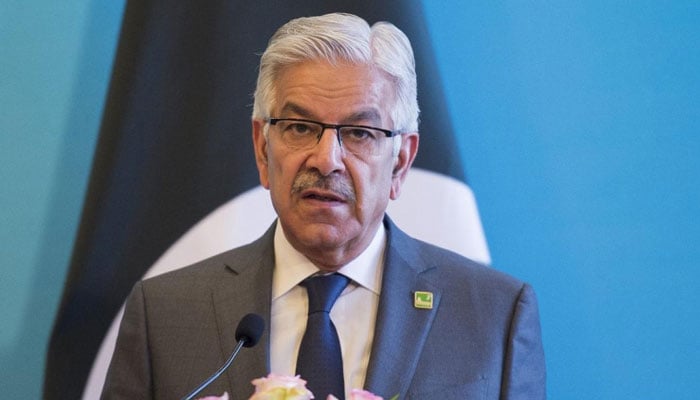
    Khawaja Asif calls bureaucracy Pakistan’s real r…

    ISLAMABAD: Defence Minister Khawaja Asif has criticised Pakistan’s bureaucracy. He described it as the country’s “real and permanent rulers.” Asif said bureaucrats had remained largely beyond effective accountability during Pakistan’s 78-year history. He said politicians had faced accountability on numerous occasions. Other powerful groups had also been held accountable at different times. However, he said it was difficult to find similar examples involving senior bureaucrats. The defence minister made the remarks while sharing a social media post about alleged financial corruption involving a senior bureaucrat. Asif said the bureaucracy had gradually become a powerful and largely untouchable class. He questioned why bureaucrats had not been subjected to the same level of scrutiny as politicians. According to Asif, politicians themselves were partly responsible for the situation. He said political leaders had failed to establish an effective system to hold the bureaucracy accountable. The minister also referred to a former bureaucratic ruler while discussing the influence of senior officials in Pakistan. He said the former official used highly inappropriate and insulting language against politicians. Despite this behaviour, politicians continued to tolerate him, according to Asif. Asif’s comments highlight his criticism of the imbalance in accountability among powerful sections of Pakistani society. His remarks also raise questions about the role of the bureaucracy in governance and decision-making. The minister maintained that stronger accountability was needed for all powerful groups. He suggested that politicians could not blame bureaucrats alone for the existing system because political leaders had also contributed to its continuation.

Leave a Reply

Your email address will not be published. Required fields are marked *