UO eyes smart university transformation through agenting AI
In line with the vision of the Honorable Prime Minister of Pakistan and the Honorable Chief Minister of the Punjab to promote digital transformation and innovation in higher education, the University of Okara (UO) has initiated efforts to explore the adoption of Artificial Intelligence (AI) agents for academic and administrative operations.
As part of this initiative, a high-level delegation comprising the Vice Chancellor of the Punjab Tianjin University of Technology (PTUT), Prof. Dr. Adeel Akram, and Chief Executive Officer of GalaxAI Solutions, Sheraz Waheed, visited the UO on Thursday. GalaxAI Solutions is an Islamabad-based technology company working on Sovereign AI infrastructure for Pakistan’s higher education sector.
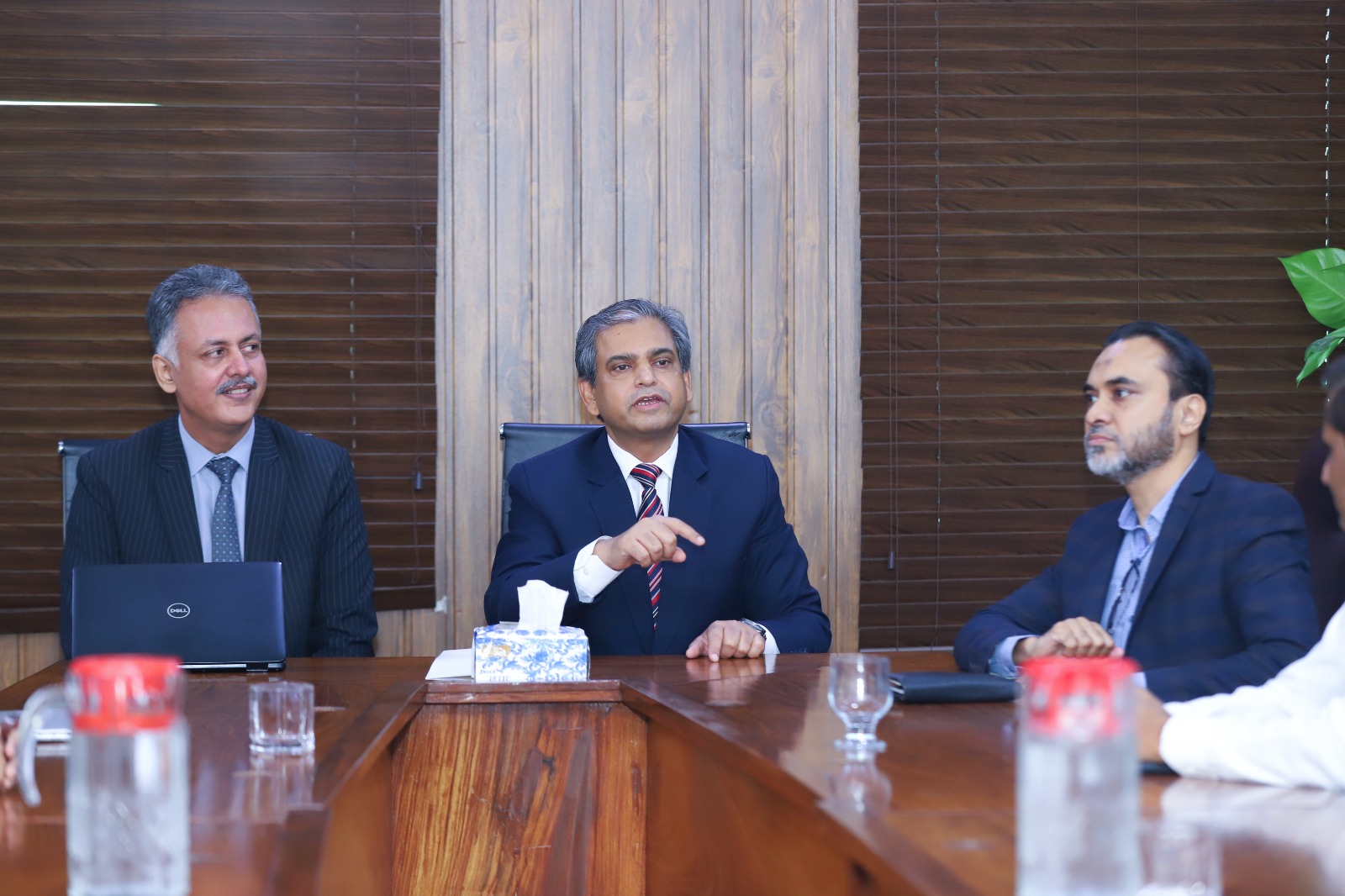
A meeting of the university’s academic heads and IT team was held under the chairmanship of the Vice Chancellor, Prof. Dr. Sajjad Mubin. During the session, the PTUT delegation delivered a comprehensive presentation on AI agents, highlighting their potential applications in admissions management, campus administration, academic support, and day-to-day institutional operations.
Addressing the participants, Prof. Mubin appreciated the PTUT team for visiting the UO to share their expertise and practical insights into emerging AI technologies. He described PTUT as a rapidly progressing institution and reiterated his vision of transforming the UO into a smart university through the integration of cutting-edge artificial intelligence solutions.
Speaking on the occasion, Prof. Dr. Akram emphasized that AI has the potential to significantly enhance efficiency across teaching, research, governance, and administrative functions. He noted that intelligent AI agents can help universities streamline routine processes, improve decision-making, and deliver better services to students and faculty.
The meeting concluded with an understanding that PTUT will submit a formal proposal for the transfer and implementation of the AI technology at the University of Okara. The proposal will be reviewed by the University’s relevant authorities and statutory bodies, and any future implementation will be subject to the completion of all required approvals.