russian envoys congratulate
| |

US, Russian envoys congratulate Pakistan on Indepe…

ISLAMABAD: Pakistan’s 79th Independence Day brought messages of goodwill from two major international partners, with the United States and Russia extending warm greetings to the Pakistani people and expressing hopes for continued peace, prosperity and stronger bilateral ties.

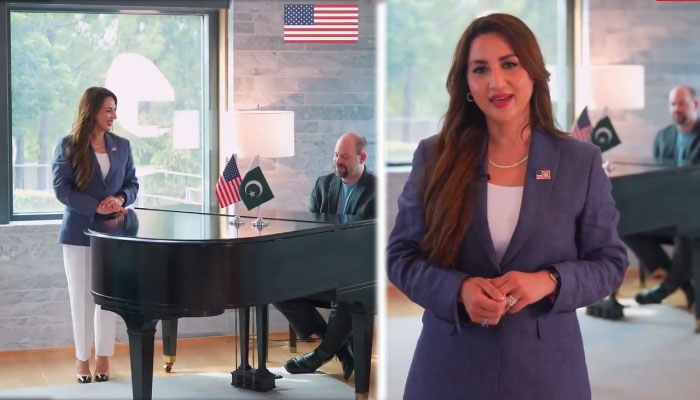
US Chargé d’Affaires Natalie A. Baker and the US diplomatic mission in Pakistan conveyed their Independence Day wishes to Pakistanis on Friday, marking the country’s 79th year as an independent nation.

In its message, the US Embassy recalled the long history of relations between the two countries, noting that the United States was among the early countries to recognise Pakistan after its creation in 1947.

The embassy said that Pakistan-US friendship had grown stronger over the decades, highlighting the enduring ties between the two countries and their peoples.

“Over the past 80 years, the friendship between Pakistan and the United States has grown stronger,” the message said, while extending wishes for peace, happiness and prosperity to the people of Pakistan.

The greeting comes as Islamabad and Washington continue to maintain engagement across several areas, including trade, investment, security, education and people-to-people ties.

Russia highlights Pakistani resilience

Russia’s ambassador to Pakistan also extended Independence Day greetings, describing the occasion as a reflection of the courage, determination and strong national spirit of the Pakistani people.

In his message, the Russian envoy praised the resilience demonstrated by Pakistanis and expressed confidence that cooperation between Moscow and Islamabad could continue to expand.

The ambassador said both countries would work together to strengthen mutual understanding and broaden their partnership in areas of shared interest.

The message underscored Moscow’s interest in developing closer relations with Islamabad at a time when Pakistan is seeking to expand its diplomatic and economic partnerships.

Messages arrive amid wider diplomatic engagement

The messages from Washington and Moscow came as Pakistan marked Independence Day with nationwide celebrations, flag-raising ceremonies and tributes to the country’s founding leaders and those who sacrificed for independence.

For Pakistan, such diplomatic messages carry significance beyond traditional greetings. They reflect the country’s longstanding relationships with major global powers and its continuing efforts to maintain engagement with partners across different regions.

As Pakistan entered its 80th year since independence, the messages from the United States and Russia shared a common theme: a desire for peace, prosperity and stronger cooperation.

While the two countries have different strategic relationships with Islamabad, their Independence Day messages highlighted the importance of continued engagement and mutual understanding.

For Pakistanis celebrating the day, the greetings added an international dimension to the occasion, with both Washington and Moscow signalling their desire to see Pakistan move forward with stability, prosperity and deeper partnerships.


Similar Posts

  • |

    Justin Bieber wins $1 million at Fanatics Games

    Justin Bieber proved he has more than musical talent after taking on some of the biggest names in sports during the Fanatics Games, an event held as part of Fanatics Fest. The Canadian singer joined a star-studded lineup of athletes and celebrities for a series of fun yet competitive challenges, showing confidence and determination throughout the event. One of the most talked-about moments came when Bieber faced tennis legend Novak Djokovic in a friendly game of table tennis. Before the match, the pop star confidently backed his own skills, joking that he was the better player. “I am a superior ping pong player. He knows it,” Bieber said while speaking in a behind-the-scenes clip from Fanatics Fest: All Access. Djokovic, one of the greatest tennis players in history, admitted he had not expected such a strong challenge from the singer. The Serbian star praised Bieber’s athletic ability and confessed that he had underestimated him before stepping onto the table tennis court. “I must say, I underestimated Justin’s athletic abilities,” Djokovic said after the match. Despite Bieber’s confidence and impressive performance, Djokovic eventually secured victory in their table tennis showdown, proving why he remains one of the world’s elite athletes. The match was played in a light-hearted spirit, with both stars enjoying the competition and entertaining fans. The Fanatics Games featured a unique mix of celebrities and professional athletes competing across different sporting challenges. The event was designed to bring together personalities from music, entertainment and sports, creating memorable moments for fans both at the venue and online. Throughout the competition, Bieber interacted with several high-profile sports figures, including NFL legend Tom Brady, NBA stars Karl-Anthony Towns and Victor Wembanyama, Olympic gymnast Jordan Chiles, social media personality and gymnast Livvy Dunne, and former NFL star Rob Gronkowski. Their friendly exchanges and competitive spirit added excitement to the event, making it one of the highlights of Fanatics Fest. While Bieber did not defeat Djokovic in table tennis, he enjoyed tremendous success in the overall competition. His consistent performances across the various challenges helped him emerge as the overall winner of the Fanatics Games, earning the event’s top prize worth $1 million. Rather than keeping the entire prize money for himself, Bieber chose to share his winnings in a generous gesture. He distributed $500,000 among the 50 fan competitors who participated in the event, with each receiving $10,000. The remaining $500,000 was donated to charity, reflecting the singer’s desire to give back to both fans and meaningful causes. Bieber’s decision to split the prize money was widely praised, highlighting not only his competitive nature but also his generosity. The event showcased a different side of the Grammy-winning artist, combining sportsmanship, entertainment and philanthropy while creating unforgettable moments alongside some of the biggest names in professional sports.

  • | |

    Rakhi Sawant gets emotional about her Pakistani fans

    Rakhi Sawant has always been one of Indian entertainment’s most unfiltered personalities, and a recent interview with BBC Hindi has given her fans on both sides of the border a moment to genuinely pause and reflect. In the interview, the actress and digital influencer spoke with visible emotion about her Pakistani fans, delivering a remarkably candid account of a connection that has quietly shaped her personal life in ways she had perhaps not expected. Sawant, who now follows Islam and has spoken openly about her affection for Muslims, did not approach the subject diplomatically or with the kind of measured language public figures typically deploy when navigating Indo-Pakistani sentiment. She spoke from personal experience, and the honesty of what she said has resonated widely. “They love me a lot,” she said, speaking of her Pakistani fans. “We Pakistanis and Hindus share a love-and-hate relationship, but whenever something happens to me, Pakistanis reach out first. Sometimes I have a fever, and no one from India shows up, but they come and take me to the hospital.” The admission was striking in its specificity. She was not speaking in generalities about cultural warmth or neighbourly affection. She was describing concrete acts of care at moments of genuine vulnerability, people showing up when she was unwell, accompanying her to hospital, filling a gap that others had left empty. She continued with equal candour, acknowledging the political narrative that frames the two countries as adversaries while making clear that her personal experience simply did not match that framing. “I know they are our enemy, our country’s enemy, but what’s true is true,” she said. “They love me a lot. I am just a neighbour residing in this building, and as neighbours, they are always there for me.” The online reaction to the interview has been overwhelmingly warm and has prompted a broader conversation that goes well beyond Sawant herself. Both Pakistani and Indian viewers flooded the comments to express agreement with the sentiment she was articulating. The most consistent thread running through the responses was the distinction between the political relationship that governments maintain and the human relationships that ordinary people choose to build across that same divide. Commenters from both countries wrote that neither people were each other’s real enemies, and that it was politicians who constructed and maintained the hostility that defined the official relationship between India and Pakistan. People on the ground, many argued, wanted something different entirely. Rakhi Sawant’s emotional honesty in this interview did not resolve any political realities. But it gave voice to something that is rarely said plainly enough in either country: that the warmth that exists between people when it is allowed to breathe is real, and sometimes shows up most clearly when someone needs to be taken to hospital and someone else simply decides to come.

  • |

    Grenade blast kills three in Lakki Marwat

    A family dispute in the Bahram Khel area of Lakki Marwat turned tragic when a hand grenade exploded inside a house, killing three people and injuring three children, police said. According to officials, the explosion occurred during an argument between family members. The powerful blast claimed the lives of a man, his sister-in-law, and his nephew on the spot, while three children suffered injuries of varying severity. Residents rushed to the house after hearing the explosion and alerted rescue teams. Emergency responders reached the scene shortly afterward and shifted the victims to a nearby hospital. Doctors are providing medical treatment to the injured children, while the bodies of the deceased have been handed over for legal formalities. Police cordoned off the area and launched an investigation to determine the circumstances that led to the explosion. Investigators are examining how the hand grenade came to be inside the house and whether it was intentionally used during the dispute or detonated accidentally. Authorities have begun collecting evidence from the scene and recording statements from family members and witnesses. Officials said they will determine responsibility after completing the investigation and forensic examination. No arrests have been reported so far, and police said further details will emerge as the inquiry progresses.

  • |

    Pakistani Fighters shine at GAMA Asian MMA Champio…

    Pakistan’s young Mixed Martial Arts (MMA) fighters delivered outstanding performances at the GAMA Asian MMA Championship, securing two gold medals for the country. In the under-16 category’s 54kg weight class final, Muhammad Javad Ahmad defeated Kazakhstan’s Dartikelasinov Merman to claim the gold medal and the title of Asian Champion. In the under-18 H-group’s 56kg weight class final, Muhammad Saqib triumphed over Thailand’s Jangpan Watchart to win the gold medal and become Asian Champion. Saqib had previously won a gold medal at the 2024 GAMA World MMA Championship as well. The GAMA Asian MMA Championship featured over 200 athletes from 16 countries competing across various weight categories. Pakistan Mixed Martial Arts Federation President Zulfiqar Ali congratulated both fighters, the coaching staff, and the national team on this historic achievement. He stated that the young fighters had raised Pakistan’s flag high across Asia through their hard work and dedication. The GAMA Asian MMA Championship is one of the most prestigious mixed martial arts competitions on the continent, featuring top fighters from across Asia. Pakistan’s success at the event is expected to further boost the growth and popularity of MMA in the country.

  • HSA VC dismissal upheld in harassment case

    Islamabad: The President of Pakistan rejected the appeal of Health Services Academy Vice Chancellor Dr Shahzad Ali Khan and maintained his dismissal from service. The latest order held that retaliatory action against Dr Ayesha Khan created a hostile work environment and amounted to gender based harassment, justifying the punishment of dismissal. The decision creates a major legal twist in the high profile HSA case. The President’s legal forum clearly observed that this was not established as a case of sexual harassment in the manner found earlier by the Federal Ombudsperson for Protection Against Harassment of Women at the Workplace. It said the earlier FOSPAH decision contained serious weaknesses, including failure to properly examine the nature of the relationship between the two parties and failure to frame separate questions on several important parts of the dispute. However, those weaknesses did not save Dr Shahzad Ali Khan from dismissal. The final order stated that his later conduct, especially the abrupt termination of Dr Ayesha Khan, could not be ignored. It held that the retaliatory measures created a hostile work environment for her and amounted to gender-based harassment. The President approved the recommendation to dismiss Dr Shahzad Ali Khan’s representation and maintain the penalty of dismissal from service. The final decision also strongly observed that Dr Shahzad Ali Khan had not approached the President with clean hands. It questioned his claim that he had been honey trapped when that claim was examined together with what the decision described as extreme retaliatory measures taken against Dr Ayesha Khan. One important point was the timing of her removal from service. The record showed that Dr Ayesha Khan registered an FIR and her employment was terminated the following day. The presidential decision said this sequence was important when deciding whether retaliation had occurred. At the same time, the President’s legal forum strongly criticised major parts of the original FOSPAH reasoning. It said FOSPAH failed to properly establish the timeline of the different complaints and legal actions between the two parties. It also found contradictions and unanswered questions in the case. The decision said FOSPAH should have separately examined the exact nature of the relationship, whether any employment benefit was linked to a romantic or sexual demand, whether electronic evidence was reliable, what the financial transactions represented and whether Dr Ayesha Khan’s termination was retaliation. Instead, FOSPAH had mainly framed the broad question of whether harassment had occurred and who was responsible. The President’s legal forum described that approach as inadequate for such a complicated case. The order went further and stated that not a single specific incident of sexual harassment had been identified in the complaint. It said the sexual harassment conclusion was reached through indirect reasoning instead of being linked to a particular incident. The forum therefore concluded that the dispute could not properly be treated as sexual harassment on that basis. The decision described the dispute as involving two people who had remained close for several years before serious differences developed. Dr Ayesha Khan’s position was that the relationship involved marriage or a promise of marriage. Dr Shahzad Ali Khan denied that a marriage existed and claimed he had been honey trapped. The presidential forum said neither honey trapping nor marriage had been established on the record before it. It observed that questions over whether a valid marriage existed should be decided by a competent family court rather than through workplace harassment proceedings. The case originally started with complaints and counter complaints between Dr Shahzad Ali Khan and Dr Ayesha Khan. Dr Shahzad Ali Khan accused Dr Ayesha Khan of blackmail, honey trapping, financial fraud, threats and misuse of authority. He alleged that she extracted Rs 27.44 million from him through threats and manipulation for an alleged property investment. He also alleged that she threatened his wife while demanding Rs 30 million. According to his version, money from the sale of two vehicles, worth around Rs 10 million, was also handed to Dr Ayesha Khan for investment and was not returned. Dr Ayesha Khan denied those accusations. She alleged that Dr Shahzad Ali Khan made personal and inappropriate remarks, discussed private marital matters with her, promised marriage and later took retaliatory action against her. She also accused him of workplace harassment and alleged physical harassment in an official vehicle. She maintained that her termination and other actions followed her resistance to him and her pursuit of legal action. The original FOSPAH order took a much stronger view against Dr Shahzad Ali Khan. It found that he had misused his authority while serving as a teacher and later Vice Chancellor, developed an inappropriate relationship with a student who later became his junior colleague and gave her unusual professional benefits. FOSPAH ordered his removal from service after finding quid pro quo harassment. WhatsApp messages also became an important part of the original case. The record included messages from Dr Shahzad Ali Khan’s number in which Dr Ayesha Khan was addressed with personal names including Zalim Princess and other affectionate expressions. FOSPAH considered these messages important evidence against the honey trap allegation and viewed them as showing personal communication initiated from a position of authority. The Ombudsperson also found that allegations of financial misappropriation against Dr Ayesha Khan had not been proved through enough documentary evidence. Dr Shahzad Ali Khan challenged the FOSPAH decision before the President. His lawyers argued that Dr Ayesha Khan had given different versions of important events before different legal forums. They also challenged the use of WhatsApp screenshots, saying the material was incomplete and had not been properly examined through forensic testing. His side denied any marriage, sexual favour or sexual relationship and argued that the finding of quid pro quo sexual harassment was based on assumptions rather than direct evidence. Dr Ayesha Khan’s lawyers opposed the appeal. They argued that the original order had followed a full inquiry, evidence and cross examination. Her side said the WhatsApp messages came from Dr Shahzad Ali Khan’s registered number and argued that his

  • |

    Powerful 7.7 quake kills 20 in Indonesia

    At least 20 people have been killed after a powerful 7.7-magnitude earthquake struck Indonesia’s Flores Island early Saturday, triggering widespread panic, building damage and a series of strong aftershocks. The earthquake struck shortly before 5am local time at a depth of about 15 kilometres, according to Indonesia’s meteorological and geophysics authorities. The relatively shallow depth increased the potential for severe damage across affected areas. Indonesia’s disaster management authorities said several people were injured, with the figures still considered preliminary as rescue teams continue searching damaged buildings and assessing casualties. The strongest aftershocks included a 6.1-magnitude tremor, forcing residents to remain outdoors because of fears that weakened structures could collapse. Dramatic scenes were reported at the port of Maumere, where sections of a terminal building broke apart during the earthquake. A gangway leading to a ferry also collapsed, sending some passengers into the sea as people attempted to escape. East Nusa Tenggara Governor Emanuel Melkiades Laka Lena said some victims were killed while sleeping after rubble from collapsing structures fell on them. Residents described the earthquake as extremely frightening. People rushed out of their homes and moved towards safer areas, with many heading to higher ground after authorities issued a tsunami warning. The tsunami alert was later lifted about three hours after the earthquake when no significant rise in sea levels was detected. Authorities said around 2,000 people evacuated or moved to safer locations on their own during the warning. Officials reported fatalities in several provinces, including Sikka, Manggarai and East Manggarai. At least two people were seriously injured while 11 others suffered minor injuries. The earthquake also caused extensive structural damage. Initial assessments indicated that dozens of houses had been severely damaged along with healthcare facilities, places of worship, government buildings, an educational institution and a warehouse. Manggarai was identified as one of the worst-affected areas. Rescue and assessment teams are continuing to work in the region, although difficult mountainous terrain could make operations challenging. Authorities have urged residents to remain calm, avoid coastal areas and stay away from buildings that have been damaged or weakened by the earthquake and aftershocks.

Leave a Reply

Your email address will not be published. Required fields are marked *