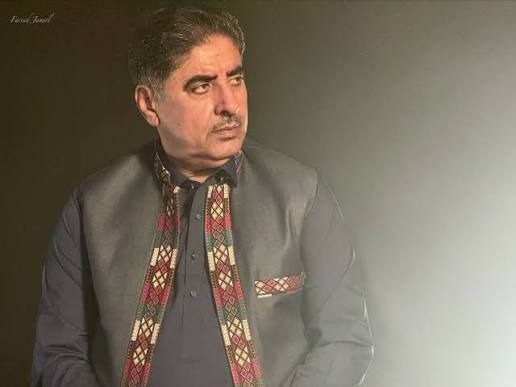
Ustad Arif Baloch: The living legend of Balochi music
By Muhammad Naseer
Music is more than entertainment; it is a reflection of history, identity, and the soul of a people. Throughout history, musicians have played an important role in preserving languages, traditions, and cultural values that might otherwise fade with time. In Balochistan, few artists have contributed to this mission as profoundly as Ustad Arif Baloch. Widely regarded as one of Pakistan’s most celebrated Balochi singers and composers, he has dedicated his life to promoting the rich musical heritage of Balochistan. By blending traditional Balochi folk melodies with modern musical arrangements, he has introduced the beauty of Balochi culture to audiences both within Pakistan and abroad, making him one of the most influential cultural figures of the region.
Born in Quetta into a family where music was deeply respected, Arif Baloch developed a passion for singing from an early age. Recognizing his talent, he received formal training in classical music under renowned teachers Ustad Abdul Sattar Baloch and Wali Mohammad Baloch, whose guidance laid the foundation for his remarkable career. While rooted in classical traditions, he possessed the vision to take Balochi music beyond its conventional boundaries. He later established his artistic base in Turbat, a city that would become the centre of his musical activities and his lifelong efforts to promote regional culture.
Over the decades, Ustad Arif Baloch has built an extraordinary musical legacy. With more than sixty albums to his credit, he is among the most prolific artists in Balochi music. His greatest achievement lies in successfully blending traditional Balochi folk music with contemporary instruments such as the guitar and modern pop-rock rhythms. This innovative style introduced younger generations to their cultural heritage without compromising the authenticity of Balochi language, poetry, or musical traditions. His work demonstrated that traditional culture can evolve with time while preserving its original identity.
His collaborations with legendary artists, particularly Ustad Noor Khan Bezanjo and Ustad Rasool Bakhsh Fareed, further strengthened the foundations of modern Balochi music. Together, they performed across Pakistan and in Gulf countries including Oman, Bahrain, and the United Arab Emirates, introducing international audiences to the richness of Balochi culture. These performances helped expand the reach of Balochi music beyond regional boundaries and earned it recognition among overseas Baloch communities.
Several of his songs have become timeless classics admired by generations of listeners. Tracks such as Jee Mani Dost O, Pari Chammay, Mast-o-Sharaba, and Shar Dila Piske continue to be appreciated for their emotional depth, poetic beauty, and cultural significance. His music reflects the landscapes, traditions, emotions, and everyday life of Balochistan, making each composition not merely a song but a representation of the region’s identity and collective memory.
One of Ustad Arif Baloch’s most remarkable contributions has been his role in preserving Balochi literature. Many of his songs are based on the poetry of renowned literary figures such as Atta Shad and Mubarak Qazi. By transforming their poetry into music, he introduced classical Balochi literature to younger generations in a form that was both accessible and memorable. At a time when many regional languages face the challenge of declining use among younger people, his music has helped preserve and promote the Balochi language with dignity and pride.
His service to music extends well beyond his own performances. Understanding the struggles faced by aspiring musicians, especially those from underprivileged backgrounds, he established a music recording centre in Turbat where emerging artists could record and promote their work. For many young singers, this studio became their first opportunity to enter the music industry. Rather than keeping his success to himself, he chose to invest in the future of Balochi music by supporting and mentoring the next generation of artists.
Despite his extraordinary achievements, Ustad Arif Baloch’s journey has not been free from hardship. Like many regional artists, he worked in an industry with limited commercial opportunities, inadequate infrastructure, and financial constraints. Frequent electricity shortages and the absence of strong institutional support posed additional challenges to music production. In July 2017, he reportedly endured a traumatic ordeal when unidentified armed men abducted him from his residence in Turbat before later releasing him. The incident drew widespread concern and condemnation from members of the artistic community and civil society. Yet, despite this painful experience, he remained committed to his homeland and continued creating music, demonstrating remarkable courage, resilience, and dedication to his profession.
Today, many young Balochi singers regard Ustad Arif Baloch as both a mentor and an inspiration. His career proves that success is not measured solely by fame but by the positive impact one leaves on society. He has shown that preserving cultural identity does not require rejecting modernity. Instead, tradition and innovation can exist together when guided by creativity, respect, and a genuine love for one’s heritage.
His life also offers valuable lessons for future generations. His perseverance in the face of adversity teaches the importance of remaining committed to one’s passion despite difficulties. His willingness to support young musicians reflects the value of sharing opportunities and uplifting others. Above all, his lifelong dedication reminds us that language, culture, and history are treasures that must be protected and passed on to future generations.
Although Ustad Arif Baloch may not have received every national honour that his contributions deserve, the respect and admiration he enjoys among the people of Balochistan remain his greatest recognition. His music has become an inseparable part of the region’s cultural identity, and his influence continues to shape contemporary Balochi music. Through decades of dedication, he has preserved a priceless cultural heritage while inspiring countless musicians and listeners across generations.
Ustad Arif Baloch’s legacy is far greater than a collection of albums or performances. It is the story of an artist who transformed music into a bridge between tradition and modernity, between literature and melody, and between past and future. As long as Balochi songs continue to echo through the mountains, deserts, and coastal towns of Balochistan, his voice and his contributions will remain alive. He is not merely a singer but a guardian of culture, a mentor to young artists, and a symbol of resilience whose work will continue to inspire generations to come.