bullied syed mohammad
| |

Who bullied Syed Mohammad Ahmed? Name emerges

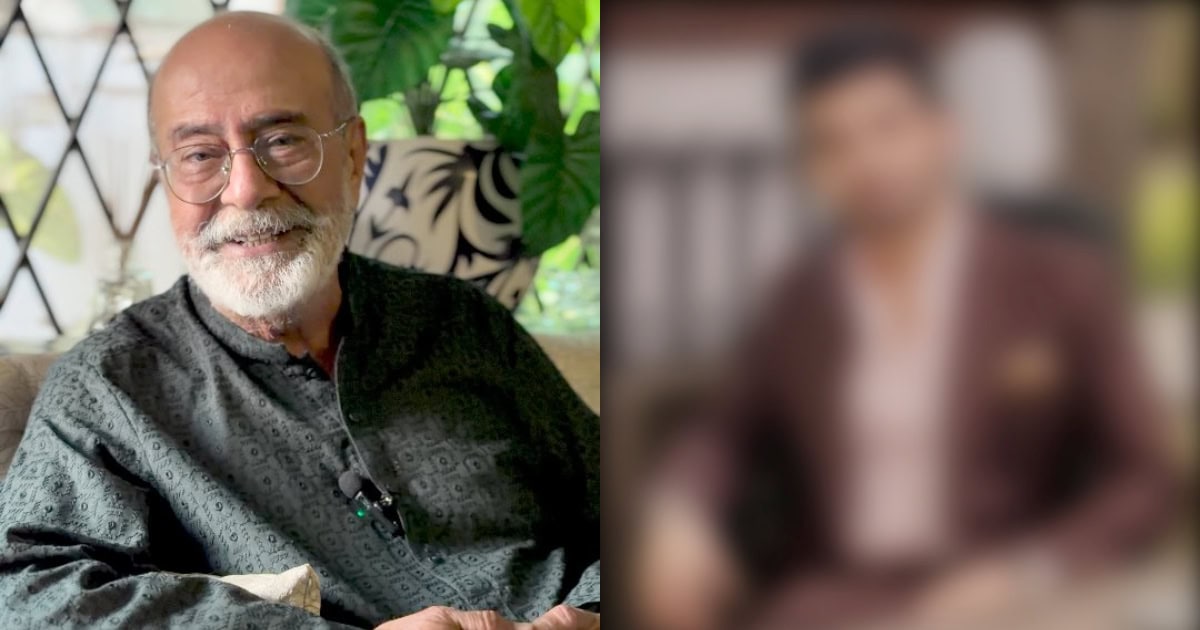
Actor and writer Syed Mohammad Ahmed has previously spoken about what he described as a difficult experience involving a younger male actor during the filming of a drama.

Ahmed did not publicly identify the actor at the time. He said the alleged mistreatment had left him humiliated and made it difficult for him to complete the project.

The matter has now resurfaced after a report by FHM Pakistan identified actor Fahad Sheikh as the person allegedly involved. The publication shared a video discussing the claim.

The allegation has attracted attention on social media and within Pakistan’s entertainment industry. However, the claims have not been independently verified.

Actor Shamoon Abbasi had earlier expressed support for Ahmed. He said he knew the younger actor involved and suggested that an apology should be offered.

Abbasi had also indicated that the actor’s identity could eventually become public if no apology was made.

According to the report, Ahmed and Sheikh worked together on two television dramas between 2020 and 2022. The report alleges that tensions arose between the two actors during their professional association.

However, the details of the alleged incident have not been independently confirmed, and Ahmed himself did not name Sheikh when he first discussed the matter publicly.

The renewed discussion has generated reactions among viewers and entertainment industry followers. Many social media users are calling for greater clarity from those involved.

Fahad Sheikh has not publicly responded to the allegations at the time of publication.

The controversy comes amid broader discussions within Pakistan’s entertainment industry about workplace conduct, professional respect and the treatment of senior artists.
Similar Posts

  • |

    Indian activists challenge AI-powered police surveillance following student demonstrations

    Indian digital rights activists and student leaders are challenging Prime Minister Narendra Modi’s government in the Delhi High Court over the deployment of artificial intelligence-powered mass surveillance during recent youth protests in New Delhi. Student activist Aishe Ghosh filed a petition with the Delhi High Court seeking to declare the police’s mass surveillance of demonstrators unconstitutional. The lawsuit requests the immediate destruction of all personal and biometric data collected during the demonstrations and asks the court to establish clear binding guidelines governing the use of surveillance technologies at public gatherings. The controversy intensified after photographs circulated showing a mobile police surveillance unit, branded “Ikshana” and developed alongside security firm CP Plus, deployed at the main protest site. The vehicle featured telescopic masts providing 360-degree coverage, AI-powered cameras, and real-time facial recognition capabilities that displayed face accuracy metrics to match attendees against law enforcement databases. Furthermore, police officers were documented recording the social media handles of arriving participants. Digital rights organisations, including the Internet Freedom Foundation, have formally requested the Delhi Police Commissioner to delete all biometric data gathered during the events. Advocates emphasise that India currently lacks a dedicated legal framework governing police deployment of facial recognition systems, making such intrusive measures disproportionate and illegal. During court proceedings, Solicitor General Tushar Mehta defended law enforcement actions, arguing that expectations of privacy at a public gathering were misplaced and asserting that the security measures were absolutely necessary in the interest of public order. Delhi Police maintained that the technology was used solely to identify individuals with criminal histories and count crowd size without restricting freedoms. The court challenge continues despite the end of the student demonstrations, which were triggered by widespread examination paper leaks in national competitive tests. The protests culminated in the resignation of Union Education Minister Dharmendra Pradhan and the announcement of a government panel tasked with overhauling the national examination system.

  • | |

    Justice Akbar Dogar emerges, top performing judge …

    Justice Sardar Ali Akbar Dogar has emerged as the highest-performing judge of the Lahore High Court during the judic ial summer vacations, disposing of the largest number of cases among all judges, according to the court’s weekly disposal report. The report, released on July 31, 2026, states that a total of 425 cases were decided at the Principal Seat of the Lahore High Court in Lahore between July 27 and July 31, 2026. According to the report, a Division Bench comprising Justice Mirza Waqas Rauf and Justice Sardar Ali Akbar Dogar disposed of 44 cases during the reporting period. Meanwhile, Justice Dogar, sitting as a Single Bench judge, disposed of an impressive 381 cases, making him the highest case-disposing judge during the vacation week. The report further reveals that the Single Bench disposed of 57 habeas corpus petitions, 33 pre-arrest bail applications, 27 post-arrest bail petitions, and 12 petitions seeking cancellation of bail. Justice Dogar also decided 32 petitions seeking the quashment of FIRs, 53 petitions relating to the registration of criminal cases, 63 petitions alleging police harassment, and 74 petitions concerning unlawful detention and illegal confinement. In addition, the court disposed of five petitions involving national identity cards and citizenship issues, while 14 cases of a religious nature were also decided during the same period. The Lahore High Court’s weekly report notes that the disposal statistics cover the period from July 27 to July 31, 2026. However, it also clarifies that the figures remain subject to official verification before being treated as final.

  • | |

    Counter-terror operations in Balochistan neutralize 12 militants

    Security forces in Pakistan have eliminated 12 high-risk terrorists during two separate operations across the southwestern province of Balochistan. According to official statements issued by the Inter-Services Public Relations (ISPR), the media wing of the Armed Forces of Pakistan, the targeted anti-terror engagements took place in the districts of Washuk and Mastung as part of an intensified campaign against extremist elements operating within the region. The military reported that these synchronized Intelligence-Based Operations (IBOs) were initiated following precise tracking and surveillance of insurgent networks. The operations represent a significant operational success for law enforcement and defense personnel working to dismantle armed groups attempting to compromise regional stability. Key Highlights of the Counter-Terror Operations District Washuk: Initial tracking detected hostile movement in the area, leading to a swift operational response that resulted in six terrorists being neutralized. District Mastung: A subsequent targeted raid triggered an intense exchange of gunfire, during which six additional terrorists were eliminated and a major militant hideout was completely dismantled Total Impact: 12 terrorists killed, operational infrastructure destroyed, and significant cache of weapons and logistics seized. Breakdown of the Intelligence-Based Raids The first phase of the counter-terrorism effort unfolded in Washuk district, where security agencies identified suspicious tactical movements by a group of armed insurgents. Acting on real-time intelligence, military units deployed swiftly to intercept the suspects. Upon confronting the militants, a heavy firefight ensued, ending with the death of six terrorists before they could execute planned sabotage activities in the district. Shortly thereafter, a second high-stakes operation was executed in the Mastung district. Intelligence agencies pinpointed an active sanctuary utilized by militants as a staging ground for planning attacks against civilians and security personnel. As forces surrounded the hideout, the cornered insurgents opened fire in a desperate attempt to break through the security perimeter. The security forces responded with decisive tactical force, eliminating six militants on the spot and neutralizing the immediate threat. Following the gun battle, search teams thoroughly cleared the facility, recovering military-grade weaponry, ammunition, and explosives, while destroying the infrastructure used to harbor illegal insurgents. Strategic Significance and Broader Context The ISPR emphasized that these successful engagements reflect the unwavering commitment of the armed forces to cleanse the country of foreign-funded terrorism. Military officials reaffirmed that anti-terror operations will persist relentlessly until all hostile networks, their safe havens, and their local facilitators are completely eradicated across Pakistan.   Authorities have urged local communities to remain vigilant and cooperate with law enforcement agencies as comprehensive intelligence gathering and mop-up activities continue throughout the region.

  • |

    Paris Jackson recalls first meeting mother Debbie Rowe

    Paris Jackson has shared rare details about meeting her biological mother, Debbie Rowe, for the first time when she was 15, offering a glimpse into how their relationship gradually developed over the years. The 28-year-old model and actress discussed her family life during a recent appearance on the Call Her Daddy podcast. She explained that she first became curious about her biological mother when she was around 10 or 11 years old. At the time, Paris said she simply asked for her mother’s name and was satisfied with the answer she received. She eventually reconnected with Rowe at around 15 and said the two began growing closer toward the end of her teenage years. Recalling their first meeting, Paris said the encounter was surprisingly relaxed. She remembered coming downstairs to find Rowe in the living room with her grandmother. Rather than feeling overwhelmed or uncomfortable, Paris simply greeted her mother and sat down to talk. The pair later went out together and spent the day getting to know each other. Paris also reflected on her approach to relationships, saying that having too many expectations can sometimes make personal connections more difficult. She explained that entering a relationship with an open mind gives people the opportunity to develop a bond naturally instead of forcing it to meet a particular idea of how things should be. She described this approach as creating space for something genuine and organic to grow. Paris is the daughter of the late pop icon Michael Jackson and Debbie Rowe. The former couple also share their eldest son, Prince Jackson. Michael’s youngest child, Bigi Jackson, was born through a surrogate. Rowe met Michael while working as an assistant at the dermatologist’s office he visited. The pair married in 1996, but their relationship was short-lived, and they divorced in 2000. Michael Jackson subsequently received full custody of their children. Following the divorce, Rowe largely stepped away from the public spotlight and moved to Palmdale, California, where she reportedly pursued her interest in horse breeding and maintained a private lifestyle. Paris and Rowe began rebuilding their relationship in 2013. Their connection became particularly close several years later when Paris supported her mother during her battle with breast cancer in 2016. Looking back on their relationship, Paris’ comments suggest that their bond developed gradually rather than being shaped by expectations. Her willingness to approach the relationship openly appears to have helped her and Rowe establish a closer connection after years apart. Her latest revelations offer a rare look into the personal relationship between the mother and daughter, while also highlighting Paris’ perspective on family, expectations and allowing relationships to develop naturally.

  • |

    Jawad Akhtar, Arsam Farooq elected Islamabad Cricket Association President

    ISLAMABAD: The Pakistan Cricket Board (PCB) has completed the election process for the Islamabad Regional Cricket Association (IRCA), with Mohammad Jawad Akhtar elected as president and Arsam Farooq Ahmed chosen as secretary for the next three years. According to an official notification issued by PCB Election Commissioner Mansoor Qadir on Thursday, both candidates were elected unopposed, allowing them to assume office immediately without a formal contest. The appointments mark another milestone in the PCB’s ongoing efforts to strengthen governance and improve the administrative framework of regional cricket across Pakistan. As office-bearers of one of the country’s key regional associations, Jawad Akhtar and Arsam Farooq Ahmed will be responsible for overseeing cricket development in Islamabad and implementing the PCB’s domestic cricket vision. The newly elected officials are expected to focus on expanding grassroots cricket, improving talent identification, and ensuring that promising young players receive better opportunities to progress through Pakistan’s domestic cricket system. Regional cricket associations serve as the backbone of the country’s cricket structure. They organise local tournaments, manage club and district competitions, coordinate coaching and development programmes, and create pathways for talented cricketers to reach the national domestic circuit. With Islamabad continuing to produce several promising players in recent years, expectations are high that the new leadership will further enhance the region’s cricketing infrastructure and provide stronger support for clubs, academies and emerging athletes. The PCB has repeatedly emphasised the importance of transparent administration and efficient regional governance as part of its long-term strategy to strengthen Pakistan’s domestic cricket. Stable leadership at the regional level is viewed as essential for nurturing future international stars and maintaining a competitive domestic structure. Jawad Akhtar and Arsam Farooq Ahmed now begin their three-year tenure with the responsibility of working closely with the PCB, local stakeholders and cricket clubs to promote the game throughout the federal capital. Their immediate priorities are expected to include improving player development programmes, supporting age-group competitions and ensuring effective coordination between regional and national cricket bodies. The successful completion of the Islamabad Regional Cricket Association elections reflects the PCB’s broader commitment to building a stronger, more organised domestic cricket system. With new leadership now in place, attention will turn to how the association translates administrative stability into meaningful progress for cricket in Islamabad and contributes to the continued growth of Pakistan’s talent pipeline.

  • |

    Rubio warns Iran’s Hormuz demands could threaten global trade and regional security

    US Secretary of State Marco Rubio has warned that Iran’s demand to control shipping through the Strait of Hormuz could create a dangerous international precedent with serious consequences for global trade and economic stability. Speaking at a meeting of Southeast Asian foreign ministers in Manila, Rubio said allowing any country to control an international waterway and impose tolls through force would undermine international law and encourage similar actions in other regions. Rubio addressed ministers from the Association of Southeast Asian Nations at the start of their annual gathering, where concerns over renewed fighting in the Middle East dominated discussions. He assured regional partners that despite Washington’s focus on the conflict with Iran, the United States remains fully committed to its relationship with ASEAN and its security partnerships in Asia. He warned that if Iran is allowed to demand payment from ships passing through the Strait of Hormuz while threatening attacks against those that refuse, it could encourage other countries to adopt similar tactics in strategic waterways around the world. Rubio said such a development would pose a serious threat not only to the Middle East but also to the Indo Pacific region, where global shipping routes are equally vital. The US secretary also accused Iran of backing away from commitments made under an earlier ceasefire arrangement. He said Tehran has contacted Washington through both direct and indirect channels to discuss possible negotiations. While the United States remains open to a diplomatic solution, Rubio said it would not tolerate attacks on commercial shipping or American personnel in the region. The ASEAN meeting has brought together senior diplomats from major global powers including the United States, China, Russia, India, Japan, and Australia. Many participating countries expressed concern over the impact of the Iran conflict on energy supplies and international markets. Russian Foreign Minister Sergey Lavrov said Moscow hopes for a quick resolution to tensions between Washington and Tehran. He stated that continued conflict hurts the global economy and affects Russia as well. Lavrov added that stable energy prices are important for long term economic planning and said Russia supports efforts to end the crisis peacefully. Australian Foreign Minister Penny Wong also called for an immediate ceasefire and renewed negotiations. She warned that the security situation in the Middle East could worsen without warning and stressed that the reopening of the Strait of Hormuz is essential for restoring stability in global energy markets. The International Energy Agency has described the current situation as a major warning for Southeast Asia’s energy security. The region depends heavily on oil and liquefied natural gas transported through the Strait of Hormuz. According to the agency, Asian countries imported about 80 percent of the crude oil and nearly 90 percent of the liquefied natural gas passing through the waterway last year. Any prolonged disruption could increase energy prices and place additional pressure on economies across the region. On the sidelines of the summit, Rubio also met foreign ministers from the Quad partnership, which includes the United States, Australia, India, and Japan. The group reaffirmed its commitment to maintaining maritime security and ensuring freedom of navigation while expressing concern over China’s growing influence in regional waters. Japanese Foreign Minister Toshimitsu Motegi criticised attempts to change the regional balance through force, referring to disputes in the South China Sea and East China Sea. Penny Wong echoed those concerns, saying that actions increasing regional instability must be addressed through dialogue and international cooperation. Rubio also held talks with Chinese Foreign Minister Wang Yi. The two discussed a recent confrontation between Chinese and Philippine forces in disputed waters. Rubio described the incident as an escalation and said disagreements between Washington and Beijing must be managed carefully to avoid wider conflict. He added that both sides also discussed trade issues ahead of a planned meeting between US President Donald Trump and Chinese President Xi Jinping later this year. Rubio is expected to meet Russian Foreign Minister Sergey Lavrov again to discuss the war in Ukraine and explore whether there is an opportunity to revive diplomatic efforts aimed at ending the conflict. Officials said the meetings in Manila highlight the growing connection between security challenges in Europe, the Middle East, and the Indo Pacific as world leaders seek ways to prevent further instability.

Leave a Reply

Your email address will not be published. Required fields are marked *