airplanes turn off

Why Airplanes turn off the AC before takeoff

Have you ever noticed that the cabin feels warmer just before a plane takes off?

Many passengers wonder why the air conditioning seems to stop working at that moment. The reason is not a technical problem it is part of the aircraft’s normal operating procedure.

When passengers board the plane the cabin is usually cooled by an external air conditioning system at the airport.

This keeps everyone comfortable while the aircraft is parked at the gate.

Just before departure the external power and cooling supply are disconnected.  At that point the aircraft switches to its Auxiliary Power Unit (APU) a small onboard engine that provides electricity and cool air until the main engines are fully running.

During takeoff pilots need as much engine power as possible to safely lift the aircraft into the air.  To help achieve this some systems that are not essential during takeoff including parts of the air conditioning and climate control system may be temporarily reduced or switched off.

This allows more engine power to be used for takeoff instead of running cabin cooling systems.

Former American pilot John Cox explains that this short changeover happens because the aircraft moves from ground power to its own power systems.

Once the engines are operating normally and the plane reaches a stable stage of flight the air conditioning returns to normal and the cabin quickly becomes comfortable again.

So, if the cabin feels a little warm before takeoff there is usually no reason to worry. It is a normal part of the flight process designed to support a safe and efficient departure.

Similar Posts

  • Unemployment

    Through the columns of your newspaper, I want to draw the attention of the concerned authorities towards the growing problem of unemployment in our country. Unemployment is a serious problem, especially among educated young people. Many students complete their education but cannot find suitable jobs. Due to unemployment, people face poverty, frustration, and many social problems. It also slows down the progress of the country. The government should create more job opportunities and encourage industries and small businesses. Technical and vocational education should also be promoted so that young people can learn useful skills and earn a living. I hope the concerned authorities will take immediate steps to control unemployment and provide better opportunities for our youth.

  • |

    Walking through time: A personal journey inside Na…

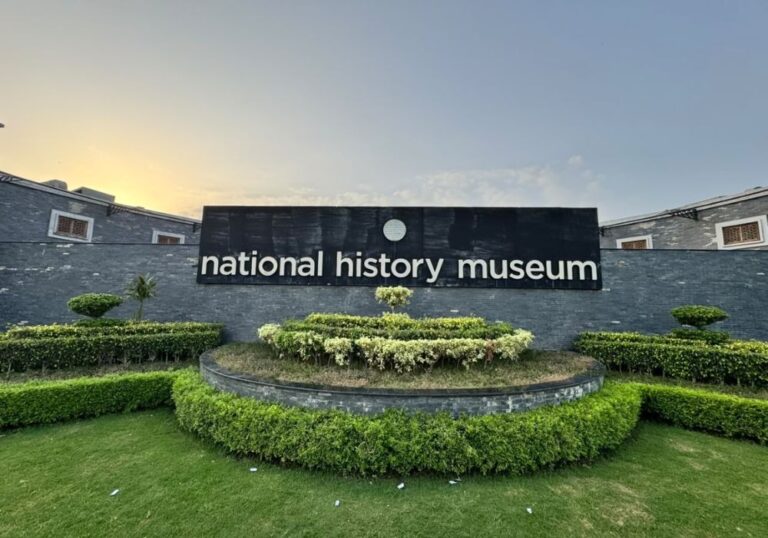
    The rain had just stopped when I reached Lahore’s National History Museum. The roads were quieter than usual, the air felt fresh and, for the first time in weeks, I wasn’t in a hurry. I had postponed this visit for years, ever since a brief stop during my internship at the Lahore Museum left me wishing for more time. This Sunday, I finally had it. I have also realised something over the past few weeks. Waiting for friends before exploring new places often means never going at all. So I decided to spend the afternoon on my own, following nothing except curiosity. As I entered the museum, Floor Supervisor Tabish welcomed me and arranged a guided tour with Muhammad Shamsher, a PhD scholar in History who also serves as one of NHM’s guides. His explanations never sounded like a lecture. Instead, he connected historical events with the people behind them, making every gallery feel like part of one continuing story. Growing up, I believed museums were places where objects sat behind glass while visitors quietly read information panels. That idea came from childhood visits to museums in Islamabad, Taxila and Harappa, and later from my internship at Lahore Museum. The National History Museum challenged that idea completely. Through digital displays, sound, projection and interactive exhibits, history became something to experience rather than simply observe. Every gallery encouraged visitors to slow down and become part of the story unfolding around them. One exhibit that caught my attention focused on the making of Minar-e-Pakistan. Like many Pakistanis, I had always admired the monument without knowing much about the person who designed it. The museum introduced architect Nasreddin Murat-Khan and displayed photographs that offered a glimpse into the creative process behind one of Pakistan’s most recognisable landmarks. It reminded me how often we celebrate monuments while forgetting the people who imagined them. The journey then moved towards Partition, where history became deeply personal. The restored railway carriage, once part of the North Western Railway, stood quietly inside the gallery. Visitors could step inside and experience a virtual reality presentation recreating the migration of 1947. I had watched countless documentaries and films about Partition, but sitting inside that carriage created an entirely different feeling. The sounds, voices and uncertainty surrounding the experience made history feel much closer than any textbook ever could. The museum then shifted from the birth of Pakistan to the challenge of building a new country. One gallery recreated the early government offices established after independence. I found myself studying old files, furniture and official records, imagining the enormous responsibility carried by those tasked with running a newly created nation. Nearby, early Pakistani passports were displayed inside glass cases. Different in design from today’s passports, they represented the same hope of a country beginning to define its identity. Another section I found especially engaging was Camera from the Past. Visitors could stand before a vintage-style camera and have their photograph taken, creating a small connection between the present and the past. The gallery also highlighted photographer Aziz Ahmed Azmi, whose images documented Pakistan’s early years. Looking at his work, I realised that photographs often become history long after the moment they capture has passed. Perhaps the gallery where I spent the most time was Popular Culture. Having studied Mass Communication with a specialisation in Theatre, Film and Television and continuing to work in journalism, I naturally found myself drawn towards the colourful Lollywood posters and displays celebrating Pakistan’s cinematic heritage. Reading about Azra, the country’s first colour film, and Zinda Laash, Pakistan’s first horror film, reminded me how rich our film history is, even if many younger audiences know little about it today. Before leaving, I also explored Husn-e-Hunar, an exhibition celebrating Pakistan’s traditional craftsmanship. Alongside literature, music and cultural displays, it served as a reminder that a nation’s identity is shaped not only by political events but also by its artists, craftsmen and storytellers. When I stepped back outside, I realised I had spent far longer inside the museum than I had planned. I didn’t leave with pages of notes or dozens of photographs. Instead, I left with a greater appreciation for how history can be presented when museums invite visitors to participate rather than simply observe. The National History Museum doesn’t just preserve Pakistan’s past. It encourages visitors to pause, ask questions and discover the stories that continue to shape the country today.

  • | |

    Documentary film on the struggle for Joint Elector…

    By Yassar Talib Aiman Zameer Lahore: The Centre for Social Justice (CSJ) held a screening of its documentary film, A Separation Refused, highlighting the Movement for the Restoration of the Joint Electorate in Pakistan, at a local hotel in Lahore. The 20-minute documentary film, by the award-winning the producer and director, CSJ and Dawood Akhtar Murad, traces the culmination of the world unique Separate Electorate system in Pakistan’s history and the movement for the restoration of the Joint Electorate in Pakistan especially during the 1990s to 2001. The film chronicles the efforts of civil society organizations, political leaders, faith communities, and human rights advocates who campaigned for equal citizenship and inclusive democratic participation for religious minorities. Using historical accounts and personal testimonies, the film illustrates how sustained advocacy contributed to democratic reforms and continues to inspire efforts towards equality, pluralism, social cohesion, and the protection of constitutional rights. Featuring over a dozen interviews, it brings together insights from Hina Jilani, Cardinal Joseph Coutts, Dr. Charles Amjad Ali, Dr. Yaqoob Bangash, and other prominent voices offering diverse perspectives youth, clergy and a parliamentarian. The even also premiered a song Hum Juda Nahein (We Are Not Separate) that expressed the The screenings were followed by an interactive panel discussion explored the progress made towards equal citizenship and the continuing challenges to the democratic participation of religious minorities in Pakistan. The panelists, Wajahat Masood a public intellectual and Peter Jacob, answered the questions while the academic Faaria Khan moderated the discussion. While addressing the participants, Wajahat Masood, said that democracy is based on the principle of equal citizenship and that the categorization of citizens into majorities and minorities reflects a constitutional anomaly. Referring to the Separate Electorate system, he noted that institutionalizing such divisions weakened democratic systems and undermined the principle of equal political participation. In response to a question on the rationale behind the documentary, Peter Jacob, Executive Director CSJ, said that the importance of the movement warranted a careful reading of the history. He noted that the film was developed to preserve authentic accounts of the struggle for the restoration of the Joint Electorate and to address competing interpretations of history and misunderstandings. He also emphasized the need for constitutional reforms to strengthen equal citizenship. He called for a review of Articles 41 and 91 of the Constitution, to remove precondition of religious affiliation for the offices of the President and Prime Minister. Moreover, implementation of Article 22(1) of the constitution of Pakistan that guarantees unbiased education. In the open discussion, participants emphasized that the message of documentary film highlighting constitutional rights, democratic inclusion, should be screened more widely through universities, arts councils, mainstream media, and other public platforms to encourage informed dialogue and greater public awareness. They further stressed that equal citizenship is not solely the concern of religious minorities but a shared national responsibility, and called for greater participation and support from the majority community in future advocacy and dialogue. At the end the participants reaffirmed a shared commitment to advancing constitutional rights, equal citizenship, participatory democracy, and peaceful coexistence through collective action.

  • 5 Footwear types that may cause pain

    When choosing shoes or slippers most people focus on style comfort and appearance. But footwear can also affect your health. Wearing the wrong type of footwear for long periods may put extra pressure on your feet, knees hips and lower back. Experts say there is no single type of footwear that is perfect for everyone. Your foot shape flat feet, walking style and how long you wear the shoes can all make a difference. Here are five common types of footwear that may cause problems for some people. Flip-Flops Flip-flops are common around the house and are often used in bathrooms because they are light and easy to wear. However most flip-flops provide very little support. They usually do not give the arch of the foot enough support especially for people with flat feet. Wearing them for long periods may affect the way you walk and put extra stress on your legs and knees. They are better suited for short-term use rather than long walks or standing for hours. Pointed shoes and flats Pointed shoes and flat shoes can look stylish especially with formal or office outfits. But some have a narrow front that leaves little room for your toes. Regularly wearing tight pointed shoes can squeeze the toes and cause discomfort. Over time they may also affect the natural position of the toes. Choose shoes that give your toes enough room to move comfortably. Crocs Crocs are popular because they are soft lightweight, and comfortable. Many people wear them at home while shopping or during daily activities. However very soft footwear may not provide enough stability for everyone. If your feet do not get proper support while walking, your walking pattern may change and place extra stress on your legs and knees. When choosing Crocs or similar footwear look beyond softness. Check the fit, sole and overall support.  Kolhapuri Sandals Kolhapuri sandals are traditional and look great with many outfits. However their flat soles often provide limited arch  support. People with flat feet may find this type of footwear less comfortable especially when worn for long periods. Poor support can affect foot alignment and may increase pressure on the knees and other parts of the lower body. This does not mean Kolhapuri sandals are harmful for everyone. The key is to consider your foot shape and comfort before wearing them for long periods. High heels and some boots High heels are popular for their stylish look but wearing them for several hours every day can cause problems for some people. High heels shift more body weight toward the front of the foot. Your body also changes its position to maintain balance which can put extra stress on the lower back and hips. Pointed high heels can also put more pressure on the toes and the front of the foot.  They may be better saved for special occasions rather than daily wear. How to choose better footwear Good footwear should be more than just attractive. When buying shoes or slippers Make sure •Your feet feel comfortable inside them •Your toes have enough room to move •The sole provides enough support •The footwear fits properly You can walk naturally without pain If you regularly experience foot knee hip, or back pain after wearing certain footwear consider changing it. If the pain continues or becomes worse speak with a qualified healthcare professional. The bottom line Fashion is important but comfort and foot health should come first. Choose footwear that matches your foot shape provides proper support and does not put unnecessary pressure on your feet or joints.

  • The Disappearing Baloch Culture

    Hani Rasheed Through the pages of your newspaper, I want to draw attention to the gradual disappearance of Baloch culture. We proudly call ourselves Baloch, but sadly, many of us are no longer following our own traditions, values and cultural practices. Our language, traditional dress, customs and respect for elders are slowly being replaced by modern influences. Modern life is not wrong, but forgetting our identity is a serious concern. Our culture is our history and a symbol of our identity. If we do not protect it today, future generations may know the word “Baloch” but forget the true meaning of Balochi culture. The government, schools and families should work together to promote Balochi language, traditions and cultural values. Young people should be encouraged to learn about their history and respect their cultural roots. I hope your newspaper will highlight this important issue and encourage people to protect our beautiful Baloch culture.

  • |

    Creative expression as survival in times of crisis

    In times of severe military occupation, state violence, and political trauma, art and literature undergo a fundamental transformation. They shift from aesthetic expression to vital tools for survival, record-keeping, and resistance. When conventional channels of news, speech, and movement are heavily restricted or censored, art and literature fulfill critical functions within a society. Documenting Counter-Narratives and Resisting Erasure In occupied zones, official narratives often frame political conflict using terms like normalcy or integration. They sanitize structural violence and human suffering. Kashmiri writers, poets, and essayists use narrative to preserve collective memory against state-enforced amnesia. Through poetry, fiction, and memoirs, literature captures the psychological reality of curfews, enforced disappearances, communication blackouts. It reminds of the loss of autonomy, rendering the lived experience of civilians indelible. Fine arts, illustration, and graphic art record incidents and emotional states that photojournalism or state-approved media often cannot access or transmit.  Processing Collective and Intergenerational Trauma Art creates a necessary intellectual and emotional container for a traumatized populace. Concepts such as unheimlich (the uncanny, or feeling un-homed in one’s own land) or grief over exile and displacement find structural expression through creative metaphors. Poetic forms allow writers to articulate loss, mourning, and fear in ways that transcend direct prose. The work of iconic Kashmiri poets such as the late Agha Shahid Ali, whose poetry continues to resonate. It demonstrates how verse can turn localized grief into a universal cry for human dignity. Artists frequently turn to raw mediums like paint, installation, and physical textiles to project the interiority of living under siege, using symbolic motifs like barren land, barbed wire, cages, or domestic objects disrupted by violence. Evading Censorship Through Metaphor and Allegory When direct political discourse leads to state surveillance, detentions, or legal suppression, creative expression relies on metaphor, symbolism, and myth. Playwrights and novelists weave political critiques into historical, mythological, or surreal settings, allowing themes of oppression, tyranny, and liberation to be discussed safely. On the ground, quick visual mediums like graffiti, posters, and digital art become decentralized tools. The mediums act for mass communication and solidarity, circulating rapidly across networks even during communication rollbacks.  Transcending Boundaries and Building Global Solidarity Art and literature serve onnect the isolated region to the global diaspora and international human rights communities. On memorial dates like August 5 (observed as Youm-e-Istehsal or Black Day by Kashmiris and solidarity groups worldwide), exhibitions, literary readings, poster competitions, and performance art allow communities across the world to bear witness to the ongoing struggle. Art transforms passive sympathy into active political consciousness. It forces the global audiences to confront physical realities of occupation beyond distant headlines. In times of intense crisis, art does not exist as an escape from reality. Rather, it becomes the definitive site where human dignity, historical truth, and resistance are actively preserved.  

Leave a Reply

Your email address will not be published. Required fields are marked *