punjab cybercrime crackdown
| |

Punjab cybercrime crackdown, 28 suspects arrested

LAHORE: Authorities have arrested 28 suspects in Lahore, Faisalabad and Multan as part of a major crackdown on organised online fraud, exposing alleged schemes that relied on impersonation, fake investment opportunities and fabricated official identities to deceive citizens.

The arrests were made during a province-wide operation by the National Cyber Crime Investigation Agency (NCCIA) Punjab, directed by Punjab Director Muhammad Ali Wasim, officials said. Investigators also seized 24 mobile phones and a laptop, which are now being examined for evidence that could lead to other members of the alleged network.

The investigation has revealed how fraudsters allegedly manipulated trust to convince victims to hand over large sums of money.

Millions allegedly lost in Lahore scam

In Lahore, 18 suspects were arrested in separate operations. Investigators said the suspects allegedly impersonated relatives, visa agents, government officials and personnel associated with the Punjab Safe Cities Authority.

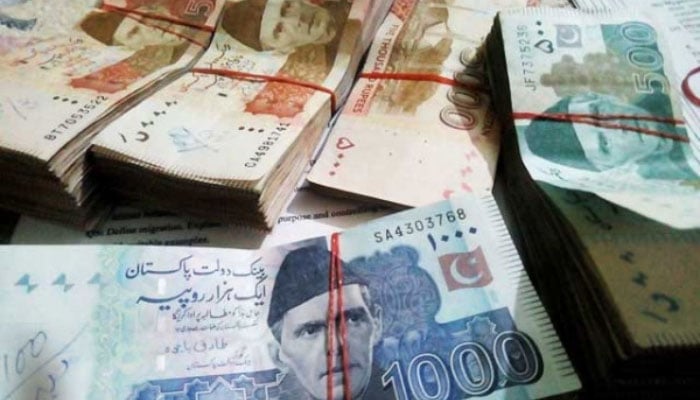
In one case, suspects allegedly posed as both a relative and a visa agent and persuaded a victim to transfer Rs25.86 million.

The case has highlighted how scammers can combine apparently familiar identities with urgent requests to make their schemes appear legitimate.

Rs54.66m trading fraud uncovered

Three suspects were arrested in Faisalabad in connection with alleged online trading fraud and unauthorised access to a company email account.

According to investigators, a victim was shown fabricated trading records, digital-wallet balances and purported profit statements to create the impression that substantial returns were being generated.

After being persuaded to invest, the victim allegedly lost Rs54.66 million, investigators said.

The case demonstrates the growing sophistication of investment scams, where criminals allegedly use manipulated digital information to make fraudulent platforms appear genuine.

Multan arrests expose impersonation tactics

In Multan, seven suspects were arrested for allegedly posing as relatives, bank employees and individuals claiming to be based in Britain.

Officials said victims were approached with various demands, including payments supposedly required for prize money, customs clearance, taxes and visa renewals.

Such tactics typically create a sense of urgency, leaving victims with little time to verify the identity of the caller or the authenticity of the demand.

Digital evidence now under forensic examination

NCCIA investigators are examining the seized devices through forensic analysis. Financial transactions, call records and digital communications are also being reviewed to establish the full extent of the alleged operation and identify other people who may be connected to it.

The crackdown comes amid growing concern over online financial fraud in Pakistan. The NCCIA’s own statistics identify financial fraud as a major category of reported cybercrime.

The latest arrests underscore a simple but increasingly important warning: an apparently familiar voice, official-looking message or promising investment opportunity may not be what it seems.

Authorities are expected to continue the investigation as they trace the alleged network and follow the digital and financial trails left behind.

Similar Posts

  • | |

    Armie Hammer breaks up with Reagan Newman after br…

    Armie Hammer and social media strategist Reagan Newman have reportedly called it quits after a short-lived romance that attracted attention earlier this summer. The Citizen Vigilante actor and Newman first sparked dating rumors in June after they were seen together at Pace restaurant in the Hollywood Hills. The pair were photographed sharing a kiss, prompting speculation that they had begun a new relationship. However, their romance appears to have been brief. According to Page Six, an insider confirmed on Monday that Hammer and Newman are no longer together, saying that the two simply “cooled it down.” (Page Six⁠) Romance sparks attention Hammer and Newman’s relationship became a talking point after their public appearance in Los Angeles. Their affectionate moment at the restaurant quickly fueled dating speculation, although neither appeared to make a major public announcement about their relationship. The pair were reportedly spending time together during a period when Hammer was returning his attention to his acting career. He has continued working on new projects following several years of intense public scrutiny. Newman, meanwhile, works as a social media strategist and has largely maintained a lower public profile compared with Hammer. Relationship ends quietly Despite the early attention surrounding their romance, the relationship reportedly did not last long. The source told Page Six that they had “cooled it down,” suggesting that the split was relatively low-key rather than the result of a dramatic public breakup. (Page Six⁠) Neither Hammer nor Newman has publicly commented on the reported separation. Their brief relationship comes after Hammer has faced significant media attention surrounding his personal life in recent years. The actor has spoken about rebuilding his career and focusing on his professional future. Hammer continues career comeback Hammer has been working to re-establish himself professionally after stepping away from Hollywood projects amid controversy. His recent work includes Citizen Vigilante, an action-comedy in which he stars and also serves as a producer. The actor has also discussed wanting to move forward with his career while navigating life away from the intense spotlight that previously surrounded him. For now, Hammer and Newman appear to have gone their separate ways. Their romance may have lasted only a few weeks, but their public appearance was enough to generate considerable interest among fans and entertainment watchers. With both reportedly moving on, the short-lived romance seems to have reached its conclusion without a major public fallout.

  • |

    North Korea fires missile ahead of US-South Korea drills

    SEOUL: North Korea launched a suspected ballistic missile into waters off the Korean Peninsula’s eastern coast on Wednesday, raising tensions just days before major military exercises between South Korea and the United States. South Korean and Japanese authorities detected the launch from the Wonsan area on North Korea’s east coast at around 6am local time. The missile travelled approximately 700 kilometres before falling into the sea, according to South Korean and Japanese defence officials. The launch came only days before the annual Ulchi Freedom Shield exercises, scheduled to begin on August 17 and continue through August 27. The drills are designed to strengthen the allies’ ability to respond to security threats from North Korea. Pyongyang has repeatedly criticised the exercises, describing them as preparations for a potential attack. Seoul and Washington maintain that the drills are defensive and necessary to improve their combined military readiness. South Korean officials said Wednesday’s launch was the latest in a series of weapons tests conducted by North Korea this year. It was assessed as the country’s 11th suspected ballistic missile test of 2026. North Korea had also launched a missile from the Wonsan region on August 6. Pyongyang did not publicly acknowledge that test. Analysts said the latest launch could have been part of North Korea’s ongoing weapons development programme. However, its timing may also have been intended to send a political and military message ahead of the upcoming US-South Korean exercises. South Korean authorities have not yet confirmed the exact type of missile involved. Officials said a detailed analysis was under way to determine its specifications. The missile’s reported range and launch location have prompted speculation that it could have been a hypersonic weapon or another advanced missile system. Officials have not confirmed those assessments. Seoul and Tokyo condemn launch South Korea and Japan strongly criticised the missile test. South Korean authorities convened an emergency security meeting and called on Pyongyang to stop activities that violate United Nations Security Council resolutions. South Korea’s military said it remained fully prepared to respond to any further provocation and would maintain its combined defence posture with the United States. Japan also lodged a formal protest through diplomatic channels. Japanese Defence Minister Shinjiro Koizumi condemned the launch and said Tokyo was closely monitoring developments. The latest test follows growing tensions over North Korea’s expanding weapons programme and Japan’s plans to strengthen its defence capabilities. North Korean state media had criticised Japan’s latest defence policy document a day earlier, accusing Tokyo of using the North Korean threat to justify an increase in military spending and capabilities. The US Indo-Pacific Command said it was coordinating closely with South Korea and Japan. Its initial assessment was that the missile launch did not pose an immediate threat to US territory, American personnel or its allies.

  • | | |

    Constitutional provisions fuel referendum debate

    Debate over the possibility of holding a national referendum has resurfaced in Pakistan, prompting discussions among political observers and constitutional experts about the legal framework governing such a move. Although the government has made no official announcement regarding a referendum, speculation in political circles has raised questions about when and how a nationwide vote can be conducted under the Constitution. Constitutional experts say Articles 48(6) and 48(7) of the Constitution empower the prime minister to propose a referendum on a matter of national importance. Under Article 48(6), the prime minister may refer such a proposal to a joint sitting of Parliament. If approved by the joint session, the matter can be presented to the public through a referendum in the form of a “Yes” or “No” question. Article 48(7) further provides that Parliament may legislate the procedure for conducting a referendum and determining its results. Legal experts note that, unlike a constitutional amendment, such legislation does not require a two-thirds majority and can be passed through a simple majority of members present, provided the quorum is complete. The renewed debate has also revived interest in the history of referendums in Pakistan. The concept first gained prominence during the political crisis that followed the March 7, 1977 general elections. Opposition parties, united under the Pakistan National Alliance (PNA), rejected the election results, alleging widespread rigging. They later boycotted provincial assembly elections and launched a nationwide protest movement demanding fresh elections, dissolution of assemblies and the resignation of then-prime minister Zulfikar Ali Bhutto. Despite mediation efforts by Saudi Arabia, negotiations between the government and the opposition failed, and the political deadlock culminated in the imposition of martial law by General Muhammad Zia-ul-Haq on July 5, 1977. Following these developments, constitutional provisions allowing referendums were introduced through the Seventh Constitutional Amendment. Pakistan’s first referendum was held on December 19, 1984, during General Zia-ul-Haq’s rule. While the public was asked to vote on the continuation of the Islamization process, a “Yes” vote effectively extended Zia’s presidency for another five years. Official results declared overwhelming support for the proposal, though opposition parties questioned both the process and the outcome. A second nationwide referendum was held in April 2002 under General Pervez Musharraf. The exercise enabled him to secure another five-year presidential term before the general elections later that year. After the 2002 elections, Musharraf was formally elected president by an electoral college comprising Parliament and the four provincial assemblies under the framework established through the Seventeenth Constitutional Amendment. Political analysts say recent discussions intensified after comments made during a media briefing by the Director General of Inter-Services Public Relations (ISPR), whose carefully worded responses to questions on constitutional matters drew public attention.

  • |

    Fawad Blames PML-N, PPP for political deadlock

    Former federal minister Fawad Chaudhry said Pakistan cannot move forward politically or economically as long as the country’s two major ruling parties, the Pakistan Muslim League-Nawaz (PML-N) and the Pakistan Peoples Party (PPP), continue to dominate national politics. Speaking to reporters in Islamabad, Fawad criticized former president Asif Ali Zardari and former prime minister Nawaz Sharif, arguing that their continued influence has prevented the country from making meaningful progress. He said Pakistan would struggle to achieve stability and development unless it moved beyond what he described as the traditional political leadership. Fawad also took aim at Prime Minister Shehbaz Sharif’s economic record. He noted that Shehbaz has presented a total of 17 budgets during his political career, including 12 as chief minister of Punjab and five at the federal level. He questioned what new solutions the prime minister could still offer after overseeing so many budgets. Commenting on constitutional reforms, Fawad said he supports the transfer of administrative powers, adding that decentralization could strengthen governance if implemented effectively. Addressing the broader political situation, he stressed that any genuine national dialogue must include the founder of Pakistan Tehreek-e-Insaf (PTI), who remains in prison. Fawad said the PTI founder is the country’s most influential political leader and should be engaged in talks as a Pakistani citizen. He added that he shares a long political association with the PTI founder and believes meaningful negotiations cannot succeed without his participation. Former Sindh governor Imran Ismail, who was also present during the media interaction, said he has submitted a request to meet the PTI founder. According to Ismail, he intends to discuss proposals related to the creation of new provinces and seek his opinion on the issue before moving forward with any political discussions.

  • Thailand Suspects Foreigners Piloting Cambodian Bomber Drones in Border Conflict

    BANGKOK – The Thai army has expressed suspicions that foreign nationals may be operating the bomber drones used by Cambodian forces in the ongoing border clashes. The 2nd Army Area, responsible for Thailand’s northeastern frontier, raised the alarm in a Facebook post on Thursday, citing radio intercepts during drone attacks that featured English communications. Cambodia […]

  • | |

    Murad vows action as Mir Raza murder probe uncover…

    KARACHI: Sindh Chief Minister Syed Murad Ali Shah has assured the family of murdered businessman Mir Raza that the investigation will be conducted fairly and that those responsible for any police or medico-legal lapses will face action once the case is concluded. Speaking to reporters at the Arts Council Karachi on Tuesday, the chief minister said the proposed judicial commission was not meant to investigate the murder itself. He explained that the police were responsible for probing the killing, while the commission was intended to examine shortcomings in the handling of the case by police and medico-legal authorities. Murad said the provincial government had initially discussed the commission with Mir Raza’s parents through the home minister and Karachi mayor, and the family had agreed to the proposal. However, after the family later withdrew its support, the government respected their decision. Meanwhile, investigators have received the chemical analysis report from Mir Raza’s first post-mortem, which reportedly detected traces of acid on his shirt. The report also found gunshot residue on the rear side of the shirt’s perforation, identified as the entry wound. Further samples were collected during a second post-mortem after the body was exhumed. So far, investigators have received the DNA report, which confirmed that the remains belonged to Mir Raza. The investigation team is also preparing to conduct geofencing around different locations near the crime scene in Gulistan-i-Jauhar to establish the movements of people in the area around the time of the incident. Call data records from Mir Raza’s mobile phone will also be obtained as part of the probe. At the request of the family’s lawyer, Jibran Nasir, DSP Siraj Lashari and Inspector Mohammed Ali have been added to the investigation team headed by DIG Amir Farooqui. Mir Raza, an IBA graduate and owner of the food business Wafflix, went missing on July 28. His body was discovered the following day in bushes near Shahi Qila Ground in Gulistan-i-Jauhar. In a related development, the National Cyber Crime Investigation Agency (NCCIA) has summoned four people over alleged defamatory social media content concerning Sindh Senior Minister Sharjeel Inam Memon and his son in connection with the murder case. Syed Abdullah, Amin Qureshi, Bilal Warsi and Obaid Qureshi have been directed to appear before the NCCIA’s Karachi office on August 13. The notices were issued following a complaint filed on Memon’s behalf, alleging that fabricated and defamatory material had been circulated through digital platforms. Memon had approached the cybercrime agency after claims circulated online alleging that he owned a guest house in Gulistan-i-Jauhar where Mir Raza was allegedly tortured and killed. Other posts claimed that Memon’s son had travelled to London immediately after the incident and was later seen accompanied by a security guard. The latest developments come as investigators continue to piece together the circumstances surrounding Mir Raza’s disappearance and death, while authorities face growing pressure to ensure that every aspect of the case is thoroughly examined.

Leave a Reply

Your email address will not be published. Required fields are marked *