echoes interstellar dark
| |

Echoes from the Interstellar Dark

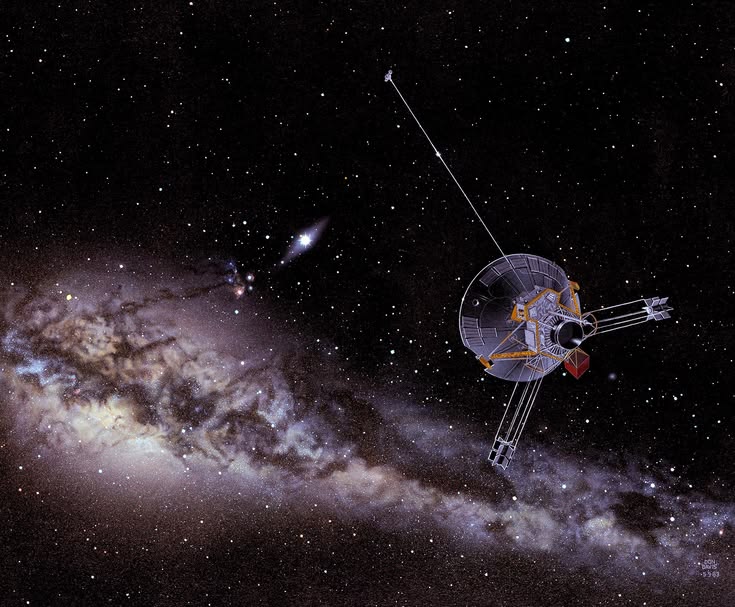
NASA’s Voyager 1 probe was designed to explore the outer giant planets and send back photographs of Jupiter and Saturn. It was launched in 1977. More than eleven billion miles from Earth, floating through the icy void beyond our solar system, a tiny scrap of 1970s human ingenuity continues its lonely journey. Decades after its primary mission ended, the craft crossed the heliopause. The boundary where the sun’s protective magnetic bubble ends and true interstellar space begins.

​In recent months, engineers faced a daunting crisis. Voyager 1 began transmitting a repeating, meaningless gibberish loop of ones and zeros back to Mission Control. For a moment, scientists feared that after nearly half a century of unbroken operation, the farthest human artifact had finally succumbed to cosmic radiation and cold degradation. Yet through meticulous diagnostic work, engineers isolated a corrupt microchip. They rerouted its memory code across ancient hardware.  Hence, they successfully restored intelligible science data across the vast distance.

​Voyager 1’s survival is not just an engineering miracle; it is a profound testament to humanity’s desire to touch the unknown.

A spindle of wire, a heart made of bronze,

It drifts through the night where the quiet responds.

Beyond the sun’s breath and the cradle of red,

It whispers the secrets of worlds overhead.

​A Message in a Bottle Across Cosmic Waves

​Carried on the hull of Voyager 1 is the Golden Record, a gold-plated copper phonograph disc containing sounds of Earth, greetings in fifty-five languages, musical compositions from Bach to Chuck Berry, and encoded images of terrestrial life. It serves as an interstellar time capsule, intended to outlast our civilization and tell any distant intelligence who we were.

We carved our desire on golden veneer,

To prove in the darkness that someone was here.

A chorus of ocean, a child’s brief greeting,

Sent out to outlive every mortal heart’s beating.

​As the probe glides through the cosmic dust, its radio signal traveling at the speed of light takes over twenty-two hours to reach dish antennas on Earth. Every line of telemetry received is a faint echo from an environment no human eye will ever witness firsthand. The spacecraft operates on a diminishing power supply provided by its decaying plutonium generators. Year by year, NASA engineers shut down non-essential instruments to conserve every milliwatt of power, prioritizing the magnetometers and cosmic ray sensors that measure the interstellar medium.

​The Final Quiet Crossing

​The remaining active instruments will inevitably power down as the thermal generators fade entirely by the end of this decade. Voyager 1 will then become a silent voyager, drifting along its galactic orbit around the center of the Milky Way, unbothered by atmospheric drag or gravitational interference, lasting for millions of years.

When the last power flickers and warmth slips away,

It will glide through the night till the dawn of no day.

No longer a transmitter, no longer a thread,

Just a monument floating where gods used to tread.

​The triumph of retrieving clear data from Voyager 1 reminds us why we look up. Science and art stem from the same original impulse: the refusal to remain quiet in the vastness of the dark, and the drive to leave something meaningful behind before the power fades.

Similar Posts

  • |

    China’s Chongqing East becomes world’s largest railway station

    Almost everyone has travelled by train at some point and has seen railway stations. But do you know which country is home to the world’s largest railway station? If you do not, here is the answer: the world’s largest railway station is located in China and is nothing short of an architectural marvel. China is already known for numerous engineering wonders ranging from remarkable bridges to the world’s largest high-speed railway network. Chongqing East Railway Station Chongqing East Railway Station located in southwestern China is the world’s largest railway station in terms of area. It was opened to the public in June 2025. The railway station covers an area of approximately 13 million square feet equivalent to around 170 football fields. It is also about five times larger than New York’s Grand Central Terminal. The station has 15 platforms and 29 railway tracks and during peak hours, it can accommodate around 16,000 passengers per hour. Around 16,500 tonnes of steel were used for its roof. However, the most remarkable feature of the station is the speed at which it was constructed and it was built on top of a mountain. The Chongqing region is mountainous which has traditionally made the development of transportation infrastructure particularly challenging. The station was constructed in just 38 months with the help of around 40,000 workers and a fleet of robotic machinery. Although 38 months may seem like a long period, in many countries, simply obtaining approval for projects of this scale can take longer than that.

  • | |

    Finding Macbeth among the cul-de-sacs

    There is a persistent cultural myth that high art requires crumbling castles, stormed heaths, or the frantic pulse of a metropolitan center. Suburbia, by contrast, is frequently dismissed as a landscape of cultural vacuum. The locality is defined instead by the hypnotic hum of lawnmowers, identical mailboxes, and the predictable choreography of the morning commute. Yet, to truly understand the works of William Shakespeare, one might argue that the quiet cul-de-sac is precisely where his characters feel most alive. Far from being an ivory-tower exercise, reading the Elizabethan canon against the backdrop of modern suburban life reveals a shocking truth. The human heart remains unchanged. It battles with the exact same ambitions, fears, and frailties that obsessed the playwright over four centuries ago. Shakespeare’s Macbeth Consider the iconic image of Macbeth encountering the three witches on a desolate heath. It’s a scene immortalized in classical art where armored men on horseback reel back in shock from supernatural prophets. On the surface, this imagery feels light-years away from a suburban subdivision. And yet, the psychological anatomy of Macbeth’s descent is intensely domestic. The internal dialogue of unchecked ambition, the quiet rationalization of moral compromise, and the creeping dread of consequences do not require a Scottish throne room. They can happen just as easily across a kitchen island or inside a quiet home office late at night. The weird sisters whispering prophecies of greatness are mirrored in modern life by the relentless cultural pressures to achieve. King Lear’s Misjudgment of His Children When we open a volume of Shakespeare, the distance between the sixteenth-century stage and the twenty-first-century lawn collapses. The suburban environment with its heavy emphasis on conformity and respectability provides a testing ground for tragedy. Iago’s subtle manipulations and toxic envy find their modern equivalents in politics, gossip, and the quiet resentments behind closed doors. King Lear’s tragic misjudgment of his children echoes in the universal anxieties of aging, and the desperate search for legacy. The stakes may appear smaller. They’re measured in property values and school districts rather than kingdoms and crowns but the emotional resonance is identical. Reading Shakespeare in Suburbia Furthermore, reading Shakespeare in suburbia changes how we interact with our immediate surroundings. It strips away the sterile academic intimidation that often turns classical literature into a chore to be checked off a syllabus. Instead, the verse becomes a lens through which the mundane details of daily existence are rendered extraordinary. The polite wave to a neighbor takes on a layer of complex subtext; the solitary evening walk under streetlights feels heavy with introspection. We begin to recognize that our neighbors are not merely background characters in a quiet life, but complex individuals harboring their own private comedies and tragedies.    Immutable Patterns of Human Behavior Ultimately, literature serves as a mirror. The suburban landscape offers a surface polished to a clear, sometimes uncomfortable reflection. Shakespeare did not write merely about royalty or historical epochs. He wrote about the immutable patterns of human behavior. By bringing his texts into the quiet corners of modern domestic life, we bridge the gap between antiquity and the everyday. We discover that drama is not something reserved for history books or theatrical stages, but an inescapable part of being human, waiting to be noticed right outside our front doors.

  • |

    Ask Me Anything with lawyer Carlo Ybanez, and IBON Foundation on the Pax Silica debate

    Where do you stand in the heated Pax Silica debate? Join Rappler’s Ask Me Anything session with people who’ve weighed in on the AI initiative by sending your questions to the Everyday Tech chat room on the Rappler app by 4 pm on August 11.

  • 40,000-Year-Old ivory birds discovered in a German cave

    Archaeologists have recently uncovered two thumbnail-sized sculptures of birds carved from mammoth ivory approximately 40,000 years ago. These delicate figurines, which have spent dozens of millennia buried in sediment, offer an intimate glimpse into the minds, environments, and creative capacities of our ancient ancestors during the Ice Age. The astonishing discoveries were made in the Hohle Fels Cave, a site deeply embedded in the Swabian Jura region of Germany. This location has long been celebrated as one of the most critical archaeological sites in the world for understanding early modern human culture in Europe. The newly found sculptures are extraordinarily small. Each measures less than a single inch in length and weighs merely a fraction of an ounce. It makes them roughly the size of an average human thumbnail. Despite their diminutive scale, the level of detail the prehistoric artist managed to achieve is nothing short of masterful. Rather than relying on abstract or highly stylized representations, the Ice Age carver recorded specific, anatomical observations. The figurines feature carefully incised markings that clearly delineate feathers, as well as distinctively carved eyes. One of the miniature sculptures portrays a bird with its wings fully spread, capturing a moment of dynamic movement, although a few fragments of its body have unfortunately been lost to time. Remarkably, this particular piece now holds the record as the smallest Ice Age artwork ever found in the region. The second figurine, which survived completely intact, depicts a bird in a resting posture. It appears to be lying down, a pose that researchers speculate might represent the animal tending to its eggs. Experts analyzing the avian features believe that at least one of the sculptures represents a ptarmigan, a robust bird belonging to the grouse family that would have been familiar to inhabitants of the harsh Ice Age landscape. While the identity of the second bird remains slightly less certain, it too could be a ptarmigan, or possibly a small bird of prey. Because the two ivory pieces were found just about five feet apart during the 2025 excavation season and share stylistic similarities, archaeologists strongly suspect they were crafted around the exact same time, quite possibly by the very same artist. The excavation was led by Nicholas Conard and a dedicated team from the University of Tübingen, who have been meticulously studying the Hohle Fels site for nearly three decades. The process of unearthing such fragile artifacts requires incredible patience. Researchers painstakingly remove layers of earth before washing and sifting the prehistoric sediment through extremely fine mesh screens. It was during this rigorous process that Elisa Luzi, a paleontologist at the university, first spotted one of the tiny birds. She described the profound emotional weight of the moment, emphasizing the sheer privilege of being the first human being to lay eyes on the carving in 40,000 years, and feeling an instant connection to the humanity of its maker. The Hohle Fels Cave These findings belong to the Aurignacian period, an epoch that coincides with the early settlement of Homo sapiens in Europe. The Hohle Fels Cave which is protected as a UNESCO World Heritage site has previously yielded some of the oldest known figurative art and musical instruments on the planet. The collection includes early bone flutes and the famous Venus of Hohle Fels. Exactly why these early humans took the time to carve such intricate, tiny birds remains a mystery. Researchers have proposed various theories, wondering if they were utilized as personal talismans meant to bring good fortune, or as cultural symbols associated with the specific identity of their owner. While we may never have a definitive answer regarding their prehistoric purpose, these thumbnail-sized masterpieces firmly remind us that the human desire to observe, create, and capture beauty is as ancient as humanity itself.  

  • Transforming Governance in Sindh’s Public Schools

    The introduction of FRAMES marks an important milestone in Sindh’s journey towards digital governance. Rather than relying on conventional attendance registers that have long served as the primary means of recording staff attendance, the School Education & Literacy Department (SE&LD) has embraced facial recognition technology to create a more transparent, secure and efficient monitoring system. The initiative reflects a broader vision of leveraging technology to improve governance, enhance institutional performance and ultimately create a better learning environment for students. For decades, education departments across Pakistan have struggled with administrative challenges that extend beyond teaching and learning. Manual attendance systems, paper-based reporting, delayed verification processes and fragmented administrative records have often limited the ability of education authorities to monitor schools effectively. In a province with thousands of public schools and a large teaching workforce, ensuring regular attendance and maintaining accurate records through traditional methods has remained a formidable challenge. Recognising these issues, the Government of Sindh has sought to replace outdated administrative practices with a technology-driven solution. FRAMES enables teaching and non-teaching staff to verify their attendance using facial recognition technology. Once authenticated, attendance records are securely captured and transmitted to a central monitoring platform, allowing authorised education officials to access real-time information regarding staff attendance across schools. Unlike conventional attendance registers that require manual compilation and verification, FRAMES introduces automation into one of the most fundamental administrative functions within the education sector. The result is not merely a change in attendance recording but a transformation in how educational institutions are monitored and managed. One of the distinguishing features of FRAMES is its ability to function both online and offline. This capability addresses one of the most practical challenges facing digital governance in developing regions. Internet connectivity remains inconsistent in several rural and remote areas of Sindh, making continuous online operation difficult for many schools. Recognising this reality, FRAMES has been designed using an offline-first architecture. Even when internet connectivity is unavailable, teachers and school staff can authenticate their attendance through facial recognition. The application securely stores attendance records on the device and automatically synchronises the data with the central server as soon as internet connectivity is restored. This intelligent synchronisation mechanism ensures that schools continue to operate without disruption while maintaining the integrity and reliability of attendance records. By eliminating dependence on uninterrupted internet access, FRAMES becomes a practical solution for schools across diverse geographical regions of the province. The importance of this feature cannot be overstated. Many digital initiatives fail because they assume ideal technological conditions that do not always exist in the field. By accommodating connectivity limitations, FRAMES demonstrates a realistic understanding of the operational environment within Sindh’s public education system. Beyond attendance verification, FRAMES represents a broader shift towards data-driven governance. Modern public administration increasingly depends on accurate, timely and reliable data to formulate effective policies. Every authenticated attendance record contributes to a growing repository of administrative information that can assist education managers in analysing attendance trends, identifying operational challenges and making informed policy decisions. Real-time monitoring significantly enhances administrative responsiveness. Instead of waiting for monthly reports or manual inspections, district and provincial authorities can obtain immediate insights into attendance patterns. Persistent absenteeism, staffing shortages or unusual attendance trends can be identified promptly, enabling faster interventions and more efficient resource allocation. The implementation of FRAMES also strengthens institutional accountability. Public institutions derive credibility from transparency, consistency and fairness. Digital attendance verification substantially reduces opportunities for manipulation associated with manual record keeping while creating an auditable electronic record of attendance. Such transparency not only improves administrative efficiency but also reinforces public confidence in government institutions. Across the world, education systems are increasingly adopting digital governance solutions to improve institutional performance. Countries in Asia, Europe and Africa have introduced biometric attendance systems, electronic education management platforms and digital monitoring tools to strengthen accountability within public education. International organisations, including UNESCO and the World Bank, have repeatedly emphasised that effective education governance depends upon reliable information systems capable of supporting evidence-based policymaking. Sindh’s adoption of FRAMES therefore aligns with broader international trends in educational management. While technology alone cannot resolve every challenge confronting the education sector, it provides administrators with the tools necessary to monitor institutional performance more effectively and allocate resources more strategically. The implementation of FRAMES also complements the Sindh Government’s wider digital transformation agenda within the School Education & Literacy Department. In recent years, the department has introduced several technology-based initiatives aimed at improving governance, financial transparency, administrative efficiency and public service delivery. Collectively, these reforms signal a transition from conventional bureaucratic practices towards modern digital administration. However, technological innovation alone is not sufficient to guarantee institutional success. The effectiveness of FRAMES will depend upon careful implementation, continuous evaluation and sustained capacity building. Teachers, head teachers and district administrators must receive comprehensive training to ensure that the system is used correctly and consistently. Technical support mechanisms must remain readily available to resolve operational issues quickly and minimise disruptions. Equally important is the need to strengthen digital infrastructure. Reliable electricity, functional devices and stable internet connectivity remain essential components of successful digital governance. Although the application’s offline functionality addresses connectivity constraints, long-term sustainability will require continued investment in technological infrastructure across public schools. Another important consideration relates to data privacy and cybersecurity. Because FRAMES utilises facial recognition technology, the protection of biometric information must remain a top priority. Clear policies governing data collection, storage, encryption and authorised access will be essential to maintaining public trust. International experience demonstrates that digital governance initiatives are most successful when supported by robust legal safeguards and transparent data protection frameworks. Some observers have expressed concerns regarding the growing use of artificial intelligence and biometric technologies within public institutions. These concerns deserve thoughtful consideration. Technology should always serve the interests of citizens rather than replace human judgement. Accordingly, FRAMES should be viewed as an administrative support system that strengthens institutional accountability without diminishing the role of educational leadership or professional responsibility. Indeed, educational quality ultimately depends upon far more than attendance alone.

  • |

    Meta hit with record $567m child safety fine

    A US judge in New Mexico has ordered Meta to pay $567 million over allegations that its social media platforms failed to adequately protect children from harmful content and online risks. The ruling is the largest penalty Meta has faced in a child safety case. It brings the total amount the company has been ordered to pay in the New Mexico case to $942 million, including an earlier $375 million penalty. Judge Bryan Biedscheid ruled that Meta’s platforms had created harms serious enough to be considered a “public nuisance”. He compared the company’s operations to a factory, saying harmful effects on children spread beyond the platforms and affect families, schools, healthcare providers and law enforcement. The judge ordered the money to be placed in a fund designed to address the impact of social media-related harm on children. A large portion of the fund, about $420 million, will support clinical and behavioural health programmes for people affected by such harms. Additional funding will be used for awareness and prevention programmes, including training for teachers and healthcare professionals. The court also imposed a series of measures aimed at strengthening protections for users under 18. Meta will be required to prevent adult users from messaging minors and stop accounts belonging to users under 18 from being recommended to adults. The company must also restrict the sending and receiving of nude material by underage users. The ruling further requires Meta to adopt a strict policy against adult users involved in child sexual exploitation. Other restrictions include removing “like” counts for users under 18 and limiting push notifications during overnight hours. Notifications will also be restricted during normal school hours on school days. The court additionally ordered a monthly usage limit of 90 hours across Instagram and Facebook for users under 18. Meta, which operates Instagram, Facebook, WhatsApp and Threads, rejected the ruling and said it would appeal. The company said it works to protect users and has been transparent about the challenges of detecting harmful content and malicious actors. Meta also maintained that the ruling does not accurately reflect its efforts to protect teenagers online. The New Mexico case began with a lawsuit filed by state authorities in 2023. Prosecutors argued that Meta’s platforms exposed children to harmful material and enabled contact with sexual predators. During the earlier stage of the case, Meta was found to have violated New Mexico’s consumer protection law. The court determined that its recommendation systems could direct young users towards harmful content and potentially dangerous contacts. Meta is facing thousands of similar lawsuits across the United States. Nearly three dozen state attorneys general are also pursuing claims involving the company’s treatment of children and their privacy.

Leave a Reply

Your email address will not be published. Required fields are marked *