stay safe viral

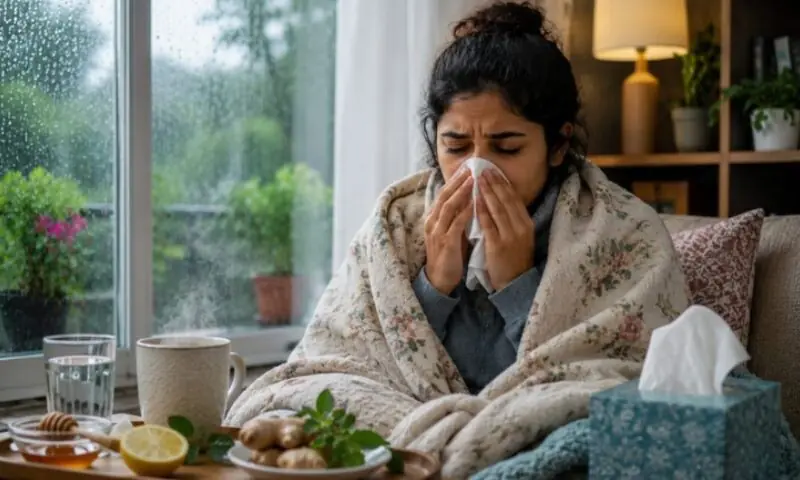
Stay safe from viral fever during monsoon

When the rainy season begins after the hot summer cases of different illnesses often increase.  Viral fever is one of the common health problems people may experience during changing weather.

Many people first develop a sore throat or runny nose followed by fever that may last several days.  It can leave the body feeling weak and may cause headaches body aches, chest discomfort or throat pain. Children older adults and people with weaker immune systems may be more likely to develop complications.

A few simple habits can help reduce the risk of infections during the rainy season.

Keep your hands clean

Germs and viruses can stay on frequently touched surfaces such as door handles mobile phones railings and other objects.

Wash your hands with soap and clean water for at least 20 seconds after returning home before eating and after using the bathroom.  If soap and water are not available use an alcohol based hand sanitizer. Try not to touch your eyes nose or mouth with unwashed hands.

Eat a healthy diet

A healthy diet supports the body’s immune system. During the rainy season include fresh fruits vegetables lentils, milk yogurt and eggs in your meals. Foods containing vitamin C and zinc can also be part of a balanced diet.

Try to avoid unhygienic street food and foods that are heavily fried.

Drink safe and clean water

Rainy weather can increase the risk of infections caused by contaminated water.  Drink properly filtered or boiled water whenever possible. Avoid uncovered drinks and ice from places where water  quality is uncertain.

Drinking enough clean water throughout the day also helps prevent dehydration.

Take care after getting wet

If you get caught in the rain change out of wet clothes as soon as possible and dry  your hair properly.

Staying in wet clothes for a long time can make you uncomfortable and may contribute to illness. If needed take a warm shower and change into clean, dry clothes.

Get enough sleep and rest

Good sleep helps the body maintain a healthy immune system. Poor sleep and constant stress can affect overall health. Try to get around seven to eight hours of sleep each night. Light exercise walking or gentle yoga can also help keep the body active.

Avoid close contact with sick people

Some viral infections can spread through coughing sneezing and close contact.  Keep some distance from people who are sick and avoid crowded places when possible.

Wear a mask when needed and do not share personal items such as towels drinking bottles or utensils with someone who is ill.  Cover your mouth and nose with a tissue or your elbow when coughing or sneezing.

Pay attention to early symptoms

Do not ignore symptoms such as fever sore throat headache runny nose or body aches. Get enough rest drink warm fluids and monitor your condition.

Avoid taking antibiotics without medical advice because antibiotics do not treat most viral infections and unnecessary use can be harmful.

Know when to see a doctor

Seek medical care if your fever reaches 102°F (38.9°C) or higher lasts for more than three days or is accompanied by breathing difficulty repeated vomiting fainting, or severe weakness. The rainy season can be enjoyable but taking basic health precautions is important.

Good hygiene safe food and water enough rest and early attention to symptoms can help reduce the risk of illness during changing weather.

Similar Posts

  • Blood treatment removes forever chemicals

    A new study suggests that a blood cleaning treatment used to lower cholesterol may also help remove harmful “forever chemicals” from the body. The treatment called apheresis is mainly used for people whose high cholesterol cannot be controlled with medication.  During the procedure blood is taken from one arm and passed through a special filter that removes excess fats. The cleaned blood is then returned to the body through the other arm. At the Technical University of Dresden in Germany, home to one of the world’s largest apheresis centers around 10,000 of these treatments are performed each year. For the study researchers examined used filter bags from the apheresis machines to see what substances had been removed along with cholesterol. They wanted to find out whether the filters could also remove harmful forever chemicals toxic substances that remain in the environment and the human body for a very long time as well as tiny plastic particles known as microplastics. The researchers say the early findings are promising. If future studies confirm these results apheresis could become a useful way to reduce the amount of certain harmful pollutants in the body in addition to lowering cholesterol.

  • World’s tallest bridge has a giant waterfall

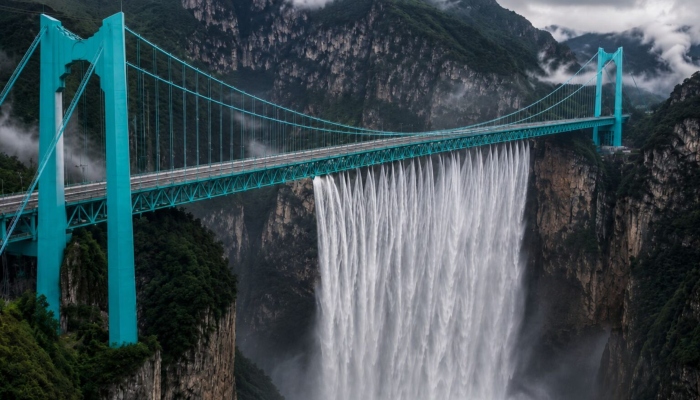
    China has completed many incredible engineering projects in recent years but the Huajiang Grand Canyon Bridge stands out as one of its most amazing achievements. If you’re afraid of heights crossing this bridge might not be easy. It is built 625 meters (2,051 feet) above the ground making it the tallest bridge in the world. It opened to the public in September 2025. However its height is not the only reason it attracts attention. The bridge also features a 300 meter long artificial waterfall creating a spectacular view for visitors. At night a laser lighting system makes the waterfall even more impressive. Chinese officials designed the bridge as more than just a road. It is also a tourist attraction with glass walkways cafes inside the bridge towers and adventure activities such as bungee jumping. According to local authorities thousands of tourists visit the bridge every day. The bridge was also recognized by Time which ranked it as the No. 1 place to visit in 2026. Located in Guizhou the bridge was built to make travel faster in the province’s mountainous landscape. Trips that once took about two hours can now be completed in just one minute.  The steel bridge is 9,482 feet long. Construction began in January 2022 and it was completed and opened in September 2025. Around 20,000 tons of steel were used to build it roughly the same amount of steel found in three Eiffel Towers.

  • Women’s heart attack signs often missed

    A heart attack is a serious medical emergency that can be life threatening.  It usually happens when the heart does not receive enough oxygen because blood flow to the heart is blocked. Doctors say that getting treatment quickly is very important.  The longer a heart attack goes untreated the more damage it can cause to the heart muscle making recovery more difficult. According to health experts most heart attacks occur when a blocked artery stops oxygen rich blood from reaching the heart. Without enough oxygen parts of the heart muscle begin to weaken and may become permanently damaged. Doctors also warn that heart attack symptoms in women are often less obvious than in men. Instead of severe chest pain women may experience unusual tiredness shortness of breath nausea dizziness pain in the back neck jaw or shoulders or mild chest discomfort. Because these symptoms can be mistaken for other health problems women may delay seeking medical care increasing the risk of serious complications. Experts advise anyone experiencing possible heart attack symptoms to seek emergency medical help immediately as early treatment can save lives and reduce damage to the heart.

  • |

    Creative expression as survival in times of crisis

    In times of severe military occupation, state violence, and political trauma, art and literature undergo a fundamental transformation. They shift from aesthetic expression to vital tools for survival, record-keeping, and resistance. When conventional channels of news, speech, and movement are heavily restricted or censored, art and literature fulfill critical functions within a society. Documenting Counter-Narratives and Resisting Erasure In occupied zones, official narratives often frame political conflict using terms like normalcy or integration. They sanitize structural violence and human suffering. Kashmiri writers, poets, and essayists use narrative to preserve collective memory against state-enforced amnesia. Through poetry, fiction, and memoirs, literature captures the psychological reality of curfews, enforced disappearances, communication blackouts. It reminds of the loss of autonomy, rendering the lived experience of civilians indelible. Fine arts, illustration, and graphic art record incidents and emotional states that photojournalism or state-approved media often cannot access or transmit.  Processing Collective and Intergenerational Trauma Art creates a necessary intellectual and emotional container for a traumatized populace. Concepts such as unheimlich (the uncanny, or feeling un-homed in one’s own land) or grief over exile and displacement find structural expression through creative metaphors. Poetic forms allow writers to articulate loss, mourning, and fear in ways that transcend direct prose. The work of iconic Kashmiri poets such as the late Agha Shahid Ali, whose poetry continues to resonate. It demonstrates how verse can turn localized grief into a universal cry for human dignity. Artists frequently turn to raw mediums like paint, installation, and physical textiles to project the interiority of living under siege, using symbolic motifs like barren land, barbed wire, cages, or domestic objects disrupted by violence. Evading Censorship Through Metaphor and Allegory When direct political discourse leads to state surveillance, detentions, or legal suppression, creative expression relies on metaphor, symbolism, and myth. Playwrights and novelists weave political critiques into historical, mythological, or surreal settings, allowing themes of oppression, tyranny, and liberation to be discussed safely. On the ground, quick visual mediums like graffiti, posters, and digital art become decentralized tools. The mediums act for mass communication and solidarity, circulating rapidly across networks even during communication rollbacks.  Transcending Boundaries and Building Global Solidarity Art and literature serve onnect the isolated region to the global diaspora and international human rights communities. On memorial dates like August 5 (observed as Youm-e-Istehsal or Black Day by Kashmiris and solidarity groups worldwide), exhibitions, literary readings, poster competitions, and performance art allow communities across the world to bear witness to the ongoing struggle. Art transforms passive sympathy into active political consciousness. It forces the global audiences to confront physical realities of occupation beyond distant headlines. In times of intense crisis, art does not exist as an escape from reality. Rather, it becomes the definitive site where human dignity, historical truth, and resistance are actively preserved.  

  • Gym and height myth or fact?

    You may have heard people say that going to the gym or lifting weights can stop your height from growing.  Because of this belief some young people avoid exercise and weight training. But is this really true?  Let’s find out. Going to the gym has become very popular among people who want to stay fit and healthy.  Some people exercise to lose weight while others want to gain muscle and strength. Gym workouts are especially popular among young people. However several myths about weight training still create confusion. One common myth is that going to the gym at a young age can stop height growth. This belief is especially common among teenagers and young people between 18 and 20 years old. Can weightlifting stop height growth? Many people believe that lifting heavy weights at a young age can prevent the body from growing taller especially when a person carries heavy weights on their shoulders. However there is no strong scientific evidence that normal strength training stops a person’s height from increasing.  Weightlifting itself does not automatically stop growth. However young people should be careful when doing heavy workouts.  Using too much weight or exercising with the wrong technique can cause injuries.  Younger people should learn proper form and when possible exercise under the guidance of a qualified trainer. What actually affects height? A person’s height is mainly influenced by genetics. Hormones nutrition sleep and overall lifestyle can also play a role in healthy growth.if the body does not produce certain growth related hormones properly it can affect normal development. Poor nutrition can also prevent the body from getting the nutrients it needs for healthy growth. The body also contains growth plates which are areas near the ends of certain bones that help bones grow longer during childhood and adolescence.  These growth plates naturally close as a person reaches physical maturity. Therefore going to the gym does not simply stop height growth.  A healthy diet proper exercise enough sleep and safe workout techniques are more important for overall growth and fitness.

  • Freedom: The Right We Must Protect

    Hani Rasheed Through the pages of your esteemed newspaper, I wish to highlight the importance of freedom in our society. Freedom is not a luxury or a favour; it is a basic right of every human being. People deserve the freedom to express their opinions, choose their future and live with dignity. Unfortunately, many people still face restrictions, fear and injustice when they raise their voices. When freedom is suppressed, society loses hope and progress comes to a standstill. A nation cannot truly develop if its people are afraid to speak the truth. The government and society must protect the rights and freedom of citizens. Freedom should be used responsibly, but no one should be silenced through injustice or fear. It is time to understand that protecting freedom means protecting the future of our nation. I hope your newspaper will highlight this important issue and encourage the authorities to protect the fundamental rights of the people

Leave a Reply

Your email address will not be published. Required fields are marked *