memory water
|

The memory of water

Water remembers. It is humans who forget.

This declaration serves as a poetic lens through which we can view one of the most pressing news events of our time. The events about the global climate crisis and the reshaping of ancient hydrological cycles. As modern reports routinely highlight record-breaking droughts, flash floods and melting glaciers across continents, we are confronted with a truth. Nature carries an indelible memory of every environmental transformation. However, human civilization continually acts surprised by the predictable consequences of its own actions.

The quote captures a moment of brutal contradiction in ancient Nineveh. King Ashurbanipal was the ruler of the vast Neo-Assyrian Empire, beloved heir of Esarhaddon, and founder of a library that preserved thousands of cuneiform tablets. He committed a horrific act of violence by executing his former mentor. A single raindrop bears witness to this cruelty embedded unseen within the king’s hair. The heat rises and the droplet evaporates into the atmosphere. It does not truly vanish. However, it transforms, rising to the skies to fall upon the earth once more.

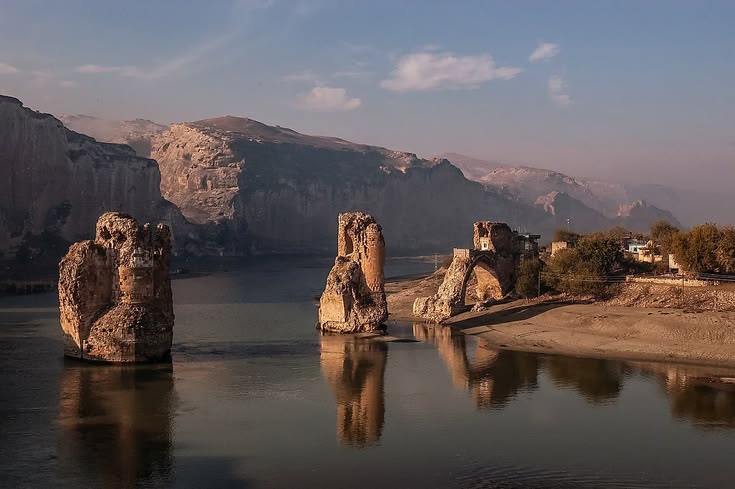
When we examine contemporary environmental journalism, specifically reports detailing how rising global temperatures are altering oceanic currents and atmospheric rivers, we see the modern echo of Ashurbanipal’s raindrop. Scientists continuously warn that the water cycle operates as earth’s immortal memory bank. The water that falls over our cities today is the exact same substance that quenched the thirst of ancient empires. The very water flooded historical valleys and bore witness to human triumphs and atrocities alike. Water absorbs every thermal change, industrial pollutant and  shift in atmospheric pressure. Moreover, water holds that memory until it returns to the land as an uncontrollable tempest or a prolonged drought.

The tragedy of human civilization lies in our collective amnesia. Ashurbanipal built an immortal storehouse of knowledge while remaining blind to the moral and environmental legacy of his own destruction. Similarly, modern society continues to treat water as a passive resource. Headlines every week record the fallout: drying riverbeds like the Colorado and the Euphrates and torrential monsoons displacing millions. Yet, humanity consistently responds to these events as isolated shocks rather than logical consequences of long-term ecological neglect.


Water does not forget the heat we introduce to the oceans. Rather, it responds by fueling violent storms. It does not forget the destruction of natural wetlands. Certainly, it responds by flooding our concrete infrastructure. The physical laws governing our planet ensure that every action leaves a permanent imprint upon the atmosphere. Human societies must learn to remember as water does: respecting history, recognizing cycles and anticipating consequences. So that we won’t remain caught in a cycle of self-inflicted crises or perpetually surprised by a natural world that simply never forgets.

Similar Posts

  • | |

    The Sham Shaman

    In 1968, a graduate student in anthropology at the University of California, published a book that would reshape the publishing world. Titled The Teachings of Don Juan: A Yaqui Way of Knowledge. The book purported to be a faithful academic field report by Carlos Castaneda detailing his apprenticeship under an elderly Yaqui shaman named Don Juan Matus in the Mexican desert. Castaneda’s account became an overnight sensation as it blended desert mysticism, hallucinogenic plant rituals, and philosophical paradoxes. It sold millions of copies, earning him a doctorate from UCLA. This success made him a guru to icons like Bob Dylan, John Lennon, and Octavio Paz. A Life Built on Fabrications Long before he wrote about desert sorcery, Castaneda had mastered the art of reinventing himself. Born César Carlos Salvador Arana in Peru in 1925—the son of a humble watchmaker—he routinely rewrote his origin story. He claimed to have been born in Brazil, shaved years off his age, and concocted wild tales of fighting as a soldier in North Korea or working as a border spy. In reality, he fled Peru after fathering a child at thirteen, eventually making his way to Los Angeles in the 1950s. Ground-breaking Anthropological Discoveries. Yet beneath the celebrated field notes lay one of the most audacious literary fabrications in modern history. Don Juan Matus was not a real person. The desert apprenticeships never took place. Castaneda was not a devoted field researcher. He was a master illusionist who deceived prestigious academics and eager seekers alike. When Castaneda enrolled at UCLA, he found an academic environment eager for authentic indigenous wisdom and existential insight. Synthesizing disparate ideas into a singular narrative, he assembled Don Juan’s philosophical worldview by freely borrowing from European philosophy, Buddhist theology, ethnomethodology, and popular horror fiction. To his impressionable professors, the resulting texts appeared to be ground-breaking anthropological discoveries. Unraveling the Hoax While Castaneda’s books topped bestseller lists throughout the late 1960s and 1970s, critical cracks in his story soon began to widen into chasms. Skeptical researchers and anthropologists began scrutinizing the timeline and claims in his field notes. Archive Contradictions: UCLA library records revealed that on dates Castaneda claimed to be in the Sonoran desert learning shamanic secrets, he was actually signed into the university library reading room. Botanical and Cultural Errors: Experts on Yaqui culture noted that the spiritual concepts and language attributed to Don Juan bore almost no resemblance to authentic Yaqui traditions or language structures. Philosophical Echoes: Literary sleuths discovered that Don Juan’s most profound dialogues were near-verbatim adaptations of modern academic sociology and Western philosophical texts. Despite being systematically exposed by critics, Castaneda maintained his mystique. He avoided photo shoots, refused interviews, and cultivated an aura of secretive invulnerability. He also assured his devotees that any perceived discrepancies were simply part of a sorcerer’s duty to erase his personal history. The Guru’s Reclusive Cult and Legacy As public acclaim gave way to scholarly embarrassment, Castaneda retreated further into reclusiveness. In the 1990s, he launched a movement called Tensegrity. He promoted a series of physical movements he claimed were ancient Toltec magical passes. Critics quickly noted their striking resemblance to modern martial arts taught by a local Santa Monica instructor. Surrounding himself with a inner circle of devout disciples in Los Angeles, Castaneda governed his group with increasing paranoia until his death from cancer in 1998. Anthropology’s Ultimate Trickster Ultimately, Carlos Castaneda remains a complex figure in cultural history. His anthropological credentials were exposed as entirely fraudulent. His writings captured the yearning of an era desperate for spiritual transcendence beyond traditional structures. He stands as anthropology’s ultimate trickster. He’s a man who turned a fictional thesis into a million-dollar empire and proved that, given the right narrative, millions of people will gladly step through the looking glass.

  • | |

    Jane Austen letter expressing affection for Mansfield Park

    A exceptionally rare, handwritten letter by legendary 19th-century British author Jane Austen has sold at auction for over $200,000. It has captivated literary historians and devoted readers across the globe. Written in early 1814, the intimate correspondence offers a fascinating glimpse into Austen’s personal thoughts during the final stages of writing her third major novel, Mansfield Park. The manuscript was acquired by a private collector after a competitive bidding battle. It highlights the enduring allure and profound market value of artifacts connected to Regency-era literature. Austen’s Private Collections In the letter, addressed to her beloved niece Martha Lloyd, Austen speaks with characteristic wit and self-effacing humor about her creative process. She candidly reveals The manuscript was acquired by a private collector after a competitive bidding battle. Austen harbored a quiet, tender affection for her newest heroine, Fanny Price. Scholars note that such direct expressions of emotion regarding her own craft are exceedingly rare in Austen’s surviving correspondence, as her sister Cassandra burned a vast majority of Jane’s personal papers following the author’s death in 1817 to protect her privacy. The document’s remarkable physical condition significantly contributed to its staggering sale price. Preserved in a family archive for generations before briefly passing through private collections, the single-sheet letter features Austen’s distinctively tidy, flowing script written in iron gall ink, complete with original wax seal remnants and postal markings from Chawton, Hampshire. Experts from the auction house confirmed the paper’s authenticity through detailed watermarking analysis, verifying that the sheet originated from a paper mill active in England during the Regency period. The Mid-80s Literary Period Beyond its physical preservation, the letter holds immense literary significance because it captures Austen at a pivotal moment in her career. Having spent years refining her craft in relative obscurity, the mid-1810s marked a period of intense productivity and emerging financial independence. Mansfield Park represented a deliberate artistic departure from the sparkling, lighthearted banter of Pride and Prejudice, diving into deeper moral complexity, social critique, and quiet emotional endurance. Austen’s reflection in this letter reveals her awareness of this shift and her defense of a softer, more gentle protagonist. Appreciation for Literary Heritage   The sale underscores a broader resurgence of interest in 19th-century women writers among modern collectors and readers. As public appreciation grows for literary heritage, original items connected to figures like Austen, the Brontë sisters, and Mary Shelley have seen exponential value growth at major international auction houses. For admirers of classic literature, this newly highlighted letter serves as a poignant reminder of Austen’s profound human warmth, proving that centuries later, her words continue to move hearts just as powerfully as her immortal fiction.

  • | |

    Greek epic poetry finds a home in Irish literature

    There is an intimacy in the way Irish writers engage with classical mythology including epic poetry. The Odyssey predates Ireland’s earliest written epic, Táin Bó Cúailnge (The Cattle Raid of Cooley), by nearly 1,400 years. The distance in time and geography vanishes the moment an Irish poet puts pen to paper. Universal Image of The Weary Traveler In her modern translation of The Odyssey, classicist Emily Wilson frames Homer’s epic through a deeply human lens. She writes of an exhausted wanderer standing outside a home. A figure who has been displaced and lost for decades. That universal image of the weary traveler searching for home is precisely why Homer’s writing has found such a permanent resonance in Ireland’s literary canon. Across generations, Ireland’s greatest literary minds have treated Homer as a living contemporary. William Butler Yeats, Patrick Kavanagh, and Nobel laureate Seamus Heaney all drew heavily on Homeric motifs to articulate the Irish experience. For these writers, the themes of exiled wanderers, domestic longing, political strife, and tragic return were not abstract concepts from a bygone Mediterranean era. They mirrored the realities of Irish history, rural life, and national identity. Seamus Heaney Seamus Heaney’s engagement with classical literature was particularly profound. Heaney frequently used ancient myths to process modern conflict, finding in Greek drama and epic poetry a framework to speak about political violence, loss, and reconciliation during the Troubles in Northern Ireland. By mapping Homeric echoes onto the Irish landscape, Heaney showed that the struggles of Ithaca were not so different from those of Derry or Ulster. To Heaney and his peers, classical antiquity offered a universal mirror through which local grief and local beauty could be understood. Patrick Kavanagh Similarly, Patrick Kavanagh famously elevated the quiet, local struggles of rural Monaghan by comparing them to the epic siege of Troy, insisting that the everyday life of ordinary people contains just as much drama and dignity as the ancient sagas. Meanwhile, W.B. Yeats wove Homeric imagery directly into the fabric of the Irish Literary Revival, bridging Ireland’s Gaelic heritage with classical antiquity to forge a distinct national identity. Ireland’s Relationship with The Odyssey What makes Ireland’s relationship with The Odyssey so enduring is this sense of shared cultural DNA. Both traditions belong to storytelling cultures rooted in oral performance, mythic memory, and a deep reverence for language. Homer’s tales of displaced heroes, lingering grief, and ultimate return resonate naturally within an island nation shaped by exile, migration, and the constant search for home. Ultimately, the literary bridge connecting Homer to Heaney proves that timeless stories do not belong to a single era or place. As long as readers recognize the tired wanderer standing at the door, The Odyssey will continue to find a home in Irish literature. The Literary Parallel Homer’s The Odyssey predates Ireland’s national epic, Táin Bó Cúailnge, by roughly 14 centuries, yet their thematic overlap remains seamless. Prominent Irish authors including Seamus Heaney, W.B. Yeats, and Patrick Kavanagh frequently adapted Homeric themes into their modern works. Emily Wilson’s modern translation highlights themes of exile and displacement, which reflect Ireland’s history of migration, political conflict, and domestic longing.

  • | | |

    Omar Musa secures 2026 Miles Franklin Award with Fierceland

    Omar Musa has been named the winner of the prestigious 2026 Miles Franklin Literary Award for his novel, Fierceland. Recognized as Australia’s most celebrated literary prize, the award honors novels of the highest literary merit that explore Australian life in all its phases. Musa’s victory highlights a powerful shift in the country’s literary landscape, celebrating a work that fearlessly confronts historical legacies while weaving together rich cultural folklore. Deconstructing Colonial Narrative Frameworks At the core of Fierceland lies an ambitious, multi-layered critique of Joseph Conrad’s classic 1899 novella, Heart of Darkness. Where Conrad’s seminal text depicted the non-Western world through a lens of exoticism, peril, and foreign mystery, Musa flips the narrative on its head. He reclaims the riverlands and lush rainforest environments not as places of terrifying obscurity, but as vibrant ecosystems steeped in history, memory, and indigenous knowledge. The True “Darkness” Musa confronted the colonial storytelling. In fact, he challenges readers to examine how Western literature has historically framed non-Western landscapes and their people. Fierceland presents the journey inward as a descent into moral decay. This journey is an essential process of unlearning, confrontation and reclamation. The novel demonstrates that the darkness lies within the unchecked impulses of imperial exploitation. It also compels the reader to not surrender to the historical erasure. The Role of Spectral Presence and Cultural Folklore Ghosts and supernatural forces drift consistently throughout the narrative of Fierceland. These forces serve as both literal story elements and profound allegorical symbols. Rather than functioning purely as horror tropes, these spectral figures act as guardians of history and physical manifestations of unhealed wounds. Musa attributes this atmospheric depth to his upbringing and heritage. He reflects on the influence of his family and heritage. Musa noted that ghost stories are deeply woven into the fabric of Malaysian culture. Growing up, he listened to his father recount haunting tales from his homeland. He developed an early appreciation for oral traditions where the living and spiritual realms continually intersect. In Fierceland, these inherited myths explore themes of displacement, grief, and ancestral connection.  These myths gave a voice to forgotten histories that refuse to remain buried. A Multidisciplinary Voice in Modern Storytelling Musa’s background is of an acclaimed spoken-word poet, hip-hop artist, and woodcut printmaker. His own roots shine brightly throughout the pages of Fierceland. The prose is defined by a rhythmic, visceral cadence that reflects his poetic mastery. His ability to blend social commentary with lyricism creates a sensory reading experience.   Winning the 2026 Miles Franklin Literary Award positions Musa as one of the most compelling voices. The judging panel has recognized the evolving nature of Australian literature. Fierceland stands as a testament to the power of reclaiming narrative agency. The novel proves that when old myths are critically dissected, extraordinary stories can emerge.

  • | |

    The immortal king: Gilgamesh

    The Epic of Gilgamesh chronicle a ruler whose reach eclipsed his own era. King Gilgamesh of Uruk was celebrated across the Fertile Crescent for his unmatched strength, towering city walls, and unyielding ambition. He was a mythical hero, two-thirds god and one-third man. The Influence of King Gilgamesh Over ancient kings and foreign lands, his influence was absolute. Monarchs who succeeded him across Sumer, Akkad, and Assyria measured their own majesty against his legacy.  Moreover, those realms seek to embody his wisdom and claim a dominion as legendary as the one he forged before the great waters swept the earth. He Who Saw the Deep.. He saw what was secret, discovered what was hidden, He brought us a tale of the days before the Flood. The Ancient Mesopotamia In recent archaeology, the shadow of Mesopotamia’s heroic past continues to reemerge in unexpected ways. Modern researchers conducting glacial surveys on Turkey’s Mount Ararat have begun mapping shrinking ice fields to retrieve core samples. Historically, Mount Ararat is the high peak linked with ancient flood mythologies.  This pioneering study seeks to extract a continuous chronicle of human activity, ancient agriculture and metal smelting preserved in ice layers spanning thousands of years. The studies offer a direct physical record of the environmental world that ancient Mesopotamian civilizations inhabited. Search For The Unknown This convergence of epic poetry and modern science reveals that the search for what was hidden remains as vital today as it was in antiquity. The ancient scribes etched Gilgamesh’s story into clay tablets. They recorded a hero who traveled to the ends of the earth to seek secrets of mortality and natural catastrophe. The story of the great deluge, brought back by Gilgamesh from the edge of the known world. It functioned both as a sobering warning and as a testament to the fragile line between human pride and nature’s fury. The Truth Today, scientists analyze ice layers and ancient cuneiform archives across the Middle East. Furthermore, we are reminded of the power of memory. Kings and empires inevitably turn to dust. Yet, the insights gathered by those who dare to look into the deep endure across millennia remain forever. Gilgamesh’s journey teaches us that true power lies not in martial conquest or monumental stone. Rather, it’s in the wisdom preserved for generations that follow. True power is a truth as resonant in our modern era as it was in the ancient halls of Uruk.    

Leave a Reply

Your email address will not be published. Required fields are marked *