After Makkah: towards an Islamic NATO—or a new r…
“Nato is a giant military alliance where there are 32 countries. We have started here as three countries and we have to take very humble but concrete steps”—Makkah defence pact technically same as Nato’s Article 5: Turkish minister, The News, August 9, 2026
The above words of Turkish Foreign Minister Hakan Fidan deserve careful attention. Speaking after the Makkah Joint Defence Agreement between Türkiye, Pakistan and Saudi Arabia, he went considerably further than the diplomatic language normally accompanying defence cooperation. He described the arrangement as technically the same as NATO’s Article 5 principle of collective defence.
More importantly, Fidan disclosed something about its intended institutional evolution. A ministerial committee resembling NATO’s structure is to be created, a permanent secretariat will be established in Saudi Arabia, and President Recep Tayyip Erdoğan does not envisage an organisation permanently confined to its three founding members. Egypt is already being mentioned as a possible entrant.
The question we raised immediately after Makkah has therefore acquired greater urgency: are we witnessing the embryonic formation of an Islamic NATO? The answer requires more caution than either celebration or alarm.
The Makkah agreement is unquestionably important. Saudi Arabia combines enormous financial and energy resources with a pivotal position in the Arab and Islamic worlds. Türkiye possesses NATO’s second-largest military, an increasingly sophisticated defence-industrial base and strategic access linking Europe, the Black Sea, the Mediterranean and the Middle East. Pakistan is a nuclear-armed state located at the intersection of South Asia, China, Central Asia, Iran and the Arabian Sea. Taken together, the three constitute an unusual coalition of middle powers.
Their convergence is also occurring at a moment when the regional order constructed around American predominance is under extraordinary strain. The latest Middle Eastern war has again demonstrated that overwhelming military capability can destroy infrastructure and degrade adversaries without necessarily producing political order.
Michael Fuchs recently argued in Foreign Affairs that the United States should finally relinquish its attempt to dominate the Middle East militarily. The proposition is important, but it raises a larger question. If American primacy recedes, what replaces it? International relations offers no reason to assume that withdrawal by a dominant external power automatically produces regional peace. It can produce strategic autonomy. It can equally produce competitive balancing, arms races and struggles among regional powers seeking to fill the resulting space.
Makkah Defence Agreement represents both an opportunity and a danger. The opportunity is the emergence of indigenous collective security. For much of the modern history of the Middle East, regional states have depended upon external powers for protection while simultaneously fearing abandonment by those same protectors. Britain once performed this role in the Gulf.
The United States subsequently constructed a much larger military architecture based upon bases, arms supplies, bilateral guarantees and partnerships. Dependence created security, but never complete strategic autonomy.
Saudi Arabia’s search for alternatives must be understood against this background. Türkiye has followed another path: remaining inside NATO while steadily expanding its capacity for independent action. Pakistan maintains a strategic partnership with China without severing its relationships with Washington, Riyadh or Ankara.
These are not states simply changing camps. They are practising what contemporary scholarship increasingly describes as hybrid or non-exclusive alignment: cultivating overlapping relationships rather than accepting the rigid binaries of Cold War alliance politics.
This makes Fidan’s second assertion as important as his comparison with Article 5. He insists that Makkah is not directed against Iran or any other country. That principle must survive implementation.
An alliance requires deterrence; it does not necessarily require a permanent enemy. If the emerging arrangement becomes an anti-Iran coalition, it will institutionalise one of the Muslim world’s most dangerous fault lines. Iran is not a temporary presence in the Gulf. It is a major civilisation and regional power whose geography cannot be altered by sanctions, regime change strategies or military pressure.
Pakistan has particular reason to understand this. Iran is its neighbour. Internal sectarian peace, Balochistan, border security, Afghanistan and regional connectivity all make a permanently hostile Pakistan-Iran relationship strategically irrational. Nor should Makkah become simply the Muslim military response to Israel.
The Palestinian question cannot be removed from regional security, as proponents of the Abraham Accords sometimes appeared to assume. Normalisation and economic integration cannot indefinitely substitute for a political settlement guaranteeing Palestinian rights and viable statehood. At the same time, transforming the region into two permanent military camps would hardly produce the peace Palestinians themselves require.
The better possibility is, thus, not an Islamic NATO in the literal sense. NATO emerged from the particular conditions of post-war Europe and bipolar confrontation with the Soviet Union. The Muslim world is geographically dispersed, politically heterogeneous and internally divided. Its states have very different relations with Washington, Beijing, Moscow, Tehran and Tel Aviv. Türkiye itself demonstrates the difficulty of imposing a binary model: it would simultaneously belong to NATO and to the emerging Makkah Accord.
That apparent contradiction may actually tell us something important about the international order now taking shape. The twenty-first century may be characterised less by fixed blocs than by overlapping arrangements through which middle powers seek room for manoeuvre between larger powers. This is also where geoeconomics becomes indispensable.
Saudi finance and energy, Türkiye’s manufacturing and defence technology and Pakistan’s geography, human resources and access towards China, Central Asia and the Arabian Sea could create something considerably more important than another military organisation. Egypt’s eventual participation would add the Suez Canal, the Arab world’s largest population and another major military power.
A security structure built around such capabilities could eventually support trade, energy corridors, defence production, technological cooperation, food security and infrastructure connectivity. Without this economic foundation, an Islamic NATO would remain largely an exercise in military coordination.
China will watch these developments closely. Beijing requires Gulf energy, values Iran, has deep interests in Pakistan and maintains substantial economic relations across the Middle East. It is unlikely to wish to inherit America’s expensive role as regional military hegemon. A regional arrangement capable of providing stability without forcing states into an anti-China or anti-Western camp could therefore coexist with China’s geoeconomic interests.
Pakistan should approach Makkah from precisely this perspective. Its greatest contribution need not be the extension of military power. Its unusual relationships with China, Saudi Arabia, Türkiye, Iran and the United States provide diplomatic space that should be preserved. Pakistan has already demonstrated the utility of mediation during the Iran crisis.
Deterrence and dialogue should become complementary pillars of the new arrangement. The establishment of a secretariat and ministerial mechanism means Makkah has moved beyond symbolism.
Whether it becomes an Islamic NATO will depend upon decisions still to be taken: membership, command arrangements, interoperability, financing, defence-industrial cooperation and, above all, the political definition of aggression and collective response. The larger objective should nevertheless remain clear.
The Muslim world does not need another alliance that divides it into opposing camps. It needs the capacity to protect its states, trade routes and peoples while reducing dependence upon external military patrons.
If Makkah evolves in that direction—and eventually creates space for Egypt, Iran and other regional states within a broader security dialogue—it could contribute to something historically significant: an indigenous regional order based upon deterrence, strategic autonomy and economic interdependence. If it merely identifies new enemies and purchases more weapons, it will reproduce the old Middle East under a new institutional name.
Fidan is right that the three countries should proceed through “humble but concrete steps.” The most important question is not whether those steps eventually create another NATO. It is whether they can create something the Muslim world has found much harder to achieve: collective strength without permanent internal confrontation.
_____________________________________________________________
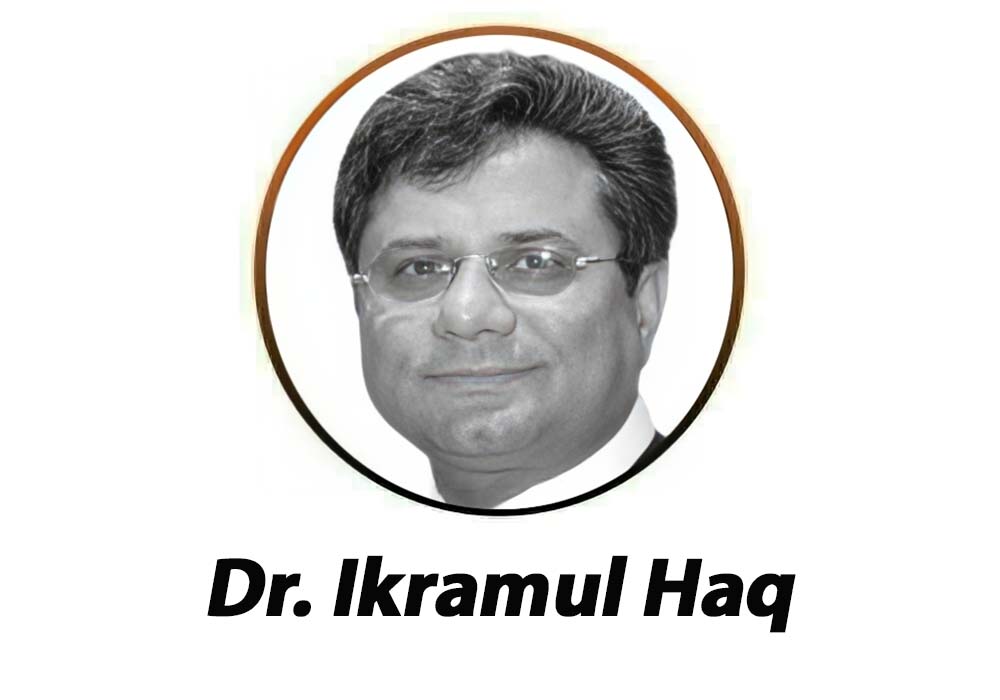
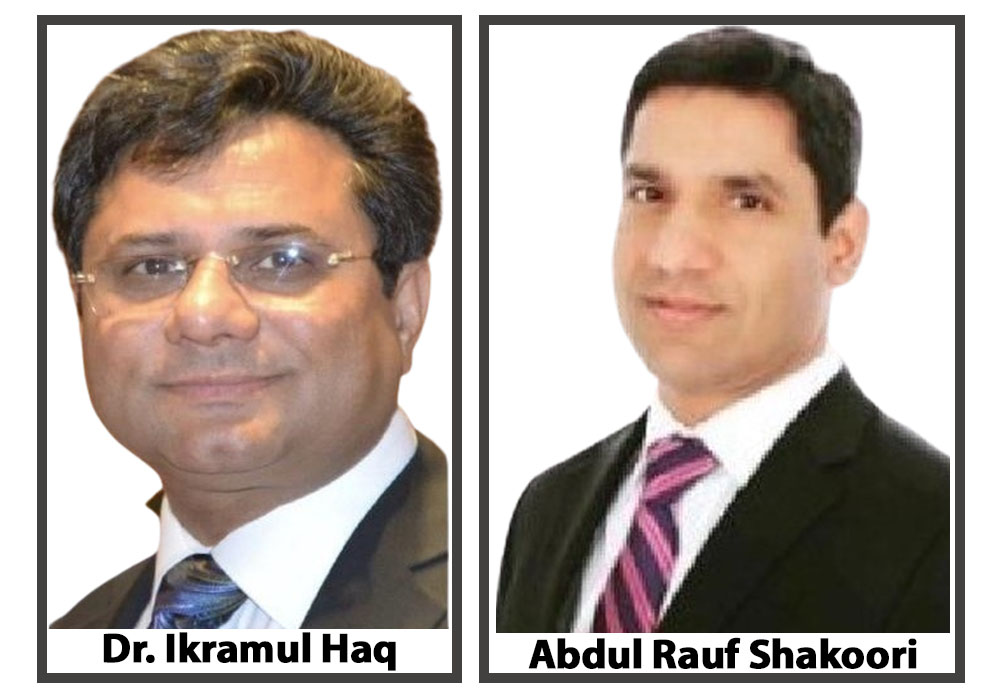
Dr. Ikramul Haq, Advocate Supreme Court, specializes in constitutional, corporate, environment, media, ML/CFT related laws, IT, intellectual property, arbitration and international tax laws. He holds an LLD in tax laws with specialization in transfer pricing. He was full-time journalist from 1979 to 1984 with Viewpoint and Dawn. He served Civil Services of Pakistan from 1984 to 1996.
He established Huzaima & Ikram in 1996 and is presently its chief partner. He studied journalism, English literature and law. He is Chief Editor of Taxation. He is country editor and correspondent of International Bureau of Fiscal Documentation (IBFD) and member of International Fiscal Association (IFA). He is Visiting Faculty at Lahore University of Management Sciences (LUMS) and member Advisory Board and Visiting Senior Fellow of Pakistan Institute of Development Economics (PIDE).
He has coauthored with Huzaima Bukhari many books that include, Tax Reforms in Pakistan: Historic & Critical Review, Towards Broad, Flat, Low-rate, and Predictable Taxes (third edition, 2024), Pakistan: Enigma of Taxation, Towards Flat, Low-rate, Broad and Predictable Taxes (revised/enlarged edition of December 2020), Law & Practice of Income Tax, Law , Practice of Sales Tax, Law and Practice of Corporate Law, Law & Practice of Federal Excise, Law & Practice of Sales Tax on Services, Federal Tax Laws of Pakistan, Provincial Tax Laws, Practical Handbook of Income Tax, Tax Laws of Pakistan, Principles of Income Tax with Glossary and Master Tax Guide, Income Tax Digest 1886-2011 (with judicial analysis).
He is author of Commentary on Avoidance of Double Taxation Agreements, Pakistan: From Hash to Heroin, its sequel Pakistan: Drug-trap to Debt-trap and Practical Handbook of Income Tax. Two books of poetry are Phull Kikkaran De (Punjabi 2023) and Nai Ufaq (Urdu 1979 with Siraj Munir and Shahid Jamal).
He regularly writes columns/article/papers for many Pakistani newspapers and international journals and has contributed over 3000 articles on a variety of issues of public interest, printed in various journals, magazines and newspapers at home and abroad.
_______________________________________________________________
Abdul Rauf Shakoori, Advocate High Court, is a subject-matter expert on AML-CFT, Compliance, Cyber Crime and Risk Management. He has been providing AML-CFT advisory and training services to financial institutions (banks, DNFBPs, Investment companies, Money Service Businesses, insurance companies and securities), government institutions including law enforcement agencies located in North America (USA & CANADA), Middle East and Pakistan.
His areas of expertise include legal, strategic planning, cross-border transactions including but not limited to joint ventures (JVs), mergers & acquisitions (M&A), takeovers, privatizations, overseas expansions, USA Patriot Act, Banking Secrecy Act, Office of Foreign Assets Control (OFAC).
Over his career he has demonstrated excellent leadership, communication, analytical, and problem-solving skills and have also developed and delivered training courses in the areas of AML/CFT, Compliance, Fraud & Financial Crime Risk Management, Bank Secrecy, Cyber Crimes & Internet Threats against Banks, E–Channels Fraud Prevention, Security and Investigation of Financial Crimes. The courses have been delivered as practical workshops with case study driven scenarios and exams to ensure knowledge transfer.
His notable publications are Rauf’s Compilation of Corporate Laws of Pakistan, Rauf’s Company Law and Practice of Pakistan and Rauf’s Research on Labour Laws and Income Tax and others.
His articles include: Revenue collection: Contemporary targets vs. orthodox approach, It is time to say goodbye to our past, US double standards, Was Due Process Flouted While Convicting Nawaz Sharif?, FATF and unjustly grey listed Pakistan, Corruption is no excuse for Incompetence, Next step for Pakistan, Pakistan’s compliance with FATF mandates, a work in progress, Pakistan’s strategy to address FATF Mandates was Inadequate, Pakistan’s Evolving FATF Compliance, Transparency Curtails Corruption, Pakistan’s Long Road towards FATF Compliance, Pakistan’s Archaic Approach to Addressing FATF Mandates, FATF: Challenges for June deadline, Pakistan: Combating the illicit flow of money, Regulating Crypto: An uphill task for Pakistan. Pakistan’s economy – Chicanery of numbers. Pakistan: Reclaiming its space on FATF whitelist. Sacred Games: Kulbhushan Jadhav Case. National FATF secretariat and Financial Monitoring Unit. The FATF challenge. Pakistan: Crucial FATF hearing. Pakistan: Dissecting FATF Failure, Environmental crimes: An emerging challenge, Countering corrupt practices .
The recent publication, coauthored by these writes with Huzaima Bukhari is:
Pakistan Tackling FATF: Challenges & Solutions, available at:
https://aacp.com.pk/book-detail/pakistan-tackling-fatf-challenges-and-solutions-35