faces potential red
|

UK faces potential red weather alerts as fifth heatwave of 2026 brings 36C temperatures

The United Kingdom is preparing for a fifth heatwave this summer, with temperatures projected to reach 36C and prompting the Met Office to consider issuing rare red weather alerts.

The extreme heat poses severe risks of disruption across railway lines and power networks, whilst compounding growing concerns over drought and food security.

Following a temporary drop in temperatures on Monday, heat levels across England and Wales are expected to climb rapidly. Sunday marked the 35th day in 2026 where British temperatures exceeded 30C, hitting a peak of 30.6C. Met Office meteorologist Tom Morgan indicated that mid-30s temperatures will become widespread on Wednesday and Thursday, with Thursday currently tracking as the hottest day of the week and holding a small chance of exceeding 36C.

The prolonged period of dry conditions has left half of England and Wales grappling with near-drought environments, and officials warn that further regions could soon be declared affected zones. Alongside potential infrastructure damage, authorities are highlighting risks to health and agricultural output.

The Met Office confirmed that formal amber and red warnings are under active consideration as the situation develops.

Meanwhile, the UK Health Security Agency has put yellow heat-health alerts in place across the East Midlands, West Midlands, South East, South West, East of England, Yorkshire and the Humber, and London. These health advisories remain active through Tuesday evening, with potential extensions if extreme conditions persist.

Similar Posts

  • |

    Hamas agrees to disarm as Gaza peace plan gains momentum

      A significant breakthrough appears to have been achieved in efforts to end the conflict in Gaza, although many challenges remain before lasting peace and recovery can become a reality. According to reports, Hamas has accepted a key proposal presented by international mediators, agreeing in principle to surrender its heavy weapons if Israeli forces completely withdraw from the Gaza Strip. The development has been described as an important step in a broader 20-point peace framework aimed at ending months of violence and creating conditions for rebuilding the war-ravaged territory. Despite this progress, several major issues remain unresolved. One of the biggest questions concerns who will take control of Hamas’s heavy weapons once they are surrendered. The agreement has yet to clarify whether an international peacekeeping force, a regional authority, or another body will oversee the disarmament process. Another critical issue is the sequence of implementation. It is still unclear whether Hamas will be expected to disarm before Israeli troops leave Gaza or whether both actions will occur simultaneously. The timeline is considered one of the most sensitive parts of the agreement because each side wants guarantees that the other will fulfill its commitments. Israeli officials have maintained a firm position on the matter. A senior Israeli official stated that the Israel Defense Forces (IDF) would not withdraw from the current military positions, known as the Yellow Line, unless Hamas undergoes what Israel considers genuine and verifiable disarmament. This stance highlights the deep mistrust that continues to exist between the two sides despite the latest diplomatic progress. Meanwhile, US President Donald Trump expressed optimism about the reported agreement while speaking at Camp David. He described Hamas’s decision as “a big step for the Middle East” and acknowledged that the situation remains extremely complicated. Trump suggested that while the agreement is encouraging, its success will ultimately depend on careful implementation and continued international engagement. For the people of Gaza, who have endured years of conflict, destruction, and humanitarian suffering, the agreement offers a rare sense of hope. Although the proposed deal will not immediately restore homes, hospitals, schools, or other essential infrastructure destroyed during the war, it could provide the foundation for a more stable future. If both parties fully implement the agreement, humanitarian organisations may be able to deliver significantly greater amounts of aid to civilians. The plan could also create opportunities for reconstruction projects, restore basic public services, and gradually re-establish more stable civilian governance across Gaza. However, the success of the peace initiative will depend on more than Hamas’s willingness to disarm. Israel will also need to fulfill its commitments, including the agreed military withdrawal, if the process is to move forward. Equally important will be the role of international mediators, who must ensure that both sides carry out their obligations at the same time. Previous ceasefire and peace agreements have frequently collapsed because of delays, disagreements, and mutual accusations of non-compliance. While many uncertainties remain, the latest development represents one of the most promising diplomatic openings in recent months. If implemented in good faith by all parties, it could become a decisive turning point, bringing Gaza closer to peace, humanitarian recovery, and long-term stability after years of devastating conflict.

  • | |

    25 family members swept into Muzaffargarh Canal, r…

    At least 25 members of a family reportedly fell into the Muzaffargarh Canal and were swept away by the strong current, triggering an urgent rescue operation. According to the available information, rescue teams have so far managed to recover five people from the canal. Efforts to locate and rescue the remaining family members are continuing. The incident has raised concerns over the difficult conditions faced by rescuers, particularly because of the canal’s flowing water. Calls have been made to the authorities to immediately reduce or temporarily stop the water flow in the canal to facilitate the search operation. Local residents and concerned citizens have urged the government and relevant departments to take emergency measures. They said controlling the water flow could help rescue teams search the canal more effectively and improve the chances of locating those still missing. Rescue personnel are continuing their search while families and local residents remain at the scene. The exact circumstances that led to so many members of the same family falling into the canal have not yet been established. Authorities are expected to provide further information as the rescue operation progresses. The number of people rescued, missing or recovered may change as search teams continue their efforts. The incident has also prompted appeals for public support. Residents have been asked to assist the affected family and share verified information about the rescue operation.

  • | | |

    Saudi Arabia rolls over $5bn Pakistan deposit

    Pakistan’s external financing pressure has eased after Saudi Arabia extended a $5 billion deposit for another three years, State Bank of Pakistan Governor Jameel Ahmad said on Wednesday. The rollover will give Pakistan additional breathing space as it manages its external debt obligations and works to strengthen its foreign exchange position. According to the governor, the Saudi deposit has been extended until December 2028. The development has reduced Pakistan’s gross external financing requirement for the current fiscal year to around $21.5 billion. Pakistan has received a total of $8 billion in deposits from Saudi Arabia. This includes $3 billion received in April this year. The remaining $5 billion had previously been rolled over annually. The latest arrangement provides Pakistan with a longer repayment period and reduces immediate pressure on its external account. Ahmad said lower interest costs on foreign debt had also helped reduce Pakistan’s financing requirements. He estimated the reduction at nearly $500 million. Pakistan continues to rely significantly on external financing to meet debt repayments and cover external account needs. The government is seeking to increase exports, attract investment and improve other sources of foreign exchange. The governor said the International Monetary Fund has projected Pakistan’s external financing requirements at around $30 billion for the next fiscal year. However, he said the estimate could be revised downward if the government succeeds in securing additional longer-term financing and improving external inflows. According to Ahmad, Pakistan’s $21.5 billion financing requirement includes around $7.3 billion in cash deposits and approximately $3.5 billion in foreign commercial loans maturing during the year. Pakistan also owes around $250 million to Kuwait through a long-standing cash deposit arrangement. The governor did not comment on reports concerning Pakistan’s request for a $10 billion credit facility from the United States. He said the federal government would be in a better position to respond to the matter. Pakistan also repaid a $1.3 billion Chinese commercial loan during July. The repayment temporarily reduced the country’s foreign exchange reserves to around $17.3 billion as of July 17. Ahmad said China was expected to refinance the amount, with the funds potentially arriving next month. Of Pakistan’s total external financing needs, around $7.5 billion represents net debt repayments. The country had already repaid approximately $2.2 billion during July, reducing the pressure for the remaining months of the fiscal year. The central bank governor also revealed that the State Bank had purchased around $9 billion from the local foreign exchange market during the previous fiscal year. The purchases were aimed at strengthening the country’s foreign exchange reserves. Over the past three years, the central bank’s total purchases from the market have reached around $28 billion. The State Bank expects workers’ remittances to continue supporting Pakistan’s external position. Remittances are projected to help finance a significant portion of the expected trade deficit. The central bank has also set a target of increasing foreign exchange reserves to $20.20 billion by the end of December 2026. Meanwhile, Ahmad told the Senate Standing Committee on Finance that the federal government had not allocated a subsidy for remittance transfers. He said commercial banks would now bear the cost of transferring workers’ remittances. Overseas Pakistanis sending money home would not be charged additional transfer fees. The committee also reviewed banking charges and services, including SMS alerts and card transactions.

  • | |

    50,000 cusecs surge through Ravi River

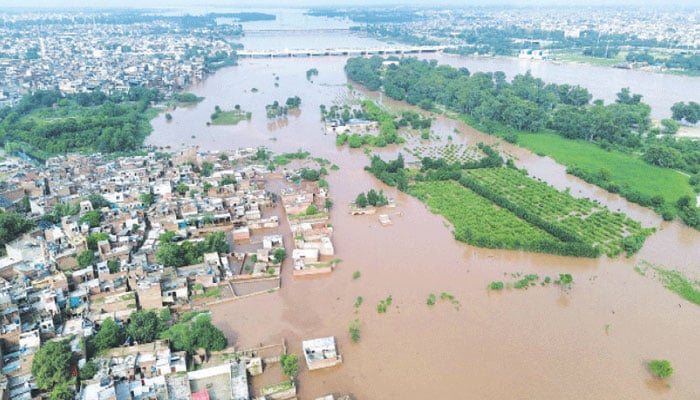
    A low-level flood has been recorded in the Ravi River near Kamalia after water levels increased at the Mil Fatyana point. Authorities have stepped up monitoring and emergency preparations as floodwater continues to move downstream. According to the Sub-Divisional Officer (SDO) Irrigation, around 50,000 cusecs of water is flowing through the Mil Fatyana section of the Ravi River. Officials are closely monitoring the river to assess any further rise in water levels and to ensure timely action if conditions worsen. The district administration has established flood relief camps in several vulnerable areas. The camps have been set up in Mil Fatyana, Kot Pathana, Adda Kalaira, Mauza Tara, Haveli Mai Safuran, Kot Karam Shah and Dedi. These facilities are intended to provide temporary shelter, food and emergency assistance to residents if evacuations become necessary. As part of efforts to improve disaster preparedness, Punjab has launched drone-based flood monitoring for the first time. The technology is being used to monitor river conditions, identify vulnerable locations and issue early warnings before floodwaters reach populated areas. Officials believe the system will help improve response times and reduce the impact of flooding. The rising water has already affected nearby agricultural land. Standing crops in Mil Fatyana, Khan Da Chak, Jhalar Sigla, Shahabal Shah, Basti Peepal Wala and Mauza Darsana have been submerged, raising concerns about crop losses and the financial impact on local farmers. The Irrigation Department has urged people living along the river belt to remain alert and cooperate with local authorities. Residents in low-lying areas have been advised to move to safer locations as a precaution against any further increase in water levels. Officials said surveillance of the Ravi River will continue around the clock. Rescue teams and local administration remain on standby to respond quickly if the flood situation intensifies. Authorities have also appealed to the public to follow official advisories and avoid unnecessary movement near the river until conditions become safe.

  • | |

    Punjab CTD arrests 54 terror suspects

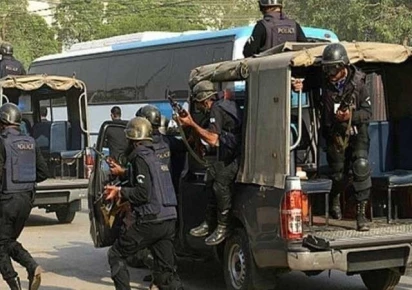
    The Punjab Counter Terrorism Department (CTD) has arrested 54 suspected terrorists, including five individuals alleged to have links with India’s intelligence agency, RAW, during a series of intelligence-based operations (IBOs) conducted across the province over the past two months. According to the CTD, a total of 419 intelligence-led operations were carried out in multiple districts to counter potential terrorist threats. During these operations, authorities questioned 422 individuals and detained 54 suspects believed to be associated with banned militant organisations. Officials said the five suspects accused of having links with RAW were identified as Waris Khan, Danish Ali, Roz Ali Khan, Wilayat Shah and Muhammad Aziz. The arrests were made in Lahore and Okara, while investigations into their alleged activities are continuing. The CTD stated that those taken into custody are suspected of having affiliations with several proscribed groups, including Fitna al-Khawarij, Daesh, Al-Qaeda in the Indian Subcontinent (AQIS), Lashkar-e-Jhangvi, Sipah-e-Sahaba and other outlawed organisations. The operations were conducted in several districts, including Lahore, Rawalpindi, Gujranwala, Faisalabad, Jhelum, Sargodha, Mianwali, Bhakkar, Sahiwal, Mandi Bahauddin, Pakpattan and Bahawalpur, as part of an ongoing campaign against terrorism. Authorities said a significant cache of weapons, explosives and other materials was recovered during the raids. The seized items included 7.9 kilograms of explosive material, 12 improvised explosive devices (IEDs), 50 detonators, safety fuse wire, pistols, rifles, ammunition, banned literature, pamphlets, flags, mobile phones and cash. The CTD also highlighted its wider security efforts, saying that during the past eight weeks it carried out more than 13,500 combing operations in coordination with local police and other law enforcement agencies. Nearly 495,000 people were screened during these operations, resulting in more than 1,100 arrests and over 1,000 registered cases.

  • |

    Pakistan, New Zealand seek stronger trade, investment and education ties

    WELLINGTON: Pakistan and New Zealand have agreed to intensify bilateral economic and commercial cooperation, with agriculture, livestock, information technology, education and services identified as key areas offering greater potential for collaboration. The understanding was reached during a series of high-level meetings held in Wellington on August 6, where officials from both countries reviewed the state of bilateral relations and discussed measures to expand trade and investment ties. According to a statement issued by Pakistan’s Foreign Office on Saturday, the discussions placed particular emphasis on improving market access and developing practical avenues for cooperation in sustainable agriculture. The two sides also explored the possibility of technical collaboration in areas such as wool production and plant protection. The meetings included the 5th round of Pakistan-New Zealand Political Consultations and the 3rd meeting of the Pakistan-New Zealand Joint Trade Committee (JTC). The talks provided both sides with an opportunity to assess existing cooperation and identify new sectors for mutually beneficial economic engagement. The Pakistani delegation at the Joint Trade Committee meeting was headed by Commerce Secretary Jawad Paul Khawaja, while the New Zealand side was led by Grahame Morton. Officials also examined ways to strengthen institutional arrangements that could facilitate closer economic cooperation between the two countries. Improving trade relations and creating a stronger framework for investment were among the areas discussed during the engagement. The political consultations were co-chaired by Ambassador Dr Syed Ali Asad Gillani, Additional Foreign Secretary for Asia Pacific at Pakistan’s Ministry of Foreign Affairs, and Grahame Morton, Deputy Secretary of the Americas and Asia Group at New Zealand’s Ministry of Foreign Affairs and Trade. During the consultations, the two delegations conducted a broad review of Pakistan-New Zealand relations and discussed opportunities to expand cooperation in several fields. These included economic development, science and technology, education, counterterrorism, efforts against transnational crime, high-level exchanges and people-to-people contacts. The officials also discussed regional and global developments and agreed on the importance of maintaining closer coordination at multilateral forums. Pakistan briefed New Zealand on its position regarding developments in the Middle East, including Islamabad’s efforts to help reduce tensions and promote peace. The Pakistani delegation also shared its assessment of the regional situation in South Asia, including developments concerning Indian Illegally Occupied Jammu and Kashmir (IIOJK) and Pakistan’s concerns over India’s actions relating to the Indus Waters Treaty. According to the Foreign Office, Morton acknowledged Pakistan’s constructive contribution to efforts aimed at promoting peace in the Middle East. Education cooperation gains momentum One of the major outcomes of the engagement was the signing of an Education Cooperation Arrangement between Pakistan and New Zealand. The agreement is expected to provide a foundation for closer cooperation in education and create opportunities for greater institutional engagement between the two countries. Education was also discussed as an important component of broader people-to-people relations, alongside science, technology and skills development. The latest consultations come as both countries seek to build on existing bilateral ties and diversify areas of cooperation. Agriculture and livestock, in particular, offer opportunities for technical exchanges and knowledge sharing, while the growing importance of information technology and services could provide additional avenues for economic collaboration. The two sides also stressed the need to translate discussions into practical initiatives that can improve bilateral trade and investment flows. Officials described the meetings as an opportunity to take stock of progress in Pakistan-New Zealand relations, explore emerging areas of cooperation and strengthen institutional mechanisms for future engagement. The discussions concluded with a reaffirmation of the two countries’ commitment to developing a broader, forward-looking partnership based on mutual economic interests, diplomatic coordination and stronger people-to-people connections.

Leave a Reply

Your email address will not be published. Required fields are marked *