notebook newsroom ethical

From notebook to newsroom: what ethical journalism looks like in an AI-powered world

By Nabiha Khalid

A specific sort of discomfort falls over a newsroom when the instruments of the profession begin to surpass the ethical standards intended to regulate them. Artificial intelligence is now capable of creating text, images, and videos that are indistinguishable from genuine human creations, and the consequences of this change are far from straightforward. When a false quote can be convincingly linked to a public figure, or when a deepfake video can spread more swiftly than any correction can be issued, the very core of journalistic integrity the assumption that reported facts reflect what has truly happened faces significant pressure. This is not an imagined crisis; it is the current reality in modern media.

I attened a workshop under the project titled “Digital Trust and Free Expression in the AI Era” at the Department of Media and Development Communication, University of the Punjab, supported by the U.S. Mission to Pakistan in partnership with the Pakistan-U.S. Alumni Network (PUAN) last week and we discuused in the wrodkshop that what ethical journalism requires in today’s context cannot depend solely on instinct. Verification must be a systematic process rather than something that happens by chance, involving a discipline of cross-checking, sourcing from multiple angles, and being technically adept at identifying manipulated media. Fact-checking, which used to be a background activity conducted before publication, must now be approached as a clear, continual practice that news consumers can observe and rely on. The difference between accurate reporting and unintentionally spreading misinformation often hinges on this one consistent habit of verification, applied uniformly rather than selectively.

It is equally important to emphasize responsible digital storytelling, understanding that journalists do not just deliver information but are guardians of public knowledge. In an information landscape dominated by AI, the journalist’s role evolves slightly: from being the first to break news to becoming the most trustworthy source to verify it. This shift does not imply a lesser role; rather, it could very well be the most crucial aspect of journalism in the coming years.

It is important to place this change in a broader historical context. Journalism has endured disruptive technologies in the past the telegraph shortened distances, the around-the-clock news cycle diminished patience, and social media altered the role of gatekeeping, enabling anyone with a smartphone to share information. Each disruption brought about its own ethical challenges, and each time, the industry persisted not by opposing the technology but by creating new standards to regulate it. Artificial intelligence is the newest and possibly the most significant example of this trend. What sets it apart from previous disruptions is the remarkable realism of synthetic content: earlier types of misinformation needed some level of narrative development, whereas AI can now generate the very evidence needed an image, a voice, a document ,Journalism has long relied on certain standards as evidence. This brings up a difficult yet essential question: can the technologies that jeopardize trust in journalism also aid in its restoration? The answer, with caution, is affirmative. News organizations are increasingly utilizing AI-assisted verification tools, reverse-image analysis, and metadata forensics to combat the misuse of these very technologies. This dual nature of AI serving both as a threat and a tool indicates that ethical journalism today necessitates a level of technical knowledge that was not mandatory a decade ago but has now become crucial. A journalist who lacks training in identifying the distinctive markers of synthetic media is, in a significant way, not adequately equipped for the current landscape.

Additionally, there is a less obvious yet significant challenge to address: the imbalance between the rapid production of AI-generated content and the measured approach of ethical journalism. News organizations facing pressure to publish swiftly areparticularly prone to this disparity, making it essential that rigorous editorial standards, rather than advanced technological capabilities, serve as the key protection.No matter how advanced a detection tool may be, it cannot take the place of an organizational culture which places a priority on accuracy rather than on immediacy.

The responsibility for digital trust does not fall solely on journalists. Public media literacy the ability to critically assess a viral image, to look for a second source before sharing, and to identify the emotional manipulation often present in synthetic content serves as a crucial second line of defense. In this regard, ethical journalism and an informed audience are interdependent: one cannot completely substitute for the lack of the other. The diligence of a newsroom holds little value if its audience hasn’t been prepared to recognize and demand that diligence in the first place. So, in an age when artificial intelligence is involved, ethical journalism does not call for rejecting technology; rather it involves basing the use of technology on firm principles of verification, transparency, and accountability. The future of the newsroom won’t be determined by how fast it publishes, but by the care with which it confirms the facts, and perhaps that is the most human safeguard we still have.

The views, thoughts, and opinions expressed in this blog are solely those of the author and do not necessarily reflect the official policy or position of the U.S. Mission to Pakistan or USEFP/PUAN.

Similar Posts

  • Why you keep opening the fridge

    Have you ever opened the fridge looked inside for a few seconds closed it without taking anything and then returned a short time later to do the same thing? If so you’re not alone. Psychologists say this habit is usually not caused by hunger.  Instead it is often linked to the way the brain responds to boredom routine and the search for something enjoyable. Experts explain that when people feel bored or mentally tired the brain looks for something that brings quick pleasure.  Foods high in sugar fat or salt can create a temporary feeling of comfort and satisfaction. As a result people may walk to the fridge without even realizing why. Opening the fridge can also become part of a daily routine. After spending time working on a computer or taking a short break many people automatically head to the kitchen even if they are not hungry. Another reason is curiosity. The brain hopes there might be something new or exciting inside such as a favorite dessert leftover food or a snack that was forgotten. Experts compare this behavior to checking a phone again and again for new messages even when you know there may not be any. Psychologists say habits often follow a simple pattern: a trigger a routine and a reward. For example feeling bored or finishing a task can trigger the habit of opening the fridge. Even if no food is eaten the action itself can provide a brief sense of interest or relief. People who work from home or spend long hours alone may be more likely to develop this habit because boredom can sometimes feel similar to hunger. Experts also say the environment plays an important role.  A bright kitchen a fridge that is easy to reach or food that is clearly visible can make people more likely to open the fridge. The next time you find yourself opening the fridge again, ask yourself one simple question “Am I really hungry or am I just looking for something to do?” According to psychologists the answer may surprise you.

  • | |

    The Sham Shaman

    In 1968, a graduate student in anthropology at the University of California, published a book that would reshape the publishing world. Titled The Teachings of Don Juan: A Yaqui Way of Knowledge. The book purported to be a faithful academic field report by Carlos Castaneda detailing his apprenticeship under an elderly Yaqui shaman named Don Juan Matus in the Mexican desert. Castaneda’s account became an overnight sensation as it blended desert mysticism, hallucinogenic plant rituals, and philosophical paradoxes. It sold millions of copies, earning him a doctorate from UCLA. This success made him a guru to icons like Bob Dylan, John Lennon, and Octavio Paz. A Life Built on Fabrications Long before he wrote about desert sorcery, Castaneda had mastered the art of reinventing himself. Born César Carlos Salvador Arana in Peru in 1925—the son of a humble watchmaker—he routinely rewrote his origin story. He claimed to have been born in Brazil, shaved years off his age, and concocted wild tales of fighting as a soldier in North Korea or working as a border spy. In reality, he fled Peru after fathering a child at thirteen, eventually making his way to Los Angeles in the 1950s. Ground-breaking Anthropological Discoveries. Yet beneath the celebrated field notes lay one of the most audacious literary fabrications in modern history. Don Juan Matus was not a real person. The desert apprenticeships never took place. Castaneda was not a devoted field researcher. He was a master illusionist who deceived prestigious academics and eager seekers alike. When Castaneda enrolled at UCLA, he found an academic environment eager for authentic indigenous wisdom and existential insight. Synthesizing disparate ideas into a singular narrative, he assembled Don Juan’s philosophical worldview by freely borrowing from European philosophy, Buddhist theology, ethnomethodology, and popular horror fiction. To his impressionable professors, the resulting texts appeared to be ground-breaking anthropological discoveries. Unraveling the Hoax While Castaneda’s books topped bestseller lists throughout the late 1960s and 1970s, critical cracks in his story soon began to widen into chasms. Skeptical researchers and anthropologists began scrutinizing the timeline and claims in his field notes. Archive Contradictions: UCLA library records revealed that on dates Castaneda claimed to be in the Sonoran desert learning shamanic secrets, he was actually signed into the university library reading room. Botanical and Cultural Errors: Experts on Yaqui culture noted that the spiritual concepts and language attributed to Don Juan bore almost no resemblance to authentic Yaqui traditions or language structures. Philosophical Echoes: Literary sleuths discovered that Don Juan’s most profound dialogues were near-verbatim adaptations of modern academic sociology and Western philosophical texts. Despite being systematically exposed by critics, Castaneda maintained his mystique. He avoided photo shoots, refused interviews, and cultivated an aura of secretive invulnerability. He also assured his devotees that any perceived discrepancies were simply part of a sorcerer’s duty to erase his personal history. The Guru’s Reclusive Cult and Legacy As public acclaim gave way to scholarly embarrassment, Castaneda retreated further into reclusiveness. In the 1990s, he launched a movement called Tensegrity. He promoted a series of physical movements he claimed were ancient Toltec magical passes. Critics quickly noted their striking resemblance to modern martial arts taught by a local Santa Monica instructor. Surrounding himself with a inner circle of devout disciples in Los Angeles, Castaneda governed his group with increasing paranoia until his death from cancer in 1998. Anthropology’s Ultimate Trickster Ultimately, Carlos Castaneda remains a complex figure in cultural history. His anthropological credentials were exposed as entirely fraudulent. His writings captured the yearning of an era desperate for spiritual transcendence beyond traditional structures. He stands as anthropology’s ultimate trickster. He’s a man who turned a fictional thesis into a million-dollar empire and proved that, given the right narrative, millions of people will gladly step through the looking glass.

  • Healthy weight may protect male fertility study

    Male infertility is becoming a growing health concern around the world and new research suggests that excess body fat may be one of the reasons behind the rising number of cases. A study from Aarhus University found that higher levels of body fat can negatively affect male reproductive health and reduce fertility. The researchers followed 1,058 young men, who were about 18 years and 9 months old when the study began. They measured body fat body weight and muscle mass to understand how body composition affects fertility. According to the researchers a healthy body fat percentage for men is generally between 8% and 19%, while 20% or higher is considered elevated. The study found that men with higher body fat had on average a 23% lower sperm count than those with healthier body fat levels. The researchers also found that excess body fat may disrupt hormones that play an important role in sperm production and overall reproductive health. Hormonal changes caused by obesity can reduce both sperm  quality and fertility. Experts say maintaining a healthy weight through regular exercise a balanced diet enough sleep and stress management can support both overall health and reproductive health. Avoiding smoking limiting alcohol and managing long term medical conditions may also help improve fertility. The findings were published in the journal Human Reproduction. The study supports earlier findings from the World Health Organization, which reported in 2023 that about 17.5% of adults worldwide experience infertility at some point in their lives. The WHO also noted that infertility affects people in high middle and low income countries making it a global public health challenge. Researchers say that while infertility can have many causes keeping body fat at a healthy level may be an important step in protecting male fertility and improving reproductive health.

  • “A Glimpse After Twenty-One Days”

    By Amar Qawi If, someday, the entire sky were covered in darkness—without a moon, without stars, without even the faintest sparkle—would a lover whose heart glows like moonlight still be able to live beneath such a sky? That day, I sat on the rooftop of my house searching for the moon. But fate had something else in store. Instead of appearing in the heavens, the moon descended into the street below to grant me a glimpse after twenty-one long days. I did not dwell much on that radiance because something similar had happened to me earlier, on the fifteenth of July. Therefore, I took it as nothing more than an unfulfilled dream rather than believing that the moon belonged to me. In truth, even considering someone as one’s possession is itself a form of poverty. Since childhood, society has taught us that air, fire, and water are the necessities of life. Yet I feel sorry for those teachers who remain unaware of a deeper truth: human beings do not survive by air, fire, and water alone. Love, inspiration, and moonlight are equally essential for the soul to remain alive. A person may survive in this highly technical age amidst bombs and weapons, but without the sight of the beloved, the soul can never truly live. Just as air, fire, and water are essential to human existence, so too is the vision of the beloved. The truth is, I was not sitting on the rooftop in search of the moon in the sky. I was waiting for that moon from whom my moonbird-like heart had been separated for what felt like centuries. And yet, even when I found that moon, it was only within my dreams. Twenty-one days after the fifteenth of July, as I walked through that familiar street, she passed by me just as a shadow silently slips along a wall in the darkness. She is my shadow, and I am her reflection. She is my reflection, and I am her moonbird. She is the full moon to me. Whenever she shines like the full moon, my heart, like a restless chakor bird, longs to fly toward her and kiss her beauty. But alas, those delicate butterfly-like wings eventually grow weary from endless flights inspired by love. When I saw her in that street after twenty-one days, the fallen Taj Mahal of my imagination began to rebuild itself. The shy poet hidden within me blossomed with the spirit of Sheikh Ayaz’s immortal lines: “O moon! Who has stolen your sleep? Surely the chakor birds have enchanted you.” Just as Sheikh Ayaz expressed, something similar happened to me. When I first met her, I had no intention of falling in love. Yet I vividly remember that when we parted, dryness had settled upon our lips while tears embraced our eyes. It was as though the Urdu poet had written about our separation: “When we parted, my poem remained within her eyes— A poem that had never yet been recited to anyone.” When she passed beside me after twenty-one days, my eyes swore by the little golden nose ornament she wore and silently recalled the beautiful verse of Shah Abdul Latif: “Who says, my beloved, that you should walk gently? Place your feet upon my eyelashes without hesitation. Leave behind all fear of causing pain, For your passage itself is my greatest joy.” When even her tongue could not gather the courage to speak to me, my own eyes, too, denied themselves the permission of truly beholding her after those twenty-one days. Love is not dependent upon union; it longs for the meeting of souls. Therefore, for a lover like me, a glimpse after twenty-one days carries no real meaning if the beloved merely passes by like a silent shadow in the darkness. In the end, I wish to encourage the young people of our society who lose their dreams and their future while chasing someone who does not value their love. As an Urdu poet beautifully said: “If you have changed, then so be it. If not you, then someone else. And if not someone else, then another.” Thus, that glimpse after twenty-one days holds no value for me if it is wrapped in deception, falsehood, and unfaithfulness. To me, that meeting means nothing if pride and arrogance overshadow love. She merely appeared in the street and passed by like a shadow. Yet even today, I continue to wait for her, because my heart still loves that moon-like beloved with the devotion of a chakor bird. Even after twenty-one days, she remains steadfast in her pride. Still, the beloved’s pride is a matter of honor for the lover, for the beloved herself is both the lover’s pride and the most precious treasure he possesses. He can be reached at alikareemshaikh123@gmail.com

  • Dark spots? Expert tips for clear skin

    Clear healthy skin is something many women want but sun exposure acne marks hormonal changes skin irritation and poor skincare can all lead to dark spots on the face. Many people try quick home remedies or low quality creams to remove these marks but these products can sometimes make the skin more sensitive instead of improving it. Experts say it is important to understand the cause of dark spots rather than just trying to hide them. •What causes dark spots? Dark spots can appear after acne heals from skin injuries or irritation hormonal changes or too much sun exposure.  In some cases using skincare products that irritate the skin can also lead to discoloration. •Simple habits for healthier skin A daily skincare routine can help keep your skin clear.  Wash your face every day to remove dirt sweat and makeup especially before going to bed. Using sunscreen every day is also important. Dermatologists say sunlight can make existing dark spots darker and increase the risk of new ones forming. •Be careful with home remedies Natural ingredients such as rose water honey and yogurt are commonly used in home beauty treatments but they may not suit every skin type. Avoid applying lemon juice or other acidic ingredients directly to your face as they can cause irritation redness and make dark spots worse. •When to see a dermatologist If your dark spots keep getting worse return frequently or do not improve despite proper skincare it is best to consult a dermatologist.  Finding the real cause of the problem is the first step toward choosing the right treatment.

  • |

    Why marginalia is devised for conversation

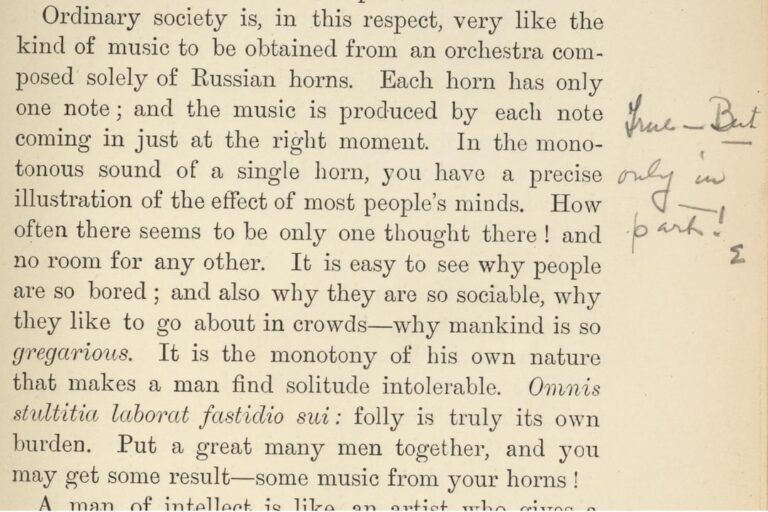
    For centuries, books were treated as sacred, untouchable artifacts. Readers were taught to open a spine with reverence, turn pages by the edges, and never, under any circumstance, mark the paper. But in the modern reading culture, a quiet revolution has taken root: marginalia is no longer viewed as defacement. Today, it is recognized as a vital form of active intellectual engagement. Marking up a book transforms reading from a passive act of consumption into an active. Reading is a two-way dialogue between the reader and the writer. When you read with a pencil, pen, or sticky tab in hand, your relationship with the text fundamentally shifts. You cease to be a distant spectator observing someone else’s thoughts. In other words, you become a collaborator. Underlining a sentence, drawing an exclamation point next to a surprising plot twist, or a counterargument in the margin forces your brain to process language at a deeper level. It requires you to articulate why a passage resonated or failed. Furthermore, annotated books serve as personal time capsules. When you reopen a novel you marked up five or ten years ago, it offers an unfiltered reflection into who you were at that exact moment in your life. You might find yourself cringing at an old marginal note. Then you agree passionately with a circled phrase, or realizing that a passage you completely ignored years ago now carries personal meaning. The book becomes a physical record not just of the author’s story, but of your own cognitive and emotional evolution. Edgar Allan Poe once wrote: ‘In getting my books, I have been always solicitous of an ample margin … for the facility it affords me of pencilling suggested thoughts, agreements and differences of opinion …’ Practically speaking, marginalia also sharpens critical thinking. Students, scholars, and casual readers alike find that tracking themes through custom color-coded tabs or brief summary notes at the end of chapters drastically improves retention and comprehension. It prevents the common phenomenon of eye-scanning where your eyes move across sentences while your mind wanders elsewhere. Annotation demands presence. Ultimately, scribbling in the margins strips away the artificial pedestal we often place books upon. It reminds us that literature is not meant to sit pristine and untouched on a display shelf. Literature is meant to be wrestled with, questioned, celebrated, and lived in. The next time you open a book that challenges or moves you, don’t hold back. Pick up a pen, claim the empty white space on the page, and join a conversation that has been taking place across centuries.  

Leave a Reply

Your email address will not be published. Required fields are marked *