US Navy begins testing 2,000-nautical-mile underwa…
WASHINGTON: The US Navy has begun testing a new low-cost unmanned underwater vehicle designed to travel more than 2,000 nautical miles, marking another step in the development of long-endurance autonomous maritime technology.
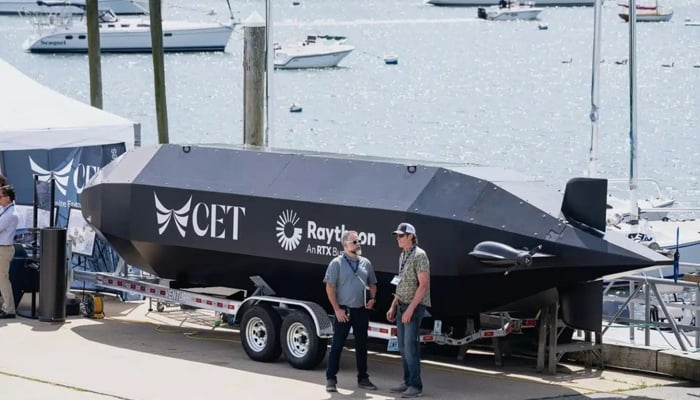
According to US media reports, the new underwater drone, known as HADALUS, has been developed for missions that require long periods of operation without a crew on board. Its developers say the system could offer a lower-cost alternative to other vehicles in the same category.
The 34-foot-long vehicle features a carbon-fibre outer structure and has a cross-section of about six feet. It is equipped with sonar and other electronic systems intended to support underwater operations and data collection.
The reported range of more than 2,000 nautical miles is among the system’s most notable features. Such endurance could allow an unmanned vehicle to operate over considerable distances before returning to its launch area or requiring further support.
The US Navy has increasingly explored unmanned maritime systems as a way to expand underwater surveillance and other capabilities while reducing the need to place personnel directly in potentially hazardous environments.
The HADALUS trials will help assess how the vehicle performs in real-world conditions, including its endurance, navigation, communications and onboard systems.
Developers say keeping the platform relatively inexpensive is another key objective. If testing proves successful, the technology could become part of a broader effort to deploy larger numbers of autonomous underwater vehicles for extended maritime missions.
The latest trial highlights the growing competition among major military powers to develop longer-range, more capable and cost-effective unmanned systems beneath the sea.