cambodia blocks return

Cambodia Blocks Return of Thais at Poipet Border Crossing Indefinitely

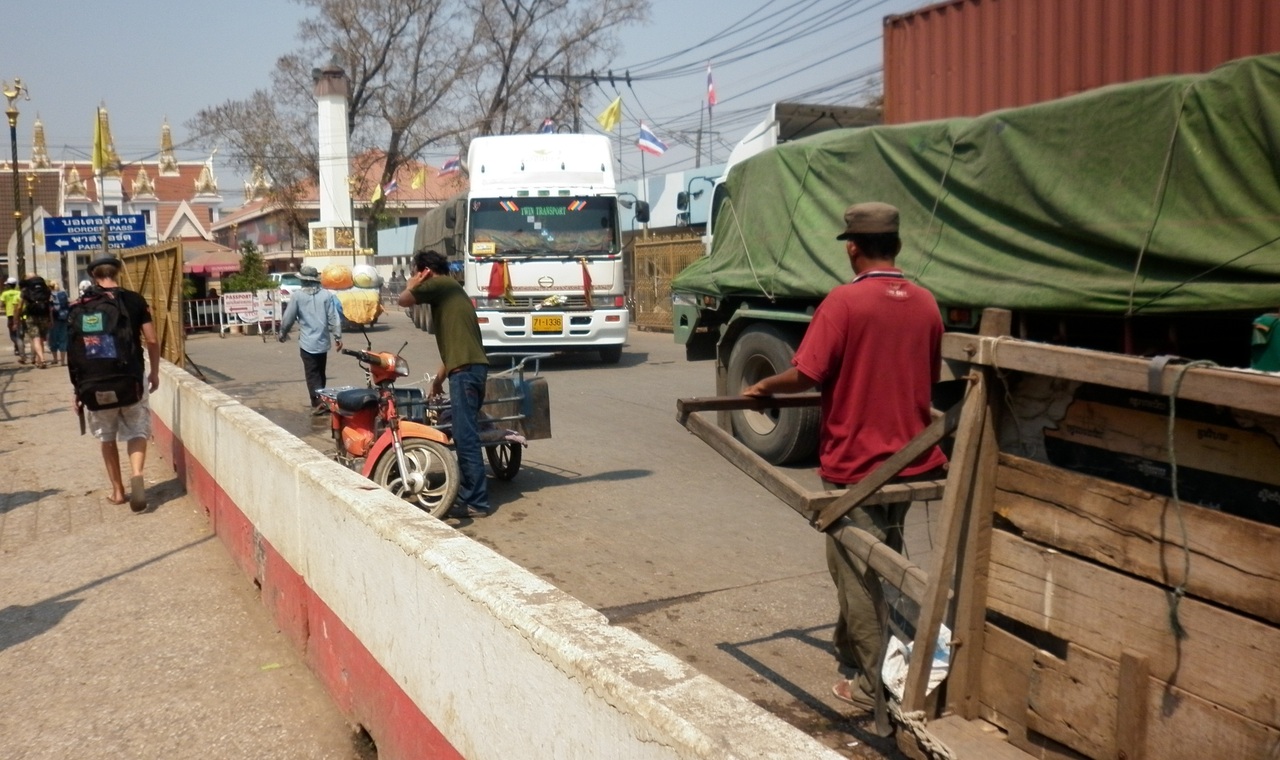
BANGKOK – Thousands of Thai nationals remain stranded in the Cambodian border town of Poipet after authorities there indefinitely postponed a promised humanitarian corridor that was scheduled to open on Saturday. The move has left approximately 3,000 Thais who gathered at the checkpoint with their belongings unable to return home.

Thai Embassy Seeks Clearance as Cambodia Blocks Thais from Returning Home

Cambodian officials had earlier agreed to open the Poipet crossing, opposite Thailand’s Khlong Luek checkpoint in Sa Kaeo province, for a three-hour window on Saturday afternoon to allow the return of Thais, many of whom work in the local casino industry. Thai authorities mobilized a rapid response, deploying buses, trucks, ambulances, and support personnel within 20 minutes to receive the returnees.

However, at the designated 1 p.m. start time, Cambodian officials informed their Thai counterparts that the release was cancelled with no new timetable provided. Thai personnel and vehicles were subsequently withdrawn from the area, and journalists were asked to leave for safety reasons.

The stranded Thais had initially gathered at the border on Thursday, hoping to cross as fighting escalated along the frontier. They were reportedly pushed back from the immediate checkpoint area by Cambodian soldiers. The Thai ambassador in Phnom Penh had formally requested Cambodia’s Interior Ministry to allow their return on humanitarian grounds.

In a related development, Cambodian Senate President and former Prime Minister Hun Sen called on the government on Saturday afternoon to suspend all cross-border travel for both Thai and Cambodian citizens, citing safety concerns. He advised Cambodians working in Thailand and Thais in Cambodia to remain where they are until further notice.

Thai authorities estimate that about 6,000 nationals have sought to leave Cambodia since the latest clashes began. The Thai military’s Burapha Task Force emphasized that it had earlier repatriated over 7,000 Cambodian nationals without conditions, stating that civilians should not be used as leverage in the military conflict.

Ceasefire Claim Unravels as Thai-Cambodian Border Fighting Continues

Meanwhile, fighting continued for a sixth day along the Sa Kaeo border on Saturday. Heavy artillery exchanges were reported in the Ban Nong Chan (Chok Chey) area, with Thai forces conducting operations to retake control. The Burapha Task Force reported that control of the area had not yet been secured, while Thai forces stated they had regained control of Ban Nong Ya Kaeo (Prey Chan), though sporadic fighting continued. The frontline in Ta Phraya district remained quiet.

-Thailand News (TN)
Similar Posts

  • Cambodia Threatens UN Maritime Mechanism If Thailand Withdraws From 2001 Border Agreement

    BANGKOK — Cambodia has signaled it will escalate a long-standing maritime boundary dispute with Thailand to international legal mechanisms under the United Nations if Bangkok proceeds with plans to withdraw from a bilateral memorandum of understanding signed in 2001, according to senior Cambodian foreign ministry officials. 8.2 Billion Baht Asset Haul Linked to Cambodian Scam […]

  • | |

    Mir Raza case deepens as guest house probe expands

    A major development has emerged in the investigation into the death of Karachi businessman Mir Raza Ali. Investigators have obtained further details about the guest house linked to the case. The premises is located near the place where Mir Raza’s body was recovered. According to investigation findings, the guest house was registered in the name of a man identified as Liaquat Ali. The property itself is reportedly owned by a woman. Police verification of the property was carried out on June 1, 2026. Investigators also found that the guest house was not registered on the Hotel Eye application. Police had made registration on the system mandatory for hotels and guest houses. After the discovery of Mir Raza’s body, police sealed the guest house. Six people working at the premises were taken into custody for questioning. Their statements are being recorded as investigators try to determine whether the guest house has any connection with the case. So far, police have detained 21 people in connection with the investigation. The detainees include Mir Raza’s friends and business partners. Investigators are examining their statements and movements. A five-member investigation committee also held a meeting under the leadership of DIG Crime Branch Amir Farooqi. The committee is reviewing the case in light of new medical and forensic evidence. Police have also expanded the charges in the case. Sections 365 and 302 were already included in the FIR. Section 201 has now been added. The provision relates to concealing, removing or destroying evidence connected to an offence. The development follows a second post-mortem conducted after Mir Raza’s grave was exhumed on August 8. The preliminary medical findings reportedly showed several injuries on his body. The report indicated a gunshot injury to the back. The entry wound was smaller, while the wound on the front side was larger. Medical findings suggest that the bullet entered from the rear and passed through the body. The examination also found fractured ribs. Several injuries were observed on Mir Raza’s head and face. A wound and fracture measuring about 12 centimetres were found on his right thigh. Blood marks were also detected in tissues in the lower part of his body. Further examination revealed a deep injury and fracture in his jaw. Injuries were also found on his nose and other parts of his face. Investigators collected 17 samples during the exhumation. Samples from Mir Raza’s parents were also obtained for DNA comparison. The samples are expected to be examined at the forensic laboratory of the University of Karachi. After the samples were collected, Mir Raza’s body was reburied on the same day. Mir Raza Ali Khan had gone missing from the PECHS area on July 28. Police said he left his home at around 4:09am in an online taxi. His body was found two days later in Gulistan-e-Johar. Police officials said the body was in a badly damaged condition. A gunshot wound was also found on his chest. Investigators also found that Mir Raza’s social media accounts had been deactivated a day before his body was recovered. His family has consistently maintained that he was murdered. His father said Mir Raza was preparing for his marriage and was excited about starting a new phase of his life. His nikah had been scheduled for August 30 at Baitul Mukarram Mosque in Gulshan-e-Iqbal. The latest investigation has brought renewed attention to the guest house and the people associated with it. Police are now examining medical evidence, forensic samples, CCTV footage, statements and other available material.

  • Thai Government Confirms Sufficient Fuel Supplies During Songkran Holiday

    BANGKOK — The government has confirmed there are sufficient fuel supplies to meet demand during the upcoming Songkran holiday, as authorities intensify nationwide distribution and monitoring efforts to ease public concerns over possible shortages during one of Thailand’s busiest travel periods, the Bangkok Post reported. Thai Government to Roll Out Fuel Relief Measures from April […]

  • Rescued Thai Scam Victim in Cambodia Warns of Beatings, Organ Sales

    TRAT – Thai authorities have repatriated 32 nationals who escaped from scam centers in Cambodia, with one survivor describing brutal conditions including beatings, fatalities, and the alleged sale of organs. The group crossed back into Thailand on January 31, 2026, following coordination between Thai officials and the embassy in Phnom Penh. Chinese Social Media Influencer […]

  • Thailand Fuel Prices Hit by Middle East Unrest and Shipping Disruptions

    BANGKOK, Thailand — Fuel prices in Thailand have surged for a second consecutive day, driven by escalating geopolitical conflicts in the Middle East and severe disruptions to global maritime shipping routes. The cumulative two-day increase has added 1.75 baht per litre to pump prices, prompting the Fuel Fund Executive Committee to implement urgent adjustments to […]

  • | | | |

    Roman-Era masterpiece found hidden beneath fields …

    Archaeologists have uncovered a stunning 4th-century Roman mosaic beneath farmland in England, offering new insight into life during the period when Britain was part of the Roman Empire. The remarkable mosaic was discovered at the remains of an ancient Roman villa in Devon. Made from thousands of colorful stones arranged into intricate floral patterns, the artwork is believed to date back to the fourth century AD. The discovery provides fresh evidence of the wealth, architecture and cultural influence that existed in Roman Britain. The Roman Empire controlled much of Britain from around AD 43 until around AD 410, leaving behind numerous settlements, villas, roads and other archaeological remains. Alongside the mosaic, archaeologists discovered a large and sophisticated Roman bathhouse near the site. The complex reportedly contained several small pools, walls decorated with colorful plaster and a range of other ancient artifacts. The excavation was carried out over a two-month period by archaeologists from the University of Exeter and Cotswold Archaeology. Volunteers also participated in the work, helping researchers investigate the agricultural land located between the Devon villages of Hill Barton and Sampford Peverell. The archaeological team already knew that the Roman villa and surrounding working areas were potentially important for understanding the spread of Roman culture across Devon. However, the latest findings have revealed that the site was considerably larger and more significant than previously understood. Project leader Dr Susan Greaney said the discoveries could help researchers better understand Roman cultural influence and its interaction with local communities in the region. The detailed mosaic is particularly significant because such decorative artwork can provide clues about the status and lifestyle of people who lived at Roman villas. Its elaborate design and the presence of a substantial bathhouse suggest that the site was an important settlement rather than a simple rural dwelling. Archaeologists will now continue studying the discoveries and artifacts recovered from the site. Researchers hope the evidence will shed more light on how people lived, worked and adopted Roman customs in southwest England nearly 2,000 years ago. The Roman mosaic discovered in Devon is another reminder of how much of Britain’s ancient history remains hidden beneath modern farmland. Further archaeological investigation could reveal even more about the communities that lived in the region during the final centuries of Roman rule.

Leave a Reply

Your email address will not be published. Required fields are marked *