jpmc doctor seeks
| |

JPMC doctor seeks relief amid patient death contro…

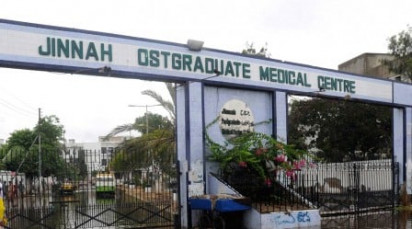
A senior doctor at Jinnah Postgraduate Medical Centre (JPMC) has asked to step down from her responsibilities amid controversy surrounding the death of a 65-year-old patient who was shifted from the hospital’s emergency department to the National Institute of Cardiovascular Diseases (NICVD) on July 28.

Dr Sanobar Sikandar, JPMC’s only senior emergency medicine specialist, submitted a request to the hospital’s Executive Director seeking relief from her duties as an assistant professor of medicine. She cited mounting professional pressure, internal interference and what she described as an unhealthy working environment.

Dr Sanobar said the hospital administration criticised her after asking her to explain the circumstances surrounding the patient’s death. She said the situation had made it increasingly difficult for her to continue managing her medical, teaching and administrative responsibilities effectively.

In her application, she highlighted what she described as a lack of professional respect in the emergency department, political interference and inappropriate conduct by some junior doctors. She said these issues had caused her severe mental stress and made it difficult to continue working under the prevailing conditions.

The Young Doctors Association (YDA) Sindh has backed Dr Sanobar and urged the JPMC administration to address the dispute immediately.

YDA Sindh Chairman Dr Mehboob Noonari said Dr Sanobar is the hospital’s only FCPS assistant professor in emergency medicine. He noted that she also serves as faculty for the FCPS programme and supervises trainee doctors.

Dr Noonari warned that her departure could seriously disrupt emergency medicine training at JPMC and may even put the FCPS programme at risk of closure.

He also alleged that the administration was pressuring Dr Sanobar to protect the doctor who was in charge of the night shift when the incident occurred. He questioned why the night-shift in-charge was being shielded and demanded that hospital authorities clarify the matter.

The YDA chairman further claimed that senior doctors had questioned Dr Sanobar over her decision to issue an explanation regarding the patient’s death, raising concerns about the handling of the case within the hospital.

Similar Posts

  • | | |

    Pakistan’s top civil-military leadership in Riya…

    Prime Minister Muhammad Shehbaz Sharif and Chief of Army Staff and Chief of Defence Forces Field Marshal Syed Asim Munir arrived in Saudi Arabia on Thursday for high-level talks with the Kingdom’s leadership, as Pakistan seeks to consolidate its strategic partnership with Riyadh and build on its growing diplomatic engagement in efforts aimed at promoting peace and stability across the region. The visit, at the invitation of Saudi Crown Prince and Prime Minister Mohammed bin Salman bin Abdulaziz Al Saud, comes at a pivotal moment in regional geopolitics and is expected to focus on security cooperation, defence collaboration, economic partnership and coordination on key regional developments. Accompanying the prime minister are Deputy Prime Minister and Foreign Minister Senator Ishaq Dar, Defence Minister Khawaja Muhammad Asif, Information Minister Attaullah Tarar and Special Assistant Tariq Fatemi. Prime Minister Shehbaz Sharif is scheduled to hold extensive discussions with Crown Prince Mohammed bin Salman on expanding the strategic partnership between the two brotherly nations, reviewing the regional security environment and enhancing cooperation across defence, investment and economic sectors. The presence of Field Marshal Syed Asim Munir in the delegation underlines the growing strategic dimension of Pakistan-Saudi Arabia relations. Security analysts say the visit reflects Islamabad’s commitment to strengthening defence coordination with Riyadh at a time when regional stability remains a shared priority. The visit also comes as Pakistan projects an increasingly active diplomatic profile in regional affairs. Islamabad has consistently advocated dialogue over confrontation and has supported international efforts to reduce tensions and encourage peaceful engagement in the Middle East. Pakistani officials have maintained that the country’s foreign policy is centred on promoting regional peace, stability and constructive diplomacy. Pakistan’s diplomatic engagement in recent months, including its support for efforts to encourage dialogue between regional and international stakeholders, has reinforced its image as a country seeking political solutions to complex regional challenges. Officials say Islamabad remains committed to facilitating an environment conducive to peace and stability while maintaining close coordination with key partners, including Saudi Arabia. Pakistan and Saudi Arabia share decades of historic brotherhood founded on mutual trust, shared faith and unwavering support. Over the years, the relationship has evolved into a comprehensive strategic partnership encompassing defence, security, investment, energy and regional cooperation. The recent defence cooperation pact between the two countries has further strengthened bilateral ties, adding greater institutional depth to military collaboration and opening new avenues for strategic coordination. Officials believe the agreement reflects the confidence both leaderships have in each other’s commitment to safeguarding regional peace and collective security. Against the backdrop of rapidly changing geopolitical dynamics, the Riyadh meetings are expected to reaffirm the close alignment between Islamabad and Riyadh on regional and international issues while exploring fresh opportunities for economic investment and defence cooperation. Besides his official engagements, Prime Minister Shehbaz Sharif will perform Umrah and offer prayers at the Prophet’s Mosque in Madinah. Officials described the visit as another milestone in Pakistan-Saudi Arabia relations, expressing confidence that the high-level engagement will further strengthen one of Pakistan’s most important strategic partnerships and reinforce Islamabad’s continuing commitment to regional peace, dialogue and stability.

  • | |

    Oil prices rise more than $2 amid falling US inven…

    Global crude oil prices climbed by more than $2 per barrel in the latest trading session, as a decline in US crude inventories boosted market sentiment and supported prices. According to Reuters, the rise came after traders responded to signs of tighter oil supplies in the United States. A drop in crude stockpiles often signals stronger demand or reduced availability, which can encourage investors to push prices higher. Oil prices had fallen in the previous session after tensions between Washington and Tehran showed signs of easing temporarily. However, the market regained momentum in the latest session as supply concerns returned to focus. Brent crude futures gained $2.71, or 3.2%, to reach $86.80 per barrel. Meanwhile, US West Texas Intermediate (WTI) crude futures rose $2.26, or 3.4%, to trade at $81.95 per barrel. Market participants continue to closely monitor developments in the Middle East, particularly any changes in US-Iran relations, as well as global supply conditions. Any renewed tensions in the region could further affect oil markets because of the Middle East’s importance to global energy supplies. Analysts also expect traders to keep an eye on upcoming inventory data and broader demand trends. A combination of falling stockpiles, geopolitical uncertainty and concerns over supply could continue to create volatility in international oil prices in the coming sessions.

  • | |

    Pakistan rise in WTC standings after West Indies w…

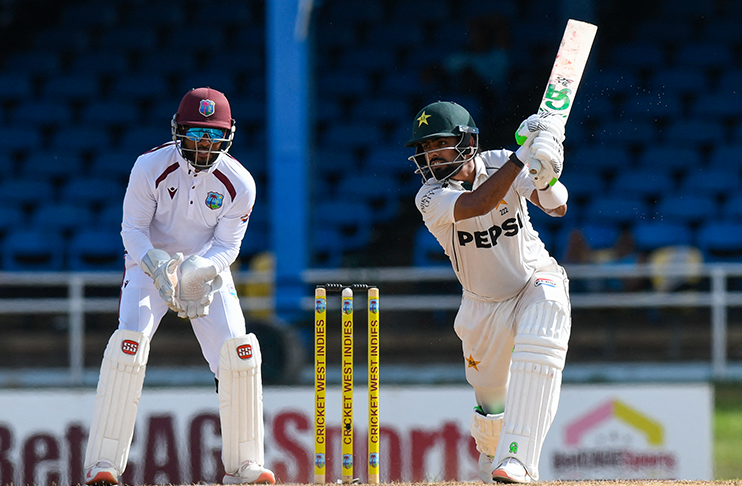
    Port of Spain: Pakistan breathed new life into their ICC World Test Championship (WTC) 2025-27 campaign after defeating the West Indies by eight wickets in the second and final Test, a victory that lifted them off the bottom of the standings and restored confidence under new captain Babar Azam. The convincing win helped Pakistan move up to seventh place in the WTC table with a points percentage of 22.22, replacing the West Indies, who dropped to the bottom after another disappointing result. Pakistan have now won two of their six matches in the current championship cycle, while the Caribbean side have managed just two victories in 12 Tests. At the top of the standings, Australia remain the dominant force with seven wins in eight matches and a remarkable winning percentage of 87.50. Defending champions South Africa occupy second place, followed by New Zealand, Bangladesh, India, Sri Lanka, England, Pakistan and West Indies. Pakistan entered the Caribbean series under fresh leadership after Babar Azam replaced Shan Masood as Test captain. However, the new chapter began on a disappointing note as the visitors suffered a 90-run defeat in the opening Test at Tarouba. The Green Shirts responded in style in the second Test at Queen’s Park Oval with an impressive all-round performance. After electing to bat, the West Indies posted 344 thanks to fighting half-centuries from captain Roston Chase and Justin Greaves. Pakistan answered with determination as opener Abdullah Shafique produced a magnificent unbeaten 160, anchoring the innings from start to finish. Captain Babar Azam added a composed half-century as Pakistan reached 387, taking a valuable first-innings lead of 43 runs. The turning point came in the West Indies’ second innings when Pakistan’s spin duo completely dominated the hosts. Sajid Khan and Ali Usman claimed four wickets each to dismiss the West Indies for just 117, leaving Pakistan a modest target of 75. Pakistan completed the chase comfortably with eight wickets to spare. Shafique and Babar remained unbeaten on 24 each, guiding their team to its first away Test victory since July 2023. Teams Matches Wins Losses Draw Points Winning Percentages Australia       8    7      1     0    84        87.50 South Africa       4    3      1     0    36           75 New Zealand       6    4      1     1    52        72.22 Bangladesh       4    2      1     1    28        58.33 India       9    4      4     1    52        48.15 Sri Lanka       4    1      1     2    20        41.67 England      13    4      8     1    38        24.36 Pakistan       6    2      4     0    16        22.22 West Indies      12    2      8     2    30        20.83   The morale-boosting triumph not only squared the two-match series 1-1 but also revived Pakistan’s hopes in the World Test Championship race. With Babar Azam’s captaincy beginning to take shape and key players delivering under pressure, Pakistan will now look to build momentum in the remainder of the WTC cycle.

  • Thar communities demand fair share of coal royalties

    MITHI: The representatives of communities affected by the Thar Coal project, activists of civil society organisations, lawyers, journalists and youth groups on Wednesday adopted a 12-point resolution calling for a comprehensive legal framework to govern the distribution and utilisation of coal royalties, describing the issue of Thar Coal Royalty as central to the region’s future development. The resolution was adopted at a consultative meeting held at the Islamkot Press Club, where participants urged the provincial government to recognise the legal and moral claims of Tharparkar’s residents over royalties generated from coal extracted from the desert. The participants demanded the establishment of a Thar Coal Royalty Fund, proposing that at least 50 per cent of royalty revenues be earmarked for the development of Tharparkar. They also called for annual white papers detailing royalty collections and expenditures, independent financial audits, and legislation to ensure transparent management of the fund. According to the resolution, the proposed fund should be administered by a representative board comprising members from affected villages, women, youths, civil society, locally elected representatives and technical experts. The resolution further proposed that royalty revenues be invested in healthcare, education, clean drinking water, environmental restoration, afforestation, pollution control, vocational training, employment opportunities for local residents, scholarships, technical institutes, university campuses and youth skills development. Participants also sought fair compensation, rehabilitation and alternative livelihood opportunities for families displaced by mining activities or affected by devastating environmental impacts. They recommended annual public hearings on the utilisation of the royalty fund, the enactment of a Thar Coal Royalty Management Act, and the establishment of a Future Generation Fund to finance long-term investments in education, healthcare, water security and climate resilience. The meeting emphasised that the principle of “Thar’s coal, Thar’s right” should guide future policy, urging authorities to ensure transparency, accountability, public oversight and greater participation of affected communities in decisions concerning royalty utilisation. The resolution recommended that copies be forwarded to the Chief Minister of Sindh, the Speaker of the Sindh Assembly, the provincial departments of Mines and Energy and Finance, elected representatives of Tharparkar, the district administration, mining companies and relevant federal institutions for consideration. During the meeting, speakers including Ubhayo Junejo, Aijaz Bajeer, Sajan Charo, Nashad Rahim Ali, Advocate Qurban Samejo, GM Bajeer, Ms Uzma Abring, Abdul Ghani Bajeer, Nehal Mehranpoto, Hassan Rizvi, Azad Asad Hingorjo, Naseer Noon, Aijaz Baloch, Soomar Khaskheli and others expressed their deep concern over the environmental and social impacts of coal mining, including land acquisition, loss of grazing areas, groundwater contamination and limited employment opportunities for local residents. They maintained that a substantial amount of royalty revenue had accumulated over the years and urged both the federal and Sindh governments to ensure that these funds are utilised for the sustainable development and welfare of the people of Tharparkar. Participants warned that if their demands for a transparent and equitable royalty mechanism remained unaddressed, they would consider launching a coordinated protest campaign.

  • | |

    Parliament approves sweeping defence command chang…

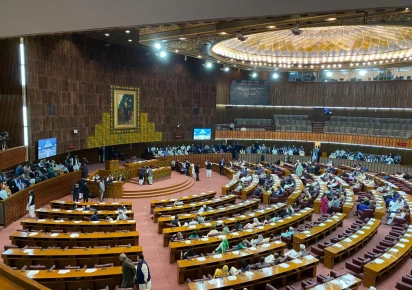
    Pakistan’s Parliament has approved legislation aimed at establishing a new legal framework for the country’s military command structure. The National Assembly and Senate passed the Defence Forces Act 2026 and amendments to the National Command Authority Act 2010 on Thursday. The legislation was approved despite strong opposition from opposition lawmakers, who objected to the speed at which the bills were brought before the Houses. Prime Minister Shehbaz Sharif attended the National Assembly session. The opposition later boycotted the voting process and walked out of the chamber in protest. The new Defence Forces Act provides a legal structure for the Defence Forces Headquarters. The headquarters will serve as a central institution for matters concerning national security, defence policy and coordination among the armed forces. Under the new framework, the Chief of Defence Forces will exercise operational command and control over the armed forces. The CDF will remain accountable to the federal government for matters related to command and control. The legislation also gives the CDF powers to improve coordination and integration among the Army, Navy and Air Force. The office will oversee joint operations, coordination and other matters involving the armed forces. The CDF will also have authority under relevant laws regarding the retirement, release and dismissal of military personnel, subject to constitutional provisions. The office will also be able to approve or reject resignations and retain personnel in service where permitted under the law. The federal government will frame rules and regulations needed to implement the new legislation. The CDF will also be authorised to issue orders and directions required to enforce the provisions of the Act. Parliament also approved amendments to the National Command Authority Act 2010. The changes replace references to the Chairman Joint Chiefs of Staff Committee with references to the Chief of Army Staff and Chief of Defence Forces. The legislation gives retrospective effect to key provisions from November 2025. The new laws are linked to changes introduced through the 27th Constitutional Amendment, which significantly altered Pakistan’s military command structure. Under the revised system, the Chief of Army Staff also serves as the Chief of Defence Forces. The office of Chairman Joint Chiefs of Staff Committee has been abolished under the new framework. The opposition strongly objected to the legislation being placed on the supplementary agenda. Opposition lawmakers said they had not been given sufficient time to examine the bills. Opposition Leader Allama Raja Nasir Abbas questioned the urgency of the legislation and called for more time for lawmakers to study the proposed changes. Mahmood Khan Achakzai also demanded that lawmakers be given at least a few days to review and debate the bills before voting. The government defended the procedure, saying parliamentary rules allow supplementary legislation to be introduced. Law Minister Azam Nazeer Tarar argued that the bills had already been examined and approved by the National Assembly. The cabinet had approved the draft legislation earlier in the day during a meeting chaired by Prime Minister Shehbaz Sharif in Islamabad. According to the government, the Defence Forces Act was necessary to provide administrative and legal arrangements for the office of the Chief of Defence Forces and its headquarters. The new framework also establishes the position of Commander of the National Strategic Command following the abolition of the CJCSC post. The commander is appointed by the prime minister on the recommendation of the army chief and CDF. The position carries a three-year term, with the possibility of another three-year term under the prescribed procedure.

  • | | |

    PCB warns former cricketers over participation 

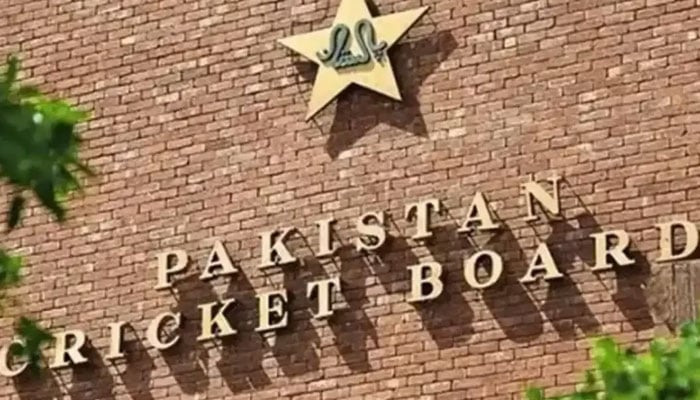
      The Pakistan Cricket Board (PCB) has taken serious notice of the participation of former Pakistani cricketers in the unauthorized Asian Legends League currently being held in Zambia. The board has announced strict disciplinary measures against any current or former player who participates in the event without obtaining prior approval through a No Objection Certificate (NOC). According to the PCB, the Asian Legends League is not recognized or approved by either the International Cricket Council (ICC) or the Zambia Cricket Union. As a result, the tournament is considered an unauthorized event, and players participating without official permission are deemed to be in violation of the board’s regulations. In an official statement, the PCB emphasized that all current and former Pakistani cricketers must obtain an NOC before taking part in any cricket event or league outside Pakistan. The board stressed that this requirement is in place to protect the integrity of the game, ensure player accountability, and maintain proper coordination with international cricket authorities. The PCB warned that any former cricketer found participating in the unauthorized league without receiving an NOC will face strict consequences. One of the key penalties announced by the board is a two-year ban on the issuance of any future NOCs. This means that players who violate the regulations will not be granted permission to participate in overseas cricket tournaments or exhibition events organized outside Pakistan during that period. In addition to restrictions on international participation, the PCB has also declared that individuals involved in the unauthorized league will be ineligible for coaching, mentoring, commentary, talent development, or any other official responsibilities associated with the Pakistan Cricket Board and the Pakistan Super League (PSL) for two years. The decision reflects the board’s intention to ensure that those associated with unauthorized competitions do not continue to benefit from official roles within Pakistan’s cricket structure. The board’s statement serves as a strong reminder that compliance with PCB regulations is mandatory for all Pakistani cricketers, regardless of whether they are active professionals or retired players. The NOC system is designed to regulate players’ participation in foreign leagues, safeguard contractual obligations, and ensure that events meet international standards and receive recognition from the relevant governing bodies. The PCB further advised all current and former players to verify the status of overseas tournaments before accepting invitations to participate. Players have been instructed to seek formal approval from the board in advance to avoid disciplinary action and ensure that the competitions they join are officially sanctioned. Cricket boards around the world often require players to obtain NOCs before participating in overseas leagues. These approvals help confirm that tournaments are legitimate, properly organized, and conducted under recognized cricketing authorities. The PCB’s latest decision reinforces its commitment to maintaining professionalism, protecting the reputation of Pakistani cricket, and ensuring that its players compete only in approved events. By announcing these strict measures, the Pakistan Cricket Board has sent a clear message that unauthorized participation in unrecognized tournaments will not be tolerated. The board hopes the policy will encourage greater discipline among players while preserving the credibility of Pakistan’s cricketing system. Going forward, all Pakistani cricketers are expected to strictly follow PCB regulations and obtain the necessary approvals before participating in any cricket event outside the country.

Leave a Reply

Your email address will not be published. Required fields are marked *