arshad nadeem opts
|

Arshad Nadeem opts for training in South Africa

Olympic javelin throw gold medallist Arshad Nadeem has decided to undergo training in South Africa ahead of major international competitions.

According to sources, Nadeem will not participate in the Lausanne Diamond League scheduled for August 21. His name had initially been included in the entry list for the event.

The Pakistani javelin thrower is now planning to train in South Africa. He has previously completed training camps in the country on two occasions.

Sources said Nadeem will travel to South Africa on the first available flight once he receives his visa. He is expected to use the training camp to prepare for his upcoming international assignments.

Following his training in South Africa, Nadeem will compete at the World Athletics Ultimate Championship.

The championship is scheduled to take place in Budapest from September 6 to 14. The event will bring together leading athletes from around the world.

Nadeem is also expected to compete at the Asian Games after the World Athletics Ultimate Championship.

The decision to skip the Lausanne Diamond League is part of his revised competition and training plan. The focus is now on preparing thoroughly for the major championships ahead.

Nadeem has emerged as one of Pakistan’s leading athletics stars. He made history by winning the Olympic javelin throw gold medal, becoming a major figure in Pakistan’s international sporting success.

His planned training stint in South Africa is expected to provide him with an opportunity to work on his technique, strength and overall competition preparation before returning to international action.
Similar Posts

  • |

    Afghan fathers struggle as girls remain barred from secondary schools

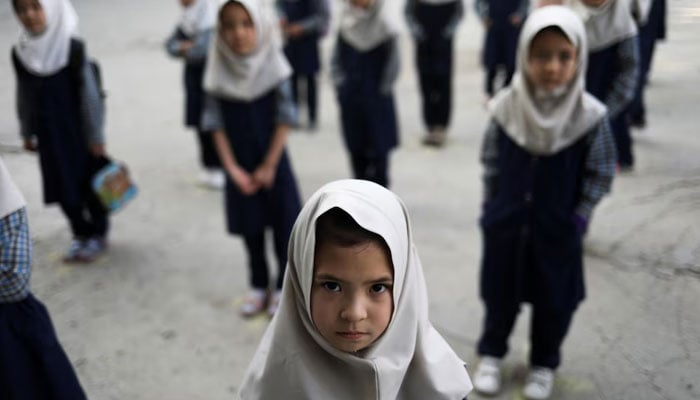
    KABUL: Afghan fathers are facing growing distress as their daughters remain unable to continue their education beyond primary school under restrictions imposed by the Taliban authorities. Families across Afghanistan say the education ban is creating deep emotional and financial pressure. Some fathers are openly questioning the policy, despite their religious beliefs and support for other government measures. The Taliban administration has defended the restrictions as temporary and based on its interpretation of religious principles. However, many Afghan men say they cannot understand why girls should be prevented from receiving secondary education. A United Nations survey conducted last year found that about nine out of 10 Afghan men considered it important for girls to attend secondary school. Nearly two-thirds also viewed supporting a daughter’s education as a religiously commendable act. Girls were barred from secondary schools after the Taliban returned to power in 2021. Women were later also prohibited from attending universities. The restrictions have affected a large number of young Afghan women and girls. For many families, the approaching end of primary education has become a source of fear. Fathers worry that their daughters will lose their chance to pursue higher education and build professional careers. One father, identified as Ahmad, said he had never imagined that his daughters could be forced to stop studying. His wife is a mathematics teacher who is also unable to continue teaching secondary-level students. Ahmad said his eldest daughter is approaching the end of primary school. The family has considered private and underground educational options, but the cost is difficult to manage. Another father, a doctor identified as Mohammad, said he had always wanted his daughters to attend leading universities. He believes women are essential to Afghanistan’s development and should have opportunities beyond household responsibilities. His daughters are approaching the age when they will be forced to leave formal schooling. The family has considered sending them abroad, including to Pakistan, but changing regional circumstances have made that option difficult. Some families have turned to private schools that secretly provide general education alongside religious studies. These institutions often charge high fees and may not provide recognised graduation certificates. Parents also fear that authorities could take action against schools operating outside official restrictions. This leaves families caught between protecting their children and trying to continue their education. Another father from Kandahar said his young daughter has a strong interest in astronomy. She asks questions about the solar system, gravity and science. The girl reportedly asked her father how she could continue learning if she could not study beyond the sixth grade. Her question has become a painful reminder of the limited opportunities available to girls. Some families have moved to Kabul in search of better educational opportunities. Others are relying on online courses, home schooling and secret classes. The restrictions are also affecting children emotionally. Parents say many girls feel frustrated, isolated and uncertain about their future. One father said his teenage daughter often stays at home and becomes deeply upset when she thinks about her education. He said he sometimes leaves the room because he cannot control his emotions and ends up crying privately. Another family has created a home-schooling routine using old secondary-school textbooks. The parents try to maintain a school-like schedule so their daughters can continue learning. However, the parents say home education cannot fully replace a formal school environment. They worry about the lack of recognised qualifications, social interaction and access to trained teachers. Some girls have also begun attending secret classes. Their families remain concerned about possible consequences if the authorities discover them. The prolonged restrictions have created uncertainty for an entire generation of Afghan girls. Parents fear that years without formal education will limit their daughters’ future opportunities

  • |

    Pakistan boxer mysteriously disappears in Glasgow before flight home

    GLASGOW: A mystery has emerged following the conclusion of the Commonwealth Games after Pakistani boxer Qudrat Ullah reportedly disappeared from Glasgow just hours before the national squad was scheduled to fly back to Pakistan, prompting an investigation by the Pakistan Boxing Federation. According to federation sources, Qudrat Ullah failed to rejoin his teammates ahead of the team’s departure from Scotland. The boxer is believed to have gone missing approximately six hours before the group’s scheduled return flight, raising concerns among officials accompanying the contingent. The team had been instructed to assemble in the hotel lobby at 9 a.m. before leaving for the airport. However, when officials went to Qudrat Ullah’s room to escort him, they found it empty. Sources said he had last been seen in his room around 2 a.m., but by morning there was no sign of him. The circumstances surrounding his disappearance have deepened the mystery because his passport and return airline ticket were reportedly still in the custody of the team manager. Officials have not explained how the boxer could have left without the travel documents required for his scheduled journey home. The Pakistan Boxing Federation has confirmed that the athlete is missing and said the matter is under investigation. Federation officials are coordinating with relevant authorities to determine his whereabouts and establish the sequence of events leading to his disappearance. No official statement has yet been issued regarding whether local Scottish authorities have launched a formal search or whether there is any indication of foul play. Federation officials have urged caution, saying further details will be shared once the inquiry progresses. The incident has revived memories of a similar episode during the 2022 Commonwealth Games in England, when two Pakistani boxers reportedly separated from the national team and failed to return with the delegation. That case sparked debate over athlete monitoring during international competitions and the challenges sports federations face in ensuring team discipline while abroad. Qudrat Ullah’s unexplained disappearance is likely to draw renewed scrutiny of travel protocols for national teams representing Pakistan at major sporting events. As officials continue their investigation, questions remain over what happened in the final hours before the squad’s departure and when the missing boxer will be located.

  • | |

    Sindh restores Saturday holiday for schools

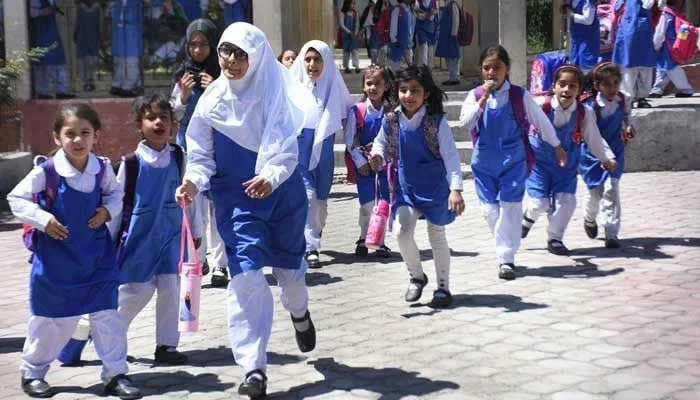
    The Sindh government has revised the weekly schedule for schools, restoring Saturday and Sunday as official weekly holidays for all public and private educational institutions across the province. According to the School Education and Literacy Department, the updated schedule has been approved by the chief secretary and will be implemented in all government and privately managed schools. Under the new arrangement, schools will operate five days a week, from Monday to Friday. To compensate for the reduced number of working days and ensure timely completion of the academic syllabus, daily teaching hours will be extended by one additional hour. Officials said the revised timetable aims to maintain the pace of academic activities while providing students and teachers with a two-day weekend. The latest decision replaces an earlier directive issued last month, under which all public and private schools in Sindh had been instructed to observe a six-day working week from August 1, with classes scheduled from Monday to Saturday. The change comes shortly after educational institutions resumed classes following the two-month summer vacation, which lasted from June 1 to July 31. Education authorities said the revised schedule will apply uniformly across the province and schools have been directed to implement the updated working days and teaching hours accordingly.

  • |

    Bob Johan Veldhof appointed Pakistan head coach after reshuffling

    LAHORE: The Pakistan Hockey Federation (PHF) has reshuffled its recently appointed foreign coaching staff, elevating Bob Johan Veldhof from goalkeeping coach to head coach as Pakistan prepares for the upcoming FIH World Cup. The decision places Veldhof in charge of the national side for the World Cup, which will be jointly hosted by the Netherlands and Belgium from August 15 to 30. PHF president Mohyuddin Ahmad Wani confirmed the reshuffle, explaining that Herman Kruis, who was initially appointed as the national team head coach and National Hockey Coaching Advisor, will now focus solely on his advisory responsibilities. Kruis was appointed on July 3 for an initial two-year period. Soon afterwards, Veldhof joined the coaching setup as goalkeeping coach, while David Dwyer was brought in as high-performance coach. Chris Bowen was assigned a dual responsibility as technical coach and sports psychologist, while Adnan Zakir became the only Pakistani among the newly appointed coaches, taking charge of junior talent identification. The latest changes have effectively altered the hierarchy of the coaching group just weeks before the World Cup, with Veldhof now taking on the most important technical role. The PHF has been looking to strengthen Pakistan’s coaching structure as the national team attempts to regain its place among the world’s leading hockey sides. Veldhof’s elevation also gives him a major challenge on the international stage. With the World Cup approaching, he will be expected to prepare the team tactically while ensuring the players are physically and mentally ready for a demanding tournament. Wani also provided an update on the role of former Pakistan captain and Olympian Tahir Zaman. Zaman, who was appointed Director High Performance on May 21, will now serve as an adviser to the PHF president. The latest reshuffle comes at a crucial stage for Pakistan hockey, with the federation relying on its revamped coaching setup to improve the team’s international performances. With the World Cup only days away, attention will now turn to how quickly Veldhof can settle into his new role and guide Pakistan through one of the sport’s biggest tournaments.

  • | | | |

    Trump reveals why Secret Service changed his plane

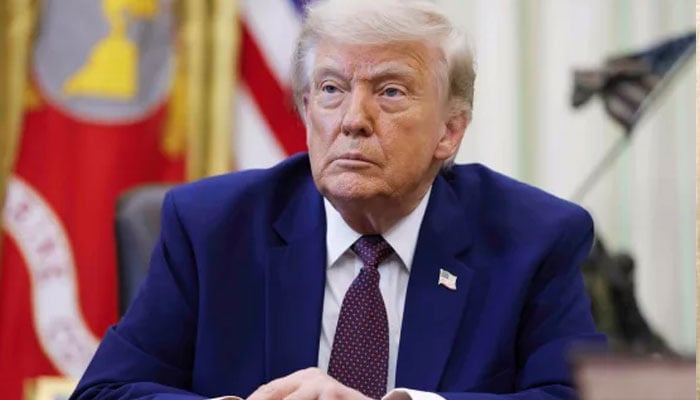
    WASHINGTON: US President Donald Trump has confirmed that his surprise plane switch during his departure from Turkey last month was carried out on the advice of the Secret Service, amid concerns over a potential threat linked to Iran. Trump said the aircraft he had initially been expected to travel on could have faced a “greater risk,” adding that he does not trust Iran. His remarks came after reports revealed that his departure from Ankara following the NATO summit involved an elaborate security operation. According to reports, Trump publicly boarded Air Force One in front of cameras, creating the impression that he would fly out of Turkey on the presidential aircraft. However, he was later secretly transferred to a smaller C-32A military aircraft. The move was reportedly carried out using an airport catering truck to conceal his transfer. Journalists and some White House staff reportedly remained under the impression that Trump was aboard Air Force One. Reporters were also instructed to keep their window shades closed, adding to the secrecy surrounding the operation. Trump said he followed the Secret Service’s instructions when the aircraft change was made and did not challenge the security decision. The unusual operation reportedly stemmed from heightened concerns over Iranian threats against the US president. Trump’s latest comments have now confirmed key details of the previously undisclosed flight arrangement. The episode has drawn attention because of the extraordinary measures used to conceal the president’s movements. It also highlights the heightened security concerns surrounding Trump amid continuing tensions between Washington and Tehran. For a president whose movements are normally tracked closely by the media and security officials, the covert transfer from one aircraft to another remains one of the most unusual presidential travel episodes of the year.

  • | |

    Suicide bombing at Kabal Police Station kills 14, injures 20 in Swat

    SWAT: At least 14 people, including five police personnel and nine civilians, were killed and 20 others injured in a suicide bombing at the main gate of Kabal Police Station in Swat district on Sunday. According to Malakand Regional Police Officer (RPO) Syed Fida Hassan Shah, the attacker attempted to enter the police compound but was intercepted by security personnel stationed at the entrance. Prevented from gaining access, the suicide bomber detonated his explosive vest at the main gate. Police said the 20 injured include 14 police personnel and six civilians. The wounded were shifted to nearby hospitals, where several are reported to be in critical condition. The RPO said the police compound houses Kabal Police Station, Kabal Police Lines, a public facilitation center, and several other government offices. He noted that the casualties could have been significantly higher had the attacker succeeded in entering the compound. Following the blast, police and other law enforcement agencies cordoned off the area and launched a search operation, while investigators began collecting forensic evidence from the scene. Police officials said the severed head of the suspected suicide bomber has been recovered, and investigators are working to establish his identity and determine the circumstances surrounding the attack. Local sources said a public demonstration calling for peace was underway at nearby Kabal Chowk when the explosion occurred. Authorities have not yet confirmed whether the protest was linked to or affected by the attack. An investigation into the incident is ongoing. An emergency has been declared at the Saidu Group of Teaching Hospitals following the suicide blast in Kabal, Swat. All doctors, nursing staff, and paramedics have been placed on high alert to ensure the timely treatment of those injured in the attack. Hospital authorities said every effort is being made to provide the best possible medical care to the victims. Medical Superintendent Dr. Muhammad Saleem Khan, along with other senior officials, is personally overseeing the emergency response and monitoring the situation. The Saidu Hospital administration has appealed to the public to donate blood to help meet the urgent needs of the injured. Citizens have also been requested to avoid unnecessary visits to the hospital during the emergency to prevent overcrowding and allow medical teams to carry out their work efficiently. Hospital officials said the situation is being closely monitored, and emergency medical services remain fully operational.

Leave a Reply

Your email address will not be published. Required fields are marked *