Russia, COMSTECH seek stronger cooperation in scie…
Russia and the Organisation of Islamic Cooperation’s Standing Committee on Scientific and Technological Cooperation (COMSTECH) have discussed new opportunities to expand collaboration in science, technology and higher education.
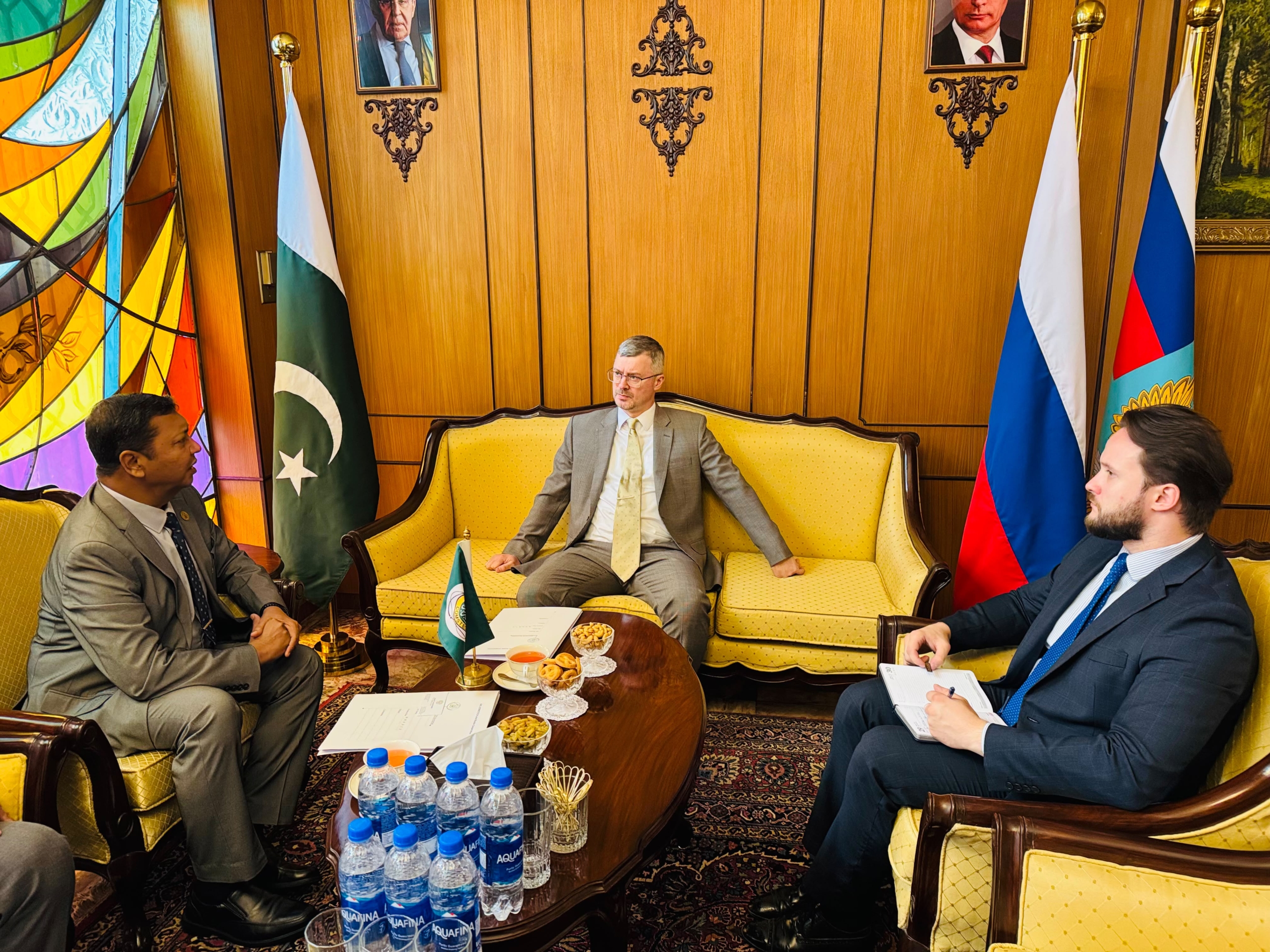
Russian Ambassador Albert P. Khorev received a COMSTECH delegation on August 12. The delegation was led by COMSTECH Coordinator General Professor Dr M. Iqbal Choudhary.
The meeting focused on strengthening cooperation between Russia and COMSTECH, particularly in areas of scientific research and academic development. Russia participates in the OIC as an observer state.
Professor Iqbal Choudhary highlighted existing cooperation between COMSTECH and Russian institutions. He specifically mentioned collaboration with Kazan Federal University and the Russian Association of Earthquake Engineering and Protection against Natural and Man-Made Hazards.
The participants identified considerable potential for expanding academic links between the two sides. They discussed stronger partnerships between universities, increased scholarship opportunities and joint research projects in fundamental sciences.
Both sides also stressed the need to speed up implementation of initiatives previously agreed upon under their bilateral working mechanism.
These initiatives were discussed during the first meeting of the Working Group on Cooperation between COMSTECH and the Russian Federation in science, technology and higher education. The meeting was held in Kazan on May 13, 2026, on the sidelines of the international economic forum Russia–Islamic World: KazanForum.
Ambassador Khorev reaffirmed Moscow’s interest in expanding its engagement with the OIC and Muslim-majority countries. He also highlighted the importance of cooperation with Pakistan.
The participants noted that stronger scientific and academic links between Russia and COMSTECH could also contribute to closer Russia-Pakistan relations, particularly through education, research and technological cooperation.
The two sides agreed to maintain regular communication and provide necessary support for implementing joint initiatives and projects.