octopus clings fishermans

Octopus clings to fisherman’s face

A surprising video from the Philippines is going viral on social media after an octopus was seen clinging tightly to a fisherman’s face.

In the video the octopus has wrapped several of its arms around the man’s face.

https://www.instagram.com/reel/Db8hqV-jCoX/?igsh=MWFoNmNucmlzNW1ucQ==

The fisherman can be seen struggling to remove it from his face. He tries several times to pull the octopus away but its strong suction cups make it difficult to free himself.

After several attempts he slowly loosens the octopus’s grip and finally removes it.

The fisherman then releases the octopus back into the water. Experts explain that an octopus has hundreds of suction cups on its eight arms. These help it hold onto different surfaces and objects firmly.

The octopus may have reacted defensively because of the unusual situation and tried to protect itself by holding on tightly.

Similar Posts

  • Azad Kashmir Elections: A Pilot Project or a Model for Pakistan’s Next General Elections?

    By Engr. Saqlain Abid Political Commentator and NFPA-Certified Electrical Engineer   Elections are the vital organ of a living democracy. If they are conducted according to the people’s choice, without interference, on equal grounds, and with the consensus of all democratic participants, then the state not only remains in good health but also flourishes with the hope and commitment promised before the elections.   For the first time in the history of Pakistan, the Azad Jammu and Kashmir (AJK) elections are not being held on a single polling day. Instead, the electoral process has been divided into three different phases—27 July, 8 August, and 20 August 2026. This unusual arrangement raises several important questions. Why is the state preparing this electoral model? What are the conditions on the ground that necessitated such a strategy? More importantly, how could this experiment influence Pakistan’s national elections next year?   The political environment surrounding these elections has already become highly contested. The major political force JAAC has been banned by the government, and several of its leaders have been detained. The party has consequently boycotted the elections. PTI, another major opposition force, has also chosen to boycott the electoral process. According to its leadership, the party has been forced to contest only through independent candidates rather than under its official party platform. PTI argues that the government has failed to provide the safety, guarantees, and political environment necessary for free and fair elections. Under such circumstances, the party believes participation would merely legitimize a process it does not trust.   On the other hand, the ruling coalition, led by PML-N and PPP, has entered the campaign with promises of development projects, including new motorways and business initiatives aimed at attracting voters. While development remains an important component of any election campaign, questions regarding electoral credibility continue to overshadow these promises.   In principle, elections should be transparent, efficient, and completed within the shortest possible time. If technological solutions such as secure online systems become feasible in the future, they may further reduce the chances of manipulation. However, extending the polling process over three different days also creates a debate. While supporters argue that it makes election management easier, critics believe that a prolonged process increases opportunities for allegations of interference and weakens public confidence.   The government should have taken all political parties on board before announcing such an unprecedented electoral model. A genuinely inclusive process requires the participation of every major democratic stakeholder. JAAC, which commands significant public support in parts of Azad Kashmir, should have been engaged through political dialogue rather than exclusion. The credibility of elections depends not only on voting day but also on the perception that every political voice has been given an equal opportunity to participate.   Pakistan has previously criticized India for conducting elections in Jammu and Kashmir while sections of the local political leadership remained outside the process. At the time, Islamabad argued that elections held without broad political participation reflected only a procedural exercise rather than the genuine will of the people. The obvious question now is what circumstances have led Pakistan toward a model that some critics argue resembles the same approach.   Some political analysts believe that the AJK elections may serve as a pilot project to test a phased electoral model before its possible application across Pakistan during future general elections. Whether this perception is accurate or not, the debate itself demonstrates the level of public skepticism surrounding the process.   Another factor attracting attention is the role of the Chief Election Commissioner, whose tenure continues to face criticism following the February 2024 general elections. Allegations raised by former Rawalpindi Commissioner Liaquat Ali Chattha regarding manipulation of election results remain part of Pakistan’s political discourse, despite subsequent developments in the case. These controversies have inevitably shaped public perceptions regarding electoral transparency.   If voter turnout remains significantly low because of political boycotts and public distrust, the legitimacy of the exercise may come under further scrutiny. It is therefore the moral responsibility of the government and the Election Commission to create an environment where every democratic force feels secure enough to participate and where no stakeholder can reasonably question the fairness of the process.   The electoral process ultimately determines the political shelf life of a state. When governments emerge through elections widely accepted by the public, trust between the people and the state grows stronger. When that trust weakens, political polarization deepens, frustration increases, and hostile external actors find greater opportunities to exploit internal divisions. With Balochistan already facing serious security challenges and Khyber Pakhtunkhwa confronting persistent instability, any controversy surrounding the AJK electoral process may further strengthen perceptions that democratic space is shrinking rather than expanding.   Ultimately, the success of these elections will not be measured solely by administrative efficiency but by whether the people of Azad Kashmir believe that their voices were freely heard and genuinely counted. A credible electoral process strengthens democracy; a disputed one risks weakening the very foundations upon which democratic legitimacy depends.

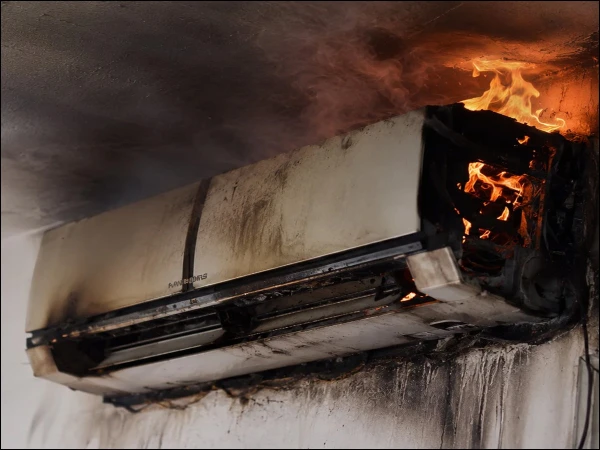
  • Danger signs your air conditioner needs repair

    As temperatures rise many people buy old or low cost air conditioners to save money. However experts warn that aging AC units can become dangerous if problems are ignored.  Small faults may turn into serious issues including electrical short circuits fires or costly damage. According to experts older air conditioners often develop worn out wiring damaged electrical parts faulty motors and overheating. These problems may seem minor at first but can become dangerous if they are not repaired in time. One of the biggest warning signs is a burning smell or the odor of melted plastic when the AC is switched on. Experts say this could mean the internal wiring motor or insulation has been damaged increasing the risk of fire.  If this happens turn off the unit immediately and have it checked by a qualified technician. Unusual sounds such as rattling grinding or loud noises are also signs that something is wrong. These noises may be caused by a loose part a damaged fan or a compressor problem.  Ignoring them could lead to a complete system failure. If the air conditioner becomes unusually hot while running it may indicate an electrical fault inside the unit.  Overheating can increase the risk of a short circuit or fire making immediate inspection and repair important. Experts also advise not to ignore weak cooling. Reduced cooling may be caused by low refrigerant a faulty compressor or a clogged air filter.  These issues usually mean the AC needs servicing or repairs. Another serious warning sign is seeing sparks near the voltage stabilizer or electrical wires. This may indicate loose connections or damaged wiring, which can quickly become a fire hazard if not fixed. Experts recommend turning off the air conditioner immediately if you notice any of these warning signs and contacting a qualified technician for a full inspection. Timely repairs can help prevent bigger damage and keep your home and family safe. They also advise that if an air conditioner keeps breaking down and needs frequent repairs replacing it with a newer safer and more energy efficient model may be a smarter and more cost effective choice.

  • The hallucination trap – information convincing but factually incorrect

    By Syeda Samar Zahra Zaidi When you ask an AI chatbot a question it does not know the answer to, an odd thing can happen: instead of hesitating or saying, “I am not sure!” it confidently delivers a tidy, well-structured, completely fabricated response—often with fake citations, fictional figures, and an authoritative tone. This phenomenon is known as the ‘hallucination trap ’, and it may be the most significant barrier between trust and artificial intelligence. I was introduced to the term “AI hallucination” for the first time in the workshop under the project titled “Digital Trust and Free Expression in the AI Era” at Department of Media and Development Communication, University of the Punjab, supported by the U.S. Mission to Pakistan in partnership with the Pakistan-U.S. Alumni Network (PUAN). I learned that a “hallucination” occurs when a language model produces information that sounds convincing but is factually incorrect or completely made up. Examples include inventing a legal case that never existed, citing a research paper that doesn’t exist or boldly misrepresenting a historical date. What is disturbing is not merely that AI can be wrong-humans make mistake too- but rather the way it presents that incorrect information with clearly, confidence and without a trace of doubt. Large language models are essentially highly complex pattern predictors trained to produce the most likely next word in a sequence. As a result, when a model has encountered a topic thousands of times in its training data, the predictors are typically accurate. However, when it comes across a gap, an unidentified fact or a question at the outer edge of its knowledge, it doesn’t shift into a hesitant mode. Instead, it continues doing exactly what it was trained to do: generate a logical, fluent piece of writing, producing a response that is structurally sound and grammatically correct but based on nothing. In human communication, confidence is generally perceived as a sign of strength which is important. We naturally prefer to trust a calm, reliable voice over a hesitant one. AI systems unintentionally exploit the tendency because their language remains confident whether they are right or wrong. The risks increase with the use of AI, as students may unintentionally include false information into their work and journalists have published articles citing artificially created sources and quotes, negatively affecting the credibility of their publications. Such inaccuracies influence what millions of people see, believe or share, thereby amplifying fabricated content. The reason AI does not simply say “I don’t know” is partly due to the way these systems are trained. Many models are designed to provide helpful, comprehensive-sounding answers and are rarely rewarded for expressing doubt during training. This means that a model that frequently acknowledges uncertainty may be judged as less helpful than one that consistently provides an answer, even when that confidence is occasionally misplaced. Such incorrectly aligned incentives arise when the training process gradually teaches the model that sounding confident is more valuable than being accuracy. Retrieval-augmented generation, which relies on responses in actual, verifiable records rather than internal memory alone, improved training techniques that explicitly account for uncertainty; and systems built to simply cite sources. So, users can independently verify claims are just a few of the ways developers are using to addresses this problem. While none of these solutions fully eliminate hallucination yet, taken together they represent a major shift from blind confidence toward earned trust. The most dangerous outcome is not an AI that makes mistakes but a culture of users who stop questioning because the system always sounds so sure of itself.   Therefore, until AI becomes more reliably aware of it own limitation, part of the responsibility falls on the people who use it: treating AI-generated output as a starting point rather than an endpoint, cross checking important facts against credible sources. In the end, the hallucination trap serves as a reminder that illusion is not the same as truth. As AI becomes increasingly common in education, digital media and everyday life, understanding why it occasionally lies with confidence is not only a technical curiosity but also a fundamental aspect of digital literacy. We must strengthen our ability to verify the information provided by AI as they become more persuasive. The views, thoughts, and opinions expressed in this blog are solely those of the author and do not necessarily reflect the official policy or position of the U.S. Mission to Pakistan or USEFP. The writer, Syeda Samar Zahra Zaidi, is a student of Media and Development Communication at  University of the Punjab, Lahore and can be reached at samarzahra456@gmail.com.  

  • Humans may live up to 194 Years

    How long can a human live? No one knows the exact answer but scientists believe there is a natural limit to the human lifespan. According to a study a person could possibly live as long as 194 years although reaching that age would be extremely rare. Researchers say living forever is not possible. Even if science discovers new ways to slow aging the body cannot avoid the natural damage that builds up over time. The study published in the journal Nature looked at how our DNA and genes change throughout life. Scientists found that many genetic changes are harmless but some damage cells and reduce how well they work. Over time this damage increases the risk of age related diseases. The researchers explained that these genetic changes cannot be completely prevented.  They happen naturally when cells divide and can also be caused by viruses certain chemicals and ultraviolet (UV) rays from sunlight. To estimate the maximum human lifespan the team created a scientific model that included reversible signs of aging while keeping permanent genetic changes in place. The results suggested that even if future technology slows the aging process the longest a human could live would likely be between 146 and 194 years. Scientists also noted that some organs such as the skin and liver regularly replace old cells helping repair some damage. However the heart and brain do not replace most of their cells making genetic damage in these organs much harder to reverse. The researchers stressed that genetic changes are not always harmful but as they build up over time they may gradually shorten a person’s lifespan. They also believe that other biological processes may affect aging and more research is needed to better understand them. At present the longest confirmed human lifespan belongs to Jeanne Calment of France who died in 1997 at the age of 122 years making her the oldest verified person in recorded history.

  • |

    Rare 1858 volume returned to Australian library after 150 Years

    A home renovation in Australia recently uncovered a piece of literary history that had been missing for a century and a half. A homeowner in the coastal community of Kiama, located south of Sydney in New South Wales, was tearing down wall structures. Amidst, he stumbled upon a sealed fireplace. Inside an old wooden tea crate behind the brickwork was an antique book that belonged to the town’s local library. The volume, titled Antiquities of Athens, was published in London in 1858. Staff at the Kiama Library realized that the book had been missing since 1870s. Library officials described the return as completely unprecedented. While they occasionally receive books that are a few decades late during estate cleanouts, they had never seen a volume missing for over a century. The book itself is a notable historical work. It was originally authored by British architects James Stuart and Nicholas Revett to document classical Greek architecture. Book No. 506. A part of Kiama Library’s inaugural catalog which comprised roughly 1,000 items when the library first opened its doors in 1872. Despite enduring around 150 years encased inside a chimney cavity, the physical volume appeared in a surprising condition. Mild water exposure near the margins and natural weathering consistent with a century of neglect. However, the pages and original library stamps remained clearly legible. How the book ended up sealed behind a fireplace wall remains open to speculation. During the 19th and early 20th centuries, homeowners used unwanted household items as insulation or filler material when bricking over chimney flues. When Kiama Library manager Michelle Hudson examined the interior cover of the returned tome, she discovered the original set of lending regulations printed inside. Among those provisions was a penalty clause dictating an overdue fee of three British pence per week. Doing the math to adjust that Victorian-era fine for inflation over 150 years results in an eye-watering figure: roughly  $28,000 Australian dollars (approximately $19,500 USD). Luckily for the current homeowner who handed it over, the library has no intention of collecting. In fact, even if staff wanted to hold someone accountable, identifying the original borrower is impossible. The library’s paper borrow ledgers from the 1870s were lost or discarded long ago. It left a complete mystery as to who last checked out the book. The volume provides a fascinating glimpse into Victorian-era social norms and public library regulations. A borrower was forbidden from checking out another book until any previously borrowed item was returned and all associated fines were cleared. Hudson playfully speculated that this rule might explain why the original patron never brought the book back. Once the fine started accumulating, returning it became too costly. Households could borrow up to three books at a time, but only if at least six members of the family were verified as capable of reading. The regulations specifically prohibited lending books to individuals who arrived at the library in a state of intoxication. Modern library policies focus on patron code of conduct rather than testing family literacy rates. However, these antique guidelines serve as a memorable reminder of how public institutions functioned in colonial Australia. Antiquities of Athens will not be re-entering general circulation returning home after a century and a half in exile. Library staff plan to place the volume on permanent display within their local history archive. It is aimed to preserve it as both a physical artifact of Victorian publishing and a symbol of local history. As Hudson quipped, the library is thrilled to have its 506th catalog entry back on the shelves. Also, they have no intention of risking another 150-year wait to see it again.  

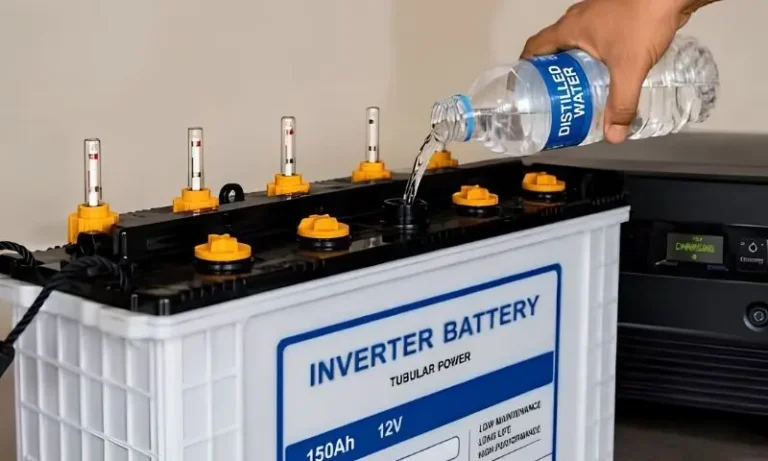
  • How to keep your inverter battery healthy

    Inverter batteries have become common in many homes especially in areas where power cuts are frequent.  However many people forget to maintain the battery properly.  Knowing when to check the water level and how much water to add can help keep a battery working well. Check the water level regularly In traditional lead acid batteries the water level slowly decreases with use.  That is why it is important to check it from time to time. If the inverter is used less often checking the battery every two to three months may be enough. With heavier use it may need to be checked more often. A very low water level can affect the battery’s internal parts and may reduce its lifespan. Watch for signs of low water If your inverter is giving less backup than before the battery feels unusually hot, or its performance keeps getting worse check its condition and water level.  However low water is not always the only reason for battery problems. If the issue continues have the battery checked by a professional. Add the right amount of water When adding water, check the level marked on the battery. The water should stay between the minimum and maximum lines. If the level is below the minimum mark add the required amount carefully.  Never fill the battery above the maximum level. Do not overfill the battery Adding extra water does not make a battery last longer.  Overfilling can cause the electrolyte to spill out and may damage nearby parts.  Always keep the water within the recommended level. Use distilled water Avoid using ordinary tap water in batteries that require topping up. Minerals and other substances in tap water can damage the battery over time. Distilled water is generally recommended but always follow the instructions provided by the battery manufacturer. Not every battery needs water Not all inverter batteries are the same.  Some are maintenance free and do not need to be opened or filled with water. Before opening a battery or adding anything to it check its type and read the manufacturer’s instructions. Be careful while Checking the battery Lead acid batteries can contain corrosive liquid so wear protective gloves and protect your eyes when handling them.  Keep cigarettes flames, and sparks away from the battery. If the battery is swollen, leaking or becoming extremely hot, do not try to open or repair it yourself. Contact a qualified technician. •Regular Maintenance •Can extend battery life •Taking simple care of your inverter battery can help maintain its performance. Check the water level when needed use the correct type of water keep the battery clean and follow the manufacturer’s instructions to help keep it in good condition.

Leave a Reply

Your email address will not be published. Required fields are marked *