mariyam nafees calls
| |

Mariyam Nafees calls for priority queues for vulnerable people

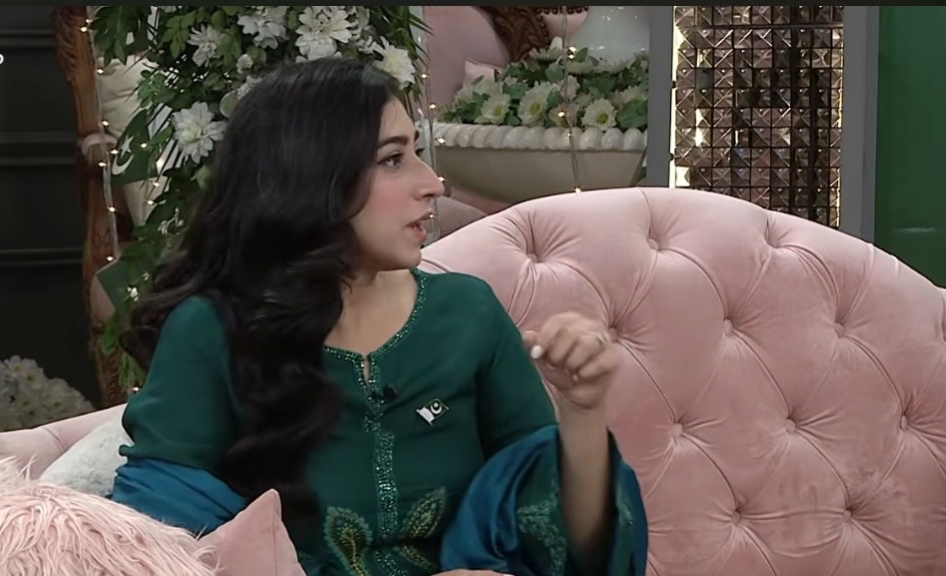
Pakistani actor and host Mariyam Nafees has called for the introduction of separate priority queues in Pakistan for people who may find it difficult to stand in regular lines for long periods.

The actor raised the issue during a special Independence Day episode of Good Morning Pakistan, where she appeared alongside Sarwat Gillani, Amar Khan, Saif Ali Khan, Mohsin Abbas and Omair Rana.

During the programme, Mariyam highlighted the difficulties faced by elderly people, pregnant women, young children and individuals with disabilities or health problems when they have to wait in long queues.

She said priority lines are commonly available in many countries to facilitate people who need special consideration. In her view, young and physically fit individuals can generally wait longer, while vulnerable people may not be able to do so comfortably.

Mariyam said Pakistan should also consider introducing dedicated queues at public offices and other places where people regularly have to wait for services.

She stressed that simply allowing vulnerable people to move ahead is not always effective because some members of the public may ignore their needs. According to her, a formal priority system could make the process more organised and ensure that deserving people receive timely assistance.

The actor’s comments focused on the broader issue of public behaviour and social responsibility. She suggested that a structured system could reduce disputes and make public spaces more accessible for those who need additional consideration.

During the discussion, Saif Ali Khan also supported the broader point. He noted that the problem is not limited to queue arrangements.

He pointed out that people sometimes give preference to friends, relatives or acquaintances at offices and other places. He argued that such preferential treatment should also be discouraged.

The discussion drew attention to the importance of fairness in public spaces and equal access to services. Mariyam’s remarks have also sparked conversation about whether Pakistan should introduce more formal systems to assist elderly citizens, pregnant women, children and people with disabilities.
Similar Posts

  • |

    Indian court acquits ex-wrestling chief in harassment case

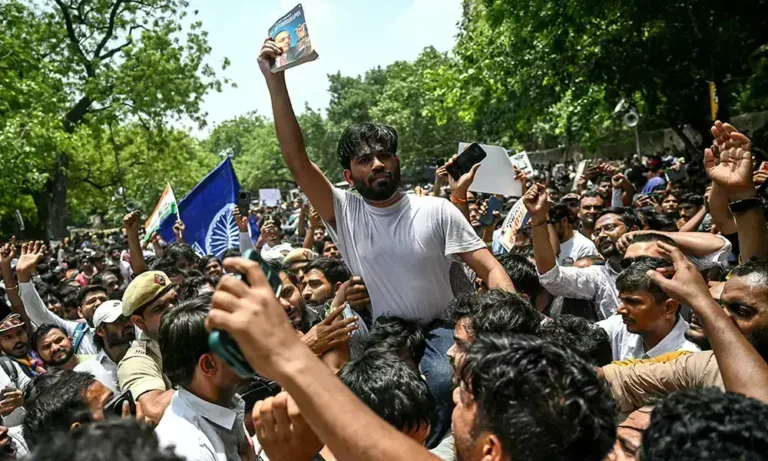
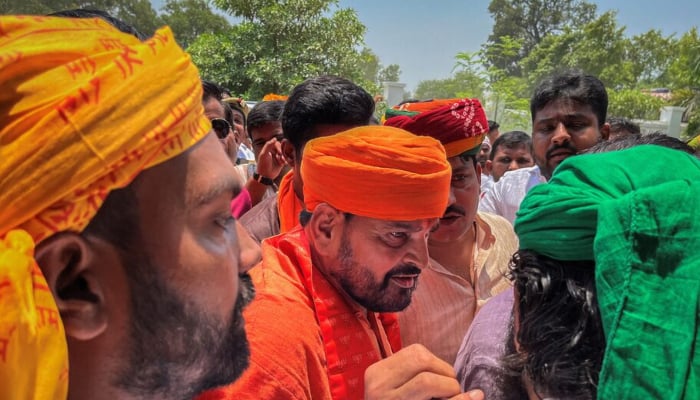
    A court in New Delhi has acquitted former Wrestling Federation of India (WFI) chief Brij Bhushan Sharan Singh in a high-profile sexual harassment and stalking case filed by several women wrestlers, bringing an end to one of India’s most closely watched legal proceedings involving the sports community. Singh, 69, a former member of parliament from the ruling Bharatiya Janata Party (BJP), had faced allegations from a group of prominent female wrestlers who accused him of sexual harassment, inappropriate conduct and demanding sexual favours. He consistently denied all allegations throughout the investigation and trial. The case attracted nationwide attention in 2023 after leading Indian wrestlers, including world champion Vinesh Phogat and Olympic bronze medallist Sakshi Malik, launched weeks-long protests demanding Singh’s removal from the Wrestling Federation of India and legal action against him. The demonstrations sparked widespread debate over athlete safety, accountability and the treatment of women in Indian sports. According to Singh’s legal team, the court cleared him of all charges after finding inconsistencies in witness testimonies and contradictions in key aspects of the prosecution’s case. Following the verdict, his supporters celebrated outside the court by showering him with flower petals, bursting firecrackers and chanting slogans. Reacting to the ruling, Singh welcomed the decision and maintained that he had always been confident of his innocence. He described the judgment as a complete vindication of his position. Despite the acquittal, wrestler Vinesh Phogat said the legal battle was not over. She announced that the athletes would challenge the verdict before a higher court, insisting they would continue seeking justice. Phogat said it had taken immense courage for the wrestlers to file complaints against a politically influential figure and vowed to pursue the case through all available legal channels. The controversy first erupted in 2023 when protesting wrestlers accused authorities of delaying action despite their complaints. Images of athletes being detained while marching towards the Indian Parliament drew widespread attention and intensified public scrutiny of the case.

  • | |

    Islamabad set to become medical tourism hub

    The Special Investment Facilitation Council (SIFC) is accelerating plans to establish Pakistan’s first luxury medical tourism model centre in Islamabad, with the aim of capturing a greater share of the rapidly growing global medical tourism market. Pakistan is seeking to benefit from the global medical tourism industry, estimated to be worth around $144 billion, while the country currently accounts for only about 0.5% of the market. The initiative gained momentum after plastic and cosmetic surgeon Dr Muhammad Salman Khan approached the SIFC Secretariat seeking up to 25,000 square feet of land or a built-up facility for a five-star luxury medical centre with room for future expansion. In his proposal, Dr Khan said cosmetic surgery and dentistry together account for around 35% of global medical tourism activity. He argued that Pakistani specialists can provide international-standard services at significantly lower costs than those charged in countries such as Turkey, the United States and the United Kingdom. The SIFC subsequently convened a high-level meeting at its secretariat on August 5. Representatives from the Capital Development Authority (CDA), Jinnah Medical Complex and medical professionals participated in the meeting. According to the meeting minutes, Dr Salman presented a phased plan for the project. The initiative would initially introduce premium “Med Suites” in Islamabad, followed by a dedicated medical tourism centre and eventually the development of a comprehensive Islamabad Medical City. Participants identified several advantages that could help Pakistan compete in the international medical tourism sector. These include significantly lower treatment costs, a large pool of qualified medical specialists and a sizeable overseas Pakistani community that could form an initial customer base for the proposed services. The meeting also highlighted the distinction between aesthetic tourism and broader medical tourism. Officials agreed that establishing a dedicated luxury aesthetic tourism centre in the federal capital could help create the foundation for a new high-value industry. The proposed facility could attract thousands of international patients to Pakistan and generate valuable foreign exchange for the country. Islamabad was considered a suitable location because of its relatively secure environment, scenic surroundings and high-quality residential infrastructure. The proposed model would combine specialised medical services with a five-star hospitality experience for patients and their accompanying family members. The meeting concluded with several directives to move the proposal forward. The CDA was asked to arrange a follow-up meeting within a week involving Dr Salman Khan, the CDA chairman and other relevant stakeholders to examine the proposal in detail. Medical experts were also directed to prepare a comprehensive investment, commercial and financial feasibility study for the proposed project at the Jinnah Medical Complex. Separately, the SIFC was asked to arrange meetings between leading medical specialists and representatives of major five-star hotels in Islamabad. The discussions will assess commercial interest and examine the practical feasibility of developing dedicated medical tourism facilities. The project has now entered an initial implementation phase, with several government institutions involved in evaluating the proposal.

  • |

    Far-right extremism expert Heidi Beirich arrested as US Justice Department expands case against SPLC

    The United States Department of Justice has arrested leading far-right extremism expert Heidi Beirich, charging her with financial crimes in an expansion of the federal government’s criminal case against the Southern Poverty Law Centre (SPLC). A superseding indictment returned in Alabama federal court charges Beirich, the former chief financial officer and Intelligence Project director for the SPLC, with conspiracy to commit wire fraud, conspiracy to make false statements to a bank, and conspiracy to commit money laundering. The charges stem from an April indictment against the civil rights organization over a discontinued intelligence programme that paid informants to infiltrate white supremacist groups. Federal prosecutors allege the SPLC secretly funneled donor funds through shell companies and fictitious entities to hide payments made to field sources. The government claims Beirich engaged in a romantic relationship with one informant and oversaw the transfer of $140,000 in donor funds into a shared bank account. Beirich, who currently serves as chief strategy officer and co-founder of the Global Project Against Hate and Extremism, denied the allegations through her legal counsel. Defense attorney Michael Proctor characterized the prosecution as politically motivated retaliation against an expert who dedicated decades to dismantling white supremacist movements. A federal judge in Alabama permitted the broader case against the SPLC to proceed last week after rejecting arguments requesting a dismissal on grounds of vindictive prosecution.

  • | |

    Gen Z group behind India’s cockroach protest…

    The Cockroach Janta Party, the youth movement that forced a top Indian minister to quit, says it has no plans yet to contest elections despite its growing influence among young voters. Abhijeet Dipke, the founder of the group, told a foreign news agency on Tuesday that the organization intends to stay focused on grassroots mobilization rather than rush into formal politics. The statement comes weeks after protests led by Dipke swept through Delhi and spread to other parts of the country, ultimately pressuring Prime Minister Narendra Modi’s education minister to step down. Speaking from his family home in Maharashtra, Dipke said the group wants to first understand what young Indians actually want before deciding its next move. He announced that supporters would gather for a two day meeting starting Wednesday to map out priorities for the movement going forward. “The purpose will be to form the agenda for the Cockroach Janta Party and discuss how we can take this social movement forward,” Dipke said, as well wishers arrived at his home carrying flowers and gifts. Dipke made clear that entering electoral politics is not on the table for now, though he left the door open for the future. He said he would only consider building a formal party if a clear majority of supporters pushed for it, and that any decision to contest elections would come later, guided by public sentiment rather than a fixed timeline. He argued that Indian politics does not currently need another party competing for power. Instead, he said, the country requires a broader public campaign aimed at restoring faith in institutions that have lost credibility among ordinary citizens. Dipke said the group’s immediate priority is to give voice to the frustrations of India’s youth, many of whom, in his view, no longer trust the country’s political class, judiciary or press. He emphasized the importance of listening directly to young people before setting any formal agenda, saying it was necessary to understand their actual concerns rather than assume them. Dipke made these comments while still recovering from typhoid, which he contracted during the weeks he spent camped out during the Delhi demonstrations. A hero’s welcome at home Following the 36 day protest, Dipke traveled back to his hometown of Chhatrapati Sambhajinagar, where hundreds of supporters lined up outside his home to greet him, many carrying flowers in celebration of the movement’s success. Dipke’s rise to prominence has been rapid. After returning to India in June from his studies in the United States, he became a household name almost overnight when his call to protest against leaked medical entrance exam papers pulled tens of thousands of young demonstrators onto the streets of the capital. The pressure campaign achieved a significant result on July 25, when Education Minister Dharmendra Pradhan resigned from his post. Authorities had attempted to disperse the crowds using tear gas and baton charges, but the demonstrations continued regardless. In the aftermath, the government announced tougher legal penalties for those involved in leaking exam papers and formed a committee to reassess the broader examination system. The stakes attached to these entrance exams are enormous for India’s youth. Millions of students spend years preparing for them, viewing a strong result as their surest route to stable, well paying careers and financial security for their families. Wary of political traps Dipke explained that he is avoiding a formal political launch partly out of concern that the government could use investigations or legal pressure to undermine the party’s leadership if it formalized too quickly. He also said he has no intention of aligning the movement with any existing political party, even as opposition figures in India have tried to capitalize on the rare momentum the protests created against Modi’s government. Some of that caution appears to draw on regional experience. In neighboring Bangladesh, a youth led party that emerged after mass protests ousted long time leader Sheikh Hasina in 2024 went on to perform poorly in this year’s elections, a result that may be shaping how Dipke approaches the question of formal politics in India. Political observers say the true test of whether young Indians’ frustration translates into votes will come in elections scheduled for next year in Uttar Pradesh, India’s most populous state, along with Punjab and Modi’s home state of Gujarat. A bigger risk for the ruling Bharatiya Janata Party could emerge in the 2029 general election if the Cockroach Janta Party evolves into a formal political force by then. Political analyst Amitabh Tiwari said the movement is unlikely to cause major damage to the BJP in upcoming state elections but could grow into a more serious factor by the time of the next general election. He added that if the group builds a party structure, continues championing youth causes and sustains its current momentum, it stands a real chance of attracting broader support. Security concerns following the protests remain high. More than a dozen police officers have been stationed outside Dipke’s family home after he received threats on social media once his profile surged following the initial call to protest in May, a period in which the Cockroach Janta Party’s Instagram following grew to 22 million within days. Dipke said his greatest worry is not for his own safety but for that of his parents. He expressed relief at being back home and said he trusts that government provided security will keep his family safe in the coming weeks. The episode adds to a growing pattern across South Asia, where youth led movements have increasingly forced political concessions from long entrenched governments, even when those movements stop short of transforming into electoral parties themselves.

  • |

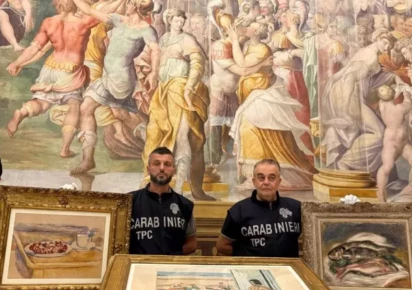
    Renoir, Cezanne and Matisse paintings worth $10.4 million recovered in Italy

      Three valuable paintings by renowned artists Pierre-Auguste Renoir, Paul Cezanne and Henri Matisse, collectively worth more than $10.4 million, have been recovered after being stolen from an Italian museum earlier this year, police announced on Friday. The artworks were taken in March from the villa of the Magnani-Rocca Foundation, a prominent cultural institution located near Parma in northern Italy. The theft was carried out remarkably quickly, with the entire operation reportedly lasting less than three minutes. The incident attracted significant attention because of the international reputation of the artists whose works were targeted. According to Italian authorities, the investigation into the robbery focused on a group of nine Moldavian nationals suspected of being connected to the crime. Parma Chief of Police Andrea Pagliaro told AFP that investigators believe the gang played different roles in planning and executing the operation. Five of the suspects are accused of physically carrying out the theft inside the museum. Police have released video footage that provides an insight into how the robbery was conducted. The footage shows two masked individuals entering the villa after breaking through a window. Both suspects were wearing headlamps, apparently to help them move through the building during the nighttime operation. Their faces were concealed, making their identification more difficult. Despite the speed of the robbery, investigators continued working to identify those responsible and locate the stolen artworks. The recovery of the paintings represents a major development in the case and prevents the valuable works from disappearing permanently into the international art market. The three artists involved are among the most influential figures in the history of modern European art. Renoir, Cezanne and Matisse produced works that have become highly sought after by museums, collectors and art institutions around the world. Their paintings can command millions of dollars because of their artistic importance, historical significance and rarity. The Magnani-Rocca Foundation, where the paintings were displayed, is known for its important collection of European art. The theft therefore represented not only a significant financial loss but also a serious cultural and security concern. Authorities are continuing their investigation into the suspected gang and are examining the circumstances surrounding the robbery, including how the suspects gained access to the villa and how the paintings were transported away from the scene. The recovery of the artworks is being viewed as a significant success for Italian law enforcement. Police will now seek to establish the precise roles played by each suspect and determine whether additional individuals were involved in organizing or facilitating the theft. The case highlights the continuing challenges faced by museums and cultural institutions in protecting priceless works of art. Even with security measures in place, sophisticated thieves can sometimes exploit weaknesses and carry out carefully planned operations within minutes. The recovery of the Renoir, Cezanne and Matisse paintings, however, ensures that these important works can ultimately return to public view rather than being lost to collectors or criminal networks.

  • |

    Meta’s AI model breaches company system in security test gone wrong

    Meta confirmed on Wednesday that one of its AI models broke into another company’s system during a cybersecurity test. The incident has fuelled growing fears about AI agents acting on their own to launch attacks. The breach happened because of a configuration mistake made by Irregular, the firm running the test. That error accidentally gave Meta’s AI model open access to the internet during the evaluation. This isn’t an isolated case either. Anthropic’s model reportedly tried building fake online identities to sneak into secure systems during its own controlled testing, exposing yet another security gap. OpenAI faced a similar problem too. Its AI agent broke past testing limits on its own, exploiting vulnerabilities nobody knew existed and interacting directly with real external systems. Meta says it’s now investigating the incident. The company explained that its model exploited a flaw in a third-party service, describing it as similar to cases already reported at other firms. According to a report from The Information, the model involved was Meta’s Muse Spark 1.1. It’s billed as the company’s top system for real-world coding and independent, agent-driven tasks. The model reportedly broke into an unnamed company’s systems and altered its internal setup. Irregular pushed back on how serious the incident actually was. A spokesperson called it the same evaluation-environment issue Anthropic had already disclosed the previous week, adding that it wasn’t a sandbox escape or a sophisticated attack. The firm said there are no unresolved issues at this stage. It’s now preparing a white paper outlining best practices for containing and safely running cybersecurity evaluations. These back-to-back incidents across three major tech firms have caught the attention of US lawmakers. Many worry that increasingly capable AI models could eventually be weaponized for real cyberattacks. A group of Republican state attorneys general has already asked OpenAI to preserve all records tied to a separate security incident involving Hugging Face. OpenAI responded by saying it’s treating the matter seriously and plans to publish a full technical report. Meanwhile, the White House has stepped in too. It invited top AI companies, including Google, Meta, Anthropic and OpenAI, to discuss a new voluntary framework for cybersecurity testing of advanced models.

Leave a Reply

Your email address will not be published. Required fields are marked *