pakistan urges back
| |

Pakistan urges US to back Islamabad MoU as regiona…

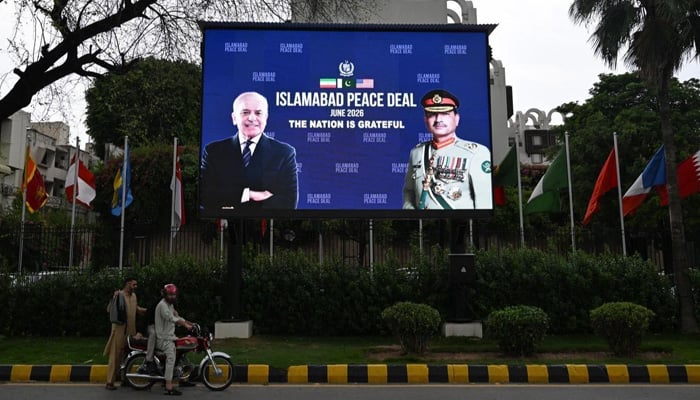
ISLAMABAD: Pakistan has urged the United States to fully implement the June 18 Islamabad Memorandum of Understanding (MoU), describing the agreement as the best path toward lasting regional peace and stability amid rising tensions involving Iran.

Deputy Prime Minister and Foreign Minister Ishaq Dar conveyed the message during a meeting with US Chargé d’Affaires Natalie A. Baker in Islamabad on Friday. He stressed that dialogue and diplomacy remained essential for resolving regional disputes while reaffirming Pakistan’s commitment to protecting its national interests.

The US diplomat acknowledged Pakistan’s constructive role in supporting regional peace and stability and congratulated the Pakistani leadership and people on Independence Day.

Dar also held talks with British High Commissioner Jane Marriott, during which the two sides discussed regional and international developments, bilateral ties and ways to enhance cooperation. Dar again called for the Islamabad MoU to be implemented in its entirety.

Separately, Chinese Ambassador Jiang Zaidong met the foreign minister and expressed appreciation for Pakistan’s assistance following the death of a Chinese mountaineer in an avalanche at Broad Peak, Gilgit-Baltistan. Dar assured him of Pakistan’s support in facilitating the repatriation of the deceased’s remains.

Dar also spoke by phone with Egyptian Foreign Minister Badr Abdelatty. The two leaders exchanged Independence Day greetings and reaffirmed their commitment to strengthening Pakistan-Egypt relations through greater cooperation and high-level engagement.

The diplomatic engagements come as tensions surrounding Iran continue to intensify, with Pakistan maintaining that dialogue and diplomacy are the most viable means of addressing outstanding regional issues.

Similar Posts

  • | |

    Arooj Aurangzeb calls out support for Indian Gen Z

    Arooj Aurangzeb is a name that carries real weight in Pakistan’s student activism circles. In 2019, she went viral after a video of her reciting a powerful poem during the student solidarity march spread rapidly across social media. She was protesting alongside thousands of other students who were demanding the restoration of student unions and proper political representation for young people within the country’s institutions. The videos from that movement were electric, emotional and widely shared, including hers. Seven years later, she is back in the public conversation, but this time it is not because of a protest. It is because of a contradiction she says she can no longer stay quiet about. When Indian students began protesting over the NEET paper leak at Jantar Mantar, demanding justice and systemic reform in the country’s examination system, Pakistani social media users responded with visible enthusiasm. Support poured in from across the border, with many Pakistanis praising the Indian Gen Z for their courage, awareness and refusal to be silent. Arooj Aurangzeb watched that wave of support and felt something shift inside her. She took to social media to point out what she saw as a glaring and painful inconsistency. While Pakistanis were celebrating the Indian protesters and calling their movement inspiring, many of those same people had ridiculed, trolled and dismissed her and her fellow students when they took to the streets in 2019 for exactly the same kind of systemic change. She did not hold back. She highlighted the irony directly, asking how the same people who mocked Pakistani students fighting for their rights could turn around and feel so moved by Indian Gen Z doing the same thing. Her post was not framed as anti-India. It was framed as a question about selective empathy and the way Pakistanis sometimes extend more admiration to voices from abroad than to those speaking up at home. The internet did not respond with silence. Reactions were divided and sharp. Some users sided with her immediately. “We never stand by our own heroes,” one person wrote, capturing the frustration that Arooj was articulating. Others pushed back, with one commenter arguing that the dynamics of Indian and Pakistani Gen Z are completely different and that direct comparisons were unfair. Another raised a pointed question of their own, asking why so many Pakistani revolutionaries eventually leave the country on foreign visas, a remark that suggested the critique went both ways. Arooj Aurangzeb’s voice in 2019 was a reminder that young Pakistanis were willing to stand up and demand something better. Her voice in 2026 is a reminder that those same young people are still watching, still paying attention, and still asking why the recognition they deserved then continues to be denied while admiration flows so freely elsewhere.

  • | |

    SBP reserves fall $229m, gold prices rise

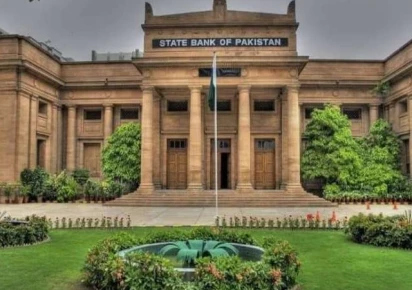
    The State Bank of Pakistan’s (SBP) foreign exchange reserves fell by $229 million in the week ending July 24, 2026, to $17.03 billion, mainly due to external debt repayments. Pakistan’s total liquid foreign exchange reserves stood at $22.4 billion during the week. The SBP held $17.03 billion, while commercial banks maintained net reserves of around $5.4 billion. Meanwhile, the Pakistani rupee edged up against the US dollar, closing at Rs277.81 in the interbank market on Thursday compared with Rs277.82 a day earlier. The dollar remained stable in early Asian trading after the US Federal Reserve kept interest rates unchanged. Gold prices in Pakistan also increased, following gains in international markets. The All-Pakistan Gems and Jewellers Sarafa Association said the price of 24-carat gold rose by Rs1,000 to Rs427,436 per tola. The price of 10 grams increased by Rs857 to Rs366,457. Internationally, spot gold gained 0.8% to $4,098.98 per ounce, while US gold futures for August delivery rose 1.4% to $4,097.70. The Federal Reserve maintained its current interest rates on Wednesday, while softer US inflation data reduced market expectations of a rate hike in September. Analysts, however, warned that the ongoing conflict in the Middle East could put renewed pressure on inflation. Silver prices moved lower in the domestic market, declining by Rs76 to Rs6,215 per tola. Interactive Commodities Director Adnan Agar said the gold market remained range-bound. Bullion traded between $4,028 and $4,120 before settling near $4,107, which he described as a “danger zone.”

  • | |

    Jersey Shore star Nicole ‘Snooki’ Polizzi shar…

    Nicole “Snooki” Polizzi is focusing on recovery after undergoing a hysterectomy as part of her treatment for stage 1 cervical cancer. The Jersey Shore star shared a heartfelt health update with fans after having surgery on Friday, revealing that while the procedure was successful, the recovery has been more difficult than she expected. Polizzi documented the experience on TikTok, giving followers an honest look at her journey from the hospital bed.  In the emotional video, the 38-year-old reality television personality thanked fans for their support while admitting she is still struggling physically and emotionally. Although she tried to stay positive, Polizzi said recovering from such a major operation has been challenging. She also shared a lighthearted moment by showing the meal she enjoyed after surgery—curly fries with ketchup—which brought a smile to many of her followers.  Polizzi first revealed her stage 1 cervical cancer diagnosis in February after receiving results from a cone biopsy. Doctors diagnosed her with adenocarcinoma, a form of cervical cancer, but assured her that it had been caught at an early stage. A subsequent PET scan showed no signs that the cancer had spread, leading doctors to recommend a hysterectomy to prevent future complications.  Before undergoing surgery, Polizzi admitted she was nervous about the procedure, calling it one of the scariest medical experiences she had ever faced. She explained that the operation would remove her uterus and cervix through an abdominal incision, making recovery more demanding than any surgery she had previously experienced.  Throughout her health journey, the mother of three has remained committed to raising awareness about cervical cancer and the importance of routine screenings. Polizzi revealed that she had experienced abnormal Pap smear results for several years before receiving her diagnosis, encouraging women not to delay regular checkups, even if the appointments feel uncomfortable or intimidating. She credits early detection with giving her the best possible chance for a full recovery.  Support has poured in from fans, family members and fellow Jersey Shore castmates, many of whom have praised Polizzi for openly sharing her experience. She has said that documenting her journey is her way of helping others feel less alone and encouraging more people to prioritize preventive healthcare.  Despite the difficult recovery, Polizzi remains optimistic about the future. She has assured followers that she is taking things one day at a time and focusing on healing. Her candid updates have transformed a deeply personal battle into an important conversation about early detection, women’s health and the power of sharing personal experiences to help others. 

  • |

    Women allege rape, abuse at UK Army teen college

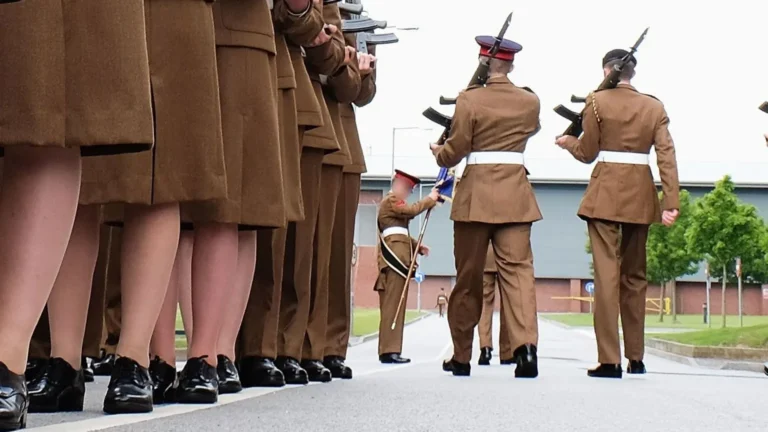
    Four former female recruits have accused the UK’s Army Foundation College (AFC) in Harrogate of fostering a culture of sexual abuse, harassment and misogyny, with one woman alleging she was raped by several fellow recruits when she was 17 years old. The women, who attended the military training college over the past five years, shared their experiences publicly for the first time. They said they faced sexual violence, harassment and degrading treatment while undergoing training at the college, which prepares teenagers for military service. One former recruit said she accepted an invitation to another recruit’s room, believing it was harmless. She alleged that several male recruits sexually assaulted and raped her over the course of several hours. The traumatic incident forced her to leave the Army within weeks, saying she could no longer continue her training after the attack. Another former recruit alleged that a fellow trainee trapped her inside a room before sexually assaulting her. She said she managed to escape after struggling with the attacker. A third former recruit’s mother said her daughter endured repeated sexual harassment throughout her training and even blocked her dormitory door at night because the room’s lock was broken and she feared male recruits entering. A fourth woman claimed some instructors openly made sexist remarks, rated female recruits based on their appearance and entered female dormitories without warning. She alleged that such behaviour encouraged disrespectful attitudes toward women among male trainees. Official data obtained through freedom of information requests revealed that police received 16 reports of sexual offences linked to the college during the year ending in June. The reported incidents included allegations of sexual assault, exposure and voyeurism. Separate Ministry of Defence figures showed that 176 complaints involving inappropriate sexual behaviour were recorded at the college between January 2018 and June 2025. Most complaints involved junior soldiers, while dozens concerned permanent staff members. The British Army described the allegations as extremely serious and distressing, stating that criminal or unacceptable behaviour has no place in the armed forces. It said several reforms have been introduced to improve victim support and strengthen the handling of serious offences, including specialist investigations conducted outside the normal chain of command. The Army also said it encourages anyone who has experienced or witnessed misconduct to report it and maintained that the college remains committed to providing a professional, safe and supportive environment for all recruits. However, concerns have grown over the safety of young recruits following previous convictions involving Army personnel for sexual offences and wider reports highlighting sexual misconduct within the armed forces.

  • |

    India’s young protesters turn memes into a tool of resistance

    NEW DELHI: A massive youth-led protest in India’s capital has taken an unusual turn after thousands of demonstrators responded to a police crackdown not only with slogans but also with memes, short videos and social media posts. The online campaign has become a powerful extension of the street movement, with young protesters using humour to document their experiences and keep public attention focused on their demands. The demonstrations were organised by supporters of the Cockroach Janta Party (CJP), a youth movement that first emerged over allegations of examination paper leaks and irregularities in government recruitment. Over time, the campaign expanded into a broader call for transparency, accountability and reforms in India’s education and recruitment systems. Tens of thousands of protesters marched towards Parliament in New Delhi, demanding the resignation of Education Minister Dharmendra Pradhan. Demonstrators accused the government of failing to stop repeated examination leaks that they say have damaged the future of millions of students. The minister has rejected the allegations and insisted that opposition parties are using students for political purposes. Police blocked the march before protesters could reach Parliament. Security personnel used tear gas and baton charges to disperse the crowd after demonstrators attempted to cross security barriers. Authorities also suspended mobile internet services around the protest area, saying the measure was necessary to maintain law and order. Both protesters and police reported injuries during the clashes. Demonstrators claimed that many participants were beaten during the operation, while police said several officers were also injured. Once internet services were restored, social media platforms were flooded with videos recorded during the protest. Instead of sharing only images of violence, many young protesters posted humorous clips showing themselves preparing for the march, running from tear gas and joking about the day’s events. Several participants uploaded “fit check” videos before joining the protest. The popular social media trend, usually used to show clothing and fashion, was transformed into political content. Some joked that they were dressed for a protest where they expected to face police action. Hours later, many of those same individuals were posting videos from the streets after the clashes. Other protesters shared short clips reviewing the effects of tear gas in a humorous style or laughing about the long distances they ran while escaping baton charges. The humour quickly attracted millions of views and became one of the defining features of the protest movement online. Participants said the jokes were never meant to make light of the violence. Instead, they described humour as a way to deal with fear and emotional stress. Many said laughing together helped them remain calm during an extremely tense situation. Young demonstrators also explained that recording videos had become a natural part of participating in modern protests. Smartphones allowed them to document events from their own perspective and preserve evidence of what happened on the streets. Researchers who study digital culture say the protests highlight how political activism is changing among younger generations. Unlike traditional demonstrations that relied mainly on speeches, banners and newspapers, today’s movements increasingly use short videos, memes and online storytelling to spread their message. Experts believe internet humour has become an effective political tool because it reaches audiences who may not normally follow current affairs. A single viral video or meme can introduce complex political issues to millions of young people in a simple and engaging way. Observers also note that humour has always played an important role in protest movements around the world. Songs, cartoons, street theatre and satire have historically helped protesters build unity, reduce fear and maintain morale during difficult campaigns. Social media has simply given those traditions a new digital form.

  • | | | |

    Malala expresses grief over Swat attack, calls for…

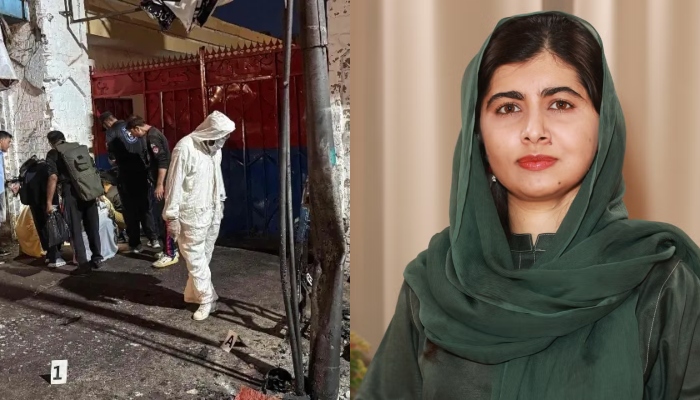
    Nobel Peace Prize laureate Malala Yousafzai has expressed deep sorrow over the recent suicide attack in Swat, urging authorities to ensure the protection of civilians and prevent the region from falling back into violence. In a statement, Malala said she was deeply saddened by the suicide bombing in her hometown of Swat, describing the incident as a tragic reminder of the suffering the region has endured over the years. She noted that the attack claimed the lives of more than a dozen people, including police personnel, and said she could understand the pain and grief being experienced by the families of the victims. Malala extended her heartfelt condolences to those who lost their loved ones and prayed for strength and patience for the bereaved families. She also expressed hope for the speedy recovery of those injured in the attack. Emphasising the importance of public safety, Malala called on the authorities to take all necessary measures to protect the lives and property of citizens and ensure lasting peace and security in the region. Reflecting on Swat’s past, she said the girls of the valley have always dreamed of living in peace, free from fear and violence. She added that her prayers are with the people of Swat and expressed hope that they would never again be forced to live under the shadow of the Taliban. Malala said the people of Swat deserve a peaceful future where children can pursue their education, families can live without fear, and communities can rebuild their lives in a secure environment.

Leave a Reply

Your email address will not be published. Required fields are marked *