amaal malik breaks
|

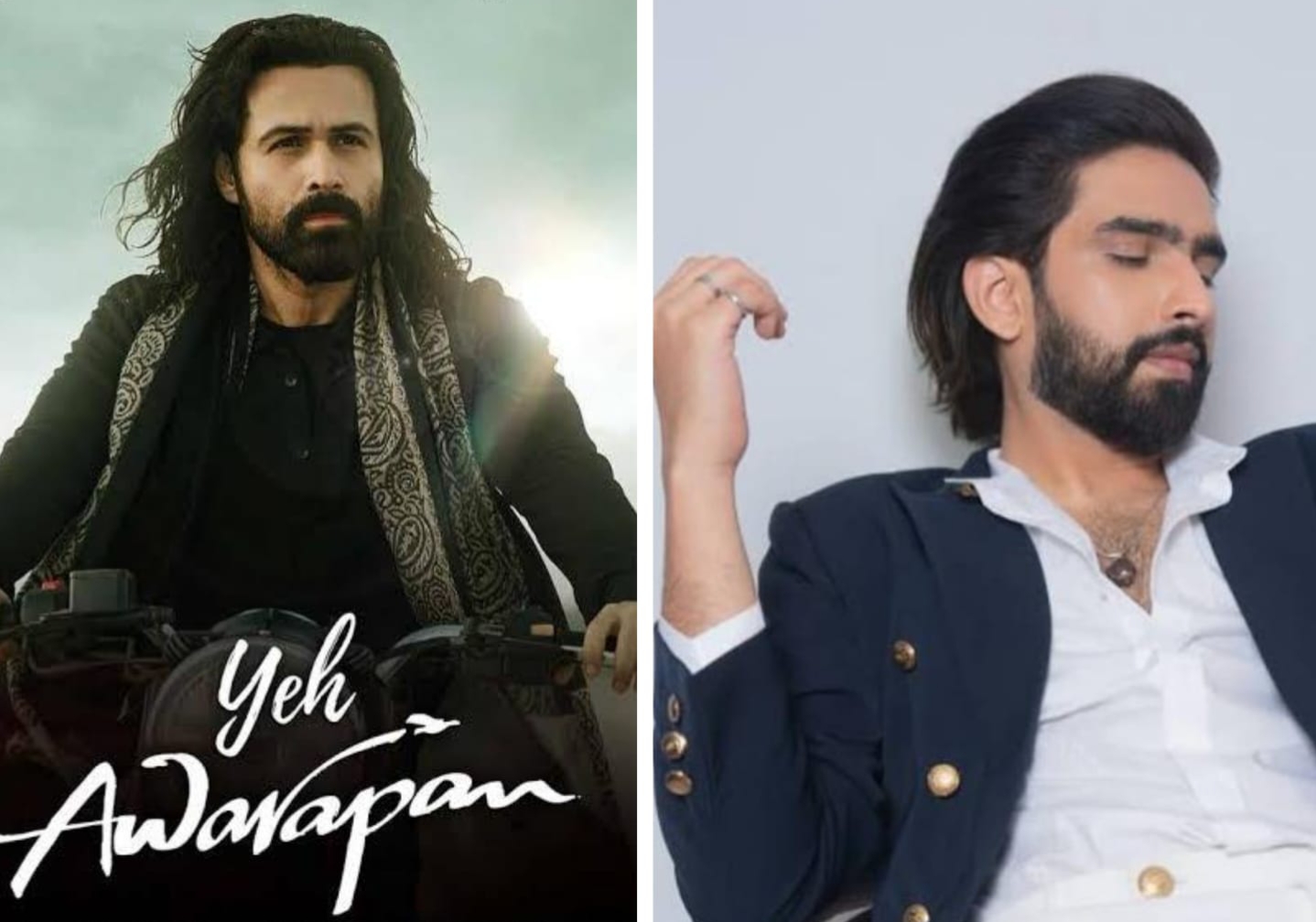
Amaal Malik breaks silence on Awarapan 2 song controversy

Music composer Amaal Malik has responded to the criticism surrounding one of the newly released songs from the upcoming film Awarapan 2, claiming that a coordinated campaign is being carried out against both the movie and its soundtrack.

The sequel stars Emraan Hashmi and follows the 2007 cult classic Awarapan, a film remembered for its emotional storyline as well as its memorable soundtrack. The original movie featured several popular songs, including Toh Phir Aao, Maula Maula, and Tera Mera Rishta, which became fan favorites over the years.

For Awarapan 2, Amaal Malik has been entrusted with composing the film’s music. As part of the soundtrack, he recently introduced a fresh version of Toh Phir Aao, originally performed by Pakistani singer Mustafa Zahid. The recreated track received attention from listeners, with many comparing it to the much-loved original.

The discussion intensified after the release of another song from the film, Ye Awarapan. Soon after it was released, the track sparked mixed reactions across social media. While some listeners praised the composition and vocals, others criticized the new version, leading to an online debate among music fans.

Breaking his silence on the criticism, Amaal Malik shared a statement on X, where he suggested that the backlash was not entirely organic. According to the composer, there is a well-organized public relations campaign being carried out by certain rivals within the film industry who do not want either the film or its music to succeed.

Without naming any individuals or organizations, Malik alleged that paid efforts were being used to influence public opinion against the soundtrack. He argued that such campaigns were unnecessary and advised those behind them to focus their resources elsewhere instead of targeting his work.

In his message, the composer also remarked that people should save their funds for their own future film projects rather than spending money on attempts to damage someone else’s release. His comments appeared to be a subtle response to critics while expressing confidence in the music and the film’s reception.

The statement quickly gained attention online, with fans reacting on both sides of the debate. Supporters defended Malik, saying that online criticism can sometimes be amplified by organized campaigns, while others maintained that audiences are entitled to express genuine opinions about new music. The discussion has continued across various social media platforms since his remarks.

One of the highlights of Ye Awarapan is its vocals by renowned playback singer Arijit Singh. The song marks another notable addition to his extensive catalog and has attracted significant interest from fans eager to hear his latest work. His performance has been widely appreciated by many listeners despite the controversy surrounding the release.

With Awarapan 2 preparing for its theatrical release, the conversation around its soundtrack continues to generate buzz. Whether the debate ultimately affects the film’s success remains to be seen, but the latest exchange has ensured that the movie and its music remain firmly in the spotlight.

Similar Posts

  • |

    Oil prices climb on fears of prolonged Middle East supply disruptions

    LONDON: Global oil prices moved higher on Friday and remained on course for weekly gains as fresh threats from the United States to maintain an indefinite naval blockade of Iran heightened concerns over the security of crude shipments from the Middle East. Brent crude futures gained $1.43, or 1.64%, to reach $88.50 a barrel by 0810 GMT. US West Texas Intermediate (WTI) crude also advanced, rising $1.56, or 1.92%, to $82.81 a barrel. The latest rally reflected growing market anxiety that the conflict in the region could persist for an extended period, potentially placing further pressure on one of the world’s most important oil supply routes. Bjarne Schieldrop, chief analyst at SEB Research, said the prospect of prolonged US pressure on Iran had increased uncertainty in the oil market. He noted that the latest developments offered little indication of a quick return to normal conditions in the region. US pressure raises supply concerns Oil markets reacted strongly after the United States warned on Thursday that its naval blockade of Iran could continue indefinitely while Washington considers additional economic measures against Tehran. US Treasury Secretary Scott Bessent said the administration was preparing further measures aimed at increasing economic pressure on Iran, signalling that Washington could take steps beyond those already announced. The comments added to concerns that tensions between the United States and Iran could remain elevated, making it more difficult for shipping and energy companies to operate normally in the region. Schieldrop said expectations for a rapid restoration of regular shipping through the Strait of Hormuz had weakened significantly as a result of the latest developments. The waterway is particularly important to global energy markets. Before the current conflict began in late February, roughly one-fifth of the world’s daily oil and liquefied natural gas supplies passed through the Strait of Hormuz. Any prolonged disruption could therefore have consequences far beyond the Middle East, potentially affecting crude availability, transportation costs and fuel prices in major consuming markets. Strait of Hormuz traffic under pressure Shipping activity through the strategic waterway declined below the monthly average toward the end of the week as tensions increased and both sides issued competing claims regarding control of the passage. The situation escalated further on Thursday when two vessels belonging to Abu Dhabi National Oil Company were attacked while travelling through the strait, according to the UAE’s state news agency WAM. The UAE government condemned the incident and attributed the attack to Iran, adding another layer of uncertainty for commercial shipping operators using the vital route. Market participants are closely monitoring developments in the strait because even a partial disruption could force vessels to take longer and more expensive alternative routes. Demand outlook limits oil gains Despite the immediate supply concerns, expectations of weaker global oil demand growth are acting as a counterweight to the price rally. Recent forecasts from the Organisation of the Petroleum Exporting Countries (OPEC) and the International Energy Agency (IEA) have pointed towards slower growth in oil consumption, suggesting that demand may not be strong enough to absorb a prolonged increase in prices without affecting economic activity. US inventory data also provided a bearish signal. American crude stockpiles recorded their biggest weekly increase in more than three and a half years, indicating that supplies in the world’s largest oil-consuming economy remain relatively comfortable. Norbert Rucker, head of economics and next-generation research at Julius Baer, said recent reports from the IEA and US Energy Information Administration showed that oil storage levels were holding up better than markets had initially feared. According to Rucker, stronger-than-expected inventories could eventually put downward pressure on crude prices if geopolitical risks ease. For now, however, the possibility of further escalation between Washington and Tehran is keeping traders focused on supply risks. The market is expected to remain highly sensitive to developments surrounding the Strait of Hormuz, particularly any signs of prolonged restrictions on tanker movements. Analysts said the direction of oil prices in the coming sessions would depend on whether geopolitical tensions intensify further or whether diplomatic efforts succeed in restoring more predictable shipping and energy flows from the region.

  • |

    UN chief visits Syria after 17 years and backs reconstruction efforts

    United Nations Secretary General Antonio Guterres visited Syria on Saturday for the first time in 17 years, marking a significant moment in the country’s efforts to rebuild after more than a decade of conflict. During his visit to Damascus, Guterres met Syrian President Ahmed al Sharaa and pledged continued UN support for reconstruction, humanitarian recovery and long-term stability as Syria works to recover from years of war. President Sharaa welcomed Guterres at the presidential palace, where the two leaders held talks focused on rebuilding the country and strengthening cooperation with the United Nations. Speaking after the meeting alongside Syrian Foreign Minister Asaad al Shaibani, Guterres said no nation can recover from a devastating conflict without international assistance. He stressed that the global community has a responsibility to help Syria restore its economy, rebuild damaged infrastructure and create conditions for lasting peace. Foreign Minister Shaibani called on the international community, particularly the European Union, to increase financial and technical support for Syria’s recovery. He said discussions with Guterres also covered plans to expand UN assistance for reconstruction projects and support the government’s efforts to gradually close displacement camps as security conditions improve. Regional security was another major topic during the visit. Guterres expressed concern over the situation in the Golan Heights, describing recent developments as unacceptable. Syrian officials repeated their demand for Israeli forces to withdraw immediately from the United Nations monitored buffer zone where troops have been stationed since 2024. Damascus has also called for a return to the 1974 disengagement agreement that previously governed military positions in the area. The visit is being viewed as another important step in Syria’s return to the international stage following the removal of former president Bashar al Assad in late 2024. The end of Assad’s rule brought an end to a civil war that began in 2011 and resulted in hundreds of thousands of deaths while forcing millions of Syrians to flee their homes. At the time, Guterres described the political transition as a hopeful moment for both Syria and the wider region. Before arriving in Damascus, the UN chief described his trip as a visit of solidarity and reaffirmed the United Nations’ commitment to supporting the Syrian people during this critical period. He is expected to spend several days in the country, meeting senior government officials, representatives of civil society and humanitarian organizations. Guterres is also scheduled to address Syria’s parliament, where he is expected to speak about the country’s opportunity to build a more stable, inclusive and prosperous future after years of conflict. The visit comes as Syria continues to rebuild diplomatic ties with countries around the world. President Sharaa’s administration has sought to strengthen relations beyond the country’s traditional allies while encouraging international investment and cooperation. Since taking office, the government has focused on restoring Syria’s place in regional and global affairs after years of political isolation. Recent diplomatic developments have reflected that effort. Last year, Sharaa became the first Syrian president in decades to address the United Nations General Assembly. Earlier this month, US President Donald Trump announced plans to remove Syria from the United States list of state sponsors of terrorism after Washington lifted most of its sanctions on the country. Despite these diplomatic gains, security concerns remain. Guterres’ visit follows recent bomb explosions near a hotel in Damascus that had hosted French President Emmanuel Macron during his landmark visit, the first by a European Union head of state since Syria’s political transition. The incidents highlighted the continuing security challenges facing the country as it moves through a delicate rebuilding process. During his stay, Guterres is also expected to visit the UN peacekeeping mission responsible for monitoring the buffer zone between Israeli and Syrian forces. The mission has operated in the area for decades and continues to play a key role in maintaining stability along the disputed frontier. His visit underscores the United Nations’ commitment to supporting Syria’s recovery while encouraging dialogue, regional stability and international cooperation.

  • |

    Gohar Rasheed criticises celebrity culture

      Actors Gohar Rasheed and Khaqan Shahnawaz recently shared their views on Pakistan’s entertainment industry, discussing everything from celebrity culture and political awareness to the Aurat March and the treatment of artists behind the scenes. During the interview, Gohar Rasheed expressed concern over what he sees as a growing lack of awareness among many celebrities. According to him, several actors and public figures avoid discussing political or social issues, choosing instead to remain neutral in order to protect their public image. Rasheed said that many stars are reluctant to speak not only about Pakistan’s political matters but also about important international events. In his opinion, this tendency to remain silent reflects a broader lack of general knowledge within the entertainment industry. He argued that many personalities are more focused on maintaining popularity than engaging with issues that affect society. He also criticized the industry’s increasing obsession with social media success, saying that likes, followers and online engagement have become more important than artistic excellence. Rasheed noted that many people in showbiz are competing for digital numbers instead of concentrating on improving their craft. He believes this shift has weakened the creative standards of the industry and distracted performers from meaningful storytelling. The discussion later moved to the Aurat March, Pakistan’s annual movement advocating for women’s rights. Rasheed clarified that he supports the overall goals of the campaign, particularly its efforts to promote equality and highlight issues affecting women. However, he said that he disagrees with some of the slogans displayed during the marches, arguing that a few of them can be interpreted as disrespectful or controversial. Using item songs as an example, Rasheed explained that he opposes anything that objectifies women and believes campaigns for women’s rights should communicate their message in a way that appeals to a wider audience. He suggested that activists can continue advocating for equal rights while choosing language that is less likely to divide public opinion or shift attention away from the movement’s main objectives. Khaqan Shahnawaz offered a different perspective, defending the Aurat March against criticism. He argued that many people focus only on a small number of controversial slogans while ignoring the movement’s broader mission. According to Shahnawaz, the campaign raises awareness about serious issues including acid attacks, gender-based violence, femicide and the denial of basic rights to women across Pakistan. He said the Aurat March is one of the few public platforms that consistently highlights these problems and demands meaningful reforms. Shahnawaz added that criticizing the wording of a few slogans overlooks the larger struggle for justice and equality. He also emphasized that the frustration expressed by many participants reflects the realities faced by women who experience discrimination and violence. Shahnawaz further argued that the language used during protests should not overshadow the importance of the causes being raised. In his view, people should pay greater attention to the issues themselves rather than attempting to dictate how protesters express their emotions. He also said that participation in the Aurat March should not automatically define a celebrity’s responsibilities as a public figure. Beyond social issues, Rasheed highlighted long-standing problems within Pakistan’s entertainment industry. He called for fairer treatment of actors, writers, directors and technical crew members, stressing that many professionals continue to face delayed payments and inadequate financial recognition for their work. He also urged producers and production houses to ensure timely compensation and a fair distribution of royalties, saying that everyone involved in creating television and film projects deserves respect and proper remuneration. Rasheed warned against exploiting creative professionals, adding that those who mistreat workers may eventually be held accountable for their actions. On the professional front, Gohar Rasheed is preparing for several upcoming television projects, including Fanaa, Ae Dil, Hasrat and Jindo. Meanwhile, Khaqan Shahnawaz continues to build his acting career with performances in dramas such as Hadsa, Sukoon and My Dear Cinderella, while also maintaining a strong presence as a digital content creator.

  • |

    Bangladesh make history, overtake India in WTC table

    DARWIN: Bangladesh’s stunning nine-wicket victory over Australia in Darwin has not only delivered a landmark moment for the team but also lifted them above India in the ICC World Test Championship 2025-27 standings. Bangladesh secured their first-ever Test victory over Australia, doing so on Australian soil in a result that sent a strong message across the Test cricket world. The win also produced a significant shift in the World Test Championship points table. Australia remain at the top despite suffering their second defeat of the current cycle, holding a points percentage of 77.78. South Africa are second with 75 per cent, while New Zealand sit third on 72.22 per cent. Bangladesh have now climbed to fourth place with an impressive 66.67 per cent, moving ahead of India, who are fifth with 48.15 per cent. The result gives Bangladesh an important boost as they continue their WTC campaign and adds even greater significance to their historic success in Darwin. Sri Lanka occupy sixth position with 41.67 per cent, followed by England on 24.36 per cent. Pakistan are eighth with 22.22 per cent, while the West Indies remain ninth on 20.83 per cent. For Bangladesh, the victory represents more than just two points or a rise in the rankings. It marks their first Test triumph against Australia and could become one of the defining results of their current World Test Championship campaign. WTC Standings Details Bangladesh Position: 4th place Bangladesh Points Percentage: 66.67% (3 wins from 5 matches) India Position: 5th place India Points Percentage: 48.15% (4 wins from 9 Tests) Historic Milestone: Marked Bangladesh’s first Test win on Australian soil.

  • | |

    Whoopi Goldberg shares the secret behind her bigge…

    Whoopi Goldberg has revealed an unexpected secret behind some of the biggest roles of her career. The acclaimed actress recently explained that several of her most memorable movies came after other actors had turned the projects down. Speaking on the podcast Baby, This Is Keke Palmer, Goldberg, 70, reflected on how she landed the lead role in the 1992 comedy Sister Act. The actress revealed that the movie was originally written with Bette Midler in mind. “They wrote that for Bette Midler,” Goldberg explained, according to reports from PEOPLE and Entertainment Weekly. Midler ultimately passed on the project, opening the door for Goldberg to take on the role that would become one of her career-defining performances. (People.com⁠) How Goldberg found major opportunities Goldberg explained that she eventually developed a strategy for finding roles that other actors had rejected. She asked her agents to send her scripts that had already been turned down by other performers. That approach proved surprisingly successful. In addition to Sister Act, Goldberg landed roles in movies that had initially been developed with other stars in mind. Burglar, for example, had originally been intended for Bruce Willis, while Jumpin’ Jack Flash was initially associated with Shelley Long. (People.com⁠) Goldberg suggested that her experiences were partly connected to the limited opportunities available to Black actresses at the time. Rather than allowing those barriers to stop her, she looked for projects that had been passed over and found ways to make them her own. Sister Act became a career highlight Goldberg eventually transformed Sister Act into a showcase for her comedy and musical talents. She played Deloris Van Cartier, a nightclub singer who enters witness protection and is hidden in a convent. The film became a major success following its 1992 release, with Goldberg’s performance becoming closely associated with the movie. She returned for the 1993 sequel, Sister Act 2: Back in the Habit. (D23⁠) Midler has previously discussed why she rejected the role. She explained that she was concerned her audience would not want to see her wearing a nun’s habit. The decision ultimately gave Goldberg the opportunity to create an iconic character of her own. (People.com⁠) Goldberg’s Hollywood lesson Looking back, Goldberg’s career offers an unusual lesson about opportunities. Some of her most recognizable performances came from projects that initially seemed destined for someone else. Her story also highlights how persistence can create unexpected breakthroughs. Instead of waiting for Hollywood to offer her the obvious choices, Goldberg searched for opportunities others had overlooked. Decades later, Sister Act remains one of her signature films, proving that sometimes the role that was written for someone else can become the performance audiences remember forever.

  • |

    Coalitional fallout as violence and electoral fraud claims mar Azad Kashmir elections

    A bitter clash between federal coalition partners has erupted over the Azad Jammu and Kashmir Legislative Assembly elections, following the death of a political worker and mutual allegations of voter fraud. The Pakistan Peoples Party (PPP) condemned the killing of 35-year-old party worker Mukhtar Younus during polling in Nikyal, Kotli. Addressing a joint press conference, Sindh Local Governments Minister Saeed Ghani directly blamed the Pakistan Muslim League-Nawaz (PML-N) candidate and supporters for the shooting, stating, “The way this election campaign was conducted, the result is that bullets are being fired today… Our workers are dying.” Ghani heavily criticised the Election Commission for failing to enforce code of conduct rules and accused the Punjab government of attempting to influence voters by promising public buses during the campaign. He also took aim at PML-N President Nawaz Sharif’s comparative statements regarding Sindh and Kashmir, asserting: “When you say ‘this is Kashmir, not Kashmore’ or ‘this is Mirpur, not Mirpur Khas’, you hurt the people of Sindh… Perhaps that is why people say the PML-N is not a national party but a Punjabi party.” Rejecting the accusations, Punjab Information Minister Azma Bokhari presented video footage alleging that a PML-N candidate discovered bags of pre-stamped ballot papers at the home of a PPP candidate in Kotli. Pointing out the contradiction, Bokhari remarked, “Yesterday they said they would not let rigging happen. Today they are rigging.” Defending her party’s track record, Bokhari argued that public transit is a basic necessity and noted that the promised buses for AJK had not yet begun operating. She maintained that voters in the Mirpur division were turning out despite boycott calls, seeking Punjab-style developmental projects such as electric buses, housing, and youth scholarships. Addressing queries regarding Nawaz Sharif’s interest in the region, Bokhari clarified that the former prime minister does not seek an official title, but simply wishes to offer development guidance to AJK due to his Kashmiri heritage.

Leave a Reply

Your email address will not be published. Required fields are marked *