north korea official
|

North Korea official blasts ASEAN for urging denuclearisation

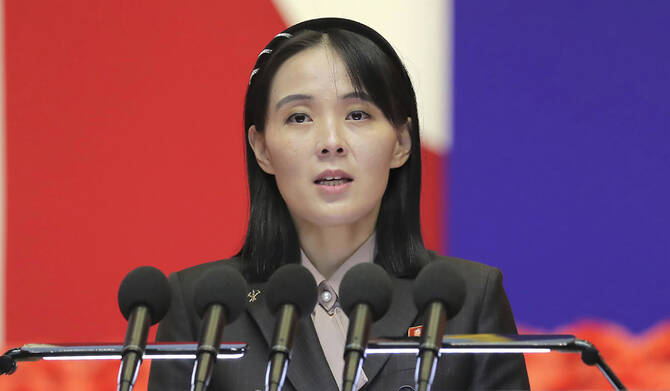
Kim Yo Jong, the influential sister of North Korean leader Kim Jong Un and a central figure in Pyongyang’s foreign policy, has launched a fierce verbal attack against the Association of Southeast Asian Nations (ASEAN) following calls for the complete denuclearisation of the Korean Peninsula.

In an official statement published by the state-run Korean Central News Agency (KCNA), she condemned the position adopted at last week’s annual ASEAN Regional Forum in Manila as “stupid and foolish”, dismissing regional hopes for nuclear disarmament as an outdated delusion.

The dispute was triggered by the release of the ASEAN Regional Forum chair’s statement, in which foreign ministers from across the Indo-Pacific region expressed grave concern over North Korea’s continued development of nuclear weapons and ballistic missile programs.

The joint declaration urged compliance with relevant United Nations Security Council resolutions and called for international dialogue to achieve lasting peace and stability through a peaceful, denuclearised peninsula.

Kim Yo Jong expressed strong dissatisfaction with the bloc, accusing ASEAN of displaying an undisguised hostile attitude and acting as a hired mouthpiece for the United States.

She argued that adhering to the concept of denuclearisation represents a complete failure of strategic logic, stating that the objective has lost all meaning both conceptually and practically.

She further accused the regional body of ignoring North Korea’s national constitution, which was updated in 2023 to formally enshrine its status as a nuclear-armed state.

Pyongyang has maintained for years that its nuclear arsenal serves as an essential deterrence mechanism to protect national sovereignty, despite facing heavy international sanctions and prohibitions from the UN Security Council.

Reaffirming the regime’s stance that its nuclear capabilities represent a “line of no retreat”, Kim Yo Jong emphasised that North Korea’s nuclear status is final and completely irreversible, adding that its arsenal will continue to be updated steadily without pause regardless of external pressure or diplomatic rhetoric.

Similar Posts

  • | |

    Sindh High Court rejects disqualification plea aga…

    The Sindh High Court has dismissed a petition seeking the disqualification of Pakistan Peoples Party leader and National Assembly member Shazia Marri over an alleged fake degree. The court announced its decision after the case remained pending for around 13 years. The petition was declared not maintainable and subsequently rejected. The court said the High Court does not have constitutional authority to disqualify a member of Parliament. According to the court, such matters must be dealt with through the relevant constitutional and electoral forums. The court also noted that a similar objection had previously been raised during the 2018 general elections. The matter was taken before an election tribunal at that time. The Election Commission later rejected the objection concerning Marri’s degree in 2022. An appeal against the tribunal’s decision was subsequently filed before the Supreme Court. The Supreme Court dismissed the appeal in 2023 after it was withdrawn. During the latest proceedings, Marri’s lawyer argued that the degree issue had already been examined by the Election Commission. He told the court that evidence relating to the qualification had been presented before the commission. The lawyer maintained that the Election Commission had already rejected the petition concerning Marri’s degree. The court also discussed the constitutional requirements for disqualification. It observed that a person cannot be disqualified simply through a constitutional petition. The court said the authority to determine whether a person meets the required constitutional standards rests with the appropriate judicial and electoral forums. It further stated that the courts cannot declare an individual truthful and trustworthy outside the constitutional procedure provided for such matters. The judges also referred to previous orders of the Supreme Court while determining the maintainability of the petition. Based on these considerations, the court concluded that the petition could not be entertained. The decision brings an end to a legal challenge that had remained pending for more than a decade. The case had focused on allegations concerning Marri’s educational qualification. However, the Election Commission had already rejected the related objection. The latest ruling also reinforces the distinction between the powers of the High Court and those of election tribunals and other constitutional forums in matters involving parliamentary eligibility. The court’s decision means that the petition seeking Marri’s disqualification has been dismissed without granting the requested relief.

  • | |

    Doctor suspended after performing laparoscopic sur…

    Islamabad: The Medical Tribunal has upheld a one year suspension of Dr Irfan Ashraf after finding that he performed laparoscopic surgery despite not completing the required training for independent laparoscopic procedures and operated at a healthcare facility that lacked an Intensive Care Unit and other essential facilities needed to deal with serious complications. The Tribunal also upheld a Rs100,000 fine and a ban preventing Dr Irfan Ashraf from performing laparoscopic procedures until he completes proper certified training. The judgment, announced on July 8, 2026, came in an appeal filed by Muhammad Zahid Niaz, whose father Niaz Ahmad died after a chain of medical treatment that began with laparoscopic surgery at Saleem Polyclinic in Mian Channu on December 31, 2016. The case took a serious turn when the disciplinary inquiry examined the actual training record of Dr Irfan Ashraf. The inquiry found that although he had taken part in laparoscopic procedures during his postgraduate training, most of his experience was as an observer or assistant. According to the judgment, Dr Irfan Ashraf had not completed the required number of procedures at the higher training levels needed to show independent surgical ability. The record showed that he had not completed even a single Level V procedure, which represents the stage at which a trainee is expected to perform laparoscopic surgery independently without supervision. The Tribunal said this was not simply a case where a normal surgical complication had occurred. The main concern was that Dr Irfan Ashraf undertook an elective laparoscopic operation without having demonstrated the required independent competence and at a facility that did not have the necessary backup facilities. The patient, Niaz Ahmad, suffered an injury to the common bile duct and hepatic vascular structures during the surgery. He was later taken to Bahawal Victoria Hospital in Bahawalpur for further treatment. He subsequently received treatment at Sheikh Zayed Hospital in Lahore and underwent an interventional radiological procedure at Lahore Medical Complex. Despite prolonged treatment at several hospitals, he died on March 4, 2017. The Punjab Healthcare Commission had earlier investigated the matter. It found that Saleem Polyclinic did not have the required infrastructure, qualified human resources and licensing needed for such surgical procedures. The Commission imposed a financial penalty on the owner of the healthcare establishment and referred the conduct of Dr Muhammad Saleem Akhtar and Dr Irfan Ashraf to the medical regulator for disciplinary action. The medical disciplinary committee later appointed Prof Dr Tanwir Khaliq, an experienced general surgeon, as an independent medical expert. He examined the medical record and assessed the standard of care, the management of laparoscopic complications and the facilities available at the clinic. Prof Dr Tanwir Khaliq concluded that the operation had been performed at a relatively small healthcare facility without an ICU and other essential backup facilities. He also found that Dr Irfan Ashraf was not sufficiently proficient in laparoscopic surgery, particularly when dealing with complications. The Tribunal noted that Dr Irfan Ashraf himself acknowledged that Saleem Polyclinic did not have an ICU or the facilities required to manage serious complications from laparoscopic surgery. The Tribunal also noted that Dr Irfan Ashraf had been working as a Senior Registrar at Bahawal Victoria Hospital, where better surgical support was available. When questioned about why the operation was carried out at the private facility, the explanation was that the patient wanted the surgery there. The Tribunal rejected this reasoning. It said a patient’s preference cannot remove a surgeon’s professional responsibility to determine whether a healthcare facility is safe enough for the planned procedure. The case also raised questions about what doctors tell patients about their professional skills. The disciplinary committee found that Dr Irfan Ashraf had represented himself as independently competent to perform laparoscopic surgery even though his training record did not show that he had completed the required independent procedures. The Tribunal said the evidence supported three major findings against Dr Irfan Ashraf. He performed an elective laparoscopic operation at a facility that could not properly manage foreseeable complications. He represented himself as independently competent despite incomplete training. He also exposed the patient to avoidable risk by choosing a facility without the necessary support instead of a properly equipped tertiary hospital. However, the Tribunal did not hold every doctor involved in the patient’s treatment responsible. Dr Muhammad Saleem Akhtar, the owner of Saleem Polyclinic, received a warning rather than a disciplinary punishment. The Tribunal found that there was no evidence that he personally performed the operation or took part in the surgical decision making. The Tribunal said ownership of a healthcare facility alone was not enough to impose the same disciplinary punishment on Dr Muhammad Saleem Akhtar as the operating surgeon. However, the warning required him to ensure that his facility was not used for procedures beyond its capacity. Dr Khurram Shafiq Khan was also cleared of professional negligence. His involvement came later, after the patient had already suffered complications from the earlier surgery. His role was connected with an embolization procedure to control bleeding from the hepatic artery. After examining his role, the disciplinary committee found no clear connection between the procedure performed by Dr Khurram Shafiq Khan and the patient’s eventual death. The Tribunal found no reason to disturb that decision. Muhammad Zahid Niaz had appealed because he believed the punishment against Dr Irfan Ashraf was too weak considering that his father’s treatment ultimately ended in death. He also wanted stronger action against Dr Muhammad Saleem Akhtar and Dr Khurram Shafiq Khan. The Medical Tribunal, chaired by Justice (Retired) Safdar Saleem Shahid, rejected the request for harsher punishment. The Tribunal said a tragic medical outcome does not automatically mean that every doctor involved was negligent. It explained that medical procedures can have known complications even when reasonable care is taken. The important question is whether a doctor failed to meet the level of skill and care expected from a competent doctor in similar circumstances. In the case of Dr Irfan Ashraf, however, the Tribunal found that the disciplinary committee had enough evidence

  • |

    OPEC+ expected to approve another oil output increase for September

    OPEC+ is widely expected to approve another increase in oil production when its members meet virtually on Sunday, as the alliance continues to adjust supply while global energy markets remain affected by ongoing geopolitical tensions. According to market analysts, Saudi Arabia, Russia and several other key members of the alliance are likely to raise their combined production target by around 188,000 barrels per day for September. If approved, the increase would continue a series of monthly production hikes introduced this year and is expected to mark the final step in the group’s current plan to gradually restore previously reduced output. OPEC+, which includes members of the Organization of the Petroleum Exporting Countries and allied producers, introduced major production cuts between late 2022 and 2023 after concerns that falling oil prices could weaken global energy markets. Those reductions removed nearly six million barrels of oil per day from the market in three separate phases. As demand gradually recovered, the group shifted its strategy by slowly increasing production, beginning in 2025, to balance supply while supporting market stability. A September increase would complete the reversal of the second package of production cuts introduced during that period. However, analysts note that higher production targets do not necessarily mean actual oil output will increase by the same amount. Several member countries are currently unable to reach their assigned quotas because of declining production capacity, ageing infrastructure or operational challenges. Energy analyst Giovanni Staunovo of UBS said many producers are already pumping below their official targets, making further quota increases less significant in practical terms. He noted that production capacity has declined in several member states, limiting their ability to take full advantage of higher output allowances. Regional tensions have also affected oil exports. Gulf producers continue to face challenges because shipping through the Strait of Hormuz has been disrupted during the conflict involving Iran. Although maritime traffic briefly improved after a memorandum of understanding between the United States and Iran was signed in June, transport through one of the world’s busiest oil routes remains uncertain. Russia is also dealing with production difficulties as repeated Ukrainian drone attacks have targeted parts of its energy infrastructure. Current Russian oil production remains close to nine million barrels per day, well below its official production target of 9.8 million barrels per day, highlighting the gap between quotas and actual output. Some OPEC+ members, including Iraq, have indicated they want to increase production significantly once conditions allow. At the same time, the alliance is reviewing the maximum sustainable production capacity of each member to help determine future output allocations. These discussions are expected to play an important role in setting production quotas for 2027 and beyond. Analysts believe negotiations over future production targets could become more challenging after the September meeting. While they say the alliance remains united for now, the departure of the United Arab Emirates from OPEC+ earlier this year has raised questions about the group’s long term cohesion. The UAE said its decision to leave was based on national interests and long term strategic goals, pointing to major investments aimed at expanding its oil production capacity beyond the limits previously set by the alliance. Despite these challenges, OPEC+ is expected to continue coordinating production policies in an effort to maintain stability in the global oil market as economic uncertainty and geopolitical tensions continue to influence energy demand and supply.

  • | |

    Court rejects Gohar’s FIR plea against PM

    A district and sessions court in Islamabad has dismissed a petition filed by Pakistan Tehreek-e-Insaf (PTI) Chairman Barrister Gohar Ali Khan, who had sought the registration of a criminal case against Prime Minister Shehbaz Sharif, Interior Minister Mohsin Naqvi, and several other senior government officials over the events of the November 26 protest. The court issued a detailed 17-page written judgment, outlining the reasons for rejecting the application. The verdict was authored by Additional Sessions Judge Afzal Majoka, who concluded that the petitioner had failed to provide sufficient evidence to justify the registration of a first information report (FIR). According to the judgment, Barrister Gohar was given multiple opportunities to appear before the court and record his statement as an eyewitness. However, the court noted that he did not record his testimony despite repeated chances. The ruling further stated that the petitioner neither presented eyewitnesses nor submitted legally admissible evidence in support of his allegations. The court observed that the application relied mainly on claims without providing documentary or forensic material required to initiate criminal proceedings. The petition alleged that 12 people lost their lives and more than 38 PTI supporters were injured during the November 26 protest. However, the court noted that no post-mortem reports, death certificates, medical records, digital videos, photographs or other primary evidence were produced to verify the claims. The judgment emphasized that criminal action cannot be initiated against senior public officeholders solely on the basis of verbal allegations. It said there must be credible and legally admissible evidence before the court can direct the registration of an FIR against high-ranking officials. Among those named in the petition were Prime Minister Shehbaz Sharif, Interior Minister Mohsin Naqvi, Information Minister Atta Tarar, Defence Minister Khawaja Asif, Islamabad Inspector General of Police Ali Nasir, DIG Operations Ali Raza, SSP Operations Zeeshan Haider and other officials. The court also observed that if the petitioner believed that government institutions were not cooperating in the investigation, he had legal options available under Pakistani law. These included approaching the courts for further investigative measures, including exhumation where legally justified. The judgment noted that no such legal remedies were pursued.

  • | | |

    Russia, Pakistan advance Moscow-Karachi rail link

    Russia and Pakistan are working to launch a new freight railway service connecting Moscow with Pakistan, Russian Ambassador to Islamabad Albert P. Khorev has said. The proposed rail link is aimed at improving trade connectivity between the two countries and creating a more direct overland route for the movement of goods. In comments published by the Russian newspaper Izvestia on August 8, Khorev said Moscow and Islamabad were jointly working on launching freight railway services along the Moscow-Faisalabad and Moscow-Karachi corridors. The proposed routes would operate in both directions, allowing goods to be transported between Russia and Pakistan through a dedicated rail-based trade network. Khorev said the possibility of including Belarus in the project was also being examined. If the Belarusian side joins the initiative, the route could provide a wider connection across parts of Eastern Europe and South Asia. The project has faced delays because of changing geopolitical conditions in the region. According to the Russian ambassador, heightened geopolitical tensions during 2025 and early 2026 resulted in several postponements to the planned launch. Despite the delays, work on the project is continuing. Khorev said the countries involved are currently finalising a contract covering the required freight railway services. At the same time, officials are identifying companies in the countries along the proposed route that could use the railway network to transport commercial cargo. The identification of potential cargo owners is considered an important step before the service can begin. A stable volume of goods would be needed to make the railway corridor commercially viable. The Moscow-Karachi route could provide Pakistani and Russian businesses with another option for moving goods between the two markets. It could also reduce reliance on traditional maritime routes for certain types of cargo. The Moscow-Faisalabad corridor would provide a direct connection to one of Pakistan’s major industrial and commercial centres. Faisalabad is an important manufacturing hub, particularly for textiles and other export-oriented industries. For Russia, improved rail connectivity with Pakistan could open additional opportunities for trade with South Asia. Pakistani businesses could also gain access to wider markets through connections with Russia and potentially Belarus. The possible involvement of Belarus could further expand the corridor’s geographical reach. It may also strengthen transport cooperation among the countries involved. However, the project still requires the completion of commercial and logistical arrangements before the first freight service can be launched. The parties are therefore focusing on finalising the service contract and securing interest from companies that can provide regular cargo for the route. The proposed railway initiative is part of broader efforts by Russia and Pakistan to strengthen economic and transport cooperation.

  • |

    UN appeals for urgent funding for Afghan women as Taliban restrictions deepen

    The United Nations has appealed directly to international donors not to reduce financial support for women’s programmes in Afghanistan, warning that aid cuts will worsen an already severe humanitarian and human rights crisis. Speaking to reporters in Geneva, Susan Ferguson, the UN Women special representative in Afghanistan, revealed that more than 50% of 74 surveyed women’s organisations expect to suspend operations or close within the next year due to extreme funding shortfalls. She highlighted that the UN’s $1.7 billion humanitarian appeal for the country remains only 25% funded, while nearly three-quarters of local women’s groups saw their budgets slashed in 2025. The UN reports that the Taliban has issued over 100 discriminatory decrees restricting education, employment, healthcare access, and freedom of movement. Surveys indicate that over half of Afghan women now leave their homes only once or twice a month, with 70% rating their mental health as bad or very bad. While a coalition of 56 nations, including Britain, France, the US, Japan, and the UAE, issued a joint statement calling on the Taliban to lift these restrictions, key regional neighbours and global powers including Pakistan, Iran, Russia, China, and India did not sign, underlining continued international division over how to engage with Kabul.

Leave a Reply

Your email address will not be published. Required fields are marked *