sindh launch facial
| |

Sindh to launch facial recognition attendance syst…

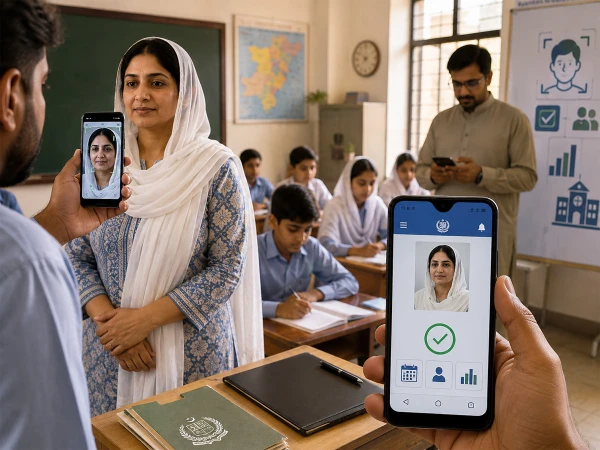
KARACHI: The Sindh government is set to introduce a facial recognition-based attendance system in government schools across six districts from August 17, aiming to strengthen staff monitoring and improve teacher availability for students.

The Facial Recognition Attendance Monitoring and Evaluation System (FRAMES) will initially be launched as a pilot project, with one district selected from each division. The system will monitor attendance of both teaching and non-teaching staff through a digital mobile application.

The pilot phase will cover Karachi East, Hyderabad, Naushehro Feroze, Jacobabad, Ghotki and Umerkot, with attendance of around 49,565 employees to be monitored through the system.

Sindh Education Minister Syed Sardar Ali Shah said the initiative would gradually be expanded to all districts if the pilot proves successful. He said the application had been designed to be user-friendly, while a mechanism had also been established to identify and resolve technical issues promptly.

The minister said FRAMES was not merely an attendance tool but was intended to ensure students have access to teachers during school hours. Staff members will be able to record attendance using their own phones or those of a headmaster or colleague.

The system will also function without an internet connection, with attendance data automatically updated once connectivity becomes available. Teachers will be required to record both their arrival and departure from school.

Employees will be able to view their attendance records through the application and download monthly reports. The system will also allow teachers to submit leave requests online from home, with approvals processed digitally.

Training for education officials, school heads and teachers has been completed to ensure smooth implementation. The government has also provided special training to school heads to assist staff in using the system.

FRAMES is available on both Android and Apple devices, while employees who have not yet completed registration have been advised to contact the Directorate General Monitoring and Evaluation office to update their records.

Similar Posts

  • |

    ICC confirms 12 host venues for Cricket World Cup 2027

    The International Cricket Council (ICC) has officially confirmed the 12 venues that will host matches during the ICC Men’s Cricket World Cup 2027, taking a major step forward in preparations for the prestigious tournament. The host cities were unveiled during a launch event in Johannesburg, where tournament officials also introduced the event’s official branding, theme and slogan. South Africa will host the majority of the matches across eight venues, while Zimbabwe will stage fixtures at three venues. Namibia will make history by hosting Cricket World Cup matches for the first time, with games scheduled to be played in its capital, Windhoek. The launch ceremony featured several prominent cricket personalities, including former South Africa captain Graeme Smith, legendary fast bowler Makhaya Ntini, batting great Hashim Amla, current Proteas captain Temba Bavuma and fast bowler Kagiso Rabada. Former Zimbabwe captain Hamilton Masakadza and Namibia representative Rudolf Jansen van Vuuren also attended the event, highlighting the partnership between the three host nations. The 2027 edition will mark the return of the men’s 50-over Cricket World Cup to Africa for the first time since 2003, when South Africa, Zimbabwe and Kenya jointly hosted the tournament. A total of 14 teams will compete in the expanded competition, offering more matches and greater opportunities for emerging cricketing nations to participate on the global stage. Tournament organizers also revealed the official theme, “Three Nations, One Heartbeat,” representing the unity and shared vision of South Africa, Namibia and Zimbabwe as co-hosts. The tournament’s visual identity is inspired by the African philosophy of Ubuntu, which emphasizes humanity, togetherness and collective strength. Often expressed through the phrase, “I am because we are,” Ubuntu reflects the spirit of unity the hosts hope to showcase throughout the event. Organizers also introduced the official slogan, “Make the Circle Bigger,” symbolizing inclusivity, community and the ambition to welcome more people into the global cricket family. With the venues confirmed and the tournament identity officially launched, preparations for the ICC Men’s Cricket World Cup 2027 are set to gather pace as the three host nations prepare to welcome teams and fans from around the world.

  • |

    Pakistan, US move closer to finalising reciprocal trade framework

    Pakistan and the United States have reaffirmed their commitment to finalising a reciprocal trade framework at the earliest, signalling significant progress in negotiations aimed at strengthening bilateral trade, investment, and long-term economic cooperation. The renewed commitment was expressed during a virtual meeting held on Wednesday between Pakistan’s Finance Minister Muhammad Aurangzeb and United States Trade Representative (USTR) Ambassador Jamieson Greer. The two sides reviewed the progress made by their negotiating teams and discussed the remaining steps required to conclude the proposed agreement. According to an official statement, both countries acknowledged that negotiations have advanced substantially in recent months and reiterated their shared determination to complete the reciprocal trade framework as soon as possible. During the meeting, Finance Minister Muhammad Aurangzeb referred to the recent discussions held in Washington, D.C., and appreciated the constructive approach adopted by both negotiating teams. He said the steady progress reflects the mutual commitment of Pakistan and the United States to deepen economic ties and expand commercial cooperation. The finance minister stressed that maintaining the current momentum in negotiations is crucial for Pakistan’s broader economic agenda. He noted that a stronger trade and investment partnership with the United States would support Pakistan’s export-led growth strategy, improve economic resilience, attract foreign investment, and create new business opportunities for companies in both countries. Aurangzeb also highlighted the importance of continued collaboration with the US Export-Import Bank (EXIM Bank), saying enhanced financial cooperation could facilitate trade, encourage investment, and strengthen business-to-business engagement between the two countries. On the US side, Ambassador Jamieson Greer acknowledged Pakistan’s consistent engagement throughout the negotiation process and appreciated the progress achieved on key labour and regulatory reforms. He particularly welcomed Pakistan’s efforts to strengthen compliance with international labour standards, including measures related to preventing forced labour. The US trade representative reaffirmed Washington’s commitment to advancing bilateral trade discussions and expressed confidence that the remaining issues could be resolved through continued technical-level consultations between the two sides. Finance Minister Aurangzeb emphasised the need for close coordination between officials from both countries and called for accelerated technical discussions to build on the progress already achieved. He said timely completion of the agreement would open new avenues for economic cooperation and strengthen long-term bilateral relations. Both delegations expressed satisfaction over the pace of negotiations and agreed to continue regular engagement to finalise the outstanding elements of the reciprocal trade framework. The officials reaffirmed their shared objective of concluding the agreement in the near future, paving the way for stronger trade, investment, and economic collaboration between Pakistan and the United States.

  • | |

    Senate health subcommittee discusses A-Level, FSc …

    Pakistan’s Senate Health Subcommittee held an important meeting to discuss concerns surrounding the Medical and Dental College Admission Test (MDCAT), the country’s medical education policies, and the increasing number of students pursuing medical education abroad. The session was chaired by Senator Samina Zehri, the convener of the subcommittee, and attended by Federal Health Minister Mustafa Kamal, Senator Anusha Rahman, Senator Shahzaib, and officials from the Pakistan Medical and Dental Council (PMDC). During the meeting, Senator Samina Zehri highlighted the significant differences between Pakistan’s FSc (Faculty of Science) education system and the internationally recognized A-Level qualification. She remarked that Pakistan’s education system is well known for its challenges and that the disparity between the two academic streams should not be overlooked when formulating admission policies for medical colleges. Responding to these concerns, Federal Health Minister Mustafa Kamal stated that the MDCAT examination is designed in a way that does not favor either A-Level or FSc students. He explained that the test includes questions that can be answered by candidates from both educational backgrounds, ensuring fairness in the admission process. According to the minister, the examination aims to assess students’ knowledge and aptitude rather than the curriculum they have studied. Mustafa Kamal further suggested that a detailed analysis should be conducted to determine how students from different educational backgrounds perform in the MDCAT. He pointed out that approximately 95,000 students had passed the examination and proposed collecting data from the past five years to determine how many successful candidates came from A-Level and FSc backgrounds. Such data, he said, would provide evidence-based insights for future policy decisions. The minister also assured members of the committee that the details of the assessment committee responsible for the MDCAT would be submitted within 24 hours. In response, Senator Anusha Rahman stated that the Senate committee was currently assisting the ministry in reviewing the admission process and therefore required complete information about the committee members involved in preparing and evaluating the examination. Following the discussion, Federal Health Minister Mustafa Kamal formally assured the committee that all requested information regarding the assessment committee would be provided within the promised timeframe. During the meeting, Senator Anusha Rahman also called for a review of the Pakistan Medical and Dental Council’s (PMDC) current policies. She emphasized the need to reassess regulations to ensure they effectively address the concerns of students and maintain the credibility of Pakistan’s medical education system. Senator Shahzaib raised another important issue regarding Pakistani students who intend to pursue higher medical education abroad. He questioned why graduates of Pakistani universities who plan to enroll in medical institutions overseas are still required to take the MDCAT. Referring to a recently issued advertisement, he noted that the existing policy appears to require these students to pass the admission test even if they have no intention of studying medicine within Pakistan. In response, Health Minister Mustafa Kamal acknowledged the concern and assured the committee that the policy would be reviewed. Senator Anusha Rahman added that while reviewing the policy, authorities should also ensure that students planning to study abroad avoid enrolling in institutions that have been identified as “red-flag” universities or those lacking proper accreditation. The Chairman of the PMDC Reforms Committee informed the meeting that students intending to study medicine overseas are required to register with the PMDC before leaving the country. This registration process, he explained, helps the regulatory body monitor students and maintain standards for foreign medical qualifications. Highlighting another major concern, Health Minister Mustafa Kamal stated that around 40,000 Pakistani students travel abroad each year for medical education, taking an estimated US$800 million out of the country. He stressed that this represents a significant financial outflow and underlined the importance of strengthening Pakistan’s own medical education system. However, Senator Anusha Rahman offered a different perspective, arguing that many of these students eventually return to Pakistan after completing their education and contribute to the country’s economy through their professional earnings. She suggested that while the government should improve local opportunities, it should also recognize the long-term benefits that internationally educated professionals can bring back to Pakistan.

  • | | |

    Pakistan seeks to revive Iran-US mediation efforts

    ISLAMABAD: Pakistan is making fresh diplomatic efforts to revive its role as a mediator between Iran and the United States. Interior Minister Mohsin Naqvi travelled to Tehran on Tuesday for talks with senior Iranian officials. During his visit, he met Iranian Foreign Minister Abbas Araghchi and President Masoud Pezeshkian. The visit is aimed at keeping Pakistan’s mediation channel active. Islamabad is seeking progress on the Islamabad Memorandum of Understanding (MoU), which emerged from earlier efforts to ease tensions between Iran and the United States. Naqvi was received in Tehran by Iranian Interior Minister Eskandar Momeni. He later held discussions with Araghchi on bilateral relations and regional developments. Pakistan’s diplomatic efforts had slowed after Oman became more directly involved in talks concerning arrangements for navigation through the Strait of Hormuz. However, recent contacts between Oman and Iran appear to have created an opportunity for Islamabad to renew its broader mediation initiative. A diplomatic source said Pakistan wants to follow up on the Islamabad MoU and encourage both sides to return to a wider diplomatic process. The situation around the Strait of Hormuz remains particularly sensitive. The waterway is vital for international energy and trade routes. Iran has maintained that the Islamabad MoU remains the key framework for resolving the wider dispute. Tehran has also linked the full reopening of the Strait of Hormuz to implementation of the commitments contained in the agreement. Iran and Oman have been discussing arrangements for safer passage through the strategic waterway. Their discussions include possible shipping routes and mechanisms for managing navigation. However, Tehran has indicated that any understanding with Oman would initially address technical matters. It would not necessarily represent a complete resolution of the wider dispute. Iran has also called for concrete assurances from Washington before moving towards the next stage of negotiations. Tehran wants guarantees that can be verified rather than verbal commitments. Pakistan has continued to encourage dialogue between the two sides. Defence Minister Khawaja Asif also indicated that Washington and Tehran could be moving closer to an understanding. He said recent signals suggested that the two countries were again moving towards a possible peace arrangement or deal. Meanwhile, Pakistan has invited Iranian Foreign Minister Araghchi and Iranian Parliament Speaker Bagher Ghalibaf to visit Islamabad. Iranian officials have said the visit would take place at an appropriate time. Naqvi’s trip to Tehran is therefore significant because Islamabad is maintaining direct engagement instead of waiting for the Iranian delegation to visit Pakistan. During his meeting with President Pezeshkian, Naqvi described Pakistan-Iran relations as strong and longstanding. He conveyed Islamabad’s intention to further strengthen ties with Tehran. Pezeshkian also stressed the importance of bilateral relations. He said stronger cooperation between Pakistan and Iran could serve their national interests and contribute to regional stability. The discussions come amid broader diplomatic and security developments in the region. Pakistan recently signed a trilateral defence agreement with Saudi Arabia and Turkiye. Islamabad has maintained that the arrangement is defensive and is not directed against any country. Deputy Prime Minister and Foreign Minister Ishaq Dar also discussed the agreement with his Iranian counterpart. He briefed Araghchi on its objectives and stressed its focus on strategic cooperation and regional peace. At the same time, US President Donald Trump has adopted a tougher tone towards Iran’s negotiating team. Trump described Iranian negotiators as difficult and accused them of making commitments privately and later presenting them differently in public. He also warned that Iran’s economic problems and inflation were becoming increasingly difficult to sustain. Trump said Washington could continue applying economic pressure on Tehran. He also suggested that the United States could take stronger measures if necessary. The contrasting positions underline the difficulties facing diplomatic efforts. Pakistan is now attempting to keep communication channels open with Tehran while encouraging a broader political process involving Iran and the United States.

  • | | | | |

    Trump says Iran serious about talks but not ready …

    US President Donald Trump has said Iran is showing greater seriousness toward negotiations than before, but cautioned that Tehran is still not prepared to reach a final agreement with Washington. Speaking to reporters at the White House, Trump said communication between the United States and Iran remains ongoing, although the prospects for an immediate breakthrough are still uncertain. According to media reports, the US president noted that Iran’s approach has changed compared with earlier stages of the diplomatic process, describing the country’s current attitude toward negotiations as more constructive. “Iran appears to be taking the talks more seriously than before,” Trump said, while emphasizing that a final deal is not yet within reach. He added that although discussions are continuing, significant progress is still needed before both sides can arrive at a mutually acceptable agreement. Trump said his administration remains committed to pursuing diplomatic efforts and is closely monitoring developments. He stressed that the coming days and weeks would be important in determining whether the ongoing contacts can lead to meaningful progress. The latest remarks come amid continued tensions between Washington and Tehran, with diplomatic channels remaining active despite months of regional instability and military confrontations. While both sides have maintained communication, key differences over major issues have continued to prevent a comprehensive agreement. Neither US officials nor Iranian authorities have announced any new breakthrough in the negotiations following Trump’s comments. Analysts say Trump’s latest assessment may signal cautious optimism, but they also note that complex disputes remain unresolved. They believe any potential agreement would require extensive negotiations and compromises from both sides before a deal could be finalized. For now, Trump’s message suggests that while diplomacy remains alive, expectations for an immediate agreement should remain measured. Observers will be watching closely for any signs of further progress as discussions continue, with the outcome likely to have significant implications for regional stability and US-Iran relations.

  • | |

    Karachi : Cloudy and humid conditions expected ove…

      Karachi is expected to experience mostly cloudy and humid weather conditions during the next 24 hours, according to the latest forecast issued by the Pakistan Meteorological Department. The weather authorities have predicted that light drizzle may occur in different parts of the city, particularly during the morning and nighttime hours. The meteorological department stated that the overall weather situation in Karachi is likely to remain warm, humid, and partly cloudy throughout the day. Residents may experience increased moisture levels in the atmosphere, which could make the temperature feel higher than the actual recorded temperature. The presence of humidity, combined with limited sunshine due to cloudy skies, is expected to create uncomfortable weather conditions for many citizens. According to the weather forecast, the minimum temperature recorded in Karachi today was 28 degrees Celsius. Meanwhile, the maximum temperature is expected to remain between 33 and 35 degrees Celsius. Although these temperatures are typical for the coastal city during this period, the high humidity level may increase the feeling of heat among residents. The humidity level in Karachi has been recorded at 78 percent, indicating a significant amount of moisture in the air. The city is also experiencing sea breezes from the southwest direction, moving at a speed of approximately 11 kilometers per hour. These coastal winds may provide some relief from the heat, but the high humidity is likely to continue affecting the overall comfort level. The weather department has advised citizens to remain aware of changing weather conditions, especially during early morning and nighttime hours when chances of drizzle are higher. Light rainfall is not expected to cause major disruption, but some areas may experience temporary wet conditions due to the drizzle. Karachi’s coastal location often results in humid weather patterns, particularly when moisture-laden winds from the Arabian Sea influence the city’s atmosphere. Cloud cover and sea breezes usually help control extreme temperatures, but high humidity can make daily activities more challenging for residents. The meteorological department further explained that no major change in weather conditions is expected during the next 24 hours. The city will likely continue to experience cloudy skies, humid conditions, and occasional light drizzle in some areas. People are advised to plan outdoor activities while keeping the possibility of brief rainfall in mind. Overall, Karachi’s weather is expected to remain mild in terms of temperature but uncomfortable due to elevated humidity levels. The combination of cloudy weather, warm temperatures, and moisture in the air will continue to define the city’s weather pattern over the coming day.

Leave a Reply

Your email address will not be published. Required fields are marked *