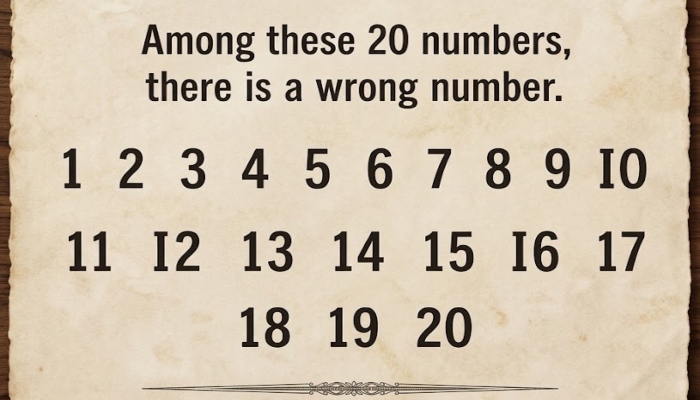
find mistake

Find the mistake in 1 to 20

Today’s puzzle is simple. Just look at the picture carefully and find the mistake hidden in the numbers. The image shows numbers from 1 to 20, but there is a small error that many people may miss at first glance.

Puzzles like this require careful observation and a little creative thinking. You need to look beyond what your brain expects to see.

The mistake is actually right in front of you.  However because the numbers look almost the same it can be easy to overlook.

This puzzle is a simple test of your observation skills. Many people may fail to notice the error because our brains often read familiar patterns automatically.

Still cannot find it?

Look closely at number 10. The first character is not the number 1. It is the capital letter “I”.

Did you spot it?

Similar Posts

  • Weight loss drugs may raise hair loss risk

    A new study suggests that some widely used weight loss medicines may increase the risk of hair loss (alopecia). These medicines are mainly prescribed to treat type 2 diabetes and obesity. They work by copying natural hormones in the body that help control blood sugar levels and reduce appetite making it easier for some people to lose weight. Researchers from the University of Pennsylvania Health System compared people taking GLP-1 medications with those using other diabetes treatments. They found that people using GLP-1 drugs appeared to have a higher rate of hair loss. The study also noted that U.S. health regulators have received many reports of hair loss after the use of semaglutide and tirzepatide. According to the UK’s Medicines and Healthcare products Regulatory Agency (MHRA) there were 399 reports of hair loss linked to tirzepatide in 2026, compared with 541 reports the previous year. For semaglutide, 148 reports were received in 2026 while 164 reports were recorded the year before. Experts say the findings show a possible link between these medicines and hair loss. However they stress that more medical research is needed to confirm whether the drugs are directly responsible.

  • Sindh’s missing universe

    Since Ashura, the mothers of Sindh have been sitting in at Babarloi Bypass through suffocating heat and humidity, with one demand: return our missing and abducted children. For a mother, a child is her entire universe — and for years these women have lived in psychological anguish searching for theirs. Fazila Sarki of Thul vanished nearly seventeen years ago; her father named the local Wadero he says orchestrated it, yet she was never recovered. Priya Kumari of Sangrar is entering her fifth year missing — committees formed, updates promised, and still nothing, as if the earth or sky simply swallowed her. Sindh’s landlords and chieftains have built a parallel state, one that operates above the law. If not, why would fourteen children currently be missing, why would the soil be stained with young blood over trifles, why would mothers go blind from weeping and cemeteries keep expanding? Innocent young women are still declared Kari and honor-killed — denied even a ritual bath, shroud, or funeral prayer, sometimes dumped in rivers. The law exists on paper; hundreds of thousands of officials draw salaries and perks from public taxes to enforce it — yet ordinary people have no protection at any level. The papers are full of these stories daily. The law exists, but it is locked away in books. Are the hands meant to enforce it helpless, or simply indifferent? Sukkur Civil Hospital — the teaching hospital for Ghulam Muhammad Mahar Medical College, and once a lifeline stretching from Balochistan’s Sibi, Nasirabad, and Bhag Nari to Kandhkot-Kashmore, Shikarpur, and Ghotki — has sunk to the level of Shikarpur’s Rai Bahadur Udhodas Hospital. Department heads sit in name only; real control rests with a handful of favorites who have run these institutions into the ground. Road accidents are a daily occurrence on the highways, and while the Orthopaedic Department stays busy, its facilities inspire only regret. With Nasir Shah and veteran politician Khurshid Shah both present, this hospital ought to be a model for Northern Sindh — instead it is anything but. Law and order, and justice, are the pillars any civilized society rests on. Where they hold, life, property, and honor are protected, and social harmony follows. Where they fail, fear, distrust, and unrest take their place — and our own society is proof enough of that; little more needs saying. An educated person lifts not just himself but his society; where ignorance and social ills grow instead, it is education that has failed first. Healthcare here tells the same story: women give birth in Qingqi rickshaws, medicine is scarce, and families buy even a disposable syringe out of pocket — though the budget for it exists. Doctors draw government salaries while absent, some working in Qatar or Saudi Arabia, others running private clinics. A friend recently told me PPHI, on taking over a government health unit, found a stockpile of medicines for heart disease, diabetes, and stomach ailments — worth a fortune, and only months from expiry. What tyranny is greater than this: medicine sitting unused while the needy go without? It is nothing short of an atrocity against the public. Hunger, disease, unemployment, lawlessness, and ignorance have battered Sindh until its people’s capacity for critical thought is paralyzed. The state, along with conscious citizens, politicians, and the well-off, must turn to this crisis — urgently.

  • | |

    The pure joy of private writing

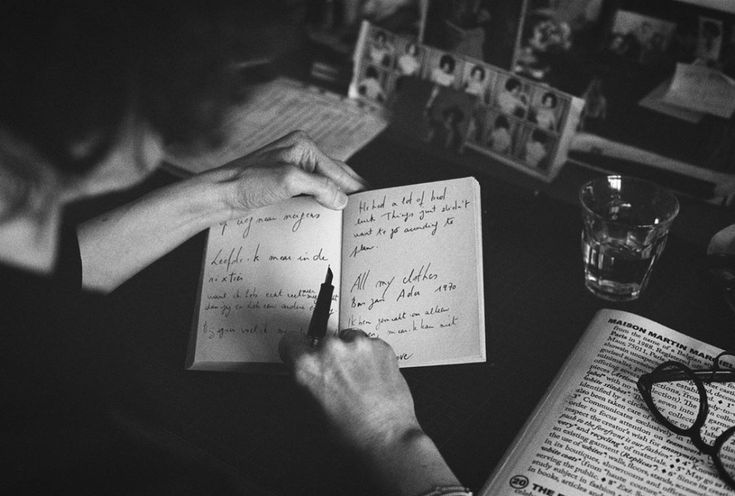
    Recent archival developments in the literary world have reignited a timeless debate about the nature of creation. When the personal archives, diaries, and private notebooks of legendary literary figures are cataloged and opened to the public, readers gain an intimate glimpse into a process entirely free from external expectation. Raw Honesty In an era dominated by social media algorithms, content metrics, and immediate digital validation, the contemporary act of writing has become increasingly public. Writers are frequently urged to build personal brands, cultivate audiences before completing a single chapter, and measure the value of their thoughts by engagement metrics. Yet, a look across literary history suggests that forcing self-expression through the filter of public consumption often strips writing of its essential power: raw honesty. The Freedom of the Unseen Page When Franz Kafka famously instructed his close friend Max Brod to burn all his unpublished manuscripts and private journals upon his death, he was asserting a radical boundary. Though Brod ultimately defied those wishes giving the world masterpieces like The Trial and The Castle, Kafka’s mandate highlighted a fundamental truth about his relationship with the written word. For Kafka, writing was not a trade, a performance, or a search for acclaim. Rather, it was a urgent, internal necessity. He wrote to process his existential anxiety and negotiate his place in a confusing world. Revolutionary Contribution to Modern Poetry Similarly, Emily Dickinson spent her life in relative reclusion in Amherst, Massachusetts, quietly composing over 1,700 poems. She bound them carefully with thread and tucked them away in a wooden chest, largely indifferent to the literary establishment of her era. Freed from the pressure of publisher deadlines, critical reviews, or popular trends, Dickinson invented an entirely original poetic structure. Unconventional in its punctuation, bold in its metaphors, and uncompromising in its vision. she didn’t customise her voice to suit 19th-century publishing standards. That’s her revolutionary contribution to modern poetry is still there. Why Private Writing Rescues Creativity Writing for an audience activates self-censorship. When you write exclusively for yourself, the fear of judgment vanishes. This phenomenon allows uncomfortable truths and unrefined ideas to flow onto the page. Modern culture fixates on output. For instance, the finished book, the polished essay, the published post. Writing privately restores focus to the immediate sensation of thinking on paper. It is transforming the craft from a task into a sanctuary. A writer’s authentic voice is rarely found by attempting to match market trends. It emerges in the quiet margins of private journals, where syntax and thought patterns develop naturally without external influence. Reclaiming the Personal Journal in a Public World Reclaiming the joy of private writing does not require abandoning public work altogether. Instead, it requires establishing a sacred space where performance is forbidden. Writing for an audience of one remains one of the most effective ways to sharpen thought and restore mental clarity.   The enduring fascination with published literary archives proves an intriguing paradox. The writing that captivates us most deeply is often the very writing that was never meant for our eyes. We unlock the true alchemy of the written word by letting go of the need for an audience. A private conversation between the self and the page.

  • Survey of Käthe Kollwitz’s legacy

    The Museum of Modern Art in New York  exhibits the first major museum retrospective devoted to the German printmaker and sculptor Käthe Kollwitz (1867–1945).The exhibition serves as reassessment of an artist who chose raw human emotion over abstract aesthetics. The survey features roughly 120 works on paper and evocative bronze sculptures gathered from private and public collections across North America and Europe. Käthe Kollwitz originally trained as a painter before turning to printmaking, etching, and charcoal drawing. She quickly realized that black-and-white graphic arts provided a far more direct, accessible, and potent medium for addressing the social injustices around her. She lived through the tumultuous transition of late 19th-century industrialization. The revolution followed by the political instability and devastating carnage of two world wars in Berlin. However, Kollwitz dedicated her career to giving form to the silent suffering of society’s most vulnerable. When many of her contemporaries were exploring radical formal abstraction, Kollwitz stayed firmly rooted in figuration. She viewed her artistic talent not as a path toward personal prestige, but as a moral imperative. As Kollwitz famously noted in her journal, she felt a profound duty to give voice to humanity’s immense burdens. It was a motivation clearly reflected in her emotionally charged compositions. The retrospective marks several crucial series and individual masterpieces that define Kollwitz’s career. Early landmark series included A Weaver’s Revolt (1890s) and Peasant War (1902–1908). They showed her skill in capturing collective resistance, class struggle, and the violent fallout of peasant rebellions. Her works like Woman with Dead Child (1903) and her recurring depictions of mothers shielding their young. This theme is also dominant in her famous Mütter (Mothers) lithographs. These works demonstrate her ability to channel deep personal empathy into universal symbols of protective instinct. Kollwitz produced woodcuts and sculptural works that transformed personal bereavement into universal anti-war statements. She was distilling the excruciating grief of losing her younger son, Peter, during World War I. Kollwitz’s artistic contributions extend far beyond historical interest. Kollwitz established herself as a genius of Expressionist printmaking. As a result, she achieved widespread international acclaim during her lifetime. More importantly, she radically prioritized the female experience, framing motherhood, domestic hardship. She expressed grief not as passive domestic occurrences, but as central, powerful forces within history and politics. Above all, she achieved all that during an era when the international art world was almost exclusively governed by male perspectives, MoMA exhibition underscores the artist’s meticulous process through rare working proofs and preliminary studies. Such an event exposed how she repeatedly refined line, shade, and texture to maximize the emotional potency of each scene. It was Curated by Starr Figura. In a world still facing economic disparity, displacement, and armed conflict, Kollwitz’s unflinching commitment to human dignity continues to resonate with undeniable relevance. Her skills were bold woodcuts, deep etchings, and heavy bronzes. However, they serve as a reminder that art can act as both a mirror to societal trauma and a compassionate voice for justice.  

  • Tracing the spiritual legacy of “Nanak Se Nankana”

    In the fertile plains of Punjab lies a landscape quietly layered with centuries of devotion, miracle tales, and interfaith kinship. This sanctuary of green fields was known as Rai-Bhoi-Di-Talwandi. The time long before the bustling town of Nankana Sahib bore its current name. It was overseen by Rai Bhoi Bhatti, a local Muslim landlord whose family had influence over the region. Yet, history transitioned irreversibly in 1469. It was in this soil that Guru Nanak Dev Ji, the founder of Sikhism, was born to Mehta Kalu and Mata Tripta. Rai Bular Bhatti (Rai Bhoi’s descendant) renamed the settlement Nankana Sahib in his honor. He was basically moved by the extraordinary spiritual wisdom radiating from the young child. Thus began a historical and spiritual trajectory known throughout the subcontinent as Nanak Se Nankana. The sacred evolution of a man into a timeless sanctuary. What makes Nankana Sahib uniquely enchanting is that the entire geography operates as a living storyboard. The city’s trees, fields, and lanes are strongly knitted  into local folklore. And each folklore is  marked by a Gurdwara commemorating young Nanak’s childhood and early enlightenment. Gurdwara Janam Asthan is the crown of the holy city. This magnificent marble compound stands at the site of Guru Nanak’s ancestral home. It was originally built as a small sanctum by his descendants. Later transformed into a grand complex surrounded by reflective Sarovars (holy pools) during the reign of Maharaja Ranjit Singh. According to popular regional legend, a young Nanak was sleeping out in the open pastures while tending to his father’s cattle. As the afternoon sun shifted, a large cobra slithered out and expanded its hood above his face to shade him from the blistering heat. Rai Bular Bhatti witnessed this miracle from his horse and then showed his devotion for Nanak. The ancient Jal (Mal) tree under which the event occurred still casts its shade today at Gurdwara Malji Sahib. Local folklore recalls a peasant complaining that Nanak’s roaming cattle had ruined his crops. Yet, when officials inspected the field, the damaged green stalks had miraculously grew back whole and undamaged. Gurdwara Kiara Sahib stands today atop that very field. When young Nanak returned from a nearby market town having spent his father’s money entirely on feeding hungry sadhus (Sacha Sauda or the True Bargain), he feared his father’s anger. He hid beneath a large, canopy-like tree whose drooping branches resembled a tent (tambu). Nearby stands Patti Sahib, where a seven-year-old Nanak astounded his teacher by writing an acrostic poem on the alphabet explaining divine truths instead of mere grammar. Beyond the miraculous legends of childhood, Nankana Sahib carries profound historical lore. It weathered the turbulent Sikh Empire era. The city witnessed the heroic sacrifices of the 1921 Akali Movement reform at Janam Asthan. It also survived the painful demographics shifts of the 1947 Partition. Today, the journey of Nanak Se Nankana remains an emotional pilgrimage. Every year during Gurpurab (Guru Nanak’s birth anniversary), thousands of pilgrims from across the globe cross borders to converge on these quiet lanes. The devotees step through the grand archways of Gurdwara Janam Asthan and touch the dust of Nankana to their foreheads. They aren’t just visiting a building. They are retracing a historical path that transformed a quiet Punjab meadow into a sanctuary of universal love, humility, and timeless unity.  

  • |

    Pakistan’s health system requires lasting reform

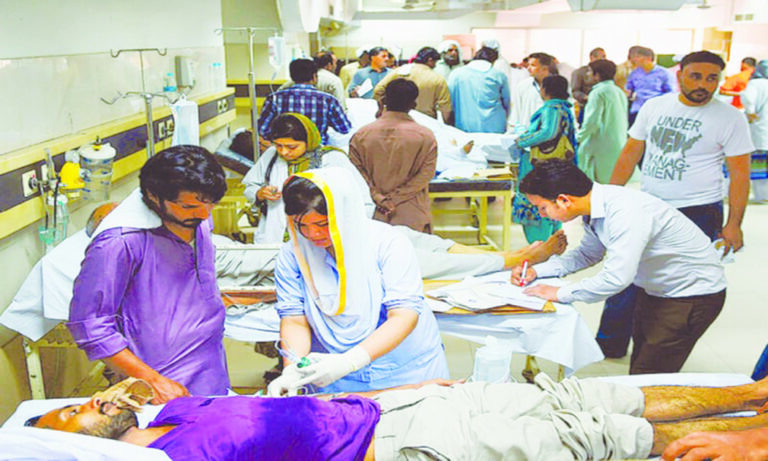
    By Raja Ashraf A country’s healthcare system is judged not only by the number of hospitals it has but also by whether people can access timely, affordable, and quality medical care. In Pakistan, public confidence in the health sector has weakened due to persistent challenges, including shortages of healthcare professionals, rising medicine prices, under-resourced hospitals, and the continued presence of unqualified medical practitioners. These issues require comprehensive and long-term reforms rather than short-term policy responses Healthcare is a fundamental right closely linked to Article 9 of Pakistan’s Constitution, which guarantees the right to life. The Supreme Court has interpreted this provision to include access to essential healthcare services. Pakistan is also a signatory to the International Covenant on Economic, Social and Cultural Rights, which commits the country to progressively ensuring the highest attainable standard of physical and mental health for its citizens. One of the most pressing concerns is the shortage of qualified doctors in rural and underserved regions. Although medical institutions produce thousands of graduates every year, many public health facilities outside major cities continue to face vacant positions. As a result, many communities struggle to obtain even basic healthcare services and are often forced to travel long distances for treatment. The migration of doctors, nurses, and other healthcare professionals to foreign countries has further weakened the healthcare system. Better salaries, improved working conditions, career opportunities, and greater security abroad encourage many skilled professionals to leave Pakistan, creating significant gaps in public hospitals and specialized medical services. The pharmaceutical sector also faces increasing challenges. Some multinational pharmaceutical companies have reduced their presence in Pakistan, raising concerns about future medicine availability and investor confidence. While local pharmaceutical manufacturers continue to meet much of the country’s demand, policymakers must create a stable regulatory and economic environment that supports both domestic production and responsible international investment. The rising cost of medicines has become another major burden for families already affected by inflation. Patients suffering from chronic illnesses such as diabetes, hypertension, and cardiovascular diseases often require lifelong treatment, making affordability a growing concern. At the same time, the continued circulation of counterfeit and substandard medicines highlights weaknesses in regulation and quality control, despite improvements in oversight by regulatory authorities. Public hospitals also frequently experience shortages of essential medicines and emergency supplies, forcing patients to purchase drugs from private pharmacies. This increases treatment costs and can delay critical medical care during emergencies. Ensuring uninterrupted medicine supplies in government hospitals should remain a national priority. Another persistent issue is the presence of unqualified medical practitioners, commonly known as quacks, particularly in areas where licensed healthcare providers are scarce. Tackling this problem requires stronger enforcement of existing laws alongside improved access to qualified medical professionals. Pakistan’s healthcare challenges extend beyond these issues to include inadequate public health funding, ageing hospital infrastructure, weak primary healthcare services, limited mental health facilities, and uneven implementation of health policies across provinces. Addressing these problems requires a comprehensive national strategy focused on increasing healthcare investment, improving working conditions for medical professionals, strengthening medicine regulation, modernizing pharmaceutical oversight, expanding preventive care, and reinforcing primary healthcare services. Investing in healthcare is not merely a public expense—it is an investment in human capital, economic growth, and national development. Pakistan possesses skilled healthcare professionals, reputable medical institutions, and a capable pharmaceutical industry. With sound policymaking, stronger governance, and sustained investment, these strengths can be transformed into a healthcare system that guarantees every citizen safe, affordable, and quality healthcare. The need for reform is no longer in question; the real challenge is ensuring that action is not delayed any further.

Leave a Reply

Your email address will not be published. Required fields are marked *