
factors which can

Factors Which Can Lead Pakistan Towards Progress a…

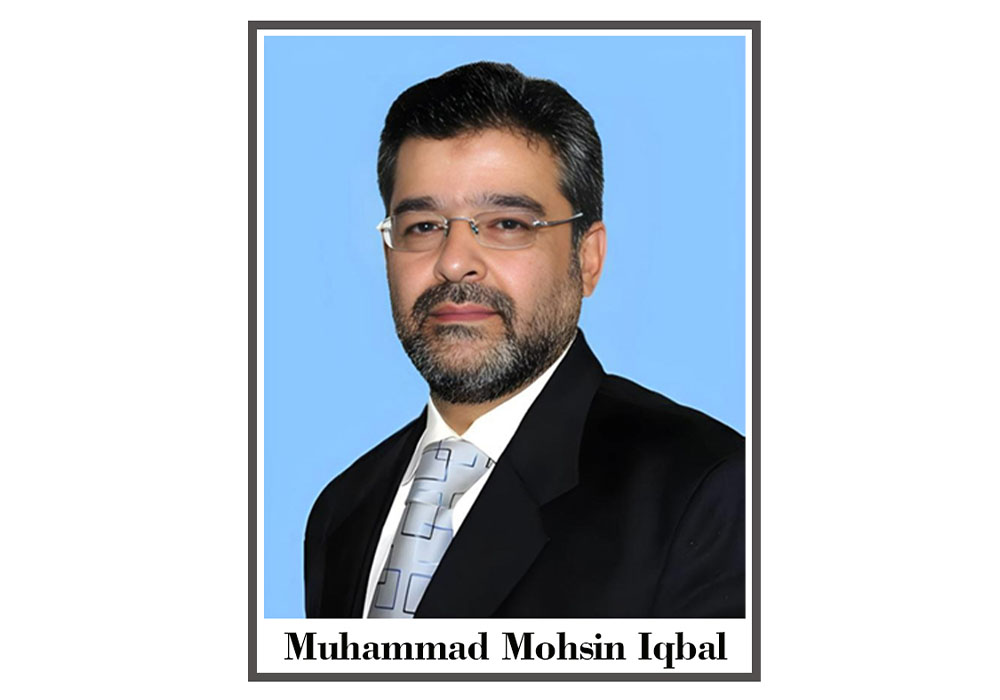
A nation’s destiny is not written by chance. It is written by the choices its people and institutions make in times of both crisis and opportunity. Seventy-nine years after independence, Pakistan stands at a decisive juncture. The country holds immense potential: a population of 241.49 million according to the 2023 Digital Census, strategic location at the crossroads of Asia, abundant natural resources, and a society that has repeatedly demonstrated resilience. Yet potential alone does not translate into prosperity. The path forward requires clarity of purpose and action on the fundamental drivers of national advancement. For Pakistan, five factors stand out as decisive: human capital, institutional credibility, economic diversification, technological adoption, and national cohesion.

The most urgent factor is human capital. Pakistan is one of the youngest nations in the world. The United Nations Population Fund estimates that 64% of Pakistanis are under the age of 30, and the median age is 20.8 years. This demographic dividend can either accelerate growth or become a liability if left untapped. The World Bank’s Human Capital Index for Pakistan is 0.41, which means a child born today will be only 41% as productive as they could be with full education and health. Closing this gap demands investment that is both broad and deep. Foundational education must be prioritized, technical and vocational training must be aligned with industry, and health and nutrition must be treated as economic inputs, not social expenses. The inclusion of women is non-negotiable. With female labor force participation at 24.1% in 2021, Pakistan is underutilizing half of its talent. McKinsey estimates that advancing gender parity could add $60 billion to Pakistan’s GDP. Every girl in school and every woman in the workforce is a direct contribution to national prosperity.

The second factor is institutional credibility. Prosperity is built where people trust that rules are fair, contracts are honored, and merit matters. Pakistan’s economy has shown resilience despite challenges. The State Bank of Pakistan reports GDP at $341.2 billion for FY2025 with projected growth of 3.6%, and remittances hit a record $35.3 billion. IT exports reached $3.55 billion in FY2025, a 24% increase year-on-year. These gains occurred even with regulatory uncertainty and energy constraints. Imagine the scale of investment and innovation if governance were more predictable. This requires digitizing public services, protecting property rights, depoliticizing key institutions, and empowering local governments with resources and accountability. When a young graduate in Multan or a startup founder in Karachi believes the system will reward effort, they will choose to build at home.

Third is economic diversification. An economy dependent on a narrow base remains vulnerable. Pakistan must move beyond textiles and remittances toward value-added exports, modern agriculture, and new industries. Agriculture still employs 36.8% of the labor force but contributes less than 23% to GDP, signaling a major productivity gap. Climate change compounds this challenge, with Pakistan ranked 5th on the 2025 Global Climate Risk Index. Investing in climate-smart agriculture, water efficiency, and agri-tech is therefore both an economic and survival imperative. At the same time, the digital economy offers Pakistan its fastest route to high-value growth. With 142.3 million broadband subscribers and internet penetration crossing 54% as of June 2025, the infrastructure for a knowledge economy exists. Pakistan ranked 3rd globally on the 2024 Online Labour Index. Scaling IT exports toward the $15 billion target by 2030 will require tax incentives, venture funding, and global market linkages for startups. The $23.1 million raised by Pakistani startups in 2024, amid a global funding slowdown, proves that investor confidence exists and can be expanded.

Fourth is technological adoption and innovation. The world is being reshaped by AI, renewable energy, and advanced manufacturing. Pakistan cannot afford to be a late adopter. The Alternative and Renewable Energy Policy target of 30% renewable share by 2030 must be met to address both energy security and climate risk. Technology must also transform service delivery. Telemedicine, digital payments, and AI in agriculture can bring quality services to remote areas at lower cost. Universities must become hubs of research and industry collaboration. Innovation thrives where there is capital, mentorship, and protection of intellectual property. The state’s role is to create that ecosystem.

The fifth and binding factor is national cohesion. Economic policy fails without social trust. Pakistan’s diversity in language, culture, and region is a strength if it is united by a shared commitment to justice and opportunity. Cohesion is built when citizens feel they have an equal stake, when public discourse is grounded in facts, and when achievements in science, sports, and culture are celebrated as national, not regional. A country that trusts itself can make difficult reforms and sustain them.

These five factors do not operate in isolation. Better education produces better institutions. Strong institutions attract investment for diversification. Diversification funds technology. Technology creates jobs that strengthen social unity. The absence of one undermines the others.

The global context adds urgency. While many nations face aging populations, Pakistan has a 20 to 25 year window to leverage its youth. That window will not remain open indefinitely. Prosperity will not arrive through slogans or external assistance alone. It will come from millions of deliberate acts: a teacher focused on learning, a farmer adopting new techniques, an engineer building solar solutions, a policymaker choosing reform over delay.

Pakistan’s history proves that the nation can achieve what seems impossible when it acts with unity and purpose. The factors for progress and prosperity are now clear. What remains is the will to pursue them consistently. If Pakistan invests in its people, strengthens its institutions, diversifies its economy, embraces technology, and unites its society, the next chapter will be one of sustained advancement. The opportunity is here. The responsibility is ours.

Similar Posts

  • From Family Discipline to National Defence

    After creating man, Allah Almighty included within his nature an administrative structure for the family, whereby he might continue the journey of life according to the needs of his age. With the passage of time this structure was obliged to expand; the family pressed onward and at length arrived at the threshold of the state. In the present family order, while the grandfather yet lives he is acknowledged head of the house, and his permission and consent enter into all the greater affairs thereof. Yet for the practical running of that household he has delegated certain responsibilities and powers to the members of his family, so that each person may be answerable for the work committed to his charge. When this same structure enlarged its scope to the management of the state, successive arrangements were fashioned in the light of varied experience, and the state began to be administered accordingly. In view of the requirements of the present hour further amendments were introduced, and thus the Pakistan Defence Forces Amendment Bill of 2026 was approved by Parliament, that all the affairs of the state might be conducted professionally under their proper jurisdictions. The Act gives effect to certain provisions of the earlier Twenty-Seventh Constitutional Amendment. It establishes a Defence Forces Headquarters under the Chief of Defence Forces—an office held concurrently by the Chief of Army Staff—as the central headquarters of the armed forces. The Chief of Defence Forces is constituted the principal military adviser to the Prime Minister upon questions of national security, defence and the armed forces; he exercises operational command and control of those forces while remaining responsible to the federal government; and he is vested with authority for multi-domain integration, operational cohesion, joint and tri-service coordination, organisation, training, administration, combat readiness and kindred functions. Broad personnel powers are likewise conferred upon him; he may retire, release, accept or reject resignation, discharge, retain in service, or relax the limits of age and length of service for personnel subject to the laws of the armed forces, excluding only those appointed under Article 243, namely the service chiefs themselves. Amendments to the National Command Authority substitute the former office of Chairman of the Joint Chiefs of Staff Committee with that of the Chief of Defence Forces. The measures are given retrospective effect from November 27, 2025. These provisions stand partially in line with a global tendency toward unified joint command and a single senior military counsellor. Many countries have created equivalent positions—Chief of Defence Staff, Chief of the Defence Force, Chairman of the Joint Chiefs and the like—in order to improve jointness, diminish service silos and furnish single-point military advice, lessons drawn from the demands of modern multi-domain warfare. In the United States the Chairman of the Joint Chiefs of Staff is the highest-ranking officer and principal military adviser to the President, the National Security Council and the Secretary of Defence. By the Goldwater-Nichols reforms and the provisions of Title 10 he possesses no operational command authority over the armed forces or over the other Joint Chiefs; the chain of command runs from the President through the Secretary of Defence to the combatant commanders. His function is deliberately advisory, concerned with counsel, planning, joint doctrine and the transmission of communications, so that civilian control and a measure of service autonomy in operations may be preserved. In India the Chief of Defence Staff serves as principal military adviser to the Defence Minister on tri-service matters, permanent Chairman of the Chiefs of Staff Committee, head of the Department of Military Affairs and military adviser to the Nuclear Command Authority. He is charged with promoting jointness in operations, logistics, training, the prioritisation of procurement and the development of theatre commands. Explicitly, however, he does not exercise operational military command over the service chiefs, who retain command of their respective services; he is described as first among equals. The office was created to enhance integration without subordinating the services in the conduct of operations. In the United Kingdom the Chief of the Defence Staff is the professional head of the Armed Forces and principal military adviser to the Prime Minister and the Secretary of State for Defence. Historically the role centred upon advice and strategy; reforms of recent years have strengthened it so that the Chief commands the service chiefs and heads a Military Strategic Headquarters charged with force design, war planning and the development of an integrated force. Even so, the office continues to operate under strong ministerial and civilian direction through the Defence Council. Canada, Australia and similar Commonwealth models typically invest the Chief of the Defence Staff or Chief of the Defence Force with command authority over the forces, subject to direction from the government or the minister and ultimate civilian or Crown control. Emphasis is laid upon unified command for both operations and administration, exercised under parliamentary oversight. The global pattern, therefore, moves toward a senior joint office for better integration and counsel. Pakistan’s law shares the goals of jointness, a central headquarters, multi-domain coordination and a principal advisory role, and is in that respect consistent with prevailing trends. Yet the Pakistani model differs in significant particulars. The concurrent dual role, whereby the Chief of Defence Forces is held by the serving Army Chief, is uncommon; most systems either appoint a separate officer, often rotated among the services, or keep the joint head distinct from day-to-day single-service command. This arrangement produces a clearer Army-centred apex than the more balanced or purely advisory models of the United States, India or the earlier British practice. Moreover, the combination of direct operational command and control of all services with sweeping personnel powers—extending to retirement, discharge, retention and the alteration of service limits across the forces, save only the top service chiefs—exceeds the strictly advisory character of the American and Indian systems. It approaches the stronger command-oriented models found in parts of the Commonwealth and in the recent British reforms, yet remains unusually comprehensive in matters of personnel under a single officer. In

  • Eudaimonia: When Being Human Was Enough”

    From Laraib Zahra Once upon a time, far from Earth, beyond the reach of our skies, there existed a planet called the Worthlands. In the Worthlands, there was an equal proportion of humans and ghosts. Whenever a human was born, a little ghost was born by their side. These little ghosts were called Hounds. Every Hound possessed a superpower: it could know exactly what its human companion was thinking. The entire planet was ruled by three powerful ghosts, commonly known by humans and Hounds as the Great 3Gs. Each of the three had a separate kingdom. They were the Ghost of Guilt, the Ghost of Productivity, and the Ghost of Fear. The Ghost of Guilt was the eldest of the three. He controlled the capital of the Worthlands. He had his own Guilt Police and Guilt Pumps. Guilt was a magical liquid found inside these pumps. The Guilt Police, along with the Hounds, kept a constant check on the behaviour of the people in the capital. Their job was to make sure that nobody ever ran out of fuel—the fuel of guilt. Whenever a person was caught running out of guilt, the Hounds immediately reported them to the Guilt Police. They were then provided with more guilt fuel to make sure that nobody went “insane.” The biggest crime in the capital was the Rest Crime. As soon as a person became exhausted and decided to take some rest, the Hounds would begin fiercely whispering in their ears: “Strong people don’t stop.” They would tell them not to rest until they reached somewhere. But where exactly this “somewhere” was, nobody really knew. Sometimes, when a person was genuinely unable to work any further because of an overwhelming workload, the Hounds would call specialised therapists known as the Fear Feeders from the Kingdom of Failure for counselling—a kingdom I shall discuss in greater detail later. On the other hand, the entire north of the Worthlands was ruled by the second Great Ghost: the Ghost of Productivity. Unlike the Guilt Police, who were actually in charge of the capital, there was no such police force in the north. Instead, there was a ministry known as the Ministry of Merit. The humans there were never supposed to sit idle. Instead, they were expected to work harder and harder to make sure that they remained at the top of the list maintained by the Ministry of Merit. Every year, there was a grand ceremony known as the Annual Worth Ceremony. The humans who earned the highest number of merit points received a golden star carved with their names in the Worth Register of the Ministry of Merit. Every time a human refused to rest in order to increase their productivity, the Hounds would greet them by saying: “Congratulations! You have earned three merit points.” Humans were comparatively happier in the north than in the other two kingdoms because here, they were rewarded with golden stars bearing their names. The more golden stars a human had beside their name in the Worth Register, the more likely they were to become part of the Hounds—the most respected position in the Worthlands. After all, the Hounds had the superpower to read human minds, and they could even fly. Their slogan was: “You could be doing more.” To the south lay the third kingdom—the Kingdom of Failure, ruled by the Great Ghost of Fear. This kingdom was the most terrible of them all. The humans there were weak and diseased. Every second person was a victim of anaemia. They looked as though they had been starving for days, perhaps even weeks. On the contrary, the Great Ghost of Fear was the fattest of the three ghosts. The reason for this strange contrast was hidden in the Hounds. Unlike the Hounds in the north and the capital, the Hounds in the south had a distinct name. They were called Fear Feeders. The Fear Feeders had one duty: to sense fear-bearing thoughts in human minds and suck them out, because the Great Ghost of Fear fed on those thoughts. There were many kinds of fears that humans carried in that kingdom: The fear of not doing enough. The fear of getting left behind. The fear of failure. And many more. The Fear Feeders collected these thoughts and presented them to their master. The Great Ghost of Failure had one dish that was especially dear to him. It was his favourite dish of all: “What If” Spaghetti. “What If” Spaghetti was a special dish found in all three kingdoms, but it was particularly abundant in the Kingdom of Failure. The humans looked starved because they had to constantly produce fear in their minds so that they could feed it to the Fear Feeders. These fears were produced through a process called whispering, carried out by Hounds that were not themselves Fear Feeders. Then, one day, something unexpected happened. A few Hounds disappeared. Seven Hounds. Everyone in the Worthlands was deeply concerned about their sudden disappearance. The Guilt Police, along with other investigation departments, launched a search operation. But not even a single missing Hound was found. The humans whose Hounds were missing were arrested and questioned. The results of the investigation shocked everyone in the Worthlands. The Hounds could only exist if their humans obeyed them. This was something that neither the Hounds nor the humans had ever known before. The humans whose Hounds had disappeared were, surprisingly, close friends. During the investigation, they confessed that one day, they had decided to step back from their usual exhausting routines and take a break to rest their tired and ruptured nerves. All of a sudden, seven Hounds appeared and began whispering their usual slogans: “Strong people don’t stop.” “What if you get left behind?” And their most favourite: “You could be doing more.” The humans became lost in their thoughts once again and decided to give up on their plan to rest. But then, suddenly, a voice echoed through the room: “But

  • Justice Begins with the Well-being of Judges

    When we talk about justice, we usually think about independent courts, fair and speedy decisions, and honest judges. But we often forget one important question: What about the justice-sector people behind all this? Judges have one of the most demanding jobs in society. Every day, they decide cases that affect people’s lives, freedom, families, businesses, property, and rights. They are expected to remain fair, independent, and impartial, no matter how difficult or ‘high profile’ the case may be. To recognize the importance of supporting judges, the United Nations General Assembly declared 25 July as the International Day for Judicial Well-being in March 2025. Judges also need healthy and supportive working conditions to perform their duties effectively. Being a judge is not easy. Many judges face heavy workloads, long working hours, difficult and emotionally charged cases, public criticism, security risks, and administrative responsibilities. These challenges can affect their physical and mental health. When judges are under constant stress, it can also affect the quality and speed of justice. Looking after judges is therefore not a personal favour; it helps the entire justice system. Healthy and motivated judges are better able to make fair decisions, uphold the rule of law, and maintain public confidence in the courts. The idea of judicial well-being gained international attention with the adoption of the Nauru Declaration on Judicial Well-being on 25 July 2024. The Nauru Declaration on Judicial Well-being is founded on seven guiding principles: (1) judicial well-being is essential to judicial independence and the effective administration of justice; (2) judicial stress should be recognized without stigma; (3) promoting judicial well-being is a shared responsibility of judges and judicial institutions; (4) courts should foster an ethical, respectful, and inclusive judicial culture; (5) awareness, education, prevention, and support measures should be encouraged; (6) each jurisdiction should develop well-being initiatives suited to its own needs and circumstances; and (7) all efforts to promote judicial well-being should respect human rights and fundamental freedoms. A 2021 survey by the Global Judicial Integrity Network of the United Nations Office on Drugs and Crime (UNODC), involving judges from more than 100 countries, highlights the growing importance of judicial well-being. The survey found that 76% of judges lack enough time to care for their physical and mental health, 92% experience work-related stress, 89% know colleagues suffering from stress or anxiety, 69% believe mental health remains a taboo subject in the judiciary, 83% say their court systems provide insufficient support, and 97% believe judicial well-being deserves greater attention. Judges also reported that poor well-being affects the efficiency of courts, the quality of judicial decisions, public confidence in the judiciary, access to justice, judicial integrity, and procedural fairness. These findings show that judges around the world face similar challenges. When judges receive proper support, they are better able to make fair and balanced decisions; work more efficiently; maintain high ethical standards; resist outside pressure; and strengthen public confidence in the courts. Supporting judges means strengthening the rule of law and improving the delivery of justice. Governments and judicial institutions should take practical steps to improve judicial well-being. These include reducing excessive workloads; providing confidential counselling and mental health services; creating peer-support programmes; offering leadership and well-being training; protecting judges from harassment and intimidation; and ensuring safe and healthy working environments. It is also important to create a culture where judges feel comfortable seeking support when they need it. In Pakistan, judges work under immense psychological pressure. The rapid growth of social media has changed the environment in which justice is delivered. Cases that are still pending before the courts are frequently debated online, with people openly expressing opinions and expecting decisions that match their own views. Such public discussion creates pressure on judges, even if it does not influence their legal reasoning or final decisions. Many judges are also present on social media or are more visible in public life than in the past. Their participation in public events and increased interaction with society have reduced the professional distance that traditionally existed between judges and the public. While greater engagement has its benefits, it also exposes judges to public criticism, expectations, and scrutiny, which can affect their psychological well-being. For a judge, there should be no distinction between an ordinary case and a so-called ‘high-profile case.’ Article 25 of the Constitution of Pakistan guarantees that all citizens are equal before the law. Every case deserves the same attention, fairness, and impartiality. However, media coverage and public opinion often create the perception that certain cases are more important than others. Even where judges remain completely independent, such external attention can create significant psychological pressure. Another challenge is public perception of the justice system. Justice is delivered by many institutions, including the police, prosecution, lawyers, prison authorities, investigators, and the courts. Delays and weaknesses often result from failures across the entire justice sector. Yet, when justice is delayed, or public confidence declines, the criticism is directed mainly at the judiciary. Judges become the visible face of the justice system and bear the burden of public dissatisfaction, even when the causes lie beyond the courts. This constant scrutiny, criticism, and pressure can affect judges’ morale and well-being. Pakistan has recently taken an important step by placing judicial well-being on the national agenda. To mark the International Day for Judicial Wellbeing, the Law and Justice Commission of Pakistan will organize the country’s first National Conference on Judicial Wellbeing at the Supreme Court of Pakistan on 25 July 2026. This initiative is a welcome beginning. However, promoting judicial well-being should become a permanent part of judicial reform rather than a one-day observance. Protecting judges’ well-being ultimately strengthens the rule of law and improves public confidence in the administration of justice. Justice is delivered by people. Judges are expected to remain fair, calm, independent, and ethical while making decisions that can change people’s lives. They can perform this important role best when their own well-being is protected.

  • Nawaz Sharif’s political revival has begun — a…

    In my view, Nawaz Sharif’s political revival is no longer just a possibility; it is clearly taking shape. His decision to return to the political frontline and personally lead the Pakistan Muslim League (N)’s campaign in Azad Jammu and Kashmir shows a leader who understands timing, patience and political strategy. The massive rallies in Muzaffarabad and Mirpur were not just election gatherings; they carried a much bigger political message. They demonstrated, in my opinion, that Nawaz Sharif still has the ability to attract large crowds and energise his supporters. For many party workers and voters who had been missing his direct presence, his return to the campaign stage created renewed confidence and enthusiasm. At the same time, these rallies sent a strong message to his political opponents and to those analysts who had predicted that Nawaz Sharif had retired from active politics. His presence on the ground has challenged that narrative and shown that he remains a central figure in Pakistan’s political landscape. During my last two meetings with Nawaz Sharif — one in the Galyat hills near Murree and another at Jati Umra, Raiwind — I observed a leader who appeared to be carefully planning his political revival. My impression was that he was not looking for a short-term political comeback but working on a long-term strategy. I have seen this before — not once, but twice. The first time was in 2006, when Nawaz Sharif came to London after leaving Saudi Arabia following his years in exile. I observed how he patiently rebuilt his political network, reconnected with party workers and gradually prepared the ground for his return to Pakistan’s political arena. The second time was before the 2024 general elections. During the more than three years he spent in London, I saw a similar approach — careful planning, political consultations and a gradual strategy to return at the right moment. In my opinion, the current phase follows the same pattern. Nawaz Sharif has relied on a team approach. At the centre, Prime Minister Shehbaz Sharif has focused on managing difficult economic, diplomatic and political challenges. His supporters believe his administration has helped improve Pakistan’s international engagement and presented the country as an important voice on global issues. On the other hand, Maryam Nawaz Sharif has emerged as a key part of this political strategy. As Chief Minister of Punjab, she has focused on development projects, infrastructure, public service delivery and administrative reforms. In my view, her performance has helped create the perception of a new generation of leadership within the PML-N. Punjab has, in my assessment, become an important example of the party’s governance message — that provinces can deliver through development, better infrastructure, improved administration and stronger public services. Nawaz Sharif’s political strength is also linked to his record as Prime Minister. His supporters highlight his focus on infrastructure development, including motorways, energy projects and large-scale national schemes. They argue that during his governments Pakistan moved towards economic stability, with greater emphasis on investment, connectivity and development. While political opinions about his governments differ, there is no doubt that Nawaz Sharif remains one of Pakistan’s most experienced political figures. With decades of experience in public life, he is among the most senior leaders in the region and has maintained relationships with world leaders. His experience in governance, diplomacy and international affairs remains one of his biggest political assets. Today, in my view, Nawaz Sharif is attempting another carefully planned political comeback. His direct involvement in the Azad Kashmir election campaign suggests that he is once again taking command of the political direction of his party. I believe his strategy is working because he is repeating a formula he has used before: patience, organisation, strengthening his team and returning to the people when he believes the political environment is favourable. History will ultimately be judged by the voters, but from my observations over the past two decades, Nawaz Sharif’s political revival appears to be following a familiar and carefully planned path.

  • Beyond Public Finance: Towards  Constitutional Po…

    Pakistan has never lacked economic advice. Since independence, successive governments have experimented with socialist planning, import substitution, nationalisation, structural adjustment, privatization, fiscal decentralisation, value added taxation, documentation drives, digital governance and, most recently, artificial intelligence in tax administration.  Almost every reform has been presented as the missing ingredient that would place the country on the path of sustained prosperity. However, Pakistan continues to oscillate between balance-of-payments crises, external dependence, fiscal instability and repeated recourse to the International Monetary Fund (IMF). This persistent failure raises a more fundamental question. Is Pakistan’s crisis primarily economic, or are economists asking the wrong questions? For decades, the dominant explanation has remained remarkably consistent. Pakistan is said to suffer from a narrow tax base, inadequate domestic resource mobilisation, weak public institutions, poor governance and inconsistent implementation of otherwise sound policies. According to this view, if taxes were broadened, exemptions withdrawn, administration digitalised and markets allowed to function efficiently, sustainable growth would eventually follow. There is much truth in these observations. They identify many of the symptoms. But they do not fully explain why technically sound reforms repeatedly fail in Pakistan while producing very different outcomes elsewhere. The reason, as suggested in earlier writings, is that Pakistan cannot be understood through the conventional assumptions of public finance alone. Economic policy does not operate in a constitutional vacuum; it reflects the incentives created by the political and legal institutions within which governments function. Orthodox economics generally assumes a constitutional order within which governments seek, however imperfectly, to maximise public welfare. Fiscal policy, taxation and expenditure are analysed as instruments for correcting market failures, financing public goods and promoting economic growth. Political constraints are acknowledged but usually treated as external distortions rather than integral components of economic analysis. Pakistan presents a different reality. Here, constitutional arrangements, political incentives, strategic considerations and informal institutions have shaped fiscal outcomes as much as, and often more than, economic policy itself. Taxation has frequently reflected the distribution of political power rather than principles of efficiency or equity.  Public expenditure has often been determined by strategic imperatives rather than developmental priorities. External assistance has repeatedly substituted for difficult domestic reforms. Elite bargains have preserved privilege while transferring the burden of adjustment to documented businesses, salaried individuals and ordinary consumers. These outcomes cannot be adequately explained by models that assume an impartial state pursuing coherent economic objectives. The analytical framework itself, therefore, requires reconsideration. This series proceeds from a simple but powerful proposition: before analysing taxes, budgets or debt, one must first understand the constitutional rules that shape political incentives. This is the central insight of Constitutional Political Economy (CPE).  Unlike conventional public finance, CPE begins not with taxes or budgets but with the constitutional rules, institutional incentives and political structures that determine how economic decisions are actually made. It asks a prior question: Who designs the rules under which economic policy operates, whose interests do those rules serve, and how do they shape incentives for both governments and citizens? Once that question is asked, many of Pakistan’s recurring puzzles begin to appear less mysterious. Why do technically sound tax reforms repeatedly fail? Why do successive governments rely on indirect taxation while avoiding politically influential sectors? Why has documentation remained elusive despite extraordinary advances in digital technology? Why does every external crisis quickly become a fiscal crisis? Why has debt expanded despite repeated stabilisation programmes? The answers lie not merely in economics but in the constitutional and political environment within which economics operates. This series proposes a different approach. Rather than examining taxation, debt or fiscal federalism as isolated subjects, it will analyse them as interconnected manifestations of Pakistan’s constitutional political economy. Future parts will explore how colonial legacies, post-independence constitutional choices, geopolitical dependency, elite capture, federal arrangements, judicial interpretation and administrative incentives have combined to shape Pakistan’s economic trajectory. The purpose is not to reject orthodox economics. Public finance remains indispensable. Sound taxation, efficient expenditure and macroeconomic stability are essential for any modern state. However, these instruments cannot achieve their intended objectives when the institutional environment within which they operate generates incentives that systematically frustrate reform. Pakistan’s crisis is not simply a fiscal crisis. Nor is it merely a crisis of governance. It is, more fundamentally, a crisis of constitutional political economy. Unless that deeper reality is understood, technical reforms, however well designed, will continue to produce disappointing results because they address the symptoms rather than the constitutional incentives that generate them. In the next part, we shall examine why the assumptions of orthodox public finance differ fundamentally from those of constitutional political economy, and why that distinction matters profoundly for understanding Pakistan. [To be continued]  ____________________________________________________________________ Dr. Ikramul Haq, Advocate Supreme Court, Adjunct Faculty at Lahore University of Management Sciences (LUMS), member Advisory Board and Visiting Senior Fellow of Pakistan Institute of Development Economics (PIDE), holds an LLD in tax laws. He was full-time journalist from 1979 to 1984 with Viewpoint and Dawn. He also served Civil Services of Pakistan from 1984 to 1996. 

  • More Than “Just a Joke”

    Walk into any classroom and everything seems perfectly normal. Students are taking notes, chatting before class, and waiting for the lecture to begin. No one is arguing, no one is fighting, and everything appears calm on the surface. Yet for many students, there is a side of campus life that often goes unnoticed: bullying. For years, bullying has been treated as just a normal part of growing up, and honestly, many people will still argue that it is. Plenty still see it as harmless teasing, or worse, some rite of passage every student is simply expected to survive. The common response is often, “ignore it,” or “everyone deals with it, get over it,” as if that settles the matter. But ask the person actually on the receiving end, and it rarely feels harmless at all. What one student brushes off as a joke can leave another feeling embarrassed, isolated, and like they don’t belong anywhere in that room. The moment passes, but the hurt from it usually doesn’t, it lingers quietly while everyone else has already moved on. A student who gets mocked enough times eventually just stops raising his hand, or talking at all. Someone left out again and again stops trying to be included and stops showing up for activities.  Confidence is often the first thing to suffer, and academic performance also follows, when a student’s energy goes into avoiding attention rather than engaging in the class. By the time anyone notices, the damage is usually already done. Many would agree that this is because it does not appear all at once, it builds gradually and people mistake it for a bad mood, a phase, or anything but what it really is. As a student myself, this isn’t just something I’ve read about, I’ve seen how it feels to watch someone go quiet, to sit in a room that should feel safe and doesn’t. What I believe makes bullying so difficult to address is that it does not always look the way people expect. When people hear the word “bullying,” they often imagine physical confrontations. That’s not always how it turns out, though. In many cases, it is far less obvious and therefore much easier to overlook. It can take the form of repeated jokes at someone’s expense, hurtful nicknames, deliberate exclusion from social groups, or rumours spread behind a person’s back, things many of us have seen or experienced at some point. These behaviours are often considered as “just joking,” so a student ends up laughing along anyway, just to avoid seeming too sensitive, even when the comment is genuinely hurtful.  Emotional bullying is another common form including constant criticism, manipulation, or certain behaviours that slowly damages a person’s confidence and sense of belonging. This is probably the one most of us have gone through at some point in our student life, quietly, without ever really talking about it. And these days, it doesn’t even need a classroom to happen in. Social media, group chats, and anonymous messages have given it a whole new stage, extending its reach far beyond the campus walls. There is also a less-discussed form of bullying that affects some students whose parents work at the same school or college. These students are assumed to receive special treatment regardless of their actual performance. Their achievements may be dismissed as favouritism, and their hard work can be unfairly questioned. I admit it sounds strange, but it is a reality many students live with. While this may not involve insults or physical intimidation, constantly feeling judged for something beyond your control can be frustrating and humiliating. So why does bullying continue? Part of the answer is that mostly people underestimate its impact. A comment that seems minor to one person may stay with someone else for days or weeks. When unkind behaviour is overlooked, it can become normalized. What starts as a joke can slowly turn into a pattern. Worth asking too, is what drives a bully. Often, it is not insecurity but the confidence that comes from believing there will be no consequences. When nobody challenges the actions, it becomes a way of gaining attention, influence, or social status. That does not excuse the harm, but it helps explain why simply telling victims to ignore it doesn’t solve the problem. Now, the good part is that bullying is not inevitable. Small actions can make a meaningful difference. Teachers who recognize warning signs and students who choose to speak up when they witness unfair treatment all help create a better environment. Educational institutions should also make it easier for students to report problems without fear of embarrassment or retaliation. Perhaps most importantly, students themselves have more influence than they realize. A kind word, an invitation to join a group, or simply refusing to laugh at someone can change the atmosphere of a classroom.  Creating a respectful environment isn’t really about rules on a wall. It just needs one person willing to say something when everyone else stays quiet.

Leave a Reply

Your email address will not be published. Required fields are marked *