nimra khans exhusband
|

Nimra Khan’s ex-husband confirms their divorce

Nimra Khan, one of Pakistan’s well-known television actresses, has made headlines following confirmation of her divorce from Zain Hamid, a UK-based pilot whom she married in June 2026.

The actress, who has built a strong fan base with her television performances, has 5.1 million followers on Instagram. Over the years, she has appeared in several popular dramas, including Aye Musht-e-Khaak, Ehraam-e-Junoon, Uraan, Meharbano, Mujhe Khuda Pay Yaqeen Hai, Choti Si Zindagi, Khoob Seerat, Baaghi and Umm-e-Ayesha. Her portrayal of a hijabi girl in Umm-e-Ayesha was particularly appreciated by viewers. Ehraam-e-Junoon and Sara Aapi also remained among the notable projects of her career.

Nimra Khan married Zain Hamid in June after entering a new chapter of her personal life. At the time, the actress openly expressed her happiness about the marriage and spoke positively about starting a new journey with her husband.

However, speculation about problems in the marriage began circulating later after social media posts shared by Nimra’s father attracted public attention. Although Nimra maintained that everything was fine, she chose to keep many details of her wedding private. She explained that she wanted to protect the relationship from the evil eye.

Her social media activity later led to further speculation, with some followers interpreting certain posts as indirect references to her former husband. Despite the growing rumours, there was no immediate official confirmation from the couple.

The situation changed when Zain Hamid publicly confirmed that the couple had separated. In an Instagram statement, he revealed that he had divorced Nimra on July 17, citing irreconcilable personal differences and choices. He stressed that he did not want to blame either side and described the separation as an amicable decision.

Zain also addressed one of his earlier social media posts, explaining that his remarks about being “at peace finally” and “good riddance” were made in response to what he described as uncalled-for social media posts and status updates. He further clarified that his comments were not intended to disrespect women.

According to Zain, the legal dissolution process has been filed and will now be handled by lawyers. He also wished Nimra well and acknowledged that divorce is a difficult experience for both men and women.

The confirmation has left many of Nimra’s followers disappointed, particularly those who had hoped that the earlier rumours would turn out to be false. Social media reactions have been mixed, with some users defending Nimra while others criticized the circumstances surrounding her second marriage.

The news has once again placed Nimra Khan’s personal life under intense public attention, although both sides have indicated that the separation is being handled through the proper legal process.


Similar Posts

  • |

    Sweden probes online links after deadly school attack

    Swedish police are investigating whether an 18-year-old man accused of attacking students at a high school in Fagersta had links to online communities associated with school violence. The attack took place on Friday in the central Swedish town, where the suspect allegedly used a sword to attack students. One teenage girl was killed, while two teenage boys suffered serious injuries. The victim’s parents confirmed her death to a local newspaper. Police arrested the suspect following the attack. Investigators are also examining a TikTok account that uploaded a photograph of a sword shortly before the incident. According to police, the account may have belonged to the suspect. The photograph was reportedly taken inside a restroom at the school. The account was created about a month ago and was removed after the attack. Investigators are examining material that allegedly referred to previous mass-violence incidents in Sweden and the 2011 Norway attacks carried out by far-right extremist Anders Behring Breivik. The account also reportedly mentioned a 2015 school attack in Trollhättan, Sweden, in which a masked attacker killed a teaching assistant and two students before being shot dead by police. Authorities are now examining whether online communities may have influenced or encouraged the suspect before the Fagersta attack. Prosecutors have ordered the suspect to remain in custody while investigators pursue murder and multiple attempted-murder allegations. Prosecutor Ann-Sofie Trossing said the investigation was at an intensive stage, with police conducting interviews and collecting evidence. She declined to provide further details because of the ongoing inquiry.

  • | | |

    Pakistan faces critical shortage of warehouse faci…

    Pakistan’s healthcare system is facing a significant logistical challenge, as the country lacks a dedicated warehouse to store emergency medicines and medical kits supplied for disease outbreaks and public health emergencies, according to sources within the Ministry of National Health Services. The revelation has raised concerns about the country’s preparedness to manage essential medical supplies, particularly those intended for large-scale disease prevention and treatment programs. Health Ministry sources disclosed that Pakistan does not even have a designated warehouse for storing medicines purchased under the country’s Hepatitis C elimination initiative. The absence of proper storage facilities has forced health authorities to rely on temporary arrangements that fall short of standard warehousing requirements. According to officials, the District Health Office (DHO) in Islamabad has converted parking areas into makeshift storage rooms to accommodate the growing stockpile of medicines and medical supplies. Temporary structures and storage racks have been installed to protect the supplies until a permanent solution becomes available. While the emergency arrangement has helped address immediate storage needs, officials acknowledge that it is not a long-term replacement for a purpose-built medical warehouse designed to safely store pharmaceutical products and emergency health equipment. The shortage of storage space has become even more pressing following the arrival of hundreds of medical kits donated by the United Nations Population Fund (UNFPA). Ministry sources said the UN agency recently supplied 742 Emergency Obstetric and Newborn Care (EmONC) and Family Planning kits to support Pakistan’s maternal and reproductive healthcare services. However, authorities are struggling to find adequate space to safely store the newly received supplies, creating additional logistical challenges for the health sector. Officials also revealed that medicines for approximately 1.6 million patients have already been procured under the Prime Minister’s Hepatitis C Elimination Programme. The large-scale procurement is intended to strengthen Pakistan’s campaign against one of the country’s most widespread infectious diseases, but the lack of dedicated storage infrastructure threatens to complicate distribution and inventory management. Health Ministry sources explained that temporary storage rooms were established in 2023, when additional racks and shelving units were installed to accommodate the increasing volume of medicines. These facilities were developed as an interim solution until permanent warehouse infrastructure could be built. Despite these efforts, experts believe that the growing number of medical supplies and emergency response materials requires modern storage facilities equipped with appropriate environmental controls, inventory management systems, and security measures to ensure the quality and effectiveness of medicines. Responding to concerns, Islamabad District Health Officer Dr. Rashida said that the medicines currently being stored in the temporary facilities are not deteriorating or losing their effectiveness. She maintained that health officials are taking the necessary precautions to preserve the supplies under existing conditions. At the same time, Dr. Rashida acknowledged the urgent need for a dedicated warehouse and confirmed that letters have been sent to development partners requesting support for the establishment of proper storage infrastructure. The shortage highlights broader challenges within Pakistan’s public healthcare system, where expanding disease-control programmes and increasing international assistance have outpaced the development of essential logistics and storage capacity. Health officials hope that with support from development partners and international organizations, permanent warehouse facilities can be established to strengthen the country’s ability to respond to public health emergencies and ensure the safe storage and timely distribution of life-saving medicines and medical supplies.

  • | |

    Pakistan urges UN to enforce Gaza peace Plan

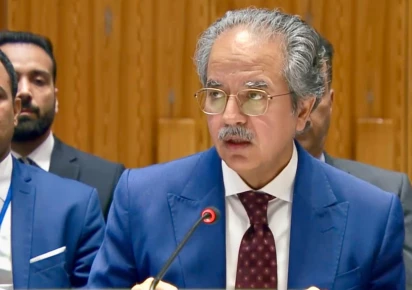
    UNITED NATIONS: Pakistan has called on the United Nations Security Council (UNSC) to ensure the immediate and complete implementation of the Gaza ceasefire and the UN-backed peace framework, warning that continued delays could jeopardise hopes for lasting peace and the creation of an independent Palestinian state. Speaking during a UN Security Council debate on the Middle East, Pakistan’s Permanent Representative to the UN, Ambassador Asim Iftikhar Ahmad, said the current situation presented a critical opportunity to advance peace but stressed that urgent action was needed to prevent further deterioration. He said the ceasefire and the internationally endorsed peace initiative offered a pathway to reduce humanitarian suffering and support Palestinian self-determination. However, he cautioned that failure to fully implement the agreement and Security Council Resolution 2803 would seriously undermine efforts to achieve a just and durable settlement. The Pakistani envoy voiced concern over developments in the occupied West Bank, accusing Israel of expanding settlements, establishing new outposts and allowing increased settler violence, which he said was changing the demographic and geographic landscape of the occupied territories. He also criticised the proposed “Crimson Thread” project, describing it as a network of military infrastructure that would isolate Palestinian communities, divide the Jordan Valley from the rest of the West Bank and weaken the prospects of a contiguous Palestinian state. Addressing the humanitarian crisis in Gaza, Ahmad said conditions remained extremely fragile despite the ceasefire. He noted that millions of Palestinians continued to face severe hardship, with widespread food insecurity, continued civilian casualties and large-scale displacement raising concerns over the full implementation of the peace plan. Pakistan urged the Security Council to take immediate action by ensuring the ceasefire agreement is fully enforced, demanding an end to Israeli settlement expansion, rejecting annexation and forced displacement, providing international protection for Palestinian civilians and ensuring the release of withheld Palestinian revenues to support essential public services. Reaffirming Islamabad’s longstanding position, Ahmad said the only sustainable solution remained the establishment of an independent, sovereign and viable Palestinian state based on the pre-1967 borders, with Al-Quds Al-Sharif (East Jerusalem) as its capital. The ambassador also expressed concern over wider instability across the Middle East, urging all parties to exercise restraint and pursue dialogue to prevent further escalation. He reaffirmed Pakistan’s support for the sovereignty and territorial integrity of regional states and backed diplomatic efforts aimed at restoring peace in Lebanon, Syria and Yemen. Highlighting concerns over attacks targeting Saudi Arabia and commercial shipping routes, Ahmad said such actions threatened regional stability and global trade, while reiterating Pakistan’s unwavering support for Saudi Arabia’s security and sovereignty. Concluding his address, the Pakistani envoy said lasting peace in the Middle East would remain impossible as long as occupation continued and the Palestinian people were denied their right to self-determination. He reaffirmed Pakistan’s commitment to supporting international efforts aimed at achieving a comprehensive and lasting peace based on UN resolutions and international law.

  • |

    Jasprit Bumrah ruled out of Sri Lanka Tests

    NEW DELHI: India have been dealt a significant setback ahead of their two-match Test series against Sri Lanka after star fast bowler Jasprit Bumrah was ruled out with a knee injury, the Board of Control for Cricket in India (BCCI) confirmed on Monday. Bumrah, widely regarded as India’s pace spearhead, has not fully recovered from the left knee injury he sustained during the One-Day International series against England last month. In a statement, the BCCI said the 32-year-old remains unavailable for selection as he continues his rehabilitation. Bumrah has not bowled competitively since the second ODI against England in Cardiff on July 16, where he suffered the injury.   His absence is a major setback for India, particularly with the challenging conditions expected in Sri Lanka, where Bumrah’s experience and ability to strike with the new ball have often made the difference in Test matches.   Replacing him in the 15-member squad is promising fast bowler Aquib Nabi, who receives his maiden senior international call-up after an impressive run in domestic cricket. The 29-year-old pacer from Jammu and Kashmir has emerged as one of India’s brightest bowling prospects, claiming 104 wickets across the last two Ranji Trophy seasons. He also impressed during India A’s recent tour of Sri Lanka, taking six wickets in two first-class matches, performances that earned him a place in the senior squad. India, led by Shubman Gill, will play a warm-up match before the opening Test begins in Galle on August 15. The second and final Test is scheduled to be played in Colombo from August 23 to 27. The series now presents a golden opportunity for Nabi to showcase his talent on the international stage, while India will hope their emerging pace attack can compensate for the absence of one of the world’s premier fast bowlers. With Bumrah sidelined and a new face joining the squad, all eyes will be on India’s bowling unit as the visitors aim to begin their Sri Lanka campaign on a winning note. India squad Shubman Gill (capt), KL Rahul (vice-captain), Yashasvi Jaiswal, Rishabh Pant (wk), Sai Sudharsan*, Dhruv Jurel (wk), Ravindra Jadeja, Kuldeep Yadav, Manav Suthar, Mohammed Siraj, Prasidh Krishna, Gurnoor Brar, Devdutt Padikkal, Saransh Jain, Auqib Nabi.

  • | | |

    Zardari, Shehbaz stress youth empowerment on World…

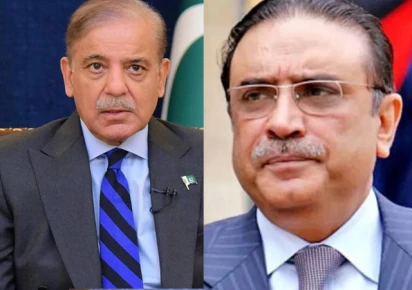
    ISLAMABAD: President Asif Ali Zardari and Prime Minister Shehbaz Sharif have highlighted the importance of empowering young people for Pakistan’s future. In their separate messages on World Youth Day, both leaders described the country’s youth as a valuable national asset. They stressed the need to provide young people with education, employment, skills and opportunities to contribute to national development. President Zardari said empowering young people was an investment in Pakistan’s future. He said the energy, creativity and determination of the country’s youth were among Pakistan’s most valuable assets. He said quality education, decent employment and innovation were among the common aspirations of young people. According to the president, around 67% of Pakistan’s population is below the age of 30. He said this made young people the country’s largest human resource. Zardari also highlighted the role of young women in national development. He said their potential and leadership were essential for Pakistan’s social and economic progress. The president said the Prime Minister’s Youth Programme was providing young people with opportunities in education, skills development, employment and entrepreneurship. He urged young people to adopt values of honesty, compassion and tolerance. He said empowering them to play an active role in national development was an urgent need. Zardari added that a strong, inclusive and prosperous Pakistan could be built through the meaningful participation of young people. Prime Minister Shehbaz Sharif also described the country’s youth as an invaluable asset. In his message on World Youth Day, the prime minister said this year’s theme was “Different circumstances, shared aspirations.” He said young people around the world live under different circumstances. However, their dreams, ambitions and hopes for a better future remain similar. Shehbaz said Pakistani youth were the architects of the country’s bright future. He noted that young Pakistanis had brought recognition to the country in different fields at both national and international levels. The prime minister said their abilities and full potential were essential for building a prosperous, peaceful and strong Pakistan. He added that the government’s priorities included using all available national resources to support the mental, physical, intellectual and academic development of young people.

  • | |

    Climate authority summoned again as questions grow…

    Islamabad: The Pakistan Climate Change Authority has been called back before a Senate committee only days after Chairperson Sherry Rehman strongly questioned why a new authority was operating alongside the Climate Change Ministry, asked what new work it was actually doing and raised concerns over staff costs, duplication and the use of public money. The fresh meeting will again focus almost entirely on the authority, its work, projects, programmes and progress. The quick return of the issue to the committee has increased pressure on the authority to clearly explain why it exists and what results it has produced that the Ministry of Climate Change and Environmental Coordination could not already deliver. At the previous meeting, Sherry Rehman repeatedly asked officials what work the authority was doing that the ministry was not already responsible for. She questioned whether the government had effectively created a parallel structure carrying out the same work on climate mitigation, adaptation, coordination and policy implementation. Rehman said the presentation before the committee did not show a clear new role for the authority. She also questioned why another institution was being created at a time when the ministry itself was facing shrinking development budgets. One of the strongest moments came when the committee discussed the authority’s staffing and expenditure. Rehman referred to a sanctioned strength of 24 positions and said employee related expenditure had already reached around Rs 80 million according to the presentation placed before the committee. She questioned why these costs were being incurred when she could not see a clear difference between the work of the authority and the ministry. She warned officials not to treat the meeting as a routine presentation exercise and demanded direct answers about public spending and actual results. Rehman also questioned whether creating the authority had brought new climate experts into government. Members asked whether the purpose was to recruit technocrats who could not otherwise be brought into the ministry. However, Rehman said the presentation appeared to show many of the same officials who had already worked inside government departments. She described the situation as a reshuffling of bureaucracy rather than the creation of a new technical institution. She said fragmentation was already a major government problem, with different organisations working separately on connected climate and disaster issues. According to her argument, creating another body without a clearly different mandate could increase costs while making responsibility more confusing. Rehman also questioned why the authority had been activated years after the law creating it first appeared. She said the law allowed the authority to exist but argued that this did not necessarily mean the government was forced to operationalise it. She said earlier governments had discussed removing such overlapping structures instead. During the exchange, she said she had opposed operationalising the authority while serving as minister because she feared it would create duplication. She told the committee that the result now appeared close to what she had warned about: officials were moving between the ministry and the authority instead of creating a completely new technical team. The authority defended its role. Dr Muhammad Rafiq told the committee that the authority was originally designed to provide technical support to the ministry. He acknowledged that more explanation was needed regarding what the authority was delivering against its original responsibilities. He suggested that the ministry and authority should be given an opportunity to return with a clearer presentation explaining what results they expected to achieve and what the authority could do that the ministry could not. The committee was told that the authority was still incomplete. Officials said a permanent chairperson was still being appointed and that only three members were working at the authority with a limited number of staff against the total positions planned. The authority also presented one of its strongest arguments in defence of its performance. An authority member told the committee that it had become Pakistan’s first public sector organisation to qualify as a delivery partner with the Green Climate Fund through the relevant mechanism. The official said this had been achieved by only three members and without technical assistance. He argued that this status could help the authority develop technical proposals and bring more climate finance into Pakistan. Rehman was not convinced that this achievement alone justified a separate authority. She argued that Green Climate Fund financing had already been coming to Pakistan through government structures and questioned why a completely new authority was needed when a climate finance office could operate within the ministry. She again asked why project development and technical hiring could not be handled directly by the ministry. Her central question remained the same throughout the discussion: what exactly could the new authority do that the ministry could not already do? The ministry told the committee that it had a supervisory and controlling role over the authority and that the authority’s budget passed through the ministry. However, Rehman continued to question how effective that control was if the authority could hire staff and exercise statutory powers separately. She asked officials to explain how rotating officials into a separate authority would make climate work more efficient when the ministry itself was losing development resources. Professor Dr Zahoor Ahmed Bazai, who identified himself as an unpaid member nominated to the authority and as a climate change academic, defended the institution. He told the committee that the authority was included in the climate law and that members had been nominated through the formal process. He argued that the authority was intended to provide expertise and serve an advisory role. Rehman said her criticism was not directed personally at individual members. She said the bigger problem was duplication between institutions and the growing number of attached bodies dealing with similar climate matters. The committee chairperson was also critical of the presentation the authority gave. Rehman said the presentation was not strong enough to be used by Pakistan at an international climate forum and described it as outdated in style. She said that if the authority wanted to demonstrate its value and

Leave a Reply

Your email address will not be published. Required fields are marked *