airplane puzzle

Airplane IQ Puzzle

Do you enjoy solving puzzles? If yes here is a fun brain teaser that will test your observation skills.

Look carefully at the picture and try to figure out which person is poor.

The image shows three people traveling on an airplane. One person is reading a newspaper a woman in the middle is holding a smartphone and another person is using a laptop.

This is more than just a simple puzzle. It is designed as a small IQ test that checks how well you notice tiny details.

Try to find the answer within 30 seconds.

Take a close look before making your choice.  The clue is visible in the picture but you need sharp eyes to spot it.

•Have you guessed the answer?

If not the puzzle says the man reading the newspaper is the poor person.

The clue is on the jacket resting on his lap. A label on the jacket suggests it is made from polyester which the puzzle presents as a cheap imitation leading to the conclusion that he is poor.

Keep in mind that this is only the intended answer to the puzzle. In real life a person’s clothing or belongings do not determine whether they are wealthy or poor.

Similar Posts

  • Too much salt? Try these simple tricks

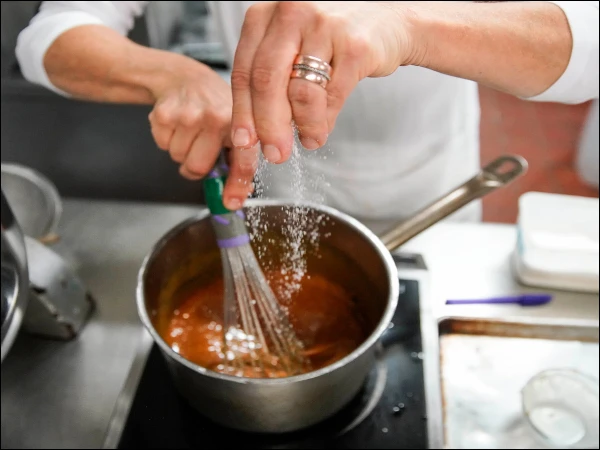
    Salt is one of the most important ingredients in cooking because it brings out the flavor of food.  A small change in spices may not make much difference but too little salt can make a dish taste bland while too much can ruin its flavor. Adding salt to food is easy when it is needed. But if you accidentally add too much salt you may think the whole dish is ruined.  Fortunately there are several simple kitchen tricks that can help reduce the strong salty taste and save your food. Add a Potato If your curry or another dish has too much salt take a raw potato cut it into two pieces and add it to the food. Let it cook for about 10 minutes and then remove it.  A boiled potato can also be used. If you prefer you can leave the potato in the curry and serve it with the dish. Use fresh cream Fresh cream can help make a salty dish taste milder. Add a small amount of cream to the curry or other suitable dishes and mix well.  It can reduce the strong salty taste while also making the food smoother and richer. Try a dough ball A small ball of flour dough is another traditional home method. Make a small dough ball and place it in the curry.  Leave it for around 15 minutes and then take it out. This may help reduce the salty taste of the dish. Add water or milk For dishes that can handle extra liquid adding a little water can reduce the salty taste.  Milk or cream can also work well in some recipes. Milk can make the flavor softer and more balanced. Use yogurt and fried onion Yogurt and fried onions can also help balance the taste especially in dishes such as meat curry karahi, or mixed vegetables. Grind some browned onions with yogurt and mix them into the dish. This can make the strong salty flavor less noticeable while adding extra taste. Add salt slowly The best way to avoid overly salty food is to add salt little by little while cooking. Taste the food before adding more.  This simple habit can help you control the amount of salt and keep your dishes flavorful. Using less salt overall is also better for general health. So instead of adding a large amount at once add small amounts gradually and adjust the taste as needed.

  • Human Capital Is Superior to Other Resources

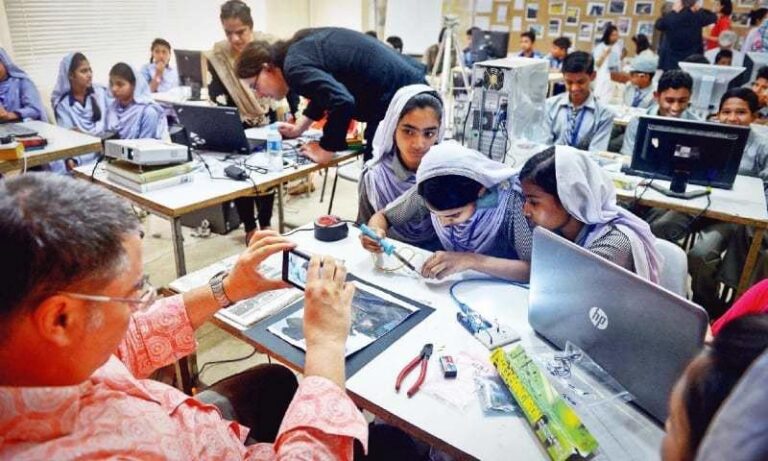
    By Dr. Naveeda Katper Human beings live in a world of countless needs and wants, but the resources available to meet those needs are limited. Food, shelter, education, health and a sense of belonging are among the basic requirements of life. Because resources are scarce, individuals, organizations and governments have to set priorities, make choices and use available resources wisely. Resources can broadly be divided into natural and human-made resources. Natural resources such as land, water, forests, minerals and energy come from nature. Human-made resources, including machines, buildings, technology and infrastructure, are developed by people using natural resources. Natural resources can be depleted, while human-made resources can depreciate through use and time. Human beings, however, are different from other resources. A person is not simply a consumer of resources. With education, training, health and appropriate opportunities, a person can develop knowledge and skills and become an important form of human capital. This is why human capital is often considered more valuable than other resources. Human beings discover, develop and manage resources. They create technology, improve production, solve problems and generate new ideas. Among the traditional factors of production—land, labour, capital and entrepreneurship—human effort remains central because it activates and combines the others. Education and skills are therefore essential for economic and social development. A person without education or employable skills may have limited opportunities to earn a stable income. A skilled person, on the other hand, can use available resources productively and create value for both themselves and society. Skills can take different forms. Hard skills include technical and professional abilities. Soft skills include communication, teamwork, discipline and problem-solving. Transferable skills can be applied across different occupations and workplaces. All of these can improve a person’s ability to participate productively in the economy. Developed economies provide useful examples of how investment in people can contribute to national development. Countries such as Finland, Norway, Singapore, Switzerland, Japan and South Korea have invested substantially in education, vocational training, technology and workforce development. Their experience shows that economic progress is not based only on natural resources or physical infrastructure. The knowledge, skills and productivity of people are equally important. Skills development should begin early in life. Children should not be taught only to memorise information. They should also be encouraged to ask questions, solve problems, make things, experiment and learn from mistakes. An education system that allows children to try, fail and try again can help develop confidence, creativity and practical thinking. Schools, vocational institutions and workplaces all have a role in this process. Young people need opportunities to connect education with practical skills. They should be able to understand how knowledge can be applied to real problems and employment opportunities. The challenge is particularly serious in developing and least-developed countries, where many people have limited access to quality education, technical training and decent employment. Weak educational systems, inadequate infrastructure and limited opportunities for formal employment can prevent large sections of the population from developing their full potential. The problem is not simply unemployment. It is also the gap between what people know and what the economy needs. Many young people complete some level of education but do not acquire the practical or technical skills required by employers. At the same time, businesses often struggle to find workers with the right skills. Pakistan faces a similar challenge. The country has a large and relatively young population, which can become an important economic advantage if the right investments are made. But population size alone does not create economic growth. A large population becomes an asset when people are healthy, educated, skilled and productively employed. The World Bank’s Human Capital Index has repeatedly highlighted the importance of investments in education, health and skills for Pakistan’s long-term economic prospects. Pakistan’s human-capital performance remains below that of many countries that have made stronger and more sustained investments in these areas. Improving the quality of education, expanding vocational training and increasing opportunities for productive employment should therefore be treated as national priorities. Formal education, however, should not be considered the only route to developing human capital. Many adults who did not receive adequate schooling can still acquire useful skills through vocational and technical training. Short courses in areas such as construction, agriculture, livestock, tailoring, information technology, electrical work, plumbing, mechanics, hospitality and other trades can provide people with opportunities to earn a livelihood. Such training should not remain concentrated in major cities. Local training centres and mobile skill programmes can take practical education to towns and villages. Community-level training can help women, young people and adults who cannot easily access conventional educational institutions. Pakistan can also benefit from stronger links between education and the labour market. Training programmes should be designed after identifying the skills actually demanded by local and national economies. Employers, educational institutions and government departments should work together to ensure that training leads to real opportunities rather than certificates alone. The private sector also has an important role. Businesses can provide apprenticeships, internships and on-the-job training. Young people can gain valuable experience when they are given opportunities to learn directly in workplaces. Human capital development should also include lifelong learning. Technology and the nature of work are changing rapidly. Skills that are valuable today may become less relevant tomorrow. Workers therefore need opportunities to update their knowledge and acquire new skills throughout their careers. The central lesson is simple: people should not be viewed merely as consumers of a country’s resources. With proper investment, they become producers, innovators, entrepreneurs, teachers, technicians, researchers and problem-solvers. They create value from resources that might otherwise remain underused. For Pakistan, this is both a challenge and an opportunity. The country’s young population can become a powerful economic resource if it receives quality education, healthcare, practical skills and meaningful employment opportunities. But if these needs are ignored, population growth can increase pressure on already limited resources. Human capital is therefore not a secondary concern. It is one of the foundations of sustainable development. Roads, buildings, machines, technology and natural

  • Top health benefits of curry leaves

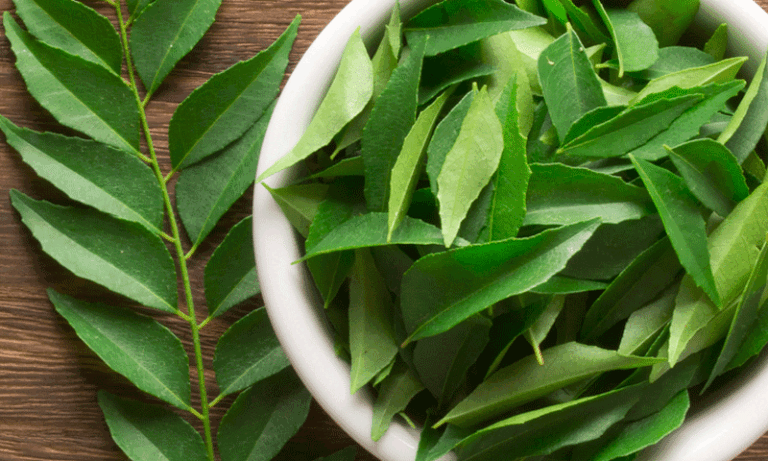
    Curry leaves are best known for adding a rich flavor and fresh aroma to food but they also offer many health benefits. Packed with important nutrients and natural plant compounds these leaves can be a healthy addition to your daily diet. Rich in nutrients Curry leaves contain vitamins A, B, and C along with other nutrients that help support overall health.  Their natural antioxidants may help protect the body from damage caused by harmful molecules. May support weight loss Many people use curry leaves as part of a healthy weight loss plan. Drinking curry leaf tea on an empty stomach every morning for several weeks is believed to support weight management when combined with a balanced diet and regular exercise. Some people also eat 10 to 15 fresh leaves in the morning and drink warm water afterward. May help lower Cancer risk Curry leaves contain natural compounds called flavonoids which have antioxidant properties.  Research suggests these compounds may help protect cells from damage and could play a role in lowering the risk of certain types of cancer. However more human studies are needed. Good for People with Diabetes Curry leaves are a good source of dietary fiber which may help support healthy blood sugar levels.  They may also improve the body’s ability to manage glucose making them a helpful addition to a diabetes friendly diet. They should not replace prescribed treatment. Supports digestive health Curry leaves have long been used to help with digestive problems such as constipation and diarrhea.  They contain natural plant compounds that may help support healthy digestion and improve gut health. •Easy ways to add curry leaves to your diet •Curry leaves are easy to use in everyday meals. You can •Add them to soups curries and lentil dishes. •Use them in stir fries or vegetable dishes. •Blend them into smoothies. •Brew them into herbal tea. Adding curry leaves to your diet is a simple way to boost flavor while enjoying their potential health benefits. Combined with a balanced diet and healthy lifestyle they can be a nutritious part of everyday meals

  • | |

    Documentary film on the struggle for Joint Elector…

    By Yassar Talib Aiman Zameer Lahore: The Centre for Social Justice (CSJ) held a screening of its documentary film, A Separation Refused, highlighting the Movement for the Restoration of the Joint Electorate in Pakistan, at a local hotel in Lahore. The 20-minute documentary film, by the award-winning the producer and director, CSJ and Dawood Akhtar Murad, traces the culmination of the world unique Separate Electorate system in Pakistan’s history and the movement for the restoration of the Joint Electorate in Pakistan especially during the 1990s to 2001. The film chronicles the efforts of civil society organizations, political leaders, faith communities, and human rights advocates who campaigned for equal citizenship and inclusive democratic participation for religious minorities. Using historical accounts and personal testimonies, the film illustrates how sustained advocacy contributed to democratic reforms and continues to inspire efforts towards equality, pluralism, social cohesion, and the protection of constitutional rights. Featuring over a dozen interviews, it brings together insights from Hina Jilani, Cardinal Joseph Coutts, Dr. Charles Amjad Ali, Dr. Yaqoob Bangash, and other prominent voices offering diverse perspectives youth, clergy and a parliamentarian. The even also premiered a song Hum Juda Nahein (We Are Not Separate) that expressed the The screenings were followed by an interactive panel discussion explored the progress made towards equal citizenship and the continuing challenges to the democratic participation of religious minorities in Pakistan. The panelists, Wajahat Masood a public intellectual and Peter Jacob, answered the questions while the academic Faaria Khan moderated the discussion. While addressing the participants, Wajahat Masood, said that democracy is based on the principle of equal citizenship and that the categorization of citizens into majorities and minorities reflects a constitutional anomaly. Referring to the Separate Electorate system, he noted that institutionalizing such divisions weakened democratic systems and undermined the principle of equal political participation. In response to a question on the rationale behind the documentary, Peter Jacob, Executive Director CSJ, said that the importance of the movement warranted a careful reading of the history. He noted that the film was developed to preserve authentic accounts of the struggle for the restoration of the Joint Electorate and to address competing interpretations of history and misunderstandings. He also emphasized the need for constitutional reforms to strengthen equal citizenship. He called for a review of Articles 41 and 91 of the Constitution, to remove precondition of religious affiliation for the offices of the President and Prime Minister. Moreover, implementation of Article 22(1) of the constitution of Pakistan that guarantees unbiased education. In the open discussion, participants emphasized that the message of documentary film highlighting constitutional rights, democratic inclusion, should be screened more widely through universities, arts councils, mainstream media, and other public platforms to encourage informed dialogue and greater public awareness. They further stressed that equal citizenship is not solely the concern of religious minorities but a shared national responsibility, and called for greater participation and support from the majority community in future advocacy and dialogue. At the end the participants reaffirmed a shared commitment to advancing constitutional rights, equal citizenship, participatory democracy, and peaceful coexistence through collective action.

  • Use rosemary in moderation

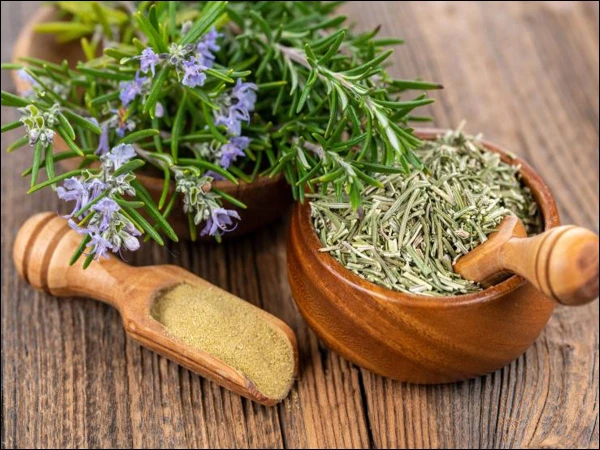
    Rosemary is a popular herb used to add a fresh and pleasant aroma to food. But it is more than just a kitchen ingredient.  This evergreen herb comes from the Mediterranean region and belongs to the mint family.  It is commonly used as dried leaves or in powdered form. Rosemary contains nutrients such as iron calcium and vitamin B6. It has also been used for centuries because of its possible health benefits. Modern research has explored how its natural compounds may affect the body. Rich in Antioxidants Rosemary contains antioxidants and anti-inflammatory compounds that may help protect the body from harmful free radicals.  These compounds may also support the immune system and healthy blood circulation. May support digestion rosemary has traditionally been used to help with digestive problems such as indigestion. In Europe it has been used for this purpose for many years and Germany’s Commission E has recognized its traditional use for digestive discomfort. May help focus and mood The smell of rosemary may also have an effect on mental performance. Research published in Therapeutic Advances in Psychopharmacology found that rosemary aroma was linked with better attention mental performance speed accuracy and mood. Possible brain benefits Rosemary contains a natural compound called carnosic acid.  Scientists are studying this compound because it may help protect brain cells from damage caused by free radicals. This is one reason rosemary is being researched for its possible role in brain and nerve health. What about Cancer? Some laboratory studies have explored rosemary extracts and their possible anti tumor effects.  One study found that a rosemary extract slowed the growth of human leukemia cells in laboratory conditions. Other research has also looked at its anti inflammatory and anti-tumor properties. However these findings do not mean that rosemary can treat or cure cancer. More research is needed to understand its effects in humans. Use it in moderation Rosemary is generally safe when used in normal amounts as a food ingredient.  However taking very large amounts may cause harmful effects including vomiting and other serious problems. For this reason rosemary is best used in moderate amounts. If you plan to take rosemary as a supplement or use it for a specific health purpose it is better to speak with a healthcare professional first.

  • Important of Diplomacy in Modern Conflicts

    By Dhani Bux Wassan Peace cannot be kept by force it can be achieved by understanding (Albert Einstein). In an increasingly interconnected world, disputes and tensions among nations have become more complex, involving geopolitical rivalries, ethnic and religious conflicts, ideological differences, civil unrest, and cyber warfare. These challenges threaten global peace and stability, and destroy the hustle and bustle of cities, turning them into ashes. These assaults lead to violence against innocent people . Amidst humanitarian crises and violence, diplomacy plays a crucial role in maintaining global peace, stability, and mutual prosperity among nations. Diplomacy is the most effective way to mediate disputes among nations through negotiations and table talks, preventing major conflicts and saving thousands of innocent lives. It is a manifestation of wisdom and dialogue. Modern conflicts are far more violent and complex than traditional wars. They arise from the struggle for power, competition over resources, territorial disputes, political instability, nationalism, separatism, and economic inequality. These conflicts have transformed cities into ruins, leaving streets littered with debris and countless lives lost. Millions of people have been displaced, deprived of education, healthcare, and shelter, and forced to live in extreme poverty. They have also left mothers, fathers, sisters, brothers, and children waiting in vain for their loved ones who never returned from the battlefield. Now, let us turn our attention to the Israel–Palestine war. Since October 7, 2023, the conflict has continued for more than 1,000 days. According to the Gaza Health Ministry, more than 73,000 Palestinians have lost their lives, while millions have been displaced and face severe humanitarian conditions. Similarly, the Russia–Ukraine war has continued for more than 1,600 days. The conflict has destroyed homes, schools, hospitals, and vital infrastructure, forcing millions to flee their homes and seek refuge in neighboring countries. History reminds us that when regional conflicts escalate into world wars, the world loses its path to peace. The First and Second World Wars claimed millions of lives and devastated entire nations. If diplomacy fails and violence prevails, humanity risks repeating the tragedies of the past. Therefore, dialogue, cooperation, and peaceful negotiation remain the only sustainable path. As modern conflicts continue to grow the importance of diplomacy cannot be overstated. Diplomacy provides nations with a peaceful means of resolving disputes through dialogue and compromise rather than violence. It prevents misunderstandings from escalating into armed conflicts and helps build trust and cooperation among nations. Strong diplomatic relations create a stable environment that encourages economic growth, attracts foreign investment, expands trade, and creates employment opportunities. Moreover, diplomacy facilitates humanitarian assistance, strengthens regional cooperation, and promotes lasting peace.In an increasingly interconnected world, it remains the most effective instrument for achieving peace, stability, and shared prosperity. History demonstrate that diplomacy repeatedly succeeded where military cops failed .The Camp David Accords (1978) ended decades of hostility between Egypt and Israel, proving that persistent dialogue can transform long-standing enemies into peace partners. Similarly, the Good Friday Agreement (1998) brought an end to years of violence in Northern Ireland through negotiation and political compromise. The Dayton Peace Agreement (1995) ended the devastating Bosnian War, while the Indus Waters Treaty (1960) between Pakistan and India has endured despite multiple wars, demonstrating that diplomatic agreements can survive even during periods of intense political tension. These examples illustrate that meaningful dialogue, mutual respect, and sustained negotiations often achieve what military force cannot. As former UN Secretary-General Kofi Annan wisely observed, “More than ever before in human history, we share a common destiny. We can master it only if we face it together.” In modern world conflicts strengthening diplomacy is essential for building a peaceful, stable, and prosperous future. Governments should prioritize dialogue over confrontation, invest in skilled diplomacy, and promote mutual trust through regular communication. International organizations, regional alliances, and civil society also have an important role in facilitating peaceful negotiations and resolving disputes before they escalate into violence. At the same time, nations must uphold international law, respect sovereignty, and work together to address shared challenges such as climate change, terrorism and cyber threats. By embracing cooperation instead of conflict, diplomacy can prevent wars, protect human lives, and lay the foundation for lasting global peace and sustainable development. To conclude, diplomacy remains the cornerstone of peace and stability in an increasingly turbulent world. While modern conflicts have become more complex due to geopolitical rivalries, technological advancements, and transnational threats, dialogue and cooperation continue to offer the most effective path to lasting solutions. Military force may end battles, but only diplomacy can build enduring peace, restore trust, and promote mutual understanding among nations. As global challenges continue to transcend borders, the international community must strengthen diplomatic institutions, uphold international law, and foster a culture of cooperation. A peaceful and prosperous future depends not on the power of weapons, but on the wisdom of dialogue and the commitment to resolve differences through diplomacy. (The writer is Larkana Cadet College student)

Leave a Reply

Your email address will not be published. Required fields are marked *